
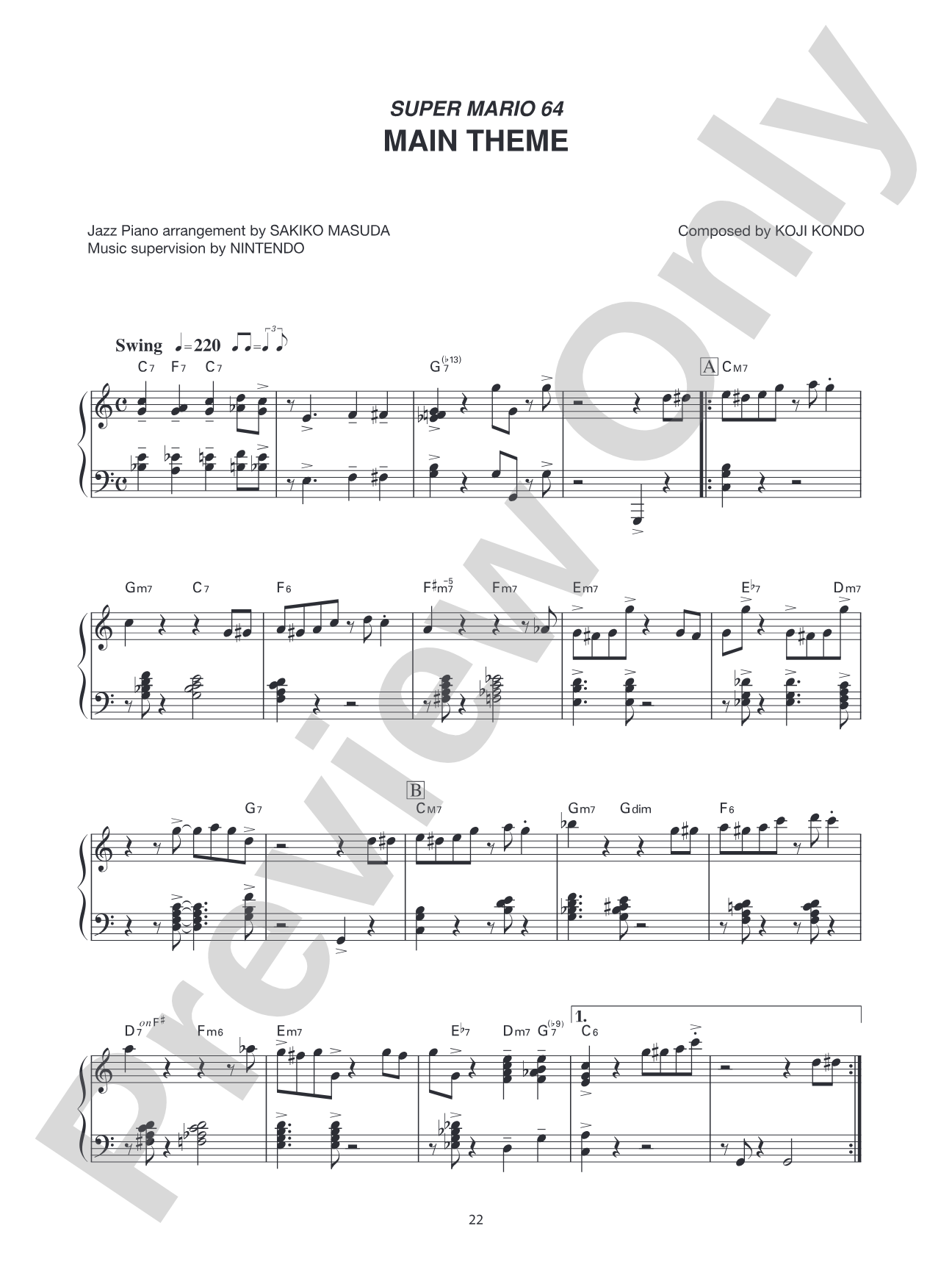

Super Mario 64 Main Theme: Piano
15 Intermediate--Advanced Piano Solos
By Koji Kondo, Asuka Ohta, Soyo Oka, Ryo Nagamatsu, and Kenta Nagata
Level: Intermediate / Advanced
Item: 00-PS-0015328
$4.99
One moment…
Related Items
Super Mario Bros. Ground Theme: Piano |
$4.99
|
View | |
Super Mario Bros. Underground Theme: Piano |
$4.99
|
View | |
Super Mario Bros. Underwater Theme: Piano |
$4.99
|
View | |
Super Mario Bros. The Lost Levels Ending: Piano |
$4.99
|
View | |
Super Mario Bros. 3 Ground Theme: Piano |
$4.99
|
View | |
Super Mario World Title: Piano |
$4.99
|
View | |
Super Mario Kart Mario Circuit: Piano |
$4.99
|
View | |
Super Mareio World 2: Yoshi's Island Ground Theme: Piano |
$4.99
|
View | |
New Super Mario Bros. Battle Theme 2: Piano |
$4.99
|
View | |
Mario Kart World Rainbow Road: Piano |
$4.99
|
View | |
New Super Mario Bros. Wii Title: Piano |
$4.99
|
View | |
New Super Mario Bros. Wii Ground Theme: Piano |
$4.99
|
View | |
Super Mario World Athletic Theme: Piano |
$4.99
|
View | |
Super Mario Galaxy 2 Yoster: Piano |
$4.99
|
View | |
Super Mario™ Jazz Piano Arrangements: Piano Book |
$14.99
|
View |
Description
The globally beloved musical themes of Nintendo's Super Mario™ video games sound great when they're played on the piano, and these new jazzy renditions make them more fun than ever! Each arrangement in this collection was crafted under direct supervision by Nintendo and renowned video game composer Koji Kondo, so each theme retains its musical integrity---but with a unique and lighthearted twist that's guaranteed to entertain. Pianists will enjoy the challenge of these 15 intermediate to early advanced arrangements, and audiences of all ages will be impressed and delighted to hear them. Titles: Super Mario Bros.™ Ground Theme * Super Mario Bros.™ Underground Theme * Super Mario Bros.™ Underwater Theme * Super Mario Bros.™: The Lost Levels Ending * Super Mario Bros.™ 3 Ground Theme * Super Mario World™ Title * Super Mario World™ Athletic Theme * Super Mario Kart™ Mario Circuit * Super Mario World™ 2 Yoshi's Island Ground Theme * Super Mario 64™ Main Theme * New Super Mario Bros.™ Battle Theme 2 * Mario Kart™ Wii™ Rainbow Road * New Super Mario Bros.™ Wii™ Title * New Super Mario Bros.™ Wii™ Ground Theme * Super Mario Galaxy™ 2 Yoster.


Discover MakeMusic Cloud: thousands of interactive titles your students can play along with today.
Sample Audio
No sample audio found.
Sample Video
No sample videos found.
Additional Details
Publisher:
Alfred Music
Page Count:
36
SKU:
00-PS-0015328
More about this title
About the Composer: Koji Kondo
Koji Kondo shaped video game music into an art form. Beginning with the original Donkey Kong arcade game in 1981, he established himself as Nintendo's principal composer, crafting instantly recognizable themes that defined entire gaming generations. His work spans from the Super Mario Bros. series to The Legend of Zelda, demonstrating masterful command of melody, harmonic sophistication, and the technical constraints of early gaming hardware.
Kondo's compositions transcend their digital origins through structural clarity and emotional directness. Each theme works across multiple arrangements and contexts while retaining its core identity, a hallmark of genuinely strong songwriting. His influence on contemporary video game music remains unmatched, and his willingness to reimagine his own work in new styles shows confidence in the fundamental strength of his melodies.
Why we love this
Arranging Sakiko Masuda brings genuine jazz sensibility to these beloved melodies without stripping away what makes them memorable. Each piece maintains the instant recognizability students and audiences cherish, then layers in fresh harmonic language, syncopated rhythms, and instrumental color. Programming these on a recital or concert gives pianists an opportunity to perform music that genuinely excites their audiences while developing sophisticated jazz vocabulary and arranging literacy.
What to expect
Playful and sophisticated at once. Kondo's melodies sparkle with the same charm they carried in the games, but now they're dressed in jazz harmonies, walking bass lines, and syncopated rhythms that give them new vitality. There's an inherent lightness here, but the arranging is serious and well-crafted—this isn't novelty music.
Who it's for
Intermediate to early advanced pianists looking for repertoire that challenges their harmonic and rhythmic fluency while remaining genuinely fun to perform. These arrangements also suit pianists who want to build jazz literacy through music they already love, or students preparing recital programs that appeal to multigenerational audiences.
How to get the most out of it
- Approach the jazz voicings as deliberate harmonic choices, not ornamentation. Let the chords breathe and listen to how Masuda reharmonizes familiar moments; this reveals the arrangement's intention.
- Balance the melodic line against busier accompaniment patterns by shaping dynamics across the full range. A common risk is letting left-hand activity overshadow the tune, especially in the intermediate-level pieces.
- Nail the rhythmic precision in syncopated sections. Video game music typically emphasizes exact timing; jazz arrangements amplify this by playing against the beat. Practice subdividing carefully.
- Use the recorded accompaniment if available to hear how these pieces sit in ensemble contexts, which can clarify voicing clarity and tempo relationships.
How to use it
Feature one or two pieces on a spring recital to close a program on a high-energy note that engages families and friends. Alternately, program the collection across multiple students to create a thematic concert segment, allowing each pianist to perform a different theme and showcase their personal approach to the material.
Skills your students will build
- Jazz harmony and reharmonization techniques
- Syncopated rhythm reading and execution
- Independent left-hand accompaniment patterns while maintaining melodic clarity
- Interpretation of stylistic cues in jazz contexts
- Sight-reading facility across varied textures within familiar musical frameworks