
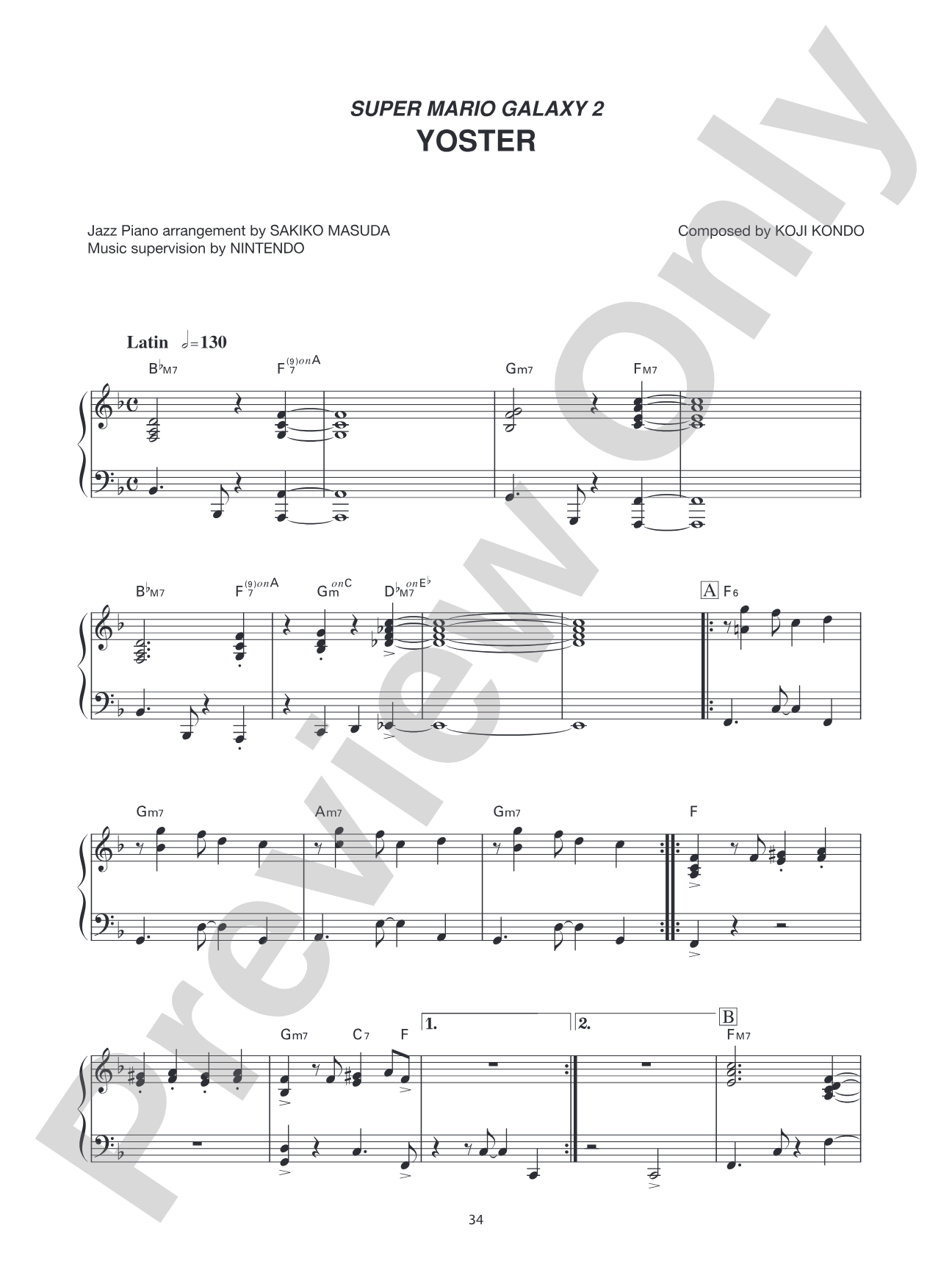

Super Mario Galaxy 2 Yoster: Piano
15 Intermediate--Advanced Piano Solos
By Koji Kondo, Asuka Ohta, Soyo Oka, Ryo Nagamatsu, and Kenta Nagata
Level: Intermediate / Advanced
Item: 00-PS-0015334
$4.99
One moment…
Related Items
Super Mario Bros. Ground Theme: Piano |
$4.99
|
View | |
Super Mario Bros. Underground Theme: Piano |
$4.99
|
View | |
Super Mario Bros. Underwater Theme: Piano |
$4.99
|
View | |
Super Mario Bros. The Lost Levels Ending: Piano |
$4.99
|
View | |
Super Mario Bros. 3 Ground Theme: Piano |
$4.99
|
View | |
Super Mario World Title: Piano |
$4.99
|
View | |
Super Mario Kart Mario Circuit: Piano |
$4.99
|
View | |
Super Mareio World 2: Yoshi's Island Ground Theme: Piano |
$4.99
|
View | |
Super Mario 64 Main Theme: Piano |
$4.99
|
View | |
New Super Mario Bros. Battle Theme 2: Piano |
$4.99
|
View | |
Mario Kart World Rainbow Road: Piano |
$4.99
|
View | |
New Super Mario Bros. Wii Title: Piano |
$4.99
|
View | |
New Super Mario Bros. Wii Ground Theme: Piano |
$4.99
|
View | |
Super Mario World Athletic Theme: Piano |
$4.99
|
View | |
Super Mario™ Jazz Piano Arrangements: Piano Book |
$14.99
|
View |
Description
The globally beloved musical themes of Nintendo's Super Mario™ video games sound great when they're played on the piano, and these new jazzy renditions make them more fun than ever! Each arrangement in this collection was crafted under direct supervision by Nintendo and renowned video game composer Koji Kondo, so each theme retains its musical integrity---but with a unique and lighthearted twist that's guaranteed to entertain. Pianists will enjoy the challenge of these 15 intermediate to early advanced arrangements, and audiences of all ages will be impressed and delighted to hear them. Titles: Super Mario Bros.™ Ground Theme * Super Mario Bros.™ Underground Theme * Super Mario Bros.™ Underwater Theme * Super Mario Bros.™: The Lost Levels Ending * Super Mario Bros.™ 3 Ground Theme * Super Mario World™ Title * Super Mario World™ Athletic Theme * Super Mario Kart™ Mario Circuit * Super Mario World™ 2 Yoshi's Island Ground Theme * Super Mario 64™ Main Theme * New Super Mario Bros.™ Battle Theme 2 * Mario Kart™ Wii™ Rainbow Road * New Super Mario Bros.™ Wii™ Title * New Super Mario Bros.™ Wii™ Ground Theme * Super Mario Galaxy™ 2 Yoster.


Discover MakeMusic Cloud: thousands of interactive titles your students can play along with today.
Sample Audio
No sample audio found.
Sample Video
No sample videos found.
Additional Details
Publisher:
Alfred Music
Page Count:
36
SKU:
00-PS-0015334
More about this title
About the Composer: Koji Kondo
Koji Kondo revolutionized video game music by composing iconic themes that defined Nintendo's most celebrated franchises. His work across the Super Mario series, The Legend of Zelda, and other landmark titles established a compositional legacy that influenced an entire medium; his melodies are recognizable to millions worldwide and have proven remarkably durable across decades of arrangement and reinterpretation.
Beyond his role as a video game composer, Kondo's contributions to music education extend through his direct involvement in curating these jazz arrangements. By overseeing adaptations that preserve melodic integrity while introducing new harmonic colors, he demonstrates that beloved source material can challenge intermediate and advanced pianists without compromising the joy listeners associate with these themes.
Why we love this
These arrangements strike an uncommon balance: they're instantly recognizable enough to draw an audience into the room, yet sophisticated enough to command serious pianists' attention. The jazzy voicings and harmonic expansions transform familiar melodies into genuine musical puzzles rather than simplified versions, making them feel like discoveries rather than nostalgia.
What to expect
Playful yet polished. The jazz harmonies bring sophistication to melodies you already know, creating a sense of rediscovery with every phrase. There's lightness throughout, even in the technically demanding passages; these pieces invite you to have fun while you're working hard.
Who it's for
Pianists working at the intermediate to early advanced level who want repertoire that feels current and engaging rather than traditional. This collection is ideal for performers seeking pieces that bridge their technical development with genuine enjoyment, and for teachers building recital programs that capture diverse audience demographics.
How to get the most out of it
- Treat the syncopated rhythms as an opportunity to practice swing feels and shuffle patterns. Lock the rhythm in your left hand first, then layer the melody with precision.
- Balance melodic clarity against the jazzy harmonies. The arrangement's appeal depends on hearing both the original theme and Masuda's clever reharmonization simultaneously.
- Use the video game context to shape your phrasing. These pieces benefit from clear articulation and energetic tempo choices that echo their interactive origins.
- Experiment with rubato in the laid-back sections while maintaining a metronomic pulse in the rhythmically active passages.
How to use it
Open a recital or concert with one of the more upbeat arrangements to establish immediate audience connection and energy. Pair several pieces from this collection to create a thematic segment that showcases different eras of Nintendo's musical catalog and your technical range simultaneously.
Skills your students will build
- Jazz voicing and reharmonization techniques
- Syncopated rhythm reading across both hands
- Articulation and phrasing in contemporary styles
- Swing feels and shuffle interpretations
- Hand independence with non-traditional left-hand patterns
- Sight-reading extended harmonies and altered chords