
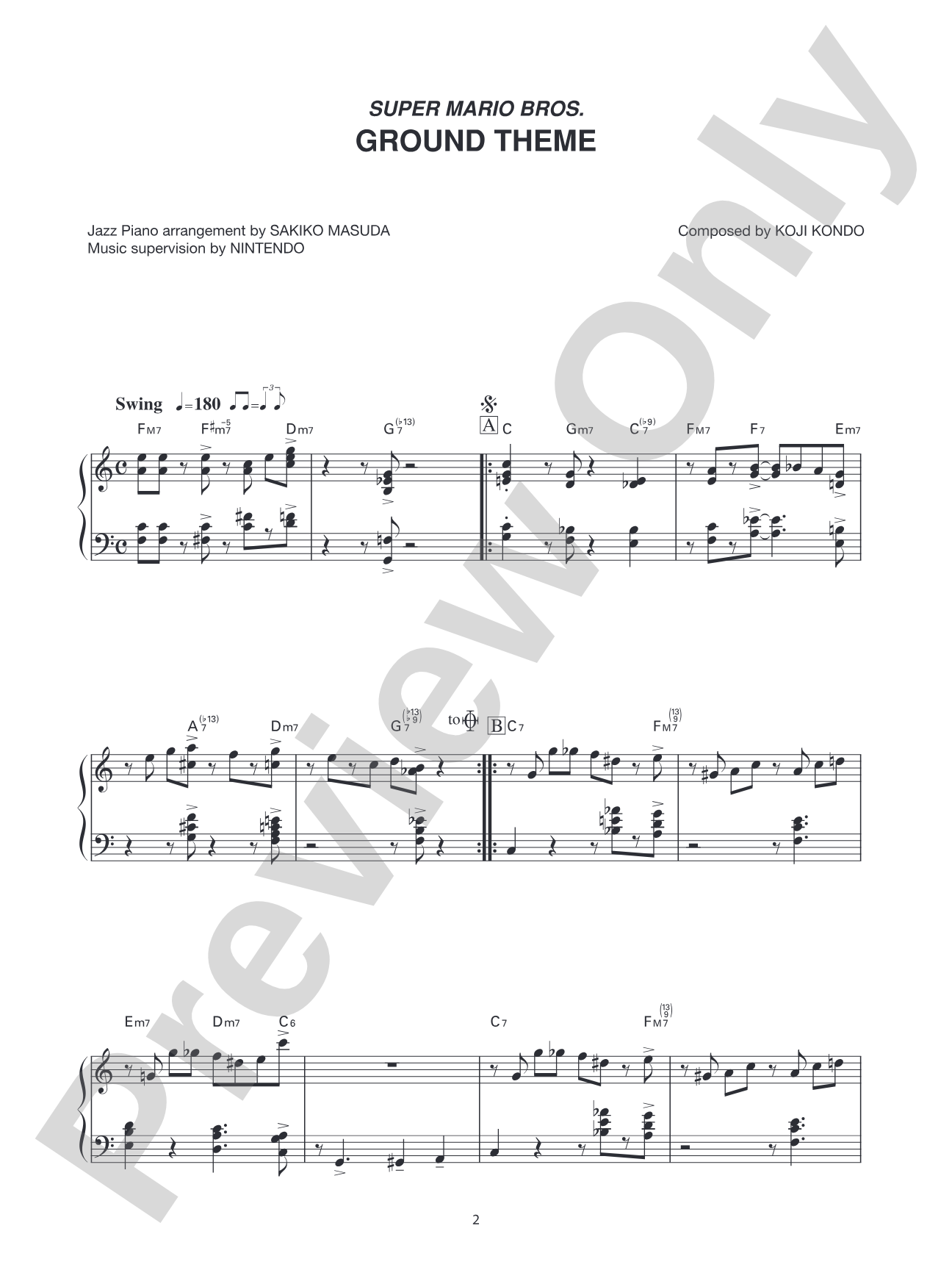

Super Mario Bros. Ground Theme: Piano
15 Intermediate--Advanced Piano Solos
By Koji Kondo, Asuka Ohta, Soyo Oka, Ryo Nagamatsu, and Kenta Nagata
Level: Intermediate / Advanced
Item: 00-PS-0015320
$4.99
One moment…
Related Items
Super Mario Bros. Underground Theme: Piano |
$4.99
|
View | |
Super Mario Bros. Underwater Theme: Piano |
$4.99
|
View | |
Super Mario Bros. The Lost Levels Ending: Piano |
$4.99
|
View | |
Super Mario Bros. 3 Ground Theme: Piano |
$4.99
|
View | |
Super Mario World Title: Piano |
$4.99
|
View | |
Super Mario Kart Mario Circuit: Piano |
$4.99
|
View | |
Super Mareio World 2: Yoshi's Island Ground Theme: Piano |
$4.99
|
View | |
Super Mario 64 Main Theme: Piano |
$4.99
|
View | |
New Super Mario Bros. Battle Theme 2: Piano |
$4.99
|
View | |
Mario Kart World Rainbow Road: Piano |
$4.99
|
View | |
New Super Mario Bros. Wii Title: Piano |
$4.99
|
View | |
New Super Mario Bros. Wii Ground Theme: Piano |
$4.99
|
View | |
Super Mario World Athletic Theme: Piano |
$4.99
|
View | |
Super Mario Galaxy 2 Yoster: Piano |
$4.99
|
View | |
Super Mario™ Jazz Piano Arrangements: Piano Book |
$14.99
|
View |
Description
The globally beloved musical themes of Nintendo's Super Mario™ video games sound great when they're played on the piano, and these new jazzy renditions make them more fun than ever! Each arrangement in this collection was crafted under direct supervision by Nintendo and renowned video game composer Koji Kondo, so each theme retains its musical integrity---but with a unique and lighthearted twist that's guaranteed to entertain. Pianists will enjoy the challenge of these 15 intermediate to early advanced arrangements, and audiences of all ages will be impressed and delighted to hear them. Titles: Super Mario Bros.™ Ground Theme * Super Mario Bros.™ Underground Theme * Super Mario Bros.™ Underwater Theme * Super Mario Bros.™: The Lost Levels Ending * Super Mario Bros.™ 3 Ground Theme * Super Mario World™ Title * Super Mario World™ Athletic Theme * Super Mario Kart™ Mario Circuit * Super Mario World™ 2 Yoshi's Island Ground Theme * Super Mario 64™ Main Theme * New Super Mario Bros.™ Battle Theme 2 * Mario Kart™ Wii™ Rainbow Road * New Super Mario Bros.™ Wii™ Title * New Super Mario Bros.™ Wii™ Ground Theme * Super Mario Galaxy™ 2 Yoster.


Discover MakeMusic Cloud: thousands of interactive titles your students can play along with today.
Sample Audio
No sample audio found.
Sample Video
No sample videos found.
Additional Details
Publisher:
Alfred Music
Page Count:
36
SKU:
00-PS-0015320
More about this title
About the Composer: Koji Kondo
Koji Kondo revolutionized video game music by treating it as serious compositional work rather than background noise. His themes for the Super Mario series became instantly recognizable worldwide, establishing musical signatures so strong that they define entire game franchises across generations.
Why we love this
These arrangements prove that beloved video game music translates brilliantly to concert piano when handled with intelligence and respect. Sakiko Masuda's jazzy reworkings maintain the melodic integrity audiences adore while adding harmonic sophistication and improvisational flavor that keeps intermediate and advanced pianists engaged.
What to expect
Familiar joy meets sophisticated reharmonization. Each theme carries the melodic warmth you remember from the games while the jazz-inflected harmonies and contemporary arrangement choices give them fresh personality. Playing these pieces feels like seeing beloved friends dressed up for an elegant evening—recognizable, delightful, and more refined than before.
Who it's for
Pianists at intermediate to early advanced levels who want repertoire that challenges harmonic reading and interpretive choice without requiring virtuosic technique. These arrangements also work beautifully for recitalists seeking to connect with listeners across age ranges and musical backgrounds.
How to get the most out of it
- Balance the melody line against the jazz harmonies; these arrangements thrive when the familiar tune sits clearly on top rather than drowning in accompaniment texture.
- Lean into the rhythmic swagger of the jazz voicings. Light swing feel and subtle syncopation in the accompaniment figures will bring out the arranged character without overshadowing Kondo's original melodic ideas.
- Use rubato thoughtfully at phrase endings to create space and prevent the pieces from feeling mechanical, especially in the slower themes like the Underground section.
- Pay attention to dynamic contrast between sections. The variety across 15 themes means each one needs its own personality; resist playing them all at the same energy level.
How to use it
Open a recital with one or two shorter pieces to establish a playful tone and immediately engage your audience, then return to them as encores to send the program out on a high note. They work equally well as a solo spotlight in a mixed-genre concert or as a charming closing piece that bridges classical and popular sensibilities.
Skills your students will build
- Reading and interpreting jazz harmony and voicings on piano
- Balancing melody projection against accompaniment texture
- Translating written swing feel and rhythmic nuance into natural performance
- Navigating varied harmonic language across 15 thematically connected pieces
- Developing interpretive choices within arranged (rather than original classical) contexts