
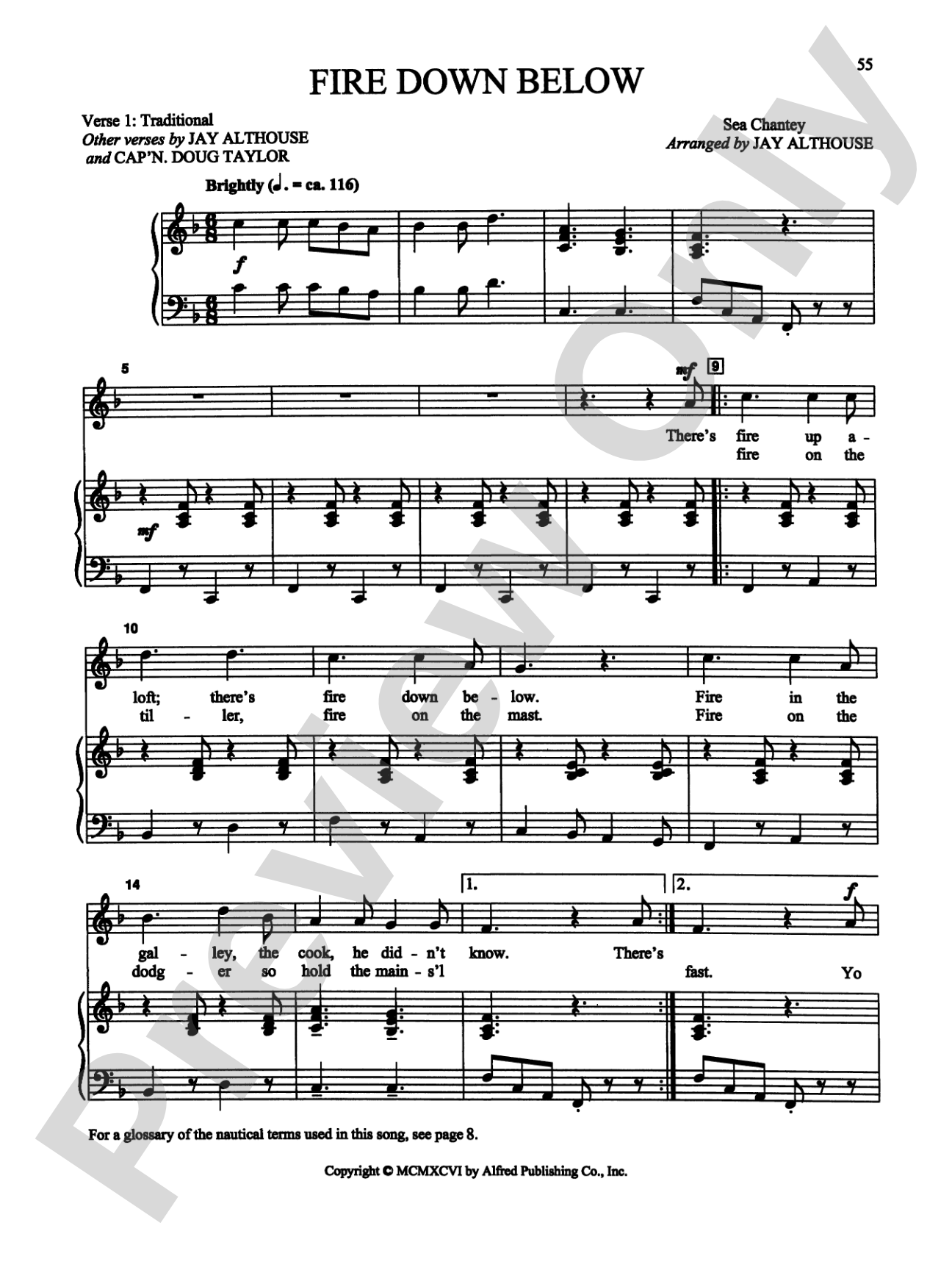
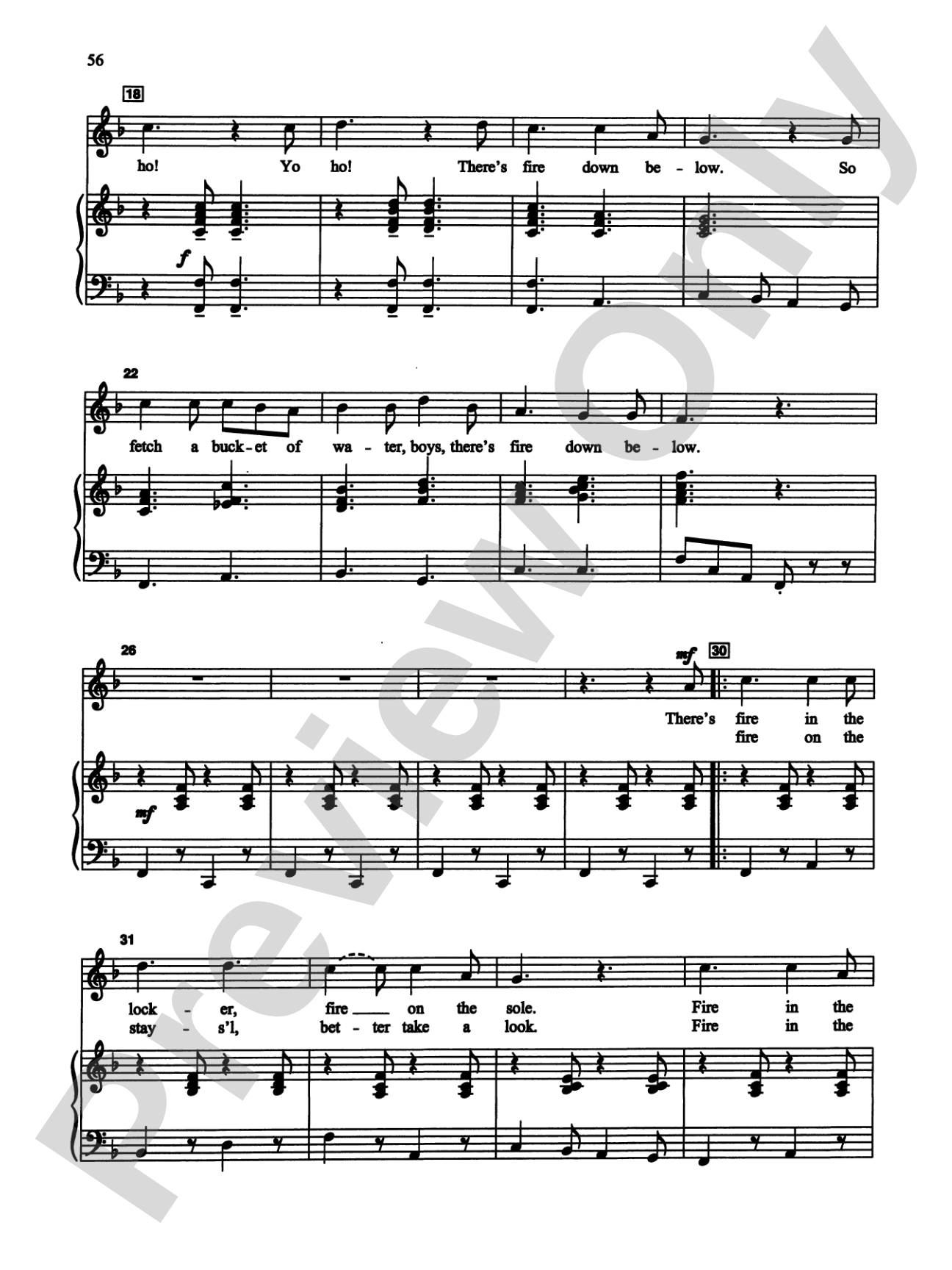

Fire Down Below - Piano/Vocal Solo (Medium High): Piano/Vocal Solo (Medium High)
14 Folk Songs Arranged for Solo Voice and Piano for Recitals, Concerts, and Contests
Compiled and ed. Jay Althouse
Item: 00-PS-0017648
$5.99
Pickup currently not available
Related Items
All My Trials - Piano/Vocal Solo (Medium High): Piano/Vocal Solo (Medium High) |
$4.99
|
View | |
All Through the Night - Piano/Vocal Solo (Medium High): Piano/Vocal Solo (Medium High) |
$4.99
|
View | |
Camptown Races - Piano/Vocal Solo (Medium High): Piano/Vocal Solo (Medium High) |
$4.99
|
View | |
Cindy - Piano/Vocal Solo (Medium High): Piano/Vocal Solo (Medium High) |
$5.99
|
View | |
Follow the Drinking Gourd - Piano/Vocal Solo (Medium High): Piano/Vocal Solo (Medium High) |
$4.99
|
View | |
Go 'Way from My Window - Piano/Vocal Solo (Medium High): Piano/Vocal Solo (Medium High) |
$4.99
|
View | |
He's Gone Away - Piano/Vocal Solo (Medium High): Piano/Vocal Solo (Medium High) |
$4.99
|
View | |
Old Dan Tucker - Piano/Vocal Solo (Medium High): Piano/Vocal Solo (Medium High) |
$5.99
|
View | |
Poor Boy - Piano/Vocal Solo (Medium High): Piano/Vocal Solo (Medium High) |
$4.99
|
View | |
Poor Wayfaring Stranger - Piano/Vocal Solo (Medium High): Piano/Vocal Solo (Medium High) |
$4.99
|
View | |
Shenandoah - Piano/Vocal Solo (Medium High): Piano/Vocal Solo (Medium High) |
$4.99
|
View | |
Simple Gifts - Piano/Vocal Solo (Medium High): Piano/Vocal Solo (Medium High) |
$4.99
|
View | |
The Water Is Wide - Piano/Vocal Solo (Medium High): Piano/Vocal Solo (Medium High) |
$4.99
|
View | |
All My Trials - Piano/Vocal Solo (Medium Low): Piano/Vocal Solo (Medium Low) |
$4.99
|
View | |
All Through the Night - Piano/Vocal Solo (Medium Low): Piano/Vocal Solo (Medium Low) |
$4.99
|
View | |
Camptown Races - Piano/Vocal Solo (Medium Low): Piano/Vocal Solo (Medium Low) |
$4.99
|
View | |
Cindy - Piano/Vocal Solo (Medium Low): Piano/Vocal Solo (Medium Low) |
$5.99
|
View | |
Fire Down Below - Piano/Vocal Solo (Medium Low): Piano/Vocal Solo (Medium Low) |
$5.99
|
View | |
Follow the Drinking Gourd - Piano/Vocal Solo (Medium Low): Piano/Vocal Solo (Medium Low) |
$4.99
|
View | |
Go 'Way from My Window - Piano/Vocal Solo (Medium Low): Piano/Vocal Solo (Medium Low) |
$4.99
|
View | |
He's Gone Away - Piano/Vocal Solo (Medium Low): Piano/Vocal Solo (Medium Low) |
$4.99
|
View | |
Old Dan Tucker - Piano/Vocal Solo (Medium Low): Piano/Vocal Solo (Medium Low) |
$5.99
|
View | |
Poor Boy - Piano/Vocal Solo (Medium Low): Piano/Vocal Solo (Medium Low) |
$4.99
|
View | |
Poor Wayfaring Stranger - Piano/Vocal Solo (Medium Low): Piano/Vocal Solo (Medium Low) |
$4.99
|
View | |
Shenandoah - Piano/Vocal Solo (Medium Low): Piano/Vocal Solo (Medium Low) |
$4.99
|
View | |
Simple Gifts - Piano/Vocal Solo (Medium Low): Piano/Vocal Solo (Medium Low) |
$4.99
|
View | |
The Water Is Wide - Piano/Vocal Solo (Medium Low): Piano/Vocal Solo (Medium Low) |
$4.99
|
View | |
Folk Songs for Solo Singers, Vol. 2: High Voice Book & Online Audio |
$26.99
|
View | |
Folk Songs for Solo Singers, Vol. 2: High Voice Book |
$15.99
|
View | |
Folk Songs for Solo Singers, Vol. 2: High Voice CD |
$16.99
|
View | |
Folk Songs for Solo Singers, Vol. 2: Medium High Voice Book & Online Audio |
$26.99
|
View | |
Folk Songs for Solo Singers, Vol. 2: Medium High Voice Book |
$15.99
|
View | |
Folk Songs for Solo Singers, Vol. 2: Medium High Voice CD |
$16.99
|
View | |
Folk Songs for Solo Singers, Vol. 2: Medium Low Voice Book & Online Audio |
$26.99
|
View | |
Folk Songs for Solo Singers, Vol. 2: Medium Low Voice Book |
$15.99
|
View | |
Folk Songs for Solo Singers, Vol. 2: Medium Low Voice CD |
$16.99
|
View |
Description
This volume of 14 best-loved folk songs for solo voice and piano contains memorable works arranged by three of Alfred Music's top writers: Jay Althouse, Mark Hayes and Ruth Elaine Schram. Titles: All My Trials * All Through the Night * Camptown Races * Cindy * Fire Down Below * Follow the Drinking Gourd * Go 'Way from My Window * He's Gone Away * Old Dan Tucker * Poor Boy * Poor Wayfaring Stranger * Shenandoah * Simple Gifts * The Water Is Wide. This title is available in MakeMusic Cloud.


Fire Down Below - Piano/Vocal Solo (Medium High): Piano/Vocal Solo (Medium High) isn't in MakeMusic Cloud just yet...but it could be. Let us know you'd like to see it, and you'll help shape what comes next. In the meantime, start a free trial and dive into thousands of interactive titles your students can play along with today.
Request This Title
Tell us you want it.
Start Your Free Trial
Explore everything that's ready to play right now.
Sample Audio
1
Audio File
--:--
0:00
0:00
Sample Video
No sample videos found.
Additional Details
Series:
For Solo Singers
Publisher:
Alfred Music
Page Count:
64
SKU:
00-PS-0017648
More about this title
About the Arranger: Jay Althouse

Jay Althouse studied music education and music at Indiana University of Pennsylvania, where he later earned recognition as a Distinguished Alumni award recipient. His career spans both the publishing industry, where he spent eight years managing rights and licenses and served on the Executive Board of the Music Publishers Association of America, and composition, resulting in more than 800 choral works performed throughout the English-speaking world.
As an ASCAP member and regular recipient of the ASCAP Special Award, Althouse has shaped music education through multiple channels: original compositions, vocal collections including Folk Songs for Solo Singers, co-authored pedagogical resources like The Complete Choral Warm-up Book and Accent on Composers, and classroom materials such as Ready to Read Music and Sixty Music Quizzes. His collaborative work with his wife Sally K. Albrecht includes children's musicals and I Hear America Singing, performed at President Obama's inauguration. Althouse serves on the National Advisory Board of the Folk Art Society of America and has contributed to its quarterly journal.
Why we love this
Althouse's arrangements honor the authenticity of these American folk songs while making them genuinely singable for solo voices in a recital setting. The collection draws from three master arrangers whose individual strengths complement each other, giving you 14 pieces with distinct musical personalities rather than a one-size-fits-all approach. For recital programs that need accessible but substantial folk material, this is repertoire singers enjoy learning and audiences recognize.
What to expect
These arrangements live in the genuine emotional territory of American folk music: spiritual yearning in "Poor Wayfaring Stranger," the wistfulness of "The Water Is Wide," the work-song energy of "Follow the Drinking Gourd." Each piece breathes with its own character while maintaining the accessibility and directness that makes folk song powerful.
Who it's for
Solo singers preparing recital repertoire in classical and folk music styles, from advanced students through professional performers. This collection serves singers who want substantial folk material that respects both the tradition and the solo voice, without requiring orchestration or ensemble accompaniment.
How to get the most out of it
- Study the lyrics and narrative of each song before diving into notes. Folk songs carry stories that shape phrasing and emotional weight; let the text guide your interpretation rather than overlaying a predetermined style.
- Balance the vocal line with the piano accompaniment rather than singing over it. These arrangements give the piano a genuine musical voice, and the most compelling performances happen when singer and pianist listen to each other throughout.
- Pay attention to the arrangement's harmonic language, which may shift between traditional and contemporary settings depending on the arranger. Let these harmonic choices inform your tone and approach rather than fighting against them.
- Use the variety among the 14 pieces to create contrast within your recital. Grouping them thematically (spirituals together, work songs together, or ballads together) gives shape to your program and helps audiences track the journey.
How to use it
Build an entire recital around these 14 songs, or select carefully curated groups to anchor a larger program that might include art songs or other American repertoire. These pieces also work well in concert settings where folk music is featured or celebrated, and they're strong choices for educational recitals that introduce audiences to the depth of American traditional music.
Skills your students will build
- Singing with expressive text interpretation and dialect awareness in American folk idioms
- Collaborating responsively with piano accompaniment
- Sustaining vocal energy across narrative-driven songs without dramatic over-singing
- Understanding how harmonic arrangement choices shape interpretation and emotional color
- Programming recitals with thematic coherence and structural balance