
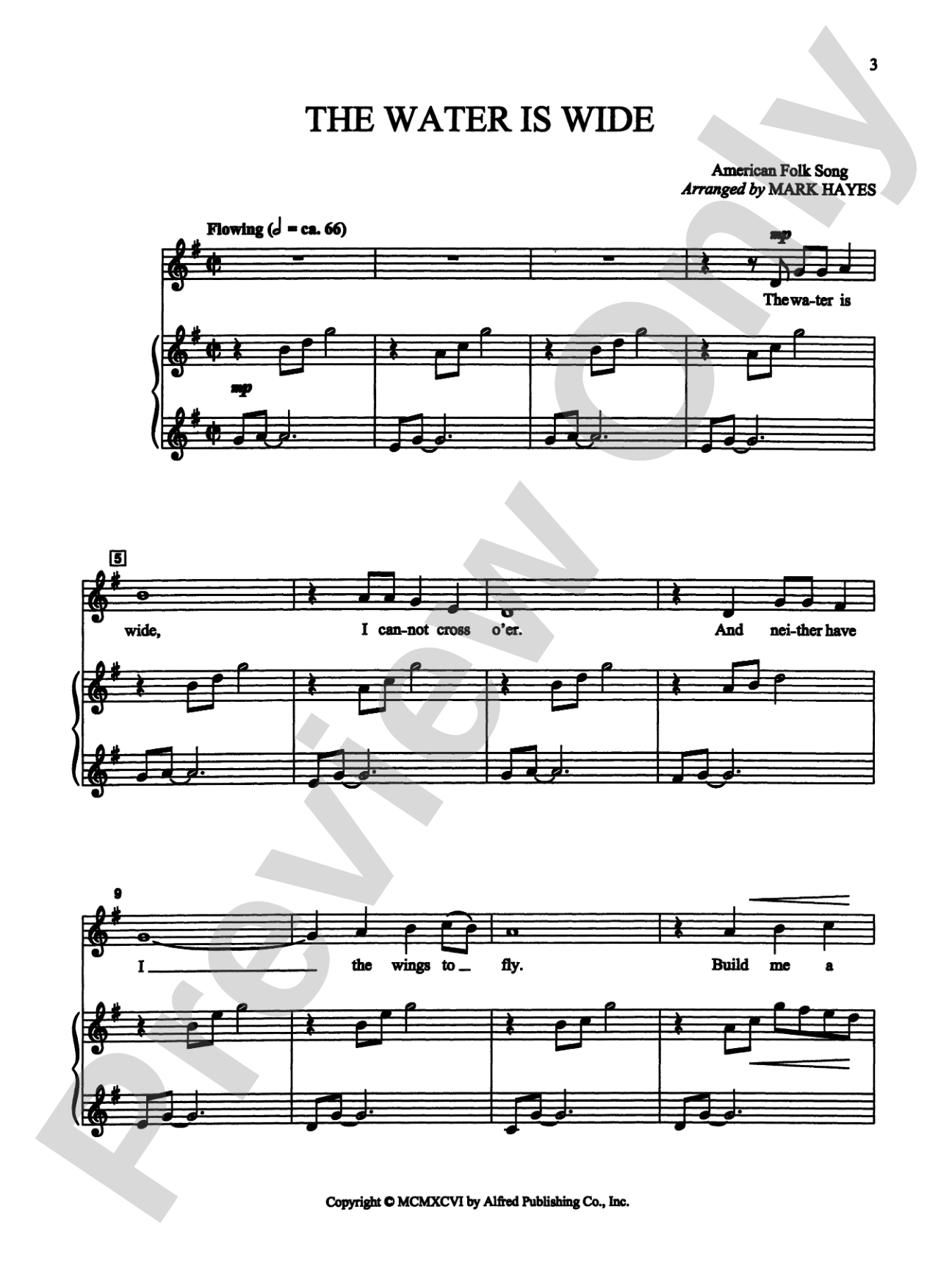

The Water Is Wide - Piano/Vocal Solo (Medium High): Piano/Vocal Solo (Medium High)
14 Folk Songs Arranged for Solo Voice and Piano for Recitals, Concerts, and Contests
Compiled and ed. Jay Althouse
Item: 00-PS-0017657
$4.99
Pickup currently not available
Related Items
All My Trials - Piano/Vocal Solo (Medium High): Piano/Vocal Solo (Medium High) |
$4.99
|
View | |
All Through the Night - Piano/Vocal Solo (Medium High): Piano/Vocal Solo (Medium High) |
$4.99
|
View | |
Camptown Races - Piano/Vocal Solo (Medium High): Piano/Vocal Solo (Medium High) |
$4.99
|
View | |
Cindy - Piano/Vocal Solo (Medium High): Piano/Vocal Solo (Medium High) |
$5.99
|
View | |
Fire Down Below - Piano/Vocal Solo (Medium High): Piano/Vocal Solo (Medium High) |
$5.99
|
View | |
Follow the Drinking Gourd - Piano/Vocal Solo (Medium High): Piano/Vocal Solo (Medium High) |
$4.99
|
View | |
Go 'Way from My Window - Piano/Vocal Solo (Medium High): Piano/Vocal Solo (Medium High) |
$4.99
|
View | |
He's Gone Away - Piano/Vocal Solo (Medium High): Piano/Vocal Solo (Medium High) |
$4.99
|
View | |
Old Dan Tucker - Piano/Vocal Solo (Medium High): Piano/Vocal Solo (Medium High) |
$5.99
|
View | |
Poor Boy - Piano/Vocal Solo (Medium High): Piano/Vocal Solo (Medium High) |
$4.99
|
View | |
Poor Wayfaring Stranger - Piano/Vocal Solo (Medium High): Piano/Vocal Solo (Medium High) |
$4.99
|
View | |
Shenandoah - Piano/Vocal Solo (Medium High): Piano/Vocal Solo (Medium High) |
$4.99
|
View | |
Simple Gifts - Piano/Vocal Solo (Medium High): Piano/Vocal Solo (Medium High) |
$4.99
|
View | |
All My Trials - Piano/Vocal Solo (Medium Low): Piano/Vocal Solo (Medium Low) |
$4.99
|
View | |
All Through the Night - Piano/Vocal Solo (Medium Low): Piano/Vocal Solo (Medium Low) |
$4.99
|
View | |
Camptown Races - Piano/Vocal Solo (Medium Low): Piano/Vocal Solo (Medium Low) |
$4.99
|
View | |
Cindy - Piano/Vocal Solo (Medium Low): Piano/Vocal Solo (Medium Low) |
$5.99
|
View | |
Fire Down Below - Piano/Vocal Solo (Medium Low): Piano/Vocal Solo (Medium Low) |
$5.99
|
View | |
Follow the Drinking Gourd - Piano/Vocal Solo (Medium Low): Piano/Vocal Solo (Medium Low) |
$4.99
|
View | |
Go 'Way from My Window - Piano/Vocal Solo (Medium Low): Piano/Vocal Solo (Medium Low) |
$4.99
|
View | |
He's Gone Away - Piano/Vocal Solo (Medium Low): Piano/Vocal Solo (Medium Low) |
$4.99
|
View | |
Old Dan Tucker - Piano/Vocal Solo (Medium Low): Piano/Vocal Solo (Medium Low) |
$5.99
|
View | |
Poor Boy - Piano/Vocal Solo (Medium Low): Piano/Vocal Solo (Medium Low) |
$4.99
|
View | |
Poor Wayfaring Stranger - Piano/Vocal Solo (Medium Low): Piano/Vocal Solo (Medium Low) |
$4.99
|
View | |
Shenandoah - Piano/Vocal Solo (Medium Low): Piano/Vocal Solo (Medium Low) |
$4.99
|
View | |
Simple Gifts - Piano/Vocal Solo (Medium Low): Piano/Vocal Solo (Medium Low) |
$4.99
|
View | |
The Water Is Wide - Piano/Vocal Solo (Medium Low): Piano/Vocal Solo (Medium Low) |
$4.99
|
View | |
Folk Songs for Solo Singers, Vol. 2: High Voice Book & Online Audio |
$26.99
|
View | |
Folk Songs for Solo Singers, Vol. 2: High Voice Book |
$15.99
|
View | |
Folk Songs for Solo Singers, Vol. 2: High Voice CD |
$16.99
|
View | |
Folk Songs for Solo Singers, Vol. 2: Medium High Voice Book & Online Audio |
$26.99
|
View | |
Folk Songs for Solo Singers, Vol. 2: Medium High Voice Book |
$15.99
|
View | |
Folk Songs for Solo Singers, Vol. 2: Medium High Voice CD |
$16.99
|
View | |
Folk Songs for Solo Singers, Vol. 2: Medium Low Voice Book & Online Audio |
$26.99
|
View | |
Folk Songs for Solo Singers, Vol. 2: Medium Low Voice Book |
$15.99
|
View | |
Folk Songs for Solo Singers, Vol. 2: Medium Low Voice CD |
$16.99
|
View |
Description
This volume of 14 best-loved folk songs for solo voice and piano contains memorable works arranged by three of Alfred Music's top writers: Jay Althouse, Mark Hayes and Ruth Elaine Schram. Titles: All My Trials * All Through the Night * Camptown Races * Cindy * Fire Down Below * Follow the Drinking Gourd * Go 'Way from My Window * He's Gone Away * Old Dan Tucker * Poor Boy * Poor Wayfaring Stranger * Shenandoah * Simple Gifts * The Water Is Wide. This title is available in MakeMusic Cloud.


The Water Is Wide - Piano/Vocal Solo (Medium High): Piano/Vocal Solo (Medium High) isn't in MakeMusic Cloud just yet...but it could be. Let us know you'd like to see it, and you'll help shape what comes next. In the meantime, start a free trial and dive into thousands of interactive titles your students can play along with today.
Request This Title
Tell us you want it.
Start Your Free Trial
Explore everything that's ready to play right now.
Sample Audio
1
Audio File
--:--
0:00
0:00
Sample Video
No sample videos found.
Additional Details
Series:
For Solo Singers
Publisher:
Alfred Music
Page Count:
64
SKU:
00-PS-0017657
More about this title
About the Arranger: Mark Hayes
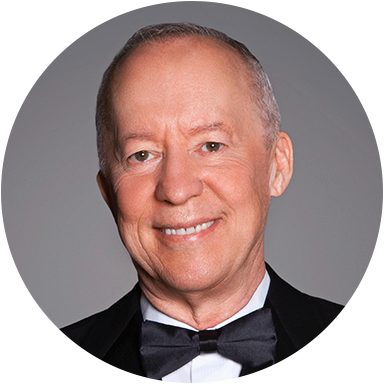
Mark Hayes brings three decades of composition and arrangement experience to every project. A summa cum laude graduate of Baylor University's Piano Performance program, he has conducted premieres at Lincoln Center and Carnegie Hall, and his catalog spans over 1,750 published works across classical, sacred, jazz, and theatrical idioms.
Hayes earned the 2010 Award for Exemplary Leadership in Christian Music from Baylor University's Center for Christian Music Studies. His arrangement work extends from choral settings to orchestrations for musical theater, and he maintains a particular passion for piano writing, with more than 100 piano volumes in print. Whether commissioned for institutional anniversaries or creating concert music for worldwide performance, Hayes prioritizes accessibility without sacrificing musical substance.
Why we love this
Hayes selected folk repertoire with recital performance in mind, giving each arrangement a piano part that feels like a full concert piece rather than simple accompaniment. The variety across 14 songs means singers can build a mixed program that tells a narrative, moving from American spirituals to Appalachian melodies to work songs, all within a single collection.
What to expect
These arrangements honor folk tradition while creating something refined for the concert stage. The piano writing brings unexpected harmonic depth to familiar melodies, transforming simple songs into small dramatic moments that feel both intimate and universally resonant.
Who it's for
Solo singers preparing for recital or festival performance in the intermediate range will find well-crafted, singable arrangements that stand up in formal concert settings. Voice teachers seeking repertoire that combines cultural substance with good vocal writing will appreciate how these songs develop musicianship without excessive technical demands.
How to get the most out of it
- Study the piano part independently before singing through it. Hayes often uses the accompaniment to establish harmonic color and emotional tone, so understanding what the pianist is doing will sharpen your phrasing.
- Let the arrangement guide your vocal approach. Some titles invite a direct, narrative delivery; others (like the spiritual arrangements) benefit from a more lyrical, sustained line. Notice where Hayes emphasizes folk simplicity versus where he adds harmonic sophistication.
- Work with your accompanist on tempo flexibility. Many folk songs benefit from gentle rubato, especially in the verses. Hayes's arrangements often support this kind of interpretive breathing.
- Pay attention to dynamics within the vocal line itself. Hayes frequently uses subtle dynamic shaping to highlight emotional peaks without requiring constant loud singing.
How to use it
Build an entire recital around this collection, programming songs thematically (spirituals together, work songs together, love songs together) to create narrative arc. Alternatively, select individual titles to fill out a mixed recital alongside art songs and other genres, using these pieces as stylistic counterpoint.
Skills your students will build
- Singing with accurate text delivery across varied American regional dialects and vernacular language
- Responding to harmonic complexity and chromatic movement in accompaniment
- Sustaining long melodic lines through folk repertoire's frequent use of limited range
- Interpreting lyrics with dramatic awareness and emotional specificity
- Adjusting vibrato and tone quality to suit different folk idioms and emotional contexts