
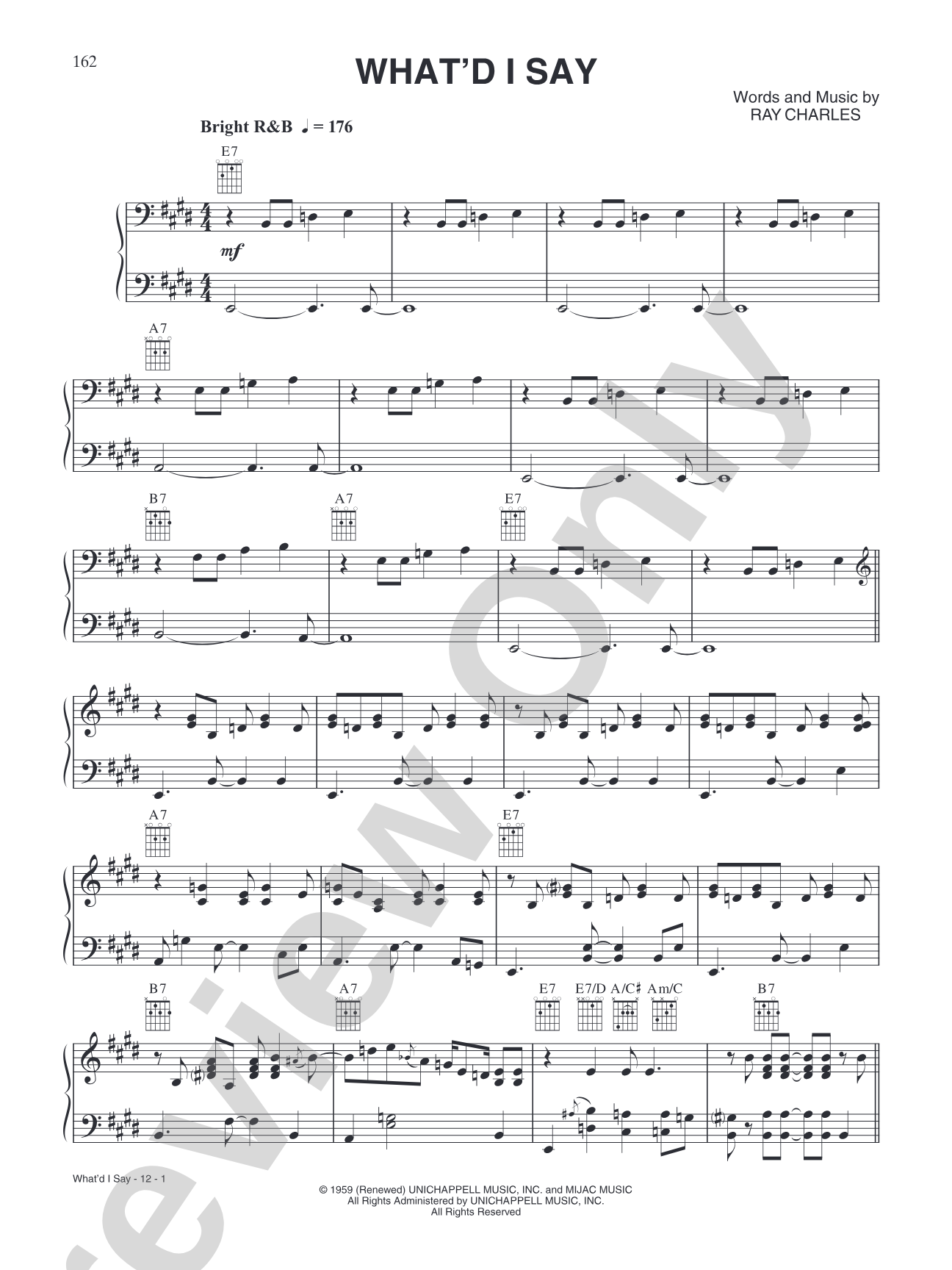
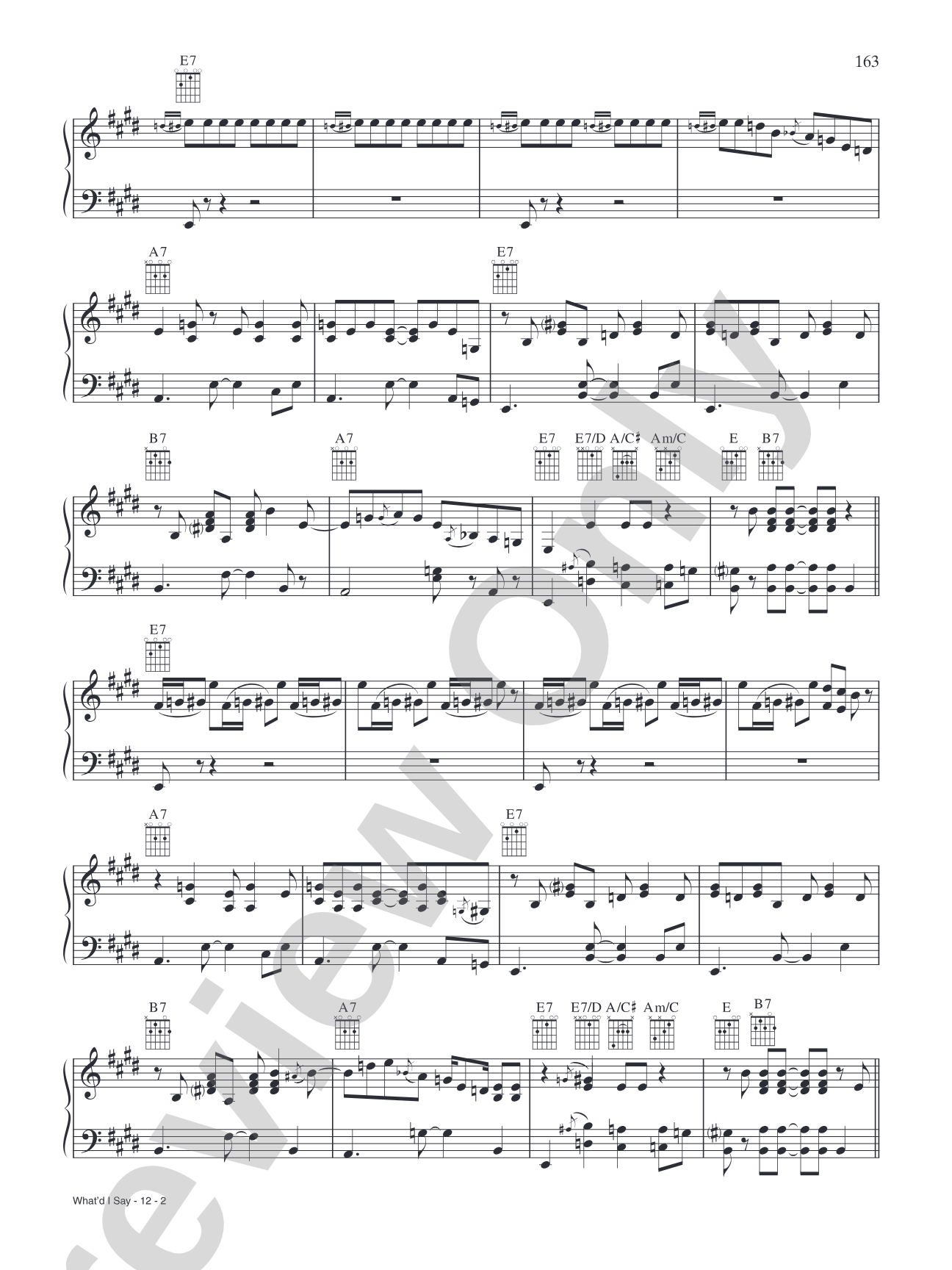
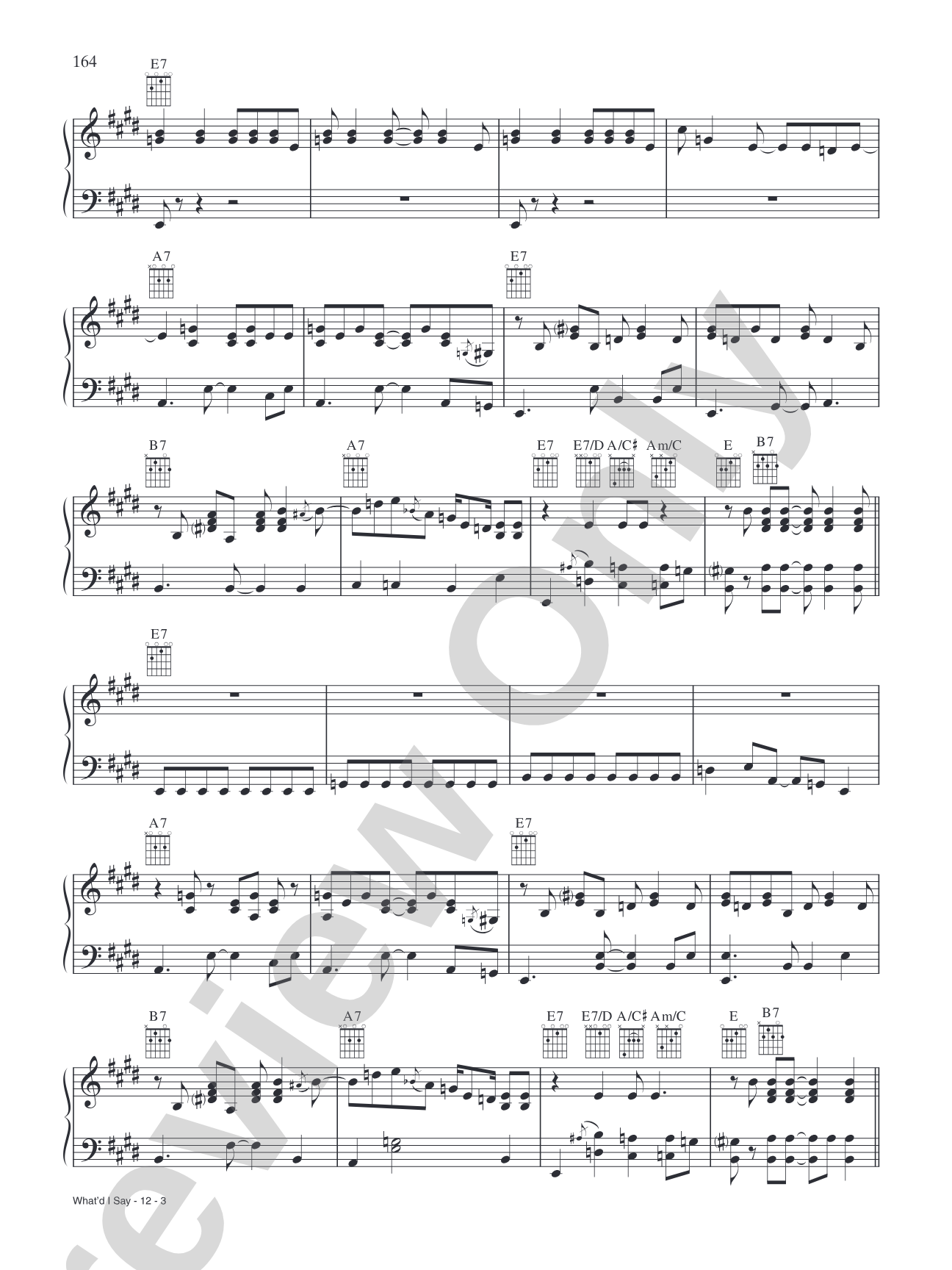

What'd I Say: Piano/Vocal/Chords
Ray Charles
Item: 00-PS-0013232
$9.99
One moment…
Related Items
Hallelujah I Love Her So: Piano/Vocal/Chords |
$5.99
|
View | |
That Lucky Old Sun: Piano/Vocal/Chords |
$5.99
|
View | |
Let the Good Times Roll: Piano/Vocal/Chords |
$5.99
|
View | |
Over the Rainbow: Piano/Vocal/Chords |
$4.99
|
View | |
Ruby: Piano/Vocal/Chords |
$5.99
|
View | |
Ain't That Love: Piano/Vocal/Chords |
$4.99
|
View | |
I've Got a Woman: Piano/Vocal/Chords |
$5.99
|
View | |
Mary Ann: Piano/Vocal/Chords |
$5.99
|
View | |
Mess Around: Piano/Vocal/Chords |
$5.99
|
View | |
One Mine Julep: Piano/Vocal/Chords |
$4.99
|
View | |
Sinner's Prayer: Piano/Vocal/Chords |
$5.99
|
View | |
This Little Girl of Mine: Piano/Vocal/Chords |
$5.99
|
View | |
Crazy Love: Piano/Vocal/Chords |
$5.99
|
View | |
Let's Go Get Stoned: Piano/Vocal/Chords |
$5.99
|
View | |
Seven Spanish Angels: Piano/Vocal/Chords |
$4.99
|
View | |
Come Rain Or Come Shine: Piano/Vocal/Chords |
$5.99
|
View | |
America the Beautful: Piano/Vocal/Chords |
$4.99
|
View |
Description
This collectible songbook celebrates the enduring legacy of Ray Charles at the 80th anniversary of his birth. Each sheet music transcription accurately renders his signature piano riffs and solos, and provides lyrics, vocal melodies, and chord changes. Ray Charles had three simple words of advice for achieving success: "Practice, practice, practice." With 28 fun and challenging transcriptions of some of popular music's most enduring standards, this collection gives pianists the opportunity to practice the techniques of the "Genius" himself. Titles: * Ain't That Love * America the Beautiful * Busted * Christmas in My Heart * Come Rain or Come Shine * Crazy Love * Georgia on My Mind * Hallelujah I Love Her So * Here We Go Again * Hit the Road Jack * I Can't Stop Loving You * I've Got a Woman * Let the Good Times Roll * Let's Go Get Stoned * Mary Ann * Mess Around * Night Time Is the Right Time * One Mint Julep * Over the Rainbow * Ruby * Seven Spanish Angels * Sinner's Prayer * That Lucky Old Sun * That Spirit of Christmas * This Little Girl of Mine * Unchain My Heart * What'd I Say * You Don't Know Me.


What'd I Say: Piano/Vocal/Chords isn't in MakeMusic Cloud just yet...but it could be. Let us know you'd like to see it, and you'll help shape what comes next. In the meantime, start a free trial and dive into thousands of interactive titles your students can play along with today.
Request This Title
Tell us you want it.
Start Your Free Trial
Explore everything that's ready to play right now.
Sample Audio
No sample audio found.
Sample Video
No sample videos found.
Additional Details
Publisher:
Alfred Music
Page Count:
180
SKU:
00-PS-0013232
More about this title
About the Composer: Ray Charles
Ray Charles (1930-2004) fundamentally changed American music by erasing the boundaries between blues, jazz, gospel, and country. Born in Albany, Georgia, and blind from childhood, he became one of the most influential pianists and bandleaders of the 20th century, commanding the keyboard with technical brilliance and emotional depth. His approach to arrangement, his ability to bend melody and harmony toward expressive ends, and his relentless work ethic made him a model for serious musicians across every genre.
For music educators, Ray Charles represents a masterclass in how technique serves emotion. His piano playing combined stride bass patterns with jazz harmonies and blues vocabulary, creating a sound that was unmistakably his own. Teachers and students who engage with his transcriptions gain insight into improvisation, voice leading, and the art of making a song your own.
Why we love this
This collection gives pianists direct access to Ray Charles' compositional and arranging vocabulary at exactly the moment they're ready to move beyond standard repertoire. The transcriptions capture his signature piano work, not simplified versions, so students learn authentic jazz and blues techniques in context. With 28 titles spanning blues, standards, and original songs, there's enough variety to support a year's worth of recital preparation or casual exploration.
What to expect
Raw and soulful, with a swagger that comes from complete command of the keyboard. These songs swing with ease, cry with conviction, and celebrate life with infectious energy. The piano work carries the weight of gospel tradition, the sophistication of jazz harmony, and the uncomplicated truth of the blues.
Who it's for
Intermediate to advanced pianists who want to expand their jazz and blues vocabulary and learn from one of the greatest voices in American music. Vocalists preparing piano-vocal versions of these standards will find accurate transcriptions of Ray Charles' iconic arrangements. Music students and teachers seeking authentic examples of jazz piano technique and blues form will find 28 masterclasses in one collection.
How to get the most out of it
- Study the stride bass patterns carefully before adding the right hand; Ray Charles built his sound on a foundation of strong, syncopated left-hand work that drives the groove.
- Listen to the original recordings while learning; the transcriptions preserve his notes, but his touch, timing, and dynamics reveal interpretive choices that sheet music alone cannot capture.
- Treat the chord changes as suggestions for voicing and reharmonization, not restrictions. Ray Charles constantly recolored chords to match his emotional intent, and you should do the same once you know the tune.
- Balance the vocal melody with the piano riffs rather than treating them as separate layers; many of these arrangements blur the line between accompaniment and countermelody.
How to use it
Build a recital around Ray Charles' original compositions and arrangements, curating a program that traces his influence across American musical traditions. Use individual transcriptions as study pieces in jazz piano or popular music classes to examine how a great arranger voices chords and builds texture. Select a handful of titles for a tribute concert or special anniversary program celebrating American songwriting.
Skills your students will build
- Stride bass and left-hand independence in jazz and blues contexts
- Jazz chord voicings and reharmonization techniques
- Blues form and 12-bar structure
- Rhythmic flexibility and swing phrasing at the keyboard
- Integration of melody, countermelody, and harmonic accompaniment
- Reading and performing from lead sheet notation with accuracy