
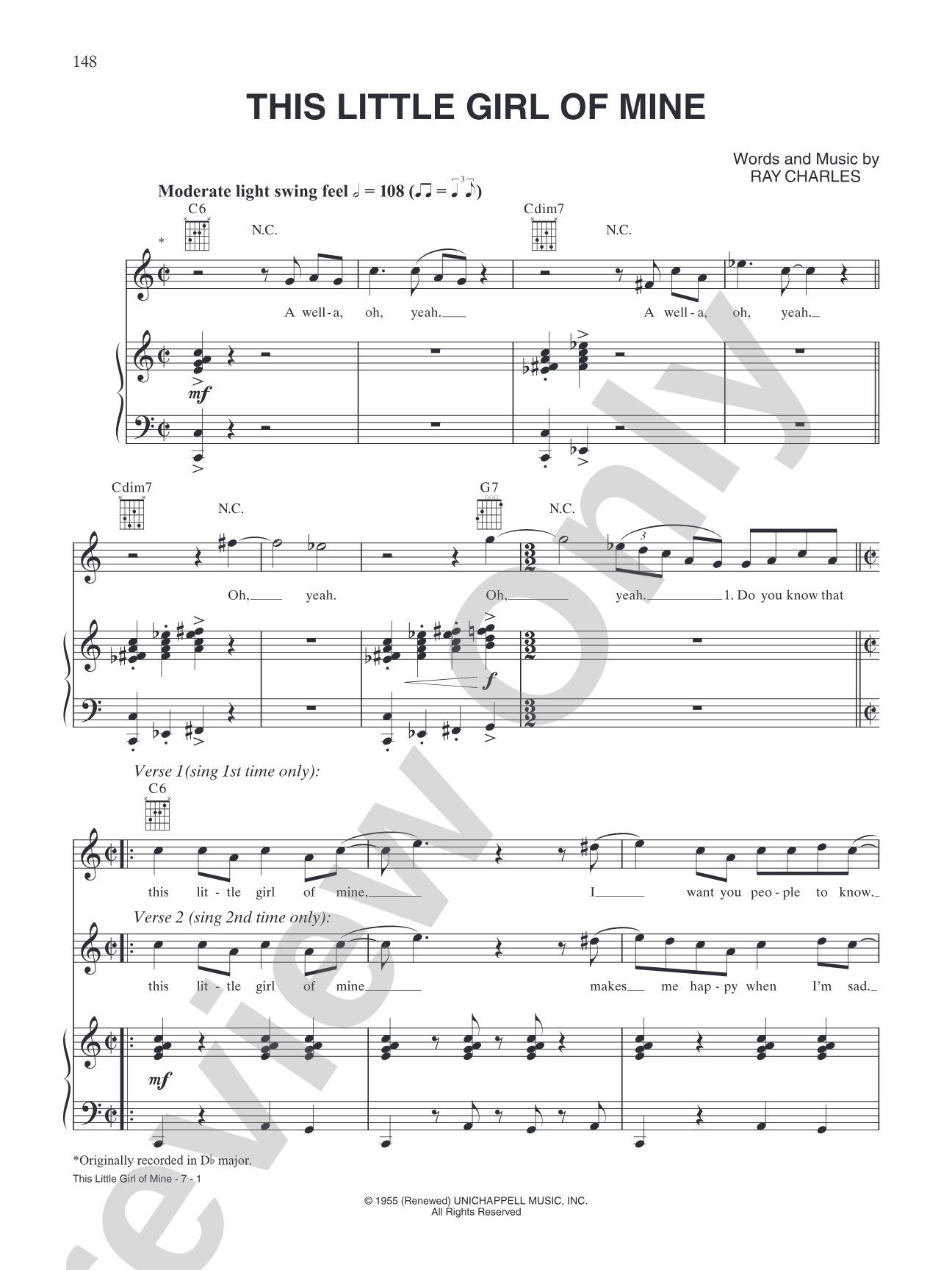
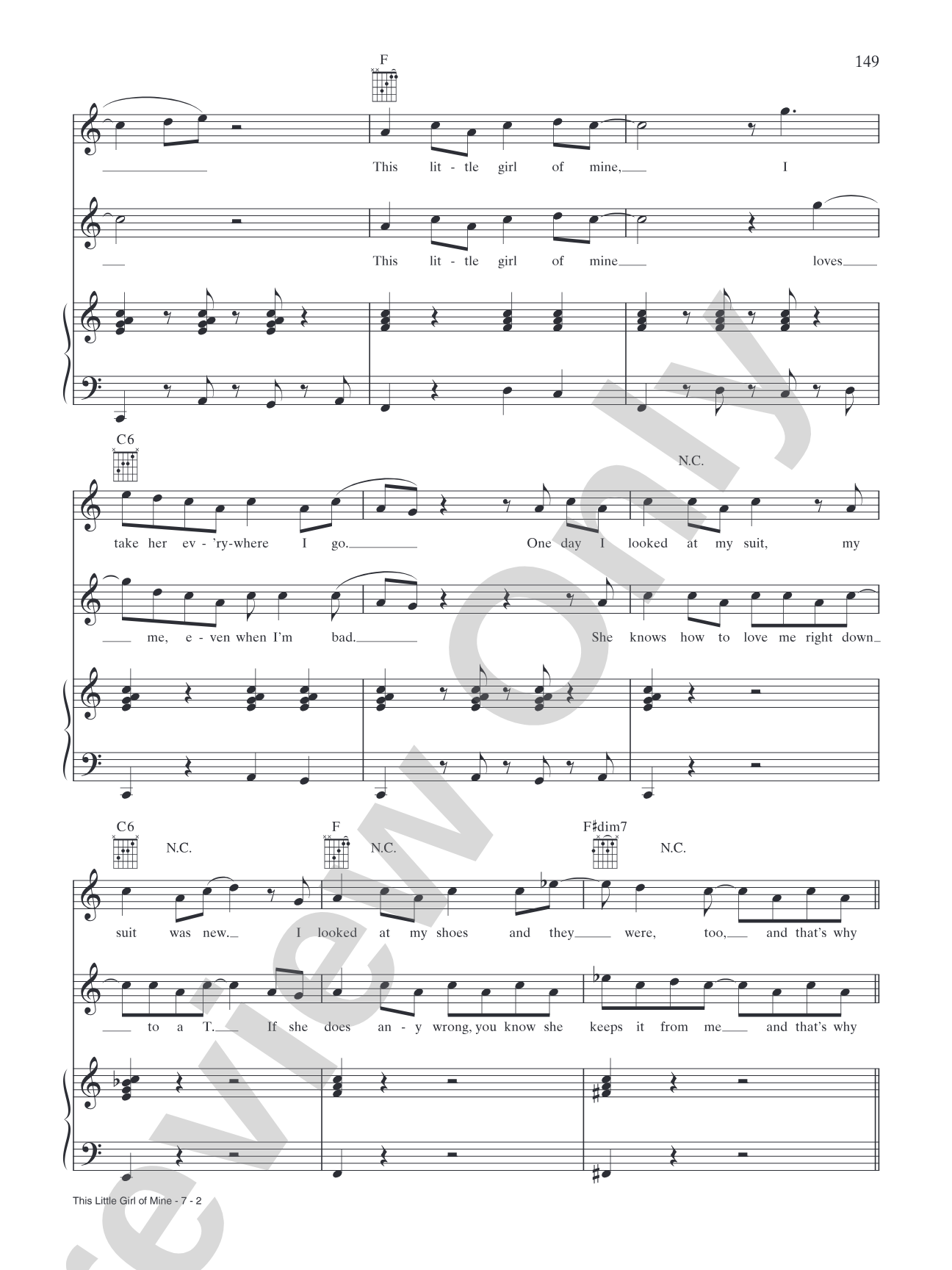

This Little Girl of Mine: Piano/Vocal/Chords
Ray Charles
Item: 00-PS-0013242
$5.99
One moment…
Related Items
Hallelujah I Love Her So: Piano/Vocal/Chords |
$5.99
|
View | |
That Lucky Old Sun: Piano/Vocal/Chords |
$5.99
|
View | |
What'd I Say: Piano/Vocal/Chords |
$9.99
|
View | |
Let the Good Times Roll: Piano/Vocal/Chords |
$5.99
|
View | |
Over the Rainbow: Piano/Vocal/Chords |
$4.99
|
View | |
Ruby: Piano/Vocal/Chords |
$5.99
|
View | |
Ain't That Love: Piano/Vocal/Chords |
$4.99
|
View | |
I've Got a Woman: Piano/Vocal/Chords |
$5.99
|
View | |
Mary Ann: Piano/Vocal/Chords |
$5.99
|
View | |
Mess Around: Piano/Vocal/Chords |
$5.99
|
View | |
One Mine Julep: Piano/Vocal/Chords |
$4.99
|
View | |
Sinner's Prayer: Piano/Vocal/Chords |
$5.99
|
View | |
Crazy Love: Piano/Vocal/Chords |
$5.99
|
View | |
Let's Go Get Stoned: Piano/Vocal/Chords |
$5.99
|
View | |
Seven Spanish Angels: Piano/Vocal/Chords |
$4.99
|
View | |
Come Rain Or Come Shine: Piano/Vocal/Chords |
$5.99
|
View | |
America the Beautful: Piano/Vocal/Chords |
$4.99
|
View |
Description
This collectible songbook celebrates the enduring legacy of Ray Charles at the 80th anniversary of his birth. Each sheet music transcription accurately renders his signature piano riffs and solos, and provides lyrics, vocal melodies, and chord changes. Ray Charles had three simple words of advice for achieving success: "Practice, practice, practice." With 28 fun and challenging transcriptions of some of popular music's most enduring standards, this collection gives pianists the opportunity to practice the techniques of the "Genius" himself. Titles: * Ain't That Love * America the Beautiful * Busted * Christmas in My Heart * Come Rain or Come Shine * Crazy Love * Georgia on My Mind * Hallelujah I Love Her So * Here We Go Again * Hit the Road Jack * I Can't Stop Loving You * I've Got a Woman * Let the Good Times Roll * Let's Go Get Stoned * Mary Ann * Mess Around * Night Time Is the Right Time * One Mint Julep * Over the Rainbow * Ruby * Seven Spanish Angels * Sinner's Prayer * That Lucky Old Sun * That Spirit of Christmas * This Little Girl of Mine * Unchain My Heart * What'd I Say * You Don't Know Me.


Discover MakeMusic Cloud: thousands of interactive titles your students can play along with today.
Sample Audio
No sample audio found.
Sample Video
No sample videos found.
Additional Details
Publisher:
Alfred Music
Page Count:
180
SKU:
00-PS-0013242
More about this title
About the Composer: Ray Charles
Ray Charles (1930-2004) revolutionized American music by fusing blues, gospel, jazz, and country into a deeply personal artistic vision. A pianist and vocalist of unparalleled expressiveness, he became known as the "Genius" for his ability to transform any song, regardless of genre, into something distinctly his own. His impact extends far beyond performance; his approach to improvisation, harmonic reharmonization, and the integration of gospel feeling into secular material became a blueprint for generations of musicians across multiple genres.
Why we love this
Ray Charles's arrangements reveal how a master musician thinks through a tune. By studying his piano voicings, reharmonizations, and the placement of melody against accompaniment, students gain insight into sophisticated jazz arranging principles applied to standards and blues. The collection spans enough stylistic ground that pianists encounter blues shuffle, swing feel, ballad accompaniment, and gospel-influenced reductions all in one book.
What to expect
These pieces swing with understated elegance and grit. You'll encounter the earthiness of blues shuffle alongside the sophistication of reharmonized standards, woven together by Ray Charles's unmistakable voice and the warmth of his gospel-inflected piano playing. There's joy in the rhythm, soulfulness in the ballads, and always a sense that you're learning from someone who understood how to make a song truly sing.
Who it's for
Pianists seeking a deep dive into the language of blues and jazz standards will find 28 expertly transcribed arrangements of Ray Charles compositions and interpretations. Whether you're preparing for a jazz audition, building your jazz repertoire, or simply wanting to understand how a genre-defining pianist approaches melody and harmony, this collection provides both the notes and the road map.
How to get the most out of it
- Isolate the left-hand piano voicings first. Ray Charles's chord work is the foundation; once those feel natural under your fingers, the right-hand melody and vocal line will sit more naturally.
- Listen to the original recordings while practicing. His interpretive choices (rubato, phrasing, dynamics) are rarely obvious on the page alone, and hearing how he breathes a phrase will inform your own execution.
- Don't rush the tempo, especially on ballads. Many of these transcriptions benefit from space and a relaxed feel; precision matters less than the groove and soulful phrasing.
- Use the chord changes as a guide for comping variations. These transcriptions capture his recorded solos, but the chord symbols give you permission to explore your own voicings once you've learned the chart.
How to use it
Feature individual transcriptions as recital solos that showcase different facets of jazz and blues piano. Pair selections with vocal students who want to study Ray Charles's interpretations of standards like "Georgia on My Mind" or "Unchain My Heart." The range of tempos and styles makes this collection ideal for a pianist building a varied concert program that touches blues, jazz, and American songbook repertoire.
Skills your students will build
- Jazz comping and left-hand voicing techniques
- Reading chord changes and realizing them idiomatically
- Interpreting blues shuffle and swing feels
- Balancing transcribed solos with improvisation opportunities
- Phrasing and dynamics in ballad settings
- Gospel-influenced harmonic reharmonization