
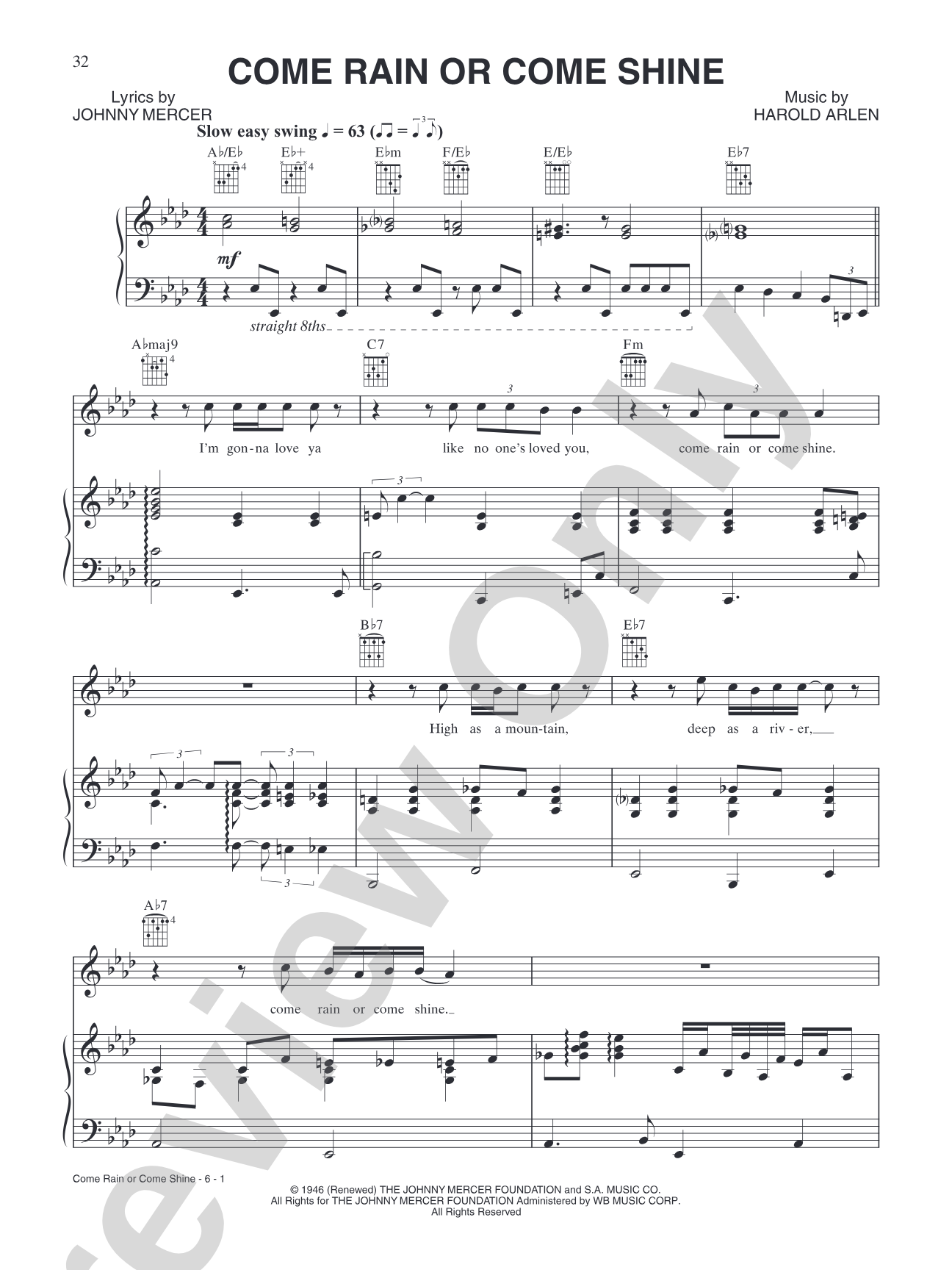
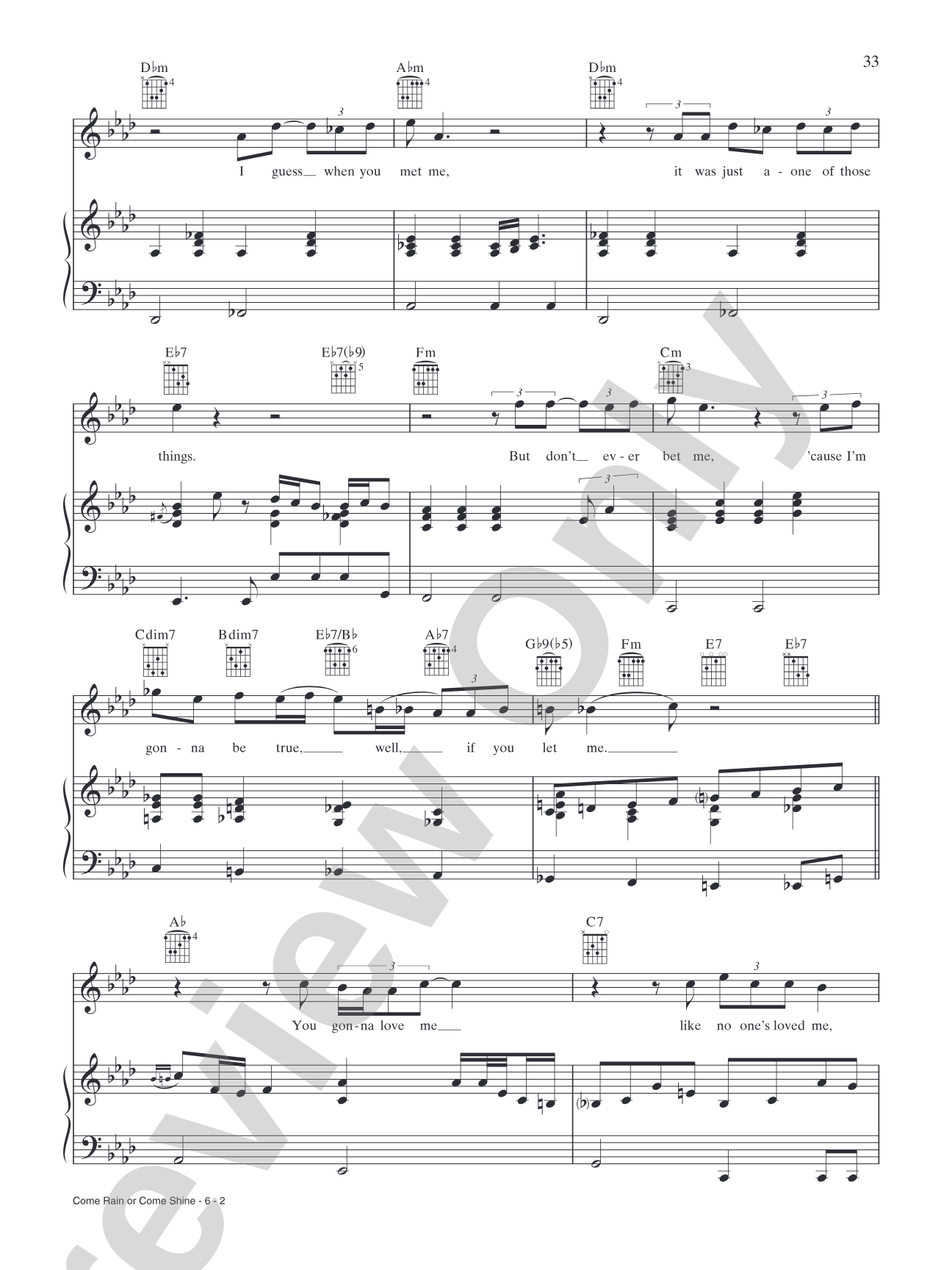

Come Rain Or Come Shine: Piano/Vocal/Chords
Ray Charles
Item: 00-PS-0013248
$5.99
One moment…
Related Items
Hallelujah I Love Her So: Piano/Vocal/Chords |
$5.99
|
View | |
That Lucky Old Sun: Piano/Vocal/Chords |
$5.99
|
View | |
What'd I Say: Piano/Vocal/Chords |
$9.99
|
View | |
Let the Good Times Roll: Piano/Vocal/Chords |
$5.99
|
View | |
Over the Rainbow: Piano/Vocal/Chords |
$4.99
|
View | |
Ruby: Piano/Vocal/Chords |
$5.99
|
View | |
Ain't That Love: Piano/Vocal/Chords |
$4.99
|
View | |
I've Got a Woman: Piano/Vocal/Chords |
$5.99
|
View | |
Mary Ann: Piano/Vocal/Chords |
$5.99
|
View | |
Mess Around: Piano/Vocal/Chords |
$5.99
|
View | |
One Mine Julep: Piano/Vocal/Chords |
$4.99
|
View | |
Sinner's Prayer: Piano/Vocal/Chords |
$5.99
|
View | |
This Little Girl of Mine: Piano/Vocal/Chords |
$5.99
|
View | |
Crazy Love: Piano/Vocal/Chords |
$5.99
|
View | |
Let's Go Get Stoned: Piano/Vocal/Chords |
$5.99
|
View | |
Seven Spanish Angels: Piano/Vocal/Chords |
$4.99
|
View | |
America the Beautful: Piano/Vocal/Chords |
$4.99
|
View |
Description
This collectible songbook celebrates the enduring legacy of Ray Charles at the 80th anniversary of his birth. Each sheet music transcription accurately renders his signature piano riffs and solos, and provides lyrics, vocal melodies, and chord changes. Ray Charles had three simple words of advice for achieving success: "Practice, practice, practice." With 28 fun and challenging transcriptions of some of popular music's most enduring standards, this collection gives pianists the opportunity to practice the techniques of the "Genius" himself. Titles: * Ain't That Love * America the Beautiful * Busted * Christmas in My Heart * Come Rain or Come Shine * Crazy Love * Georgia on My Mind * Hallelujah I Love Her So * Here We Go Again * Hit the Road Jack * I Can't Stop Loving You * I've Got a Woman * Let the Good Times Roll * Let's Go Get Stoned * Mary Ann * Mess Around * Night Time Is the Right Time * One Mint Julep * Over the Rainbow * Ruby * Seven Spanish Angels * Sinner's Prayer * That Lucky Old Sun * That Spirit of Christmas * This Little Girl of Mine * Unchain My Heart * What'd I Say * You Don't Know Me.


Come Rain Or Come Shine: Piano/Vocal/Chords isn't in MakeMusic Cloud just yet...but it could be. Let us know you'd like to see it, and you'll help shape what comes next. In the meantime, start a free trial and dive into thousands of interactive titles your students can play along with today.
Request This Title
Tell us you want it.
Start Your Free Trial
Explore everything that's ready to play right now.
Sample Audio
No sample audio found.
Sample Video
No sample videos found.
Additional Details
Publisher:
Alfred Music
Page Count:
180
SKU:
00-PS-0013248
More about this title
About the Composer: Harold Arlen
Harold Arlen (1905-1986) composed some of the most memorable melodies in American popular music, including standards from classic Hollywood films and Broadway productions. His gift for crafting singable, emotionally direct melodies made his work an ideal vehicle for interpreters across every genre, from jazz to R&B to pop. Ray Charles's interpretations of Arlen compositions showcase the composer's ability to write music that invites deep personal expression while remaining rooted in clear harmonic and melodic architecture.
Why we love this
Ray Charles's arrangements and interpretations reveal the harmonic sophistication and rhythmic flexibility hidden inside these standards. Pianists gain direct access to his signature comping patterns, walking bass lines, and the way he builds tension and release through voicing choices. Teaching from these transcriptions shows students how a master player transforms a lead sheet into something that feels inevitable and entirely personal.
What to expect
Soulful, grounded, and thoroughly human. These transcriptions capture Ray Charles's ability to find the emotional core of a song while never losing sight of the groove. The music swings, burns, and invites you into a world where technical mastery serves genuine feeling.
Who it's for
Pianists who want to deepen their understanding of jazz comping, blues voicings, and arranging by learning directly from one of popular music's greatest interpreters. Singers and guitarists working through the standards repertoire will find accurate transcriptions of how Ray Charles voiced these songs, offering fresh harmonic possibilities beyond typical lead sheet arrangements.
How to get the most out of it
- Study the chord voicings carefully before worrying about tempo. Ray Charles's sophistication lies in how he voices triads and sevenths, not just the notes he plays. Slow practice of the comping patterns trains your ear and hands simultaneously.
- Listen to multiple recordings of the same tune if possible. Charles recorded many of these standards across different decades and contexts, and comparing versions reveals his approach to reharmonization and spontaneous variation.
- Don't rush the blues and jazz inflections. Triplet feels, bent notes, and the space between phrases are written here, but they require time to internalize. Play the written rhythms first, then add the swing.
- Balance melody and accompaniment by thinking in layers. The piano riff is often as important as the vocal line. Work both hands separately until each layer is secure.
How to use it
Build a jazz or American songbook recital around a selection of these transcriptions, programming them alongside other interpretations to highlight how standards can be approached from different angles. Use individual transcriptions as study pieces in a jazz piano or vocal course, analyzing how Ray Charles solved specific harmonic or rhythmic problems that students will encounter in their own playing.
Skills your students will build
- Reading and interpreting jazz voicings and chord extensions
- Blues and swing rhythmic interpretation
- Balancing written melody with comping patterns
- Understanding how arrangers adapt standards through reharmonization
- Left-hand independence and bass line construction
- Transcribing style elements from a recorded performance