
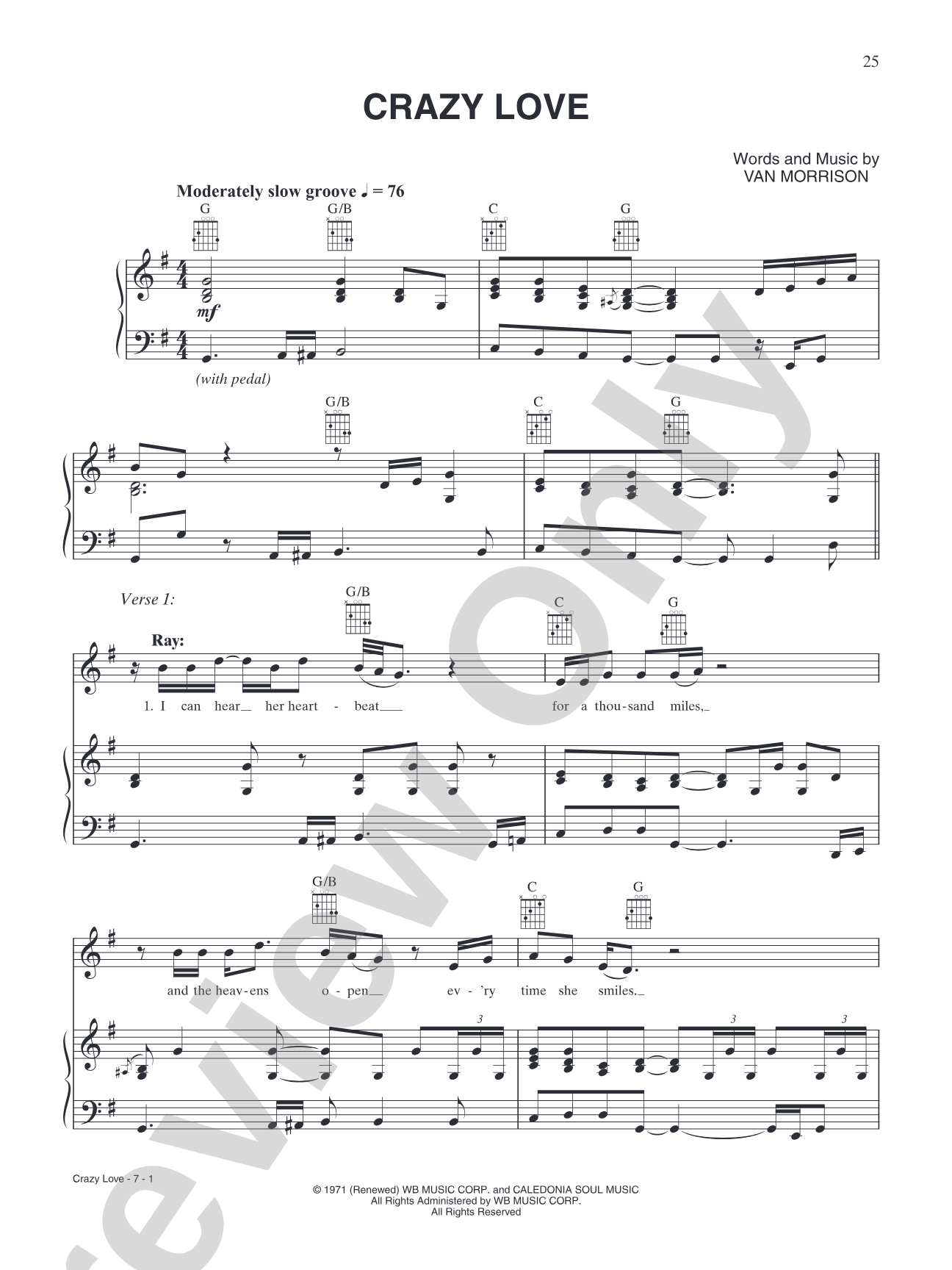
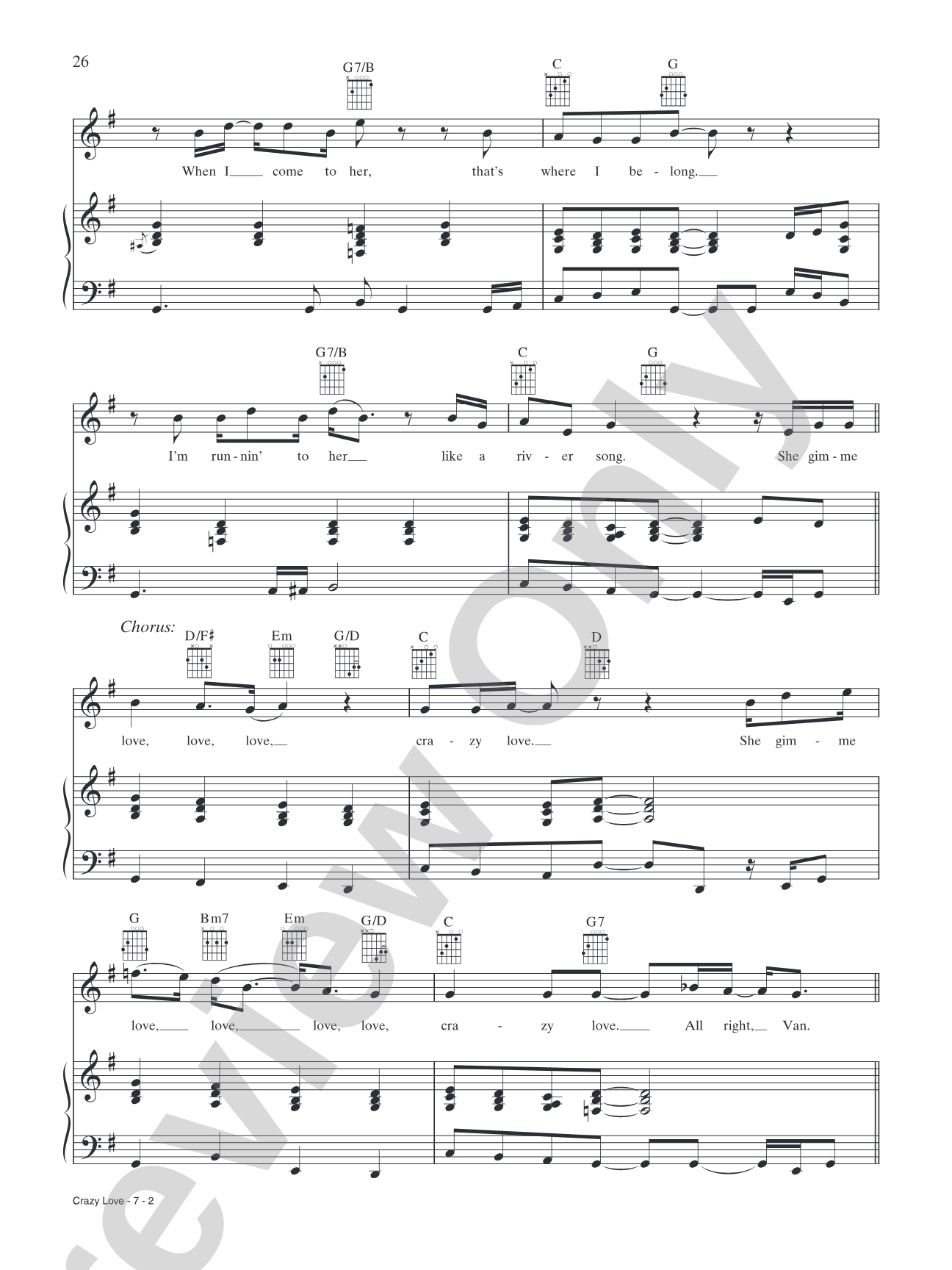

Crazy Love: Piano/Vocal/Chords
Ray Charles
Item: 00-PS-0013245
$5.99
One moment…
Related Items
Hallelujah I Love Her So: Piano/Vocal/Chords |
$5.99
|
View | |
That Lucky Old Sun: Piano/Vocal/Chords |
$5.99
|
View | |
What'd I Say: Piano/Vocal/Chords |
$9.99
|
View | |
Let the Good Times Roll: Piano/Vocal/Chords |
$5.99
|
View | |
Over the Rainbow: Piano/Vocal/Chords |
$4.99
|
View | |
Ruby: Piano/Vocal/Chords |
$5.99
|
View | |
Ain't That Love: Piano/Vocal/Chords |
$4.99
|
View | |
I've Got a Woman: Piano/Vocal/Chords |
$5.99
|
View | |
Mary Ann: Piano/Vocal/Chords |
$5.99
|
View | |
Mess Around: Piano/Vocal/Chords |
$5.99
|
View | |
One Mine Julep: Piano/Vocal/Chords |
$4.99
|
View | |
Sinner's Prayer: Piano/Vocal/Chords |
$5.99
|
View | |
This Little Girl of Mine: Piano/Vocal/Chords |
$5.99
|
View | |
Let's Go Get Stoned: Piano/Vocal/Chords |
$5.99
|
View | |
Seven Spanish Angels: Piano/Vocal/Chords |
$4.99
|
View | |
Come Rain Or Come Shine: Piano/Vocal/Chords |
$5.99
|
View | |
America the Beautful: Piano/Vocal/Chords |
$4.99
|
View |
Description
This collectible songbook celebrates the enduring legacy of Ray Charles at the 80th anniversary of his birth. Each sheet music transcription accurately renders his signature piano riffs and solos, and provides lyrics, vocal melodies, and chord changes. Ray Charles had three simple words of advice for achieving success: "Practice, practice, practice." With 28 fun and challenging transcriptions of some of popular music's most enduring standards, this collection gives pianists the opportunity to practice the techniques of the "Genius" himself. Titles: * Ain't That Love * America the Beautiful * Busted * Christmas in My Heart * Come Rain or Come Shine * Crazy Love * Georgia on My Mind * Hallelujah I Love Her So * Here We Go Again * Hit the Road Jack * I Can't Stop Loving You * I've Got a Woman * Let the Good Times Roll * Let's Go Get Stoned * Mary Ann * Mess Around * Night Time Is the Right Time * One Mint Julep * Over the Rainbow * Ruby * Seven Spanish Angels * Sinner's Prayer * That Lucky Old Sun * That Spirit of Christmas * This Little Girl of Mine * Unchain My Heart * What'd I Say * You Don't Know Me.


Crazy Love: Piano/Vocal/Chords isn't in MakeMusic Cloud just yet...but it could be. Let us know you'd like to see it, and you'll help shape what comes next. In the meantime, start a free trial and dive into thousands of interactive titles your students can play along with today.
Request This Title
Tell us you want it.
Start Your Free Trial
Explore everything that's ready to play right now.
Sample Audio
No sample audio found.
Sample Video
No sample videos found.
Additional Details
Publisher:
Alfred Music
Page Count:
180
SKU:
00-PS-0013245
More about this title
Why we love this
This collection captures Ray Charles's unmistakable piano voice across 28 standards, gospel numbers, and blues classics, giving pianists direct access to his signature riff language and solo architecture. The transcriptions preserve his exact voicings and comping patterns, so you're learning from the source rather than simplified interpretations. Programming a Ray Charles set builds immediate credibility with audiences while offering your pianists substantial technical and interpretive challenges.
What to expect
These pieces pulse with the warmth of soul and the swagger of the blues. Whether tackling upbeat numbers like "Mess Around" and "What'd I Say" or leaning into the tenderness of ballads, you'll feel the influence of gospel, R&B, and jazz standards woven together by one of music's most distinctive voices. The piano drives everything, speaking with authority and emotional directness.
Who it's for
Pianists ranging from intermediate to advanced who want to expand beyond classical repertoire and learn the blues, gospel, and jazz vocabulary that defined mid-century American popular music. Singers and guitarists using this as a songbook will benefit from the melodic and harmonic accuracy of Charles's original arrangements.
How to get the most out of it
- Study Charles's rhythmic approach to comping; his left hand doesn't simply mark time but drives the groove with intentional syncopation and silence. Listen closely to the recordings and transcriptions to capture where he drops notes for effect.
- Work the piano riffs as integral melodic material, not just accompaniment. Many of these pieces feature piano solos that deserve the same interpretive weight as a vocal line.
- Balance the chord voicings; Charles favored rootless voicings and extensions that can sound muddy if not voiced cleanly. Clarity serves the blues better than thickness.
- Don't rush the ballads. Pieces like "Come Rain or Come Shine" and "Over the Rainbow" showcase Charles's ability to inhabit a lyric through rubato and space, not through fast movement.
How to use it
Slot these into jazz or popular music concerts where they anchor a set of American standards with authentic energy. A recital featuring five or six Charles pieces creates a thematic program that celebrates his influence without requiring orchestral support. The collection also works as a teaching resource across the year, with lighter pieces available for early-semester sight-reading and deeper dives into the more complex arrangements as students develop their jazz vocabulary.
Skills your students will build
- Reading and performing chord changes in jazz and blues contexts
- Left-hand comping patterns and rhythmic independence from the melody
- Rootless voicings and extensions
- Rubato and phrasing in ballads
- Gospel and blues piano riff language
- Integrating vocal melody with piano accompaniment (for pianists supporting singers)