
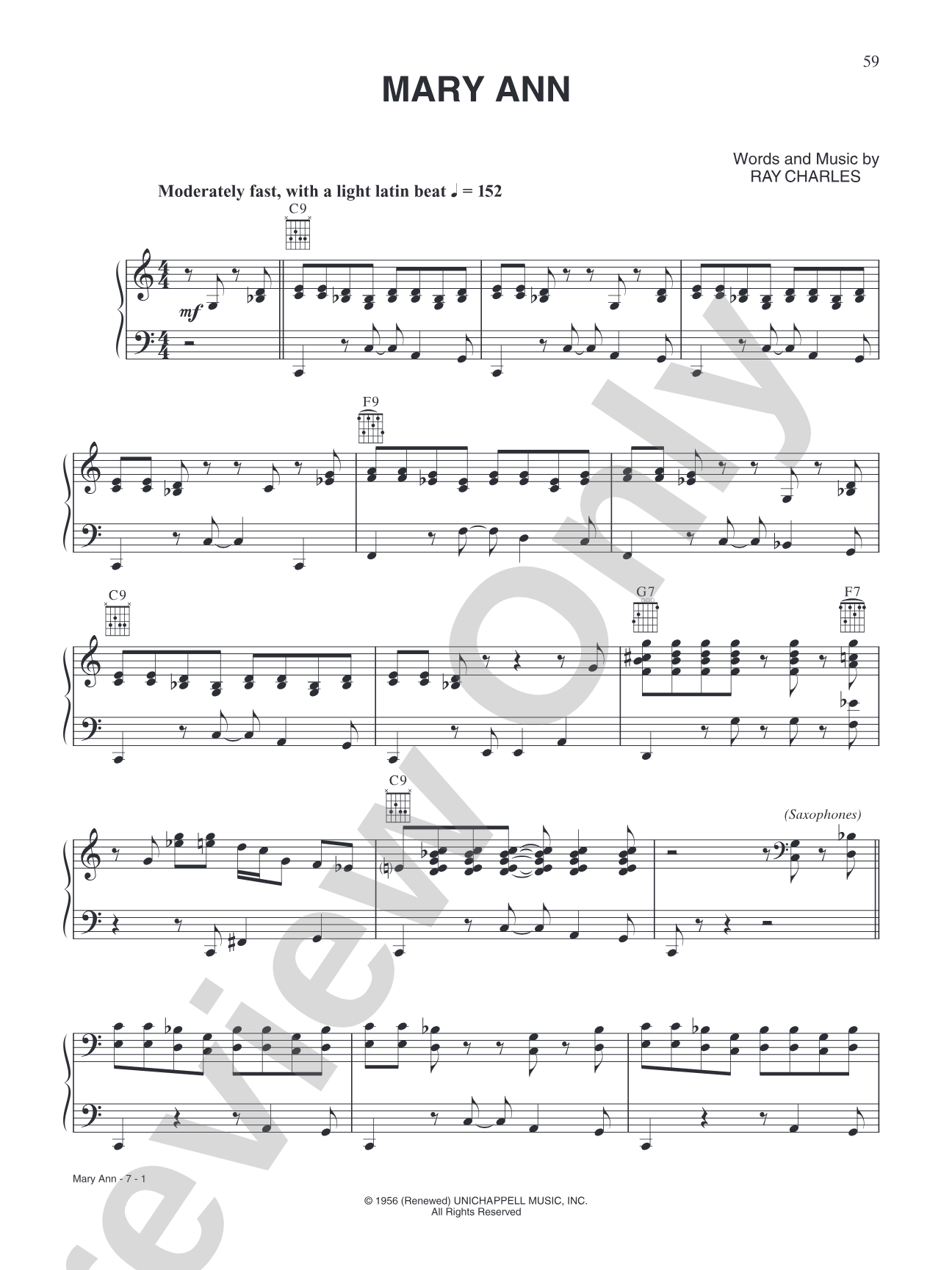
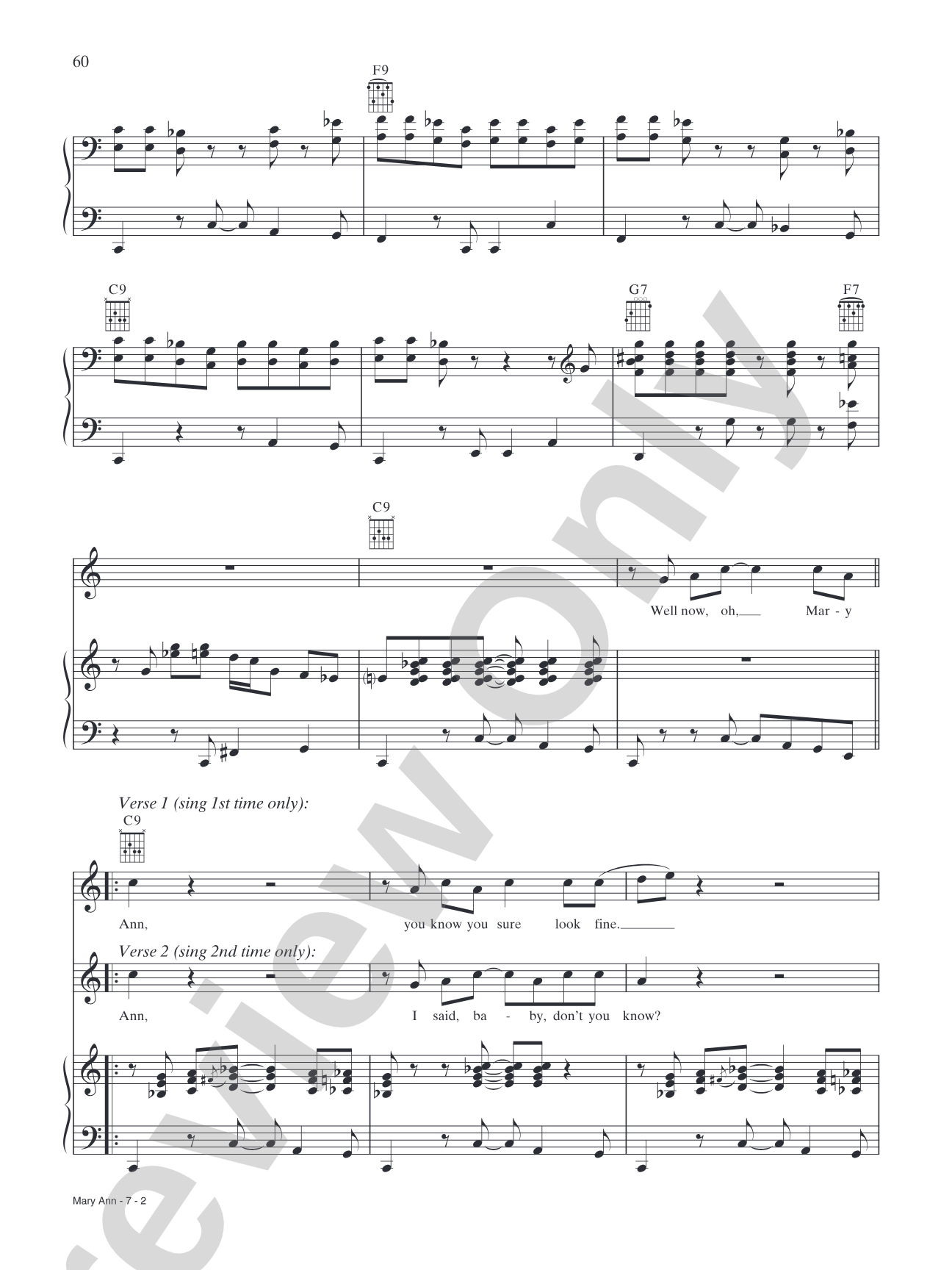

Mary Ann: Piano/Vocal/Chords
Ray Charles
Item: 00-PS-0013238
$5.99
One moment…
Related Items
Hallelujah I Love Her So: Piano/Vocal/Chords |
$5.99
|
View | |
That Lucky Old Sun: Piano/Vocal/Chords |
$5.99
|
View | |
What'd I Say: Piano/Vocal/Chords |
$9.99
|
View | |
Let the Good Times Roll: Piano/Vocal/Chords |
$5.99
|
View | |
Over the Rainbow: Piano/Vocal/Chords |
$4.99
|
View | |
Ruby: Piano/Vocal/Chords |
$5.99
|
View | |
Ain't That Love: Piano/Vocal/Chords |
$4.99
|
View | |
I've Got a Woman: Piano/Vocal/Chords |
$5.99
|
View | |
Mess Around: Piano/Vocal/Chords |
$5.99
|
View | |
One Mine Julep: Piano/Vocal/Chords |
$4.99
|
View | |
Sinner's Prayer: Piano/Vocal/Chords |
$5.99
|
View | |
This Little Girl of Mine: Piano/Vocal/Chords |
$5.99
|
View | |
Crazy Love: Piano/Vocal/Chords |
$5.99
|
View | |
Let's Go Get Stoned: Piano/Vocal/Chords |
$5.99
|
View | |
Seven Spanish Angels: Piano/Vocal/Chords |
$4.99
|
View | |
Come Rain Or Come Shine: Piano/Vocal/Chords |
$5.99
|
View | |
America the Beautful: Piano/Vocal/Chords |
$4.99
|
View |
Description
This collectible songbook celebrates the enduring legacy of Ray Charles at the 80th anniversary of his birth. Each sheet music transcription accurately renders his signature piano riffs and solos, and provides lyrics, vocal melodies, and chord changes. Ray Charles had three simple words of advice for achieving success: "Practice, practice, practice." With 28 fun and challenging transcriptions of some of popular music's most enduring standards, this collection gives pianists the opportunity to practice the techniques of the "Genius" himself. Titles: * Ain't That Love * America the Beautiful * Busted * Christmas in My Heart * Come Rain or Come Shine * Crazy Love * Georgia on My Mind * Hallelujah I Love Her So * Here We Go Again * Hit the Road Jack * I Can't Stop Loving You * I've Got a Woman * Let the Good Times Roll * Let's Go Get Stoned * Mary Ann * Mess Around * Night Time Is the Right Time * One Mint Julep * Over the Rainbow * Ruby * Seven Spanish Angels * Sinner's Prayer * That Lucky Old Sun * That Spirit of Christmas * This Little Girl of Mine * Unchain My Heart * What'd I Say * You Don't Know Me.


Mary Ann: Piano/Vocal/Chords isn't in MakeMusic Cloud just yet...but it could be. Let us know you'd like to see it, and you'll help shape what comes next. In the meantime, start a free trial and dive into thousands of interactive titles your students can play along with today.
Request This Title
Tell us you want it.
Start Your Free Trial
Explore everything that's ready to play right now.
Sample Audio
No sample audio found.
Sample Video
No sample videos found.
Additional Details
Publisher:
Alfred Music
Page Count:
180
SKU:
00-PS-0013238
More about this title
About the Composer: Ray Charles
Ray Charles (1930-2004) fundamentally changed how the world heard American music. Born in Albany, Georgia, and blinded by age seven, he mastered piano, saxophone, and harmonica while developing an unmistakable voice that fused gospel, blues, jazz, and country into something entirely his own. His fearless approach to genre and his refusal to be confined by commercial expectations made him a towering figure in 20th-century music.
For music educators, Charles represents a master class in musical authority built through relentless practice and deep knowledge of multiple styles. His piano work showcases sophisticated harmonic thinking alongside blues tradition; his arrangements reveal how a single performer can command an entire musical vision. Every transcription in this collection offers a window into how intentional practice transforms technique into artistry.
Why we love this
These transcriptions capture something often lost in casual listening: the architectural brilliance of Ray Charles's keyboard playing. Pianists get to inhabit the exact voicings, rhythmic feels, and improvisation patterns that defined his sound, moving far beyond simplified arrangements into the real textures of his artistry. Teaching from these scores naturally opens conversations about how blues vocabulary, gospel harmony, and jazz sophistication coexist in the same phrase.
What to expect
These songs pulse with a restless creative energy. Ray Charles refuses to let a melody sit still; every phrase bends, reaches, or reframes itself through the lens of blues feeling and gospel fervor. The piano work ranges from earthy and grounded to ornate and virtuosic, often within the same song. Playing through this collection means inhabiting a musical world where technical brilliance and emotional directness are inseparable.
Who it's for
Pianists with intermediate-to-advanced technique who are ready to engage with jazz and blues idioms through the prism of a major American master. This collection works equally well for piano students seeking stylistic breadth, singer-pianists building accompaniment skills, and guitarists reading through chord changes and melodies. Anyone drawn to understanding how blues tradition intersects with mainstream songwriting will find 28 compelling case studies here.
How to get the most out of it
- Approach the rhythmic liberties as intentional phrasing choices, not mistakes. Charles's sense of time sits just behind or ahead of the beat in ways that create swing; honor that looseness rather than forcing it into rigid time.
- Use the chord notations as a framework for understanding his harmonic movement, especially in blues progressions. This foundation makes his departures and extensions land with purpose.
- Invest time in the left-hand figures and riffs; they carry as much melodic weight as the vocal line. Many of these pieces demand equal attention from both hands.
- Record yourself and listen for clarity in fast passages. Charles's technical facility serves the song, never overshadows it; precision enables expressiveness.
How to use it
Feature individual transcriptions as recital showcases for advanced pianists exploring jazz and blues vocabulary within a classical or standards context. A well-prepared performance of "Georgia on My Mind" or "Unchain My Heart" demonstrates interpretive depth and historical awareness. Alternatively, use selections as supplementary repertoire in jazz piano studies, contemporary music courses, or any curriculum centered on American songwriting traditions.
Skills your students will build
- Blues and jazz harmonic vocabulary (seventh chords, extensions, voice leading)
- Rhythmic flexibility and swing feel within strict notation
- Left-hand independence and comping patterns characteristic of jazz piano
- Improvisation frameworks built from understanding chord changes and melody interaction
- Balancing technical facility with emotional expression in popular standards
- Reading and interpreting lead sheets and chord notations in real performance contexts