
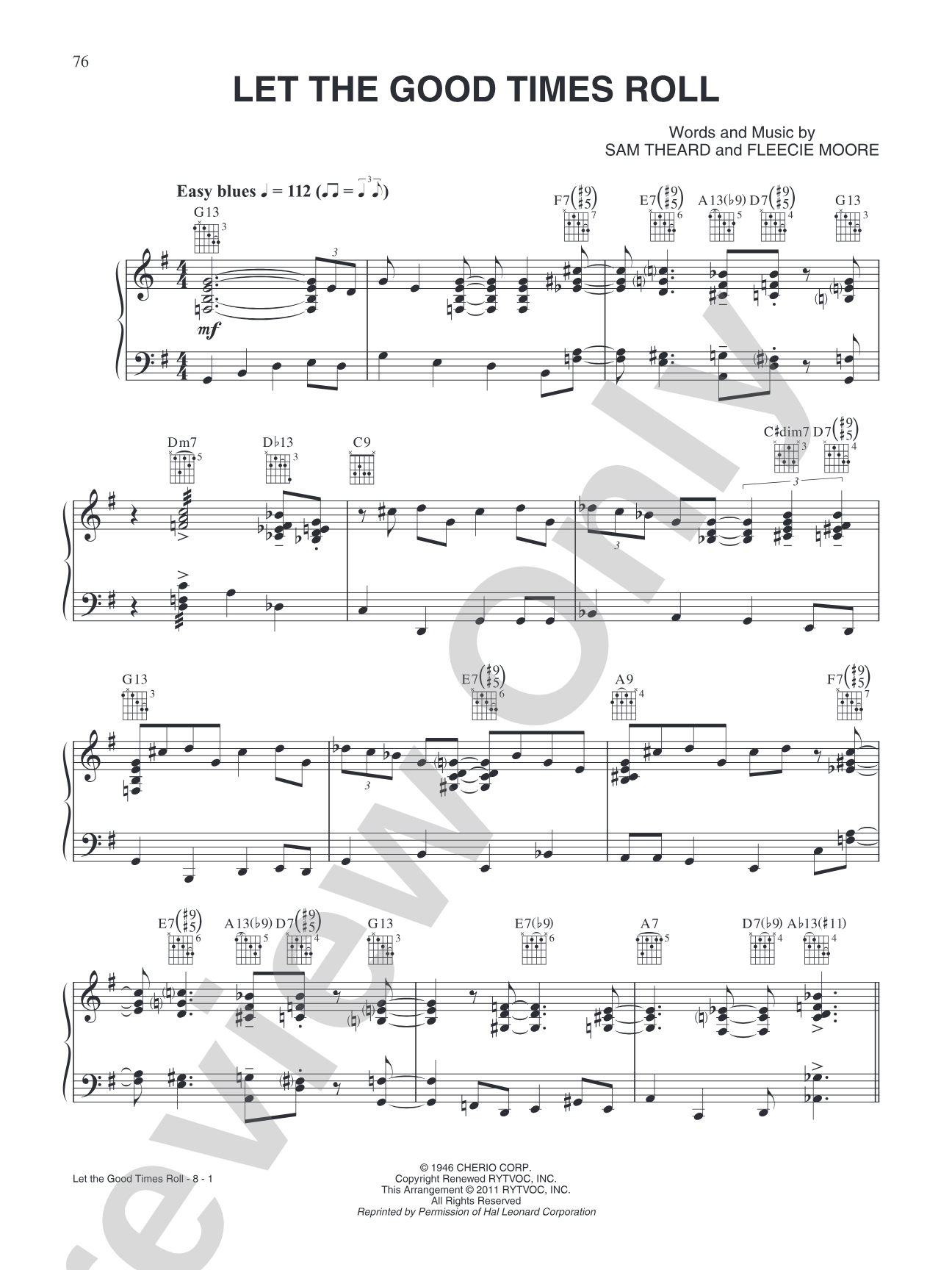
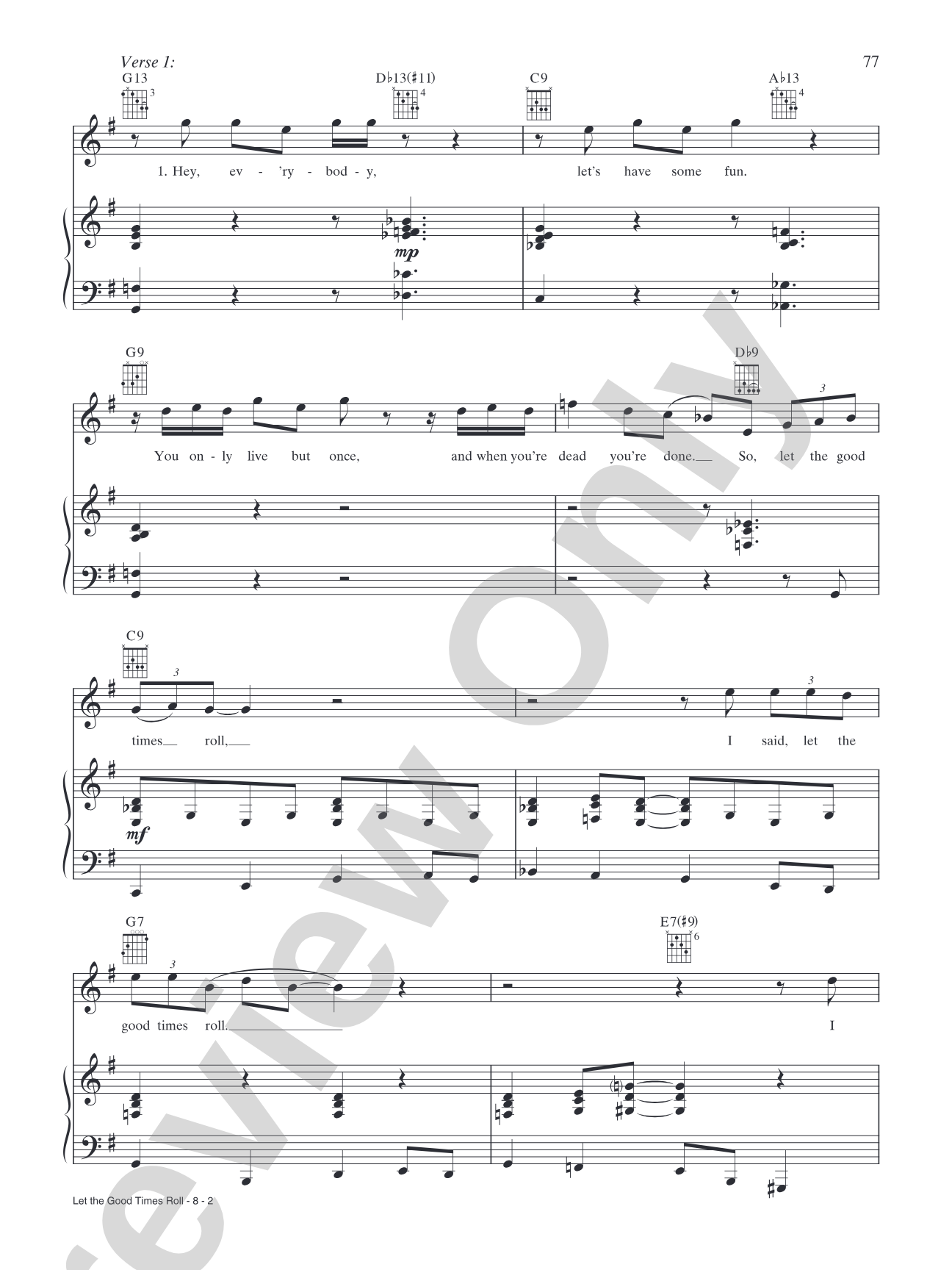

Let the Good Times Roll: Piano/Vocal/Chords
Ray Charles
Item: 00-PS-0013233
$5.99
One moment…
Related Items
Hallelujah I Love Her So: Piano/Vocal/Chords |
$5.99
|
View | |
That Lucky Old Sun: Piano/Vocal/Chords |
$5.99
|
View | |
What'd I Say: Piano/Vocal/Chords |
$9.99
|
View | |
Over the Rainbow: Piano/Vocal/Chords |
$4.99
|
View | |
Ruby: Piano/Vocal/Chords |
$5.99
|
View | |
Ain't That Love: Piano/Vocal/Chords |
$4.99
|
View | |
I've Got a Woman: Piano/Vocal/Chords |
$5.99
|
View | |
Mary Ann: Piano/Vocal/Chords |
$5.99
|
View | |
Mess Around: Piano/Vocal/Chords |
$5.99
|
View | |
One Mine Julep: Piano/Vocal/Chords |
$4.99
|
View | |
Sinner's Prayer: Piano/Vocal/Chords |
$5.99
|
View | |
This Little Girl of Mine: Piano/Vocal/Chords |
$5.99
|
View | |
Crazy Love: Piano/Vocal/Chords |
$5.99
|
View | |
Let's Go Get Stoned: Piano/Vocal/Chords |
$5.99
|
View | |
Seven Spanish Angels: Piano/Vocal/Chords |
$4.99
|
View | |
Come Rain Or Come Shine: Piano/Vocal/Chords |
$5.99
|
View | |
America the Beautful: Piano/Vocal/Chords |
$4.99
|
View |
Description
This collectible songbook celebrates the enduring legacy of Ray Charles at the 80th anniversary of his birth. Each sheet music transcription accurately renders his signature piano riffs and solos, and provides lyrics, vocal melodies, and chord changes. Ray Charles had three simple words of advice for achieving success: "Practice, practice, practice." With 28 fun and challenging transcriptions of some of popular music's most enduring standards, this collection gives pianists the opportunity to practice the techniques of the "Genius" himself. Titles: * Ain't That Love * America the Beautiful * Busted * Christmas in My Heart * Come Rain or Come Shine * Crazy Love * Georgia on My Mind * Hallelujah I Love Her So * Here We Go Again * Hit the Road Jack * I Can't Stop Loving You * I've Got a Woman * Let the Good Times Roll * Let's Go Get Stoned * Mary Ann * Mess Around * Night Time Is the Right Time * One Mint Julep * Over the Rainbow * Ruby * Seven Spanish Angels * Sinner's Prayer * That Lucky Old Sun * That Spirit of Christmas * This Little Girl of Mine * Unchain My Heart * What'd I Say * You Don't Know Me.


Discover MakeMusic Cloud: thousands of interactive titles your students can play along with today.
Sample Audio
No sample audio found.
Sample Video
No sample videos found.
Additional Details
Publisher:
Alfred Music
Page Count:
180
SKU:
00-PS-0013233
More about this title
About the Composer: Sam Theard
Sam Theard was a prolific songwriter and pianist who shaped the sound of rhythm and blues in the 1940s and 1950s. His compositions, including "Let the Good Times Roll," became foundational standards of American popular music, performed and reinterpreted by generations of artists.
Theard's work demonstrates the direct connection between blues piano traditions and the evolving language of R&B. His songwriting emphasized strong melodic hooks and adaptable harmonic frameworks that have allowed his tunes to endure across decades and genres.
Why we love this
Ray Charles's piano work demands serious musicianship from anyone who tackles it. These transcriptions capture the sophisticated voicings, bluesy ornamentation, and rhythmic independence between hands that made him a pianist first and foremost. Whether you're teaching jazz vocabulary or building technical facility, having his own arrangements on the page accelerates learning in ways generic lead sheets simply cannot.
What to expect
Soulful, conversational, and deeply grounded in blues language. The piano dominates these transcriptions with syncopated rhythms, rich chord extensions, and a call-and-response quality that pulls the vocalist in. You're not just playing songs; you're inhabiting a musical conversation between two voices.
Who it's for
Pianists and keyboardists seeking accessible entry into jazz standards with real substance. Vocalists who want to understand the piano-vocal relationship from the composer's perspective. Music teachers building jazz repertoire that rewards both technical growth and stylistic immersion.
How to get the most out of it
- Study the recorded versions alongside the sheet music. Ray Charles's timing and phrasing often sit slightly behind or ahead of the beat in ways notation alone cannot convey; listening trains your ear before your hands.
- Work the piano riffs and fills as standalone technical studies before integrating them with the vocal melody. These are composed solos meant to shine, not accompaniment figures.
- Pay close attention to chord voicings and substitutions. Charles's harmonic language extends well beyond basic triads; capturing those colors is essential to the authenticity of each arrangement.
- Coordinate the piano part with any vocalist you're accompanying. The interplay between his keyboard work and vocal phrasing is central to these songs; they're written as a conversation, not separate tracks.
How to use it
Feature these arrangements in jazz or American music units where authenticity matters. A mixed recital pairing Charles standards with other American song traditions showcases both the piano writing and the genre's cultural weight. They work equally well as teaching pieces in private study and in ensemble or showcase settings.
Skills your students will build
- voicing jazz chords beyond triads (sevenths, extensions, substitutions)
- left-hand independence and rhythmic flexibility in blues contexts
- interpreting written ornamentation and stylistic notation
- coordinating piano accompaniment with vocal phrasing and timing
- sight-reading jazz notation and lead sheet symbols