
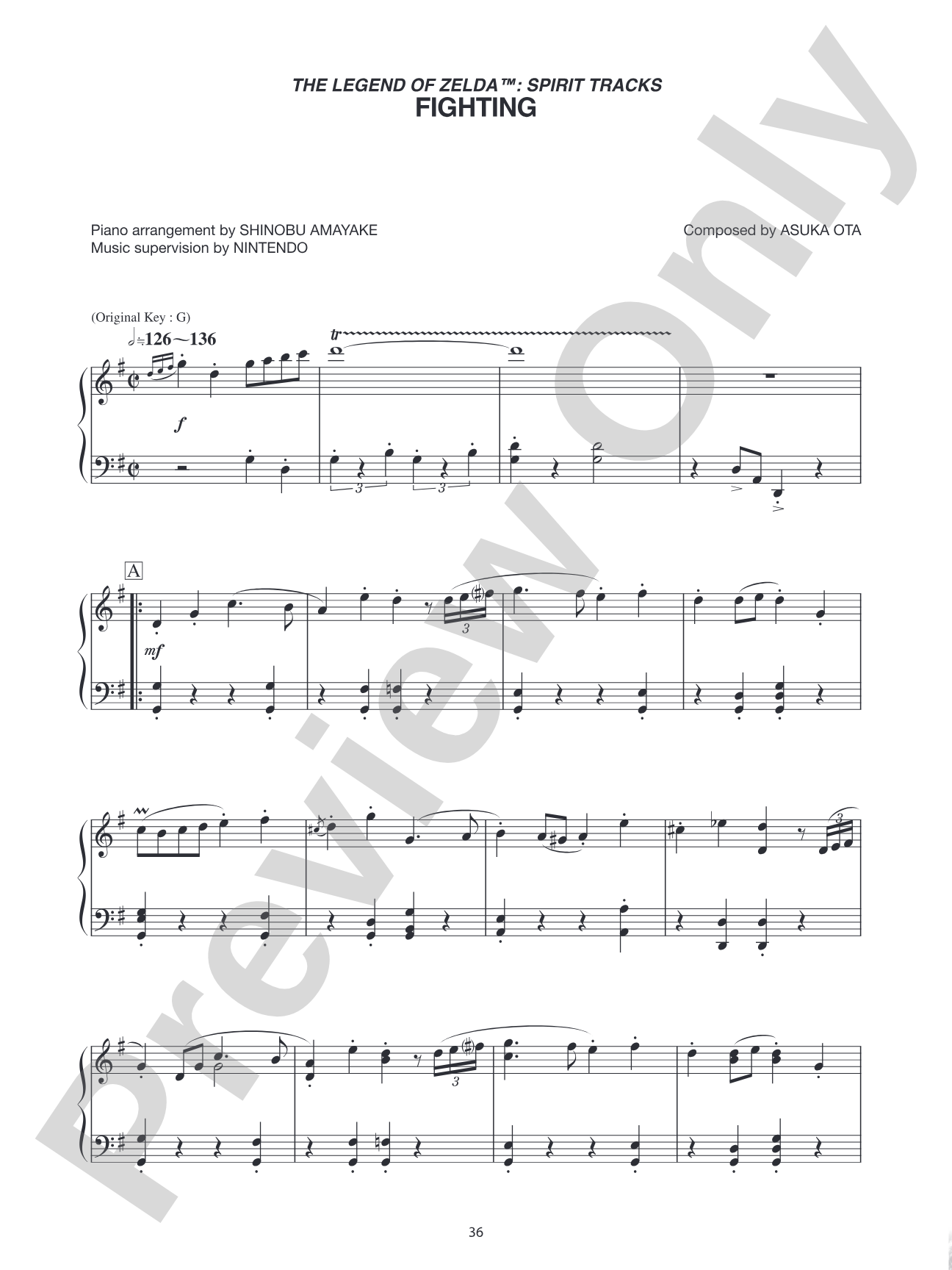

The Legend of Zelda™: Spirit Tracks Fighting: Piano
Composed by Koji Kondo, Tominaga Mao, Toru Minegishi, and Asuka Ota
Level: Intermediate / Advanced
Item: 00-PS-0015455
$4.99
One moment…
Related Items
The Legend of Zelda™: Spirit Tracks Title Theme: Piano |
$4.99
|
View | |
The Legend of Zelda™: Spirit Tracks Aboda Village: Piano |
$4.99
|
View | |
The Legend of Zelda™: Spirit Tracks Chancellor Coles Theme: Piano |
$4.99
|
View | |
The Legend of Zelda™: Spirit Tracks Hyrule Castle: Piano |
$4.99
|
View | |
The Legend of Zelda™: Spirit Tracks Princess Zeldas Theme: Piano |
$4.99
|
View | |
The Legend of Zelda™: Spirit Tracks The Battle: Piano |
$4.99
|
View | |
The Legend of Zelda™: Spirit Tracks Anjeans Theme: Piano |
$4.99
|
View | |
The Legend of Zelda™: Spirit Tracks Adventuring: Piano |
$4.99
|
View | |
The Legend of Zelda™: Spirit Tracks The Tower of Spirits: Piano |
$4.99
|
View | |
The Legend of Zelda™: Spirit Tracks Riding the Rails 2: Piano |
$4.99
|
View | |
The Legend of Zelda™: Spirit Tracks Linebecks Theme: Piano |
$4.99
|
View | |
The Legend of Zelda™: Spirit Tracks Byrnes Theme: Piano |
$4.99
|
View | |
The Legend of Zelda™: Spirit Tracks Seabed: Piano |
$4.99
|
View | |
The Legend of Zelda™: Spirit Tracks Hero of the Tracks: Piano |
$4.99
|
View | |
The Legend of Zelda™: Spirit Tracks Song of Awakening: Piano |
$4.99
|
View | |
The Legend of Zelda™: Spirit Tracks Song of Healing: Piano |
$4.99
|
View | |
The Legend of Zelda™: Spirit Tracks Song of Discovery: Piano |
$4.99
|
View | |
The Legend of Zelda™: Spirit Tracks Song of Birds: Piano |
$4.99
|
View | |
The Legend of Zelda™: Spirit Tracks Song of Light: Piano |
$4.99
|
View | |
The Legend of Zelda™: Spirit Tracks Fanfare of the Spirit Tracks: Piano |
$4.99
|
View | |
The Legend of Zelda™: Spirit Tracks Game Over: Piano |
$4.99
|
View |
Description
The soundtrack to Nintendo's The Legend of Zelda™: Spirit Tracks is packed with melodic, note-for-note transcriptions that sound great on the piano! With this officially licensed sheet music collection, intermediate to advanced pianists can dazzle friends and family by playing 22 themes from the popular video game. Titles: Title Theme * Aboda Village * Hyrule Castle * Anjean's Theme * Princess Zelda's Theme * The Tower of Spirits * Chancellor Cole's Theme * Riding the Rails 2 (Main Theme) * Seabed * The Battle * Adventuring * Linebeck's Theme * Byrne's Theme * Hero of the Tracks * Fighting * Song of Awakening * Song of Healing * Song of Discovery * Song of Birds * Song of Light * Fanfare of the Spirit Tracks * Game Over.


Discover MakeMusic Cloud: thousands of interactive titles your students can play along with today.
Sample Audio
No sample audio found.
Sample Video
No sample videos found.
Additional Details
Publisher:
Alfred Music
Page Count:
40
SKU:
00-PS-0015455
More about this title
About the Composer: Asuka Ohta
Asuka Ohta has composed music for Nintendo franchises across multiple generations of gaming hardware, establishing himself as a skilled orchestrator of interactive soundtracks that blend memorable melodies with functional game design. His work on The Legend of Zelda series demonstrates a deep understanding of how musical themes can anchor player experience and reinforce narrative moments without overwhelming gameplay.
Ohta's approach to game composition prioritizes melodic clarity and harmonic accessibility, making his pieces natural candidates for transcription and study. His arrangements reveal how themes can sustain interest through variation and orchestration rather than relying on harmonic complexity alone.
Why we love this
This collection captures the melodic heart of Spirit Tracks in playable arrangements that intermediate pianists can tackle with real satisfaction. The selection spans action sequences, character themes, and atmospheric moments, giving you legitimate concert material that audiences recognize and enjoy. Video game music at this level doesn't sacrifice musical substance for accessibility, and these transcriptions prove it.
What to expect
The collection spans emotional territory: moments of stately grandeur in castle themes sit alongside urgent, rhythmically driving battle sequences. Songs of awakening and healing offer lyrical passages with clear melodic contours, while recurring motifs tie the album together, creating a sense of narrative coherence that keeps listeners engaged across 22 distinct pieces. There's an undeniable energy throughout, born from the game's adventuring spirit and reinforced by Ohta's gift for memorable hooks.
Who it's for
Intermediate to advanced pianists who want concert-ready material that connects with contemporary audiences. This book works equally well for students building solo recital programs and for pianists looking to expand beyond classical and jazz standards into repertoire they genuinely love playing.
How to get the most out of it
- Study the harmonic progression in "Princess Zelda's Theme" carefully before adding tempo; the chord changes drive the piece's emotional arc more than speed does.
- Pay attention to Shinobu Amayake's voicing choices in the battle themes. Octave doublings and register shifts do the work that orchestration does in the original, so honor those decisions even in passages that feel simple.
- Bring out the left-hand countermelody in "Riding the Rails 2" as if it were a second voice; it's easy to reduce it to accompaniment, but it carries substantial musical interest.
- Record yourself playing these pieces at performance tempo. Hearing the full arc will reveal where rubato serves the phrase and where strict time anchors the groove.
How to use it
These pieces work well in a modern or eclectic recital context where you're curating music that matters to your audience, not just defaulting to classical canon. The variety of mood and tempo lets you build interesting program architecture without sounding scattered. Consider opening with the Title Theme, programming a mix of character and action pieces for the body of the set, and closing with a theme that leaves audiences smiling.
Skills your students will build
- Voice leading and harmonic clarity in melody-driven writing
- Managing register shifts and orchestration-inspired voicing at the keyboard
- Balancing rhythmic precision with expressive phrasing in video game-style melodies
- Sight-reading and interpreting transcriptions of instrumental arrangements for solo piano