
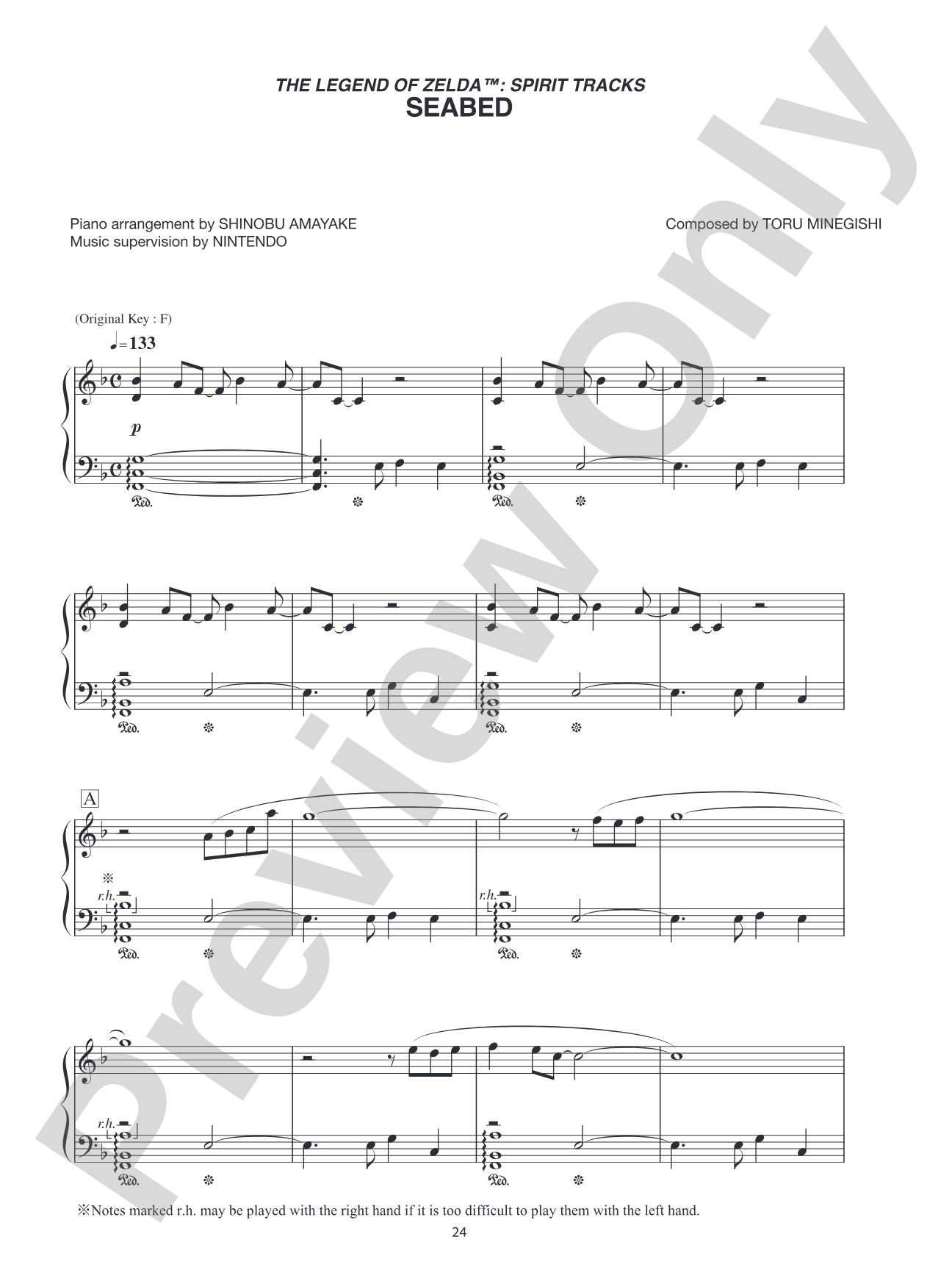

The Legend of Zelda™: Spirit Tracks Seabed: Piano
Composed by Koji Kondo, Tominaga Mao, Toru Minegishi, and Asuka Ota
Level: Intermediate / Advanced
Item: 00-PS-0015453
$4.99
One moment…
Related Items
The Legend of Zelda™: Spirit Tracks Title Theme: Piano |
$4.99
|
View | |
The Legend of Zelda™: Spirit Tracks Aboda Village: Piano |
$4.99
|
View | |
The Legend of Zelda™: Spirit Tracks Chancellor Coles Theme: Piano |
$4.99
|
View | |
The Legend of Zelda™: Spirit Tracks Hyrule Castle: Piano |
$4.99
|
View | |
The Legend of Zelda™: Spirit Tracks Princess Zeldas Theme: Piano |
$4.99
|
View | |
The Legend of Zelda™: Spirit Tracks The Battle: Piano |
$4.99
|
View | |
The Legend of Zelda™: Spirit Tracks Anjeans Theme: Piano |
$4.99
|
View | |
The Legend of Zelda™: Spirit Tracks Adventuring: Piano |
$4.99
|
View | |
The Legend of Zelda™: Spirit Tracks The Tower of Spirits: Piano |
$4.99
|
View | |
The Legend of Zelda™: Spirit Tracks Riding the Rails 2: Piano |
$4.99
|
View | |
The Legend of Zelda™: Spirit Tracks Linebecks Theme: Piano |
$4.99
|
View | |
The Legend of Zelda™: Spirit Tracks Byrnes Theme: Piano |
$4.99
|
View | |
The Legend of Zelda™: Spirit Tracks Hero of the Tracks: Piano |
$4.99
|
View | |
The Legend of Zelda™: Spirit Tracks Fighting: Piano |
$4.99
|
View | |
The Legend of Zelda™: Spirit Tracks Song of Awakening: Piano |
$4.99
|
View | |
The Legend of Zelda™: Spirit Tracks Song of Healing: Piano |
$4.99
|
View | |
The Legend of Zelda™: Spirit Tracks Song of Discovery: Piano |
$4.99
|
View | |
The Legend of Zelda™: Spirit Tracks Song of Birds: Piano |
$4.99
|
View | |
The Legend of Zelda™: Spirit Tracks Song of Light: Piano |
$4.99
|
View | |
The Legend of Zelda™: Spirit Tracks Fanfare of the Spirit Tracks: Piano |
$4.99
|
View | |
The Legend of Zelda™: Spirit Tracks Game Over: Piano |
$4.99
|
View |
Description
The soundtrack to Nintendo's The Legend of Zelda™: Spirit Tracks is packed with melodic, note-for-note transcriptions that sound great on the piano! With this officially licensed sheet music collection, intermediate to advanced pianists can dazzle friends and family by playing 22 themes from the popular video game. Titles: Title Theme * Aboda Village * Hyrule Castle * Anjean's Theme * Princess Zelda's Theme * The Tower of Spirits * Chancellor Cole's Theme * Riding the Rails 2 (Main Theme) * Seabed * The Battle * Adventuring * Linebeck's Theme * Byrne's Theme * Hero of the Tracks * Fighting * Song of Awakening * Song of Healing * Song of Discovery * Song of Birds * Song of Light * Fanfare of the Spirit Tracks * Game Over.


Discover MakeMusic Cloud: thousands of interactive titles your students can play along with today.
Sample Audio
No sample audio found.
Sample Video
No sample videos found.
Additional Details
Publisher:
Alfred Music
Page Count:
40
SKU:
00-PS-0015453
More about this title
About the Composer: Toru Minegishi
Toru Minegishi is a video game composer at Nintendo who has shaped the sonic identity of the Legend of Zelda franchise across multiple generations of consoles. His work on Spirit Tracks demonstrates his gift for writing melodies that feel both heroic and intimate, layering thematic material that rewards repeated listening and careful study.
Minegishi's approach to game music composition treats each piece as a standalone musical statement while maintaining harmonic coherence across an entire soundtrack. For pianists approaching his transcriptions, understanding his orchestration choices (and how they translate to the keyboard) opens doors to deeper interpretive choices.
Why we love this
This collection hits a rare sweet spot: the melodies are genuinely singable and memorable, the arrangements sit naturally under the hands, and the 22 tracks offer enough variety to satisfy both performers who want showpiece material and those building a program around a unifying theme. Students won't feel like they're playing "transcriptions of a video game"—they're playing real piano music that happens to come from a beloved source.
What to expect
The collection captures the sense of journey and discovery central to Spirit Tracks: opening with the stately Title Theme, unfolding through quieter, reflective pieces like Anjean's Theme, building toward the propulsive energy of Riding the Rails. The music shifts between triumphant fanfares and intimate character themes, never losing the sense that you're moving through a living, breathing world.
Who it's for
Intermediate to advanced pianists ready to move beyond classical standards and explore music that rewards expressive playing without requiring virtuosic technique. This collection appeals equally to dedicated video game music fans and pianists seeking accessible contemporary material with genuine melodic substance.
How to get the most out of it
- Pay attention to the song titles as structural guides. Each of the four "Song of" pieces (Awakening, Healing, Discovery, Birds) has a distinct harmonic character and emotional arc; resist the urge to play them at a uniform tempo or dynamic level.
- Balance melody against accompaniment carefully in passages where Minegishi layers folk-like melodies over arpeggiated chords. These moments need transparency, not blur, even when the texture feels full.
- Use the contrast between the dungeon and battle themes as rehearsal checkpoints. "The Battle" and "Fighting" demand different energy and articulation; practicing them back-to-back reveals how much character lives in subtle touch choices.
How to use it
Consider pairing selections from this collection with classical piano repertoire in a recital that explores how melody and accompaniment patterns appear across different musical traditions. Individual pieces work well as encores or as standalone performance pieces in student recitals, while teachers might use complete thematic suites (the four Songs, for instance) to create a mini-program within a larger concert.
Skills your students will build
- Translating orchestral textures to piano voicing and voice leading
- Sustaining lyrical singing tone while managing left-hand accompaniment patterns
- Navigating leaps and disjunct melody lines with musical coherence
- Reading accidentals and modal harmonic movement typical of video game composition
- Balancing emotional expression in character themes with rhythmic precision in action sequences