
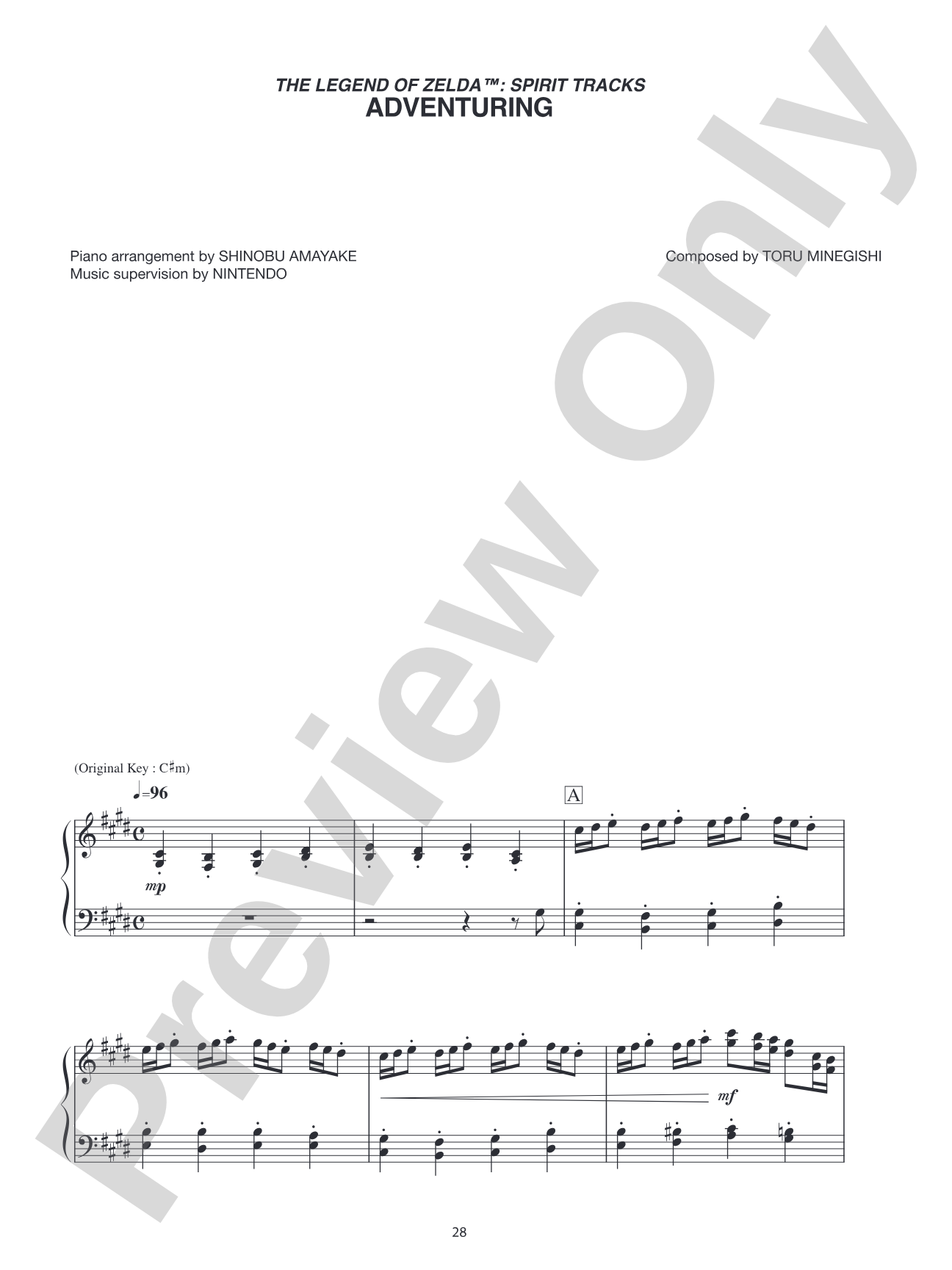

The Legend of Zelda™: Spirit Tracks Adventuring: Piano
Composed by Koji Kondo, Tominaga Mao, Toru Minegishi, and Asuka Ota
Level: Intermediate / Advanced
Item: 00-PS-0015448
$4.99
One moment…
Related Items
The Legend of Zelda™: Spirit Tracks Title Theme: Piano |
$4.99
|
View | |
The Legend of Zelda™: Spirit Tracks Aboda Village: Piano |
$4.99
|
View | |
The Legend of Zelda™: Spirit Tracks Chancellor Coles Theme: Piano |
$4.99
|
View | |
The Legend of Zelda™: Spirit Tracks Hyrule Castle: Piano |
$4.99
|
View | |
The Legend of Zelda™: Spirit Tracks Princess Zeldas Theme: Piano |
$4.99
|
View | |
The Legend of Zelda™: Spirit Tracks The Battle: Piano |
$4.99
|
View | |
The Legend of Zelda™: Spirit Tracks Anjeans Theme: Piano |
$4.99
|
View | |
The Legend of Zelda™: Spirit Tracks The Tower of Spirits: Piano |
$4.99
|
View | |
The Legend of Zelda™: Spirit Tracks Riding the Rails 2: Piano |
$4.99
|
View | |
The Legend of Zelda™: Spirit Tracks Linebecks Theme: Piano |
$4.99
|
View | |
The Legend of Zelda™: Spirit Tracks Byrnes Theme: Piano |
$4.99
|
View | |
The Legend of Zelda™: Spirit Tracks Seabed: Piano |
$4.99
|
View | |
The Legend of Zelda™: Spirit Tracks Hero of the Tracks: Piano |
$4.99
|
View | |
The Legend of Zelda™: Spirit Tracks Fighting: Piano |
$4.99
|
View | |
The Legend of Zelda™: Spirit Tracks Song of Awakening: Piano |
$4.99
|
View | |
The Legend of Zelda™: Spirit Tracks Song of Healing: Piano |
$4.99
|
View | |
The Legend of Zelda™: Spirit Tracks Song of Discovery: Piano |
$4.99
|
View | |
The Legend of Zelda™: Spirit Tracks Song of Birds: Piano |
$4.99
|
View | |
The Legend of Zelda™: Spirit Tracks Song of Light: Piano |
$4.99
|
View | |
The Legend of Zelda™: Spirit Tracks Fanfare of the Spirit Tracks: Piano |
$4.99
|
View | |
The Legend of Zelda™: Spirit Tracks Game Over: Piano |
$4.99
|
View |
Description
The soundtrack to Nintendo's The Legend of Zelda™: Spirit Tracks is packed with melodic, note-for-note transcriptions that sound great on the piano! With this officially licensed sheet music collection, intermediate to advanced pianists can dazzle friends and family by playing 22 themes from the popular video game. Titles: Title Theme * Aboda Village * Hyrule Castle * Anjean's Theme * Princess Zelda's Theme * The Tower of Spirits * Chancellor Cole's Theme * Riding the Rails 2 (Main Theme) * Seabed * The Battle * Adventuring * Linebeck's Theme * Byrne's Theme * Hero of the Tracks * Fighting * Song of Awakening * Song of Healing * Song of Discovery * Song of Birds * Song of Light * Fanfare of the Spirit Tracks * Game Over.


Discover MakeMusic Cloud: thousands of interactive titles your students can play along with today.
Sample Audio
No sample audio found.
Sample Video
No sample videos found.
Additional Details
Publisher:
Alfred Music
Page Count:
40
SKU:
00-PS-0015448
More about this title
About the Composer: Toru Minegishi
Toru Minegishi is a video game composer at Nintendo who has shaped the sound of the Legend of Zelda franchise across multiple entries. His work on Spirit Tracks demonstrates his gift for creating memorable melodies that balance orchestral sophistication with accessibility, translating seamlessly to the piano.
Minegishi's compositional approach emphasizes clear harmonic progressions and singable lines, qualities that make his game music particularly rewarding for pianists to perform. His scores have introduced countless players to classical forms and romantic-era harmonic language through interactive entertainment.
Why we love this
This collection captures why Legend of Zelda music endures: every theme is melodically intact and harmonically satisfying, so pianists aren't fighting awkward transcriptions or missing the core of what made these pieces work in the first place. The arrangement choices respect both the source material and piano idiom, giving intermediate to advanced players genuinely rewarding material that sounds polished in recital without requiring virtuosic technique.
What to expect
Spirited, inventive, and often charming. These themes alternate between intimate character moments (Linebeck's Theme, Anjean's Theme) and rousing adventure music (Riding the Rails, Adventuring) with enough harmonic color to keep the listening ear engaged. There's genuine warmth here, along with moments of drama and discovery.
Who it's for
Pianists in the intermediate to advanced range who want to explore repertoire beyond traditional classical and popular piano collections. This works equally well for students learning film and game music arrangement conventions and for performers seeking music that bridges their classical training with contemporary popular culture.
How to get the most out of it
- Shape the melodic lines with attention to breath and phrasing, even though you're playing a keyboard instrument. Video game themes often follow vocal or orchestral phrasing patterns that feel stiff if played mechanically.
- Balance the decorative voices in the accompaniment against the main theme. Many of these pieces feature active inner voices that can obscure the melody if they're played at equal volume.
- Explore the dynamic range across the 22 pieces. The battle themes demand different energy than reflective pieces like the Songs, so vary your approach rather than settling into a single interpretive mode.
- Engage with the rhythmic clarity the transcriptions offer. Video game music relies on crisp articulation and rhythmic precision, especially in the rail-riding themes and action sequences.
How to use it
Include individual selections in student recitals where they belong stylistically alongside the performer's other repertoire, or present a curated sequence of thematically linked pieces (the four Songs back to back, for instance) as a concert program segment. This officially licensed material also makes an excellent standalone recital when you want to celebrate video game music as legitimate concert fare.
Skills your students will build
- Transposing themes and understanding key relationships across arrangements
- Maintaining steady tempo through varied accompaniment patterns
- Balancing melody and accompaniment across multiple voices
- Recognizing and executing leitmotif structures in extended compositions
- Interpreting harmonic progressions beyond standard triadic movement