
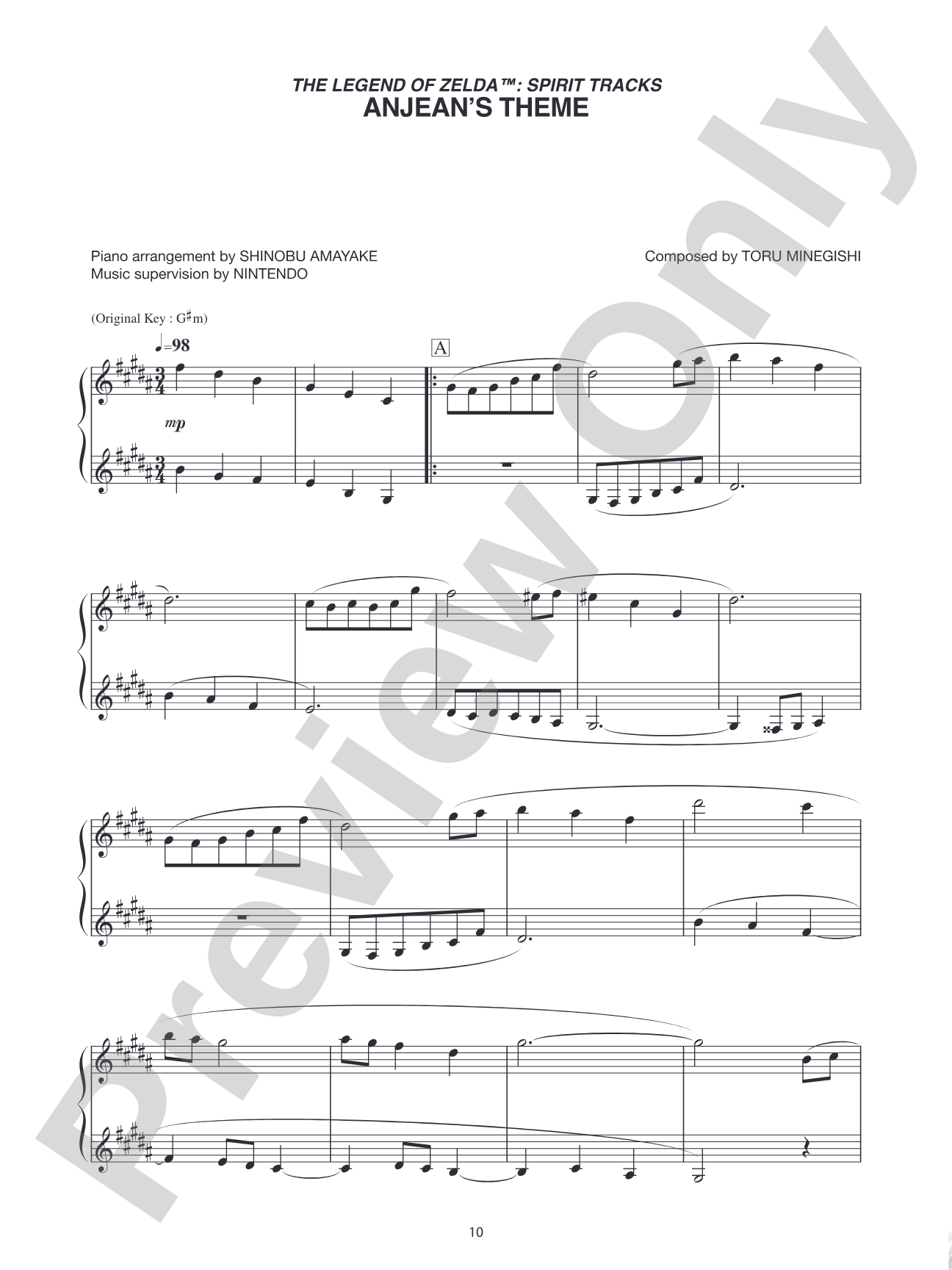

The Legend of Zelda™: Spirit Tracks Anjeans Theme: Piano
Composed by Koji Kondo, Tominaga Mao, Toru Minegishi, and Asuka Ota
Level: Intermediate / Advanced
Item: 00-PS-0015447
$4.99
One moment…
Related Items
The Legend of Zelda™: Spirit Tracks Title Theme: Piano |
$4.99
|
View | |
The Legend of Zelda™: Spirit Tracks Aboda Village: Piano |
$4.99
|
View | |
The Legend of Zelda™: Spirit Tracks Chancellor Coles Theme: Piano |
$4.99
|
View | |
The Legend of Zelda™: Spirit Tracks Hyrule Castle: Piano |
$4.99
|
View | |
The Legend of Zelda™: Spirit Tracks Princess Zeldas Theme: Piano |
$4.99
|
View | |
The Legend of Zelda™: Spirit Tracks The Battle: Piano |
$4.99
|
View | |
The Legend of Zelda™: Spirit Tracks Adventuring: Piano |
$4.99
|
View | |
The Legend of Zelda™: Spirit Tracks The Tower of Spirits: Piano |
$4.99
|
View | |
The Legend of Zelda™: Spirit Tracks Riding the Rails 2: Piano |
$4.99
|
View | |
The Legend of Zelda™: Spirit Tracks Linebecks Theme: Piano |
$4.99
|
View | |
The Legend of Zelda™: Spirit Tracks Byrnes Theme: Piano |
$4.99
|
View | |
The Legend of Zelda™: Spirit Tracks Seabed: Piano |
$4.99
|
View | |
The Legend of Zelda™: Spirit Tracks Hero of the Tracks: Piano |
$4.99
|
View | |
The Legend of Zelda™: Spirit Tracks Fighting: Piano |
$4.99
|
View | |
The Legend of Zelda™: Spirit Tracks Song of Awakening: Piano |
$4.99
|
View | |
The Legend of Zelda™: Spirit Tracks Song of Healing: Piano |
$4.99
|
View | |
The Legend of Zelda™: Spirit Tracks Song of Discovery: Piano |
$4.99
|
View | |
The Legend of Zelda™: Spirit Tracks Song of Birds: Piano |
$4.99
|
View | |
The Legend of Zelda™: Spirit Tracks Song of Light: Piano |
$4.99
|
View | |
The Legend of Zelda™: Spirit Tracks Fanfare of the Spirit Tracks: Piano |
$4.99
|
View | |
The Legend of Zelda™: Spirit Tracks Game Over: Piano |
$4.99
|
View |
Description
The soundtrack to Nintendo's The Legend of Zelda™: Spirit Tracks is packed with melodic, note-for-note transcriptions that sound great on the piano! With this officially licensed sheet music collection, intermediate to advanced pianists can dazzle friends and family by playing 22 themes from the popular video game. Titles: Title Theme * Aboda Village * Hyrule Castle * Anjean's Theme * Princess Zelda's Theme * The Tower of Spirits * Chancellor Cole's Theme * Riding the Rails 2 (Main Theme) * Seabed * The Battle * Adventuring * Linebeck's Theme * Byrne's Theme * Hero of the Tracks * Fighting * Song of Awakening * Song of Healing * Song of Discovery * Song of Birds * Song of Light * Fanfare of the Spirit Tracks * Game Over.


Discover MakeMusic Cloud: thousands of interactive titles your students can play along with today.
Sample Audio
No sample audio found.
Sample Video
No sample videos found.
Additional Details
Publisher:
Alfred Music
Page Count:
40
SKU:
00-PS-0015447
More about this title
About the Composer: Toru Minegishi
Toru Minegishi is a video game composer who has shaped the sound of Nintendo's most beloved franchises. His work across The Legend of Zelda series demonstrates a gift for writing memorable melodies that anchor players' emotional connection to their adventures, and his orchestral sensibilities translate remarkably well to solo piano arrangements.
Minegishi's approach to game music composition balances accessibility with harmonic sophistication. His themes reward repeated listening and retain their character whether heard as 8-bit chiptunes, full orchestrations, or intimate piano transcriptions.
Why we love this
This collection captures some of gaming's most instantly recognizable melodies in arrangements that stand on their own as concert repertoire. The transcriptions preserve the character of the originals while giving pianists room to shape phrasing and articulation in ways that feel natural at the keyboard. Intermediate and advanced pianists gain access to music that genuinely excites audiences, making these pieces ideal for recitals or community performance contexts where familiar material builds engagement.
What to expect
These themes move between moments of intimate reflection and energetic adventure, mirroring the emotional beats of exploration and discovery. The melodies sit comfortably under the fingers while harmonic underpinnings suggest lush orchestral colors. You'll find yourself drawn into the narrative logic of each piece, even away from the game.
Who it's for
Intermediate to advanced pianists who want concert repertoire that connects with listeners of all ages, including gamers and non-gamers alike. Students building performance confidence appreciate music with strong melodic hooks and recognizable structure. Pianists looking to expand their recital scope beyond classical and popular standards find this collection offers engaging alternatives.
How to get the most out of it
- Pay attention to the harmonic movement underneath the main melody. Even in straightforward passages, Minegishi often uses voice leading that sounds fuller and more interesting when each hand maintains clear independence and weight.
- These arrangements reward pedal work that respects the original's orchestral color. Experiment with half-pedaling and quick changes to sustain harmony while keeping articulation crisp.
- Balance playfulness with precision in the faster, rhythmically active pieces like 'Riding the Rails 2'. The mechanical quality of the game's setting comes through in the rhythm, so locking your eighth-note figures gives these pieces their intended energy.
- Use the quieter moments (passages in 'Song of Healing' and 'Anjean's Theme') to establish a character and emotional arc across a set. These themes carry narrative weight in the game and deserve interpretive space.
How to use it
Program these pieces in recitals targeting younger audiences or family-friendly events where contemporary video game music lands as genuine concert fare. Mix individual themes into a longer concert program to vary texture and energy, or combine several pieces into a suite-like set. A pianist preparing for community outreach or informal performance settings finds this collection offers accessible yet musically substantial material.
Skills your students will build
- Pedaling technique for sustaining harmonic color and managing texture in transcribed orchestral music
- Voice leading awareness when playing arrangements that distribute orchestral colors across two hands
- Tempo and articulation flexibility within melodies that originally appeared in different instrumental contexts
- Reading and interpreting markings that communicate the original game's emotional and programmatic intent