
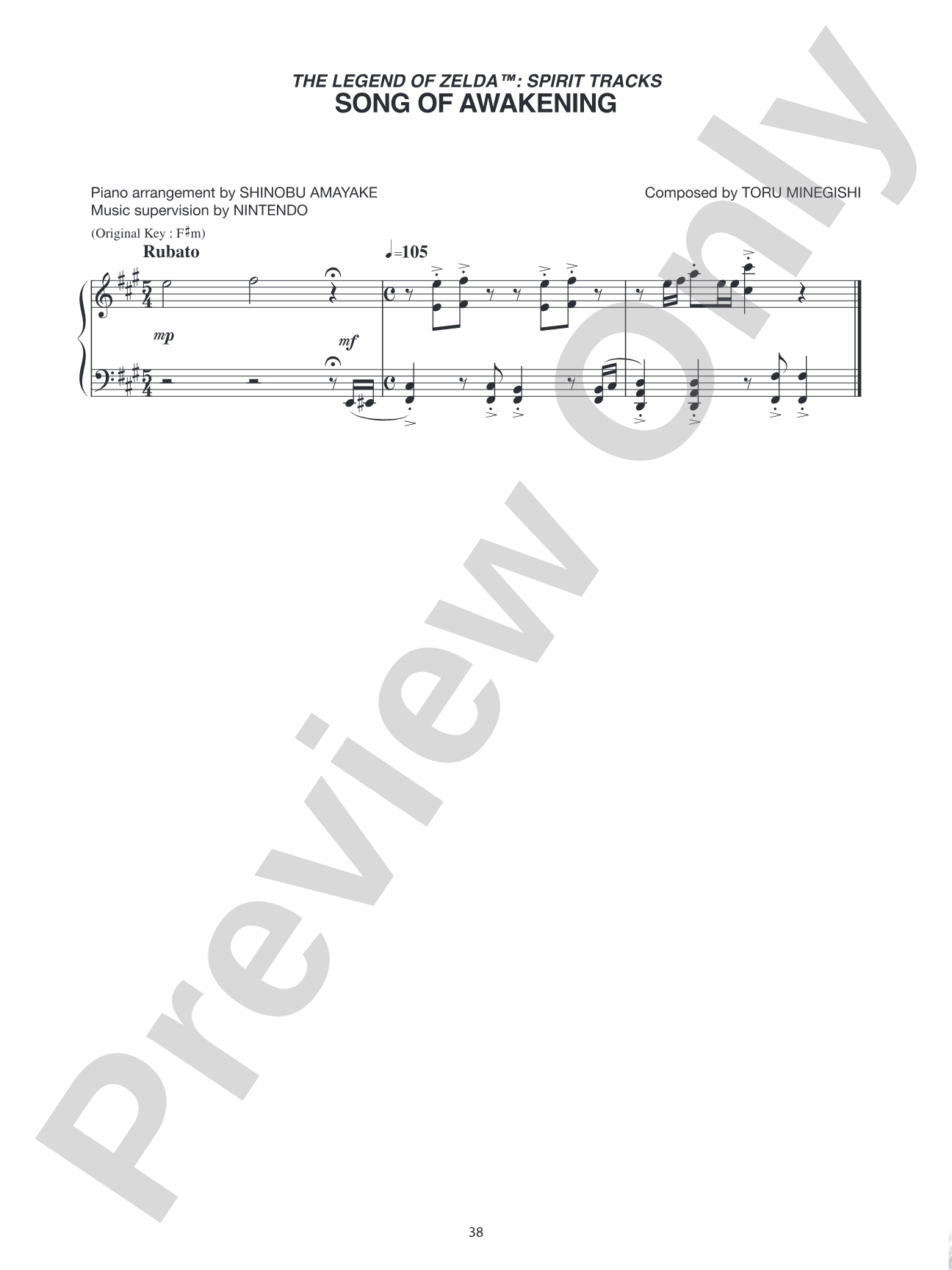

The Legend of Zelda™: Spirit Tracks Song of Awakening: Piano
Composed by Koji Kondo, Tominaga Mao, Toru Minegishi, and Asuka Ota
Level: Intermediate / Advanced
Item: 00-PS-0015456
$4.99
One moment…
Related Items
The Legend of Zelda™: Spirit Tracks Title Theme: Piano |
$4.99
|
View | |
The Legend of Zelda™: Spirit Tracks Aboda Village: Piano |
$4.99
|
View | |
The Legend of Zelda™: Spirit Tracks Chancellor Coles Theme: Piano |
$4.99
|
View | |
The Legend of Zelda™: Spirit Tracks Hyrule Castle: Piano |
$4.99
|
View | |
The Legend of Zelda™: Spirit Tracks Princess Zeldas Theme: Piano |
$4.99
|
View | |
The Legend of Zelda™: Spirit Tracks The Battle: Piano |
$4.99
|
View | |
The Legend of Zelda™: Spirit Tracks Anjeans Theme: Piano |
$4.99
|
View | |
The Legend of Zelda™: Spirit Tracks Adventuring: Piano |
$4.99
|
View | |
The Legend of Zelda™: Spirit Tracks The Tower of Spirits: Piano |
$4.99
|
View | |
The Legend of Zelda™: Spirit Tracks Riding the Rails 2: Piano |
$4.99
|
View | |
The Legend of Zelda™: Spirit Tracks Linebecks Theme: Piano |
$4.99
|
View | |
The Legend of Zelda™: Spirit Tracks Byrnes Theme: Piano |
$4.99
|
View | |
The Legend of Zelda™: Spirit Tracks Seabed: Piano |
$4.99
|
View | |
The Legend of Zelda™: Spirit Tracks Hero of the Tracks: Piano |
$4.99
|
View | |
The Legend of Zelda™: Spirit Tracks Fighting: Piano |
$4.99
|
View | |
The Legend of Zelda™: Spirit Tracks Song of Healing: Piano |
$4.99
|
View | |
The Legend of Zelda™: Spirit Tracks Song of Discovery: Piano |
$4.99
|
View | |
The Legend of Zelda™: Spirit Tracks Song of Birds: Piano |
$4.99
|
View | |
The Legend of Zelda™: Spirit Tracks Song of Light: Piano |
$4.99
|
View | |
The Legend of Zelda™: Spirit Tracks Fanfare of the Spirit Tracks: Piano |
$4.99
|
View | |
The Legend of Zelda™: Spirit Tracks Game Over: Piano |
$4.99
|
View |
Description
The soundtrack to Nintendo's The Legend of Zelda™: Spirit Tracks is packed with melodic, note-for-note transcriptions that sound great on the piano! With this officially licensed sheet music collection, intermediate to advanced pianists can dazzle friends and family by playing 22 themes from the popular video game. Titles: Title Theme * Aboda Village * Hyrule Castle * Anjean's Theme * Princess Zelda's Theme * The Tower of Spirits * Chancellor Cole's Theme * Riding the Rails 2 (Main Theme) * Seabed * The Battle * Adventuring * Linebeck's Theme * Byrne's Theme * Hero of the Tracks * Fighting * Song of Awakening * Song of Healing * Song of Discovery * Song of Birds * Song of Light * Fanfare of the Spirit Tracks * Game Over.


Discover MakeMusic Cloud: thousands of interactive titles your students can play along with today.
Sample Audio
No sample audio found.
Sample Video
No sample videos found.
Additional Details
Publisher:
Alfred Music
Page Count:
40
SKU:
00-PS-0015456
More about this title
About the Composer: Toru Minegishi
Toru Minegishi is a video game composer at Nintendo whose work spans some of the company's most beloved franchises. His compositions for The Legend of Zelda series demonstrate sophisticated harmonic writing and melodic invention that translate remarkably well to acoustic instruments, making his scores equally engaging for performers and listeners.
Minegishi's approach to video game music emphasizes memorable themes that support narrative moments while remaining musically substantial. His work on Spirit Tracks balances the whimsical and adventurous character of the game with compositional depth that rewards careful study and expressive playing.
Why we love this
These transcriptions capture the personality of Nintendo's most iconic game music without sacrificing piano technique. The collection spans 22 themes that range from intimate character moments to grand action sequences, giving intermediate and advanced pianists genuine variety within a single book. Programming video game music alongside traditional classical repertoire signals to students that composition worthy of serious study exists everywhere.
What to expect
These 22 pieces capture the emotional arc of adventure itself. Quiet moments of reflection sit alongside triumphant fanfares; mysterious underscore transitions into urgent action music. The writing maintains enough harmonic sophistication to reward thoughtful interpretation, while the melodies stay singable and immediate.
Who it's for
Intermediate to advanced pianists who want to explore popular music with real melodic substance and manageable technical demands. This collection works equally well for students building performance confidence, teachers seeking contemporary repertoire that engages their studios, and pianists interested in video game music as a legitimate area of study.
How to get the most out of it
- Each theme carries specific emotional weight from its game context. Reference video clips of the original music before your first read-through to absorb the intended tempo and character, then adjust based on what feels natural under your fingers.
- The rhythmic patterns in pieces like Riding the Rails 2 (Main Theme) anchor the energy of the piece. Keep these elements steady and clear rather than pulling tempos; the accompaniment figures will shine when they sit in a solid groove.
- Song of Healing and Song of Awakening are among the more sparse textures in the collection. Resist the urge to add pedal indiscriminately; let silence and restraint do the work these pieces ask for.
- Battle sequences and action themes often feature rapid passage work. Break these into smaller practice sections, establishing clean finger independence before attempting tempo. Video game music rewards precision and clarity over interpretive flexibility.
How to use it
Weave individual themes into student recitals across the year as contrasting pieces between classical selections; a single game theme becomes a palate cleanser and conversation starter. For a cohesive program, select 4-6 thematically related pieces from the collection and arrange them as a suite exploring different character or location motifs from the game.
Skills your students will build
- Pedaling for harmonic clarity in sparse textures
- Rhythmic precision in syncopated and energetic passages
- Managing rapid sixteenth-note figurations at performance tempo
- Sustaining melodic line integrity over busier accompaniment patterns
- Stylistic interpretation of narrative-driven thematic material
- Sight-reading efficiency across 22 distinct pieces