
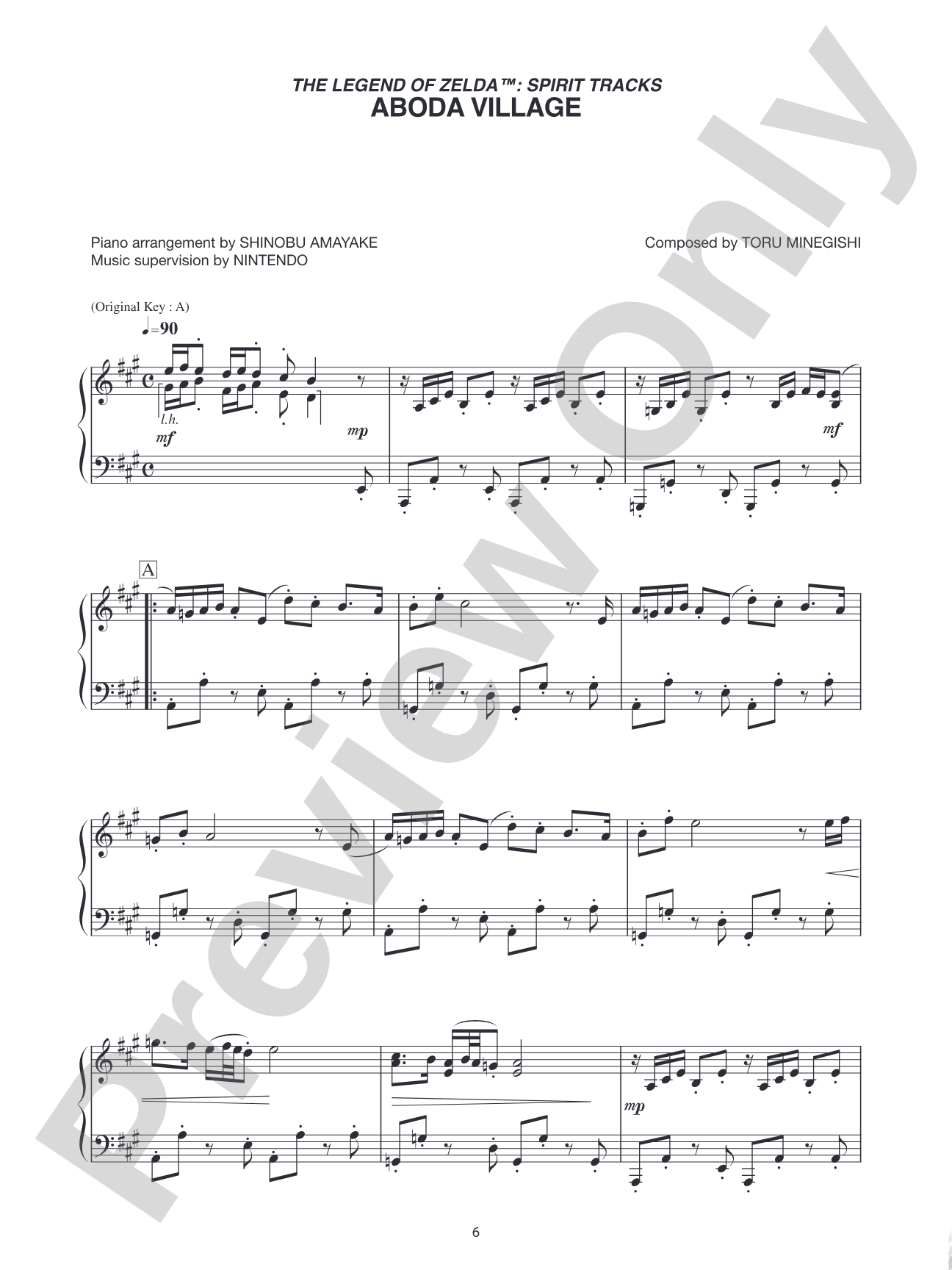

The Legend of Zelda™: Spirit Tracks Aboda Village: Piano
Composed by Koji Kondo, Tominaga Mao, Toru Minegishi, and Asuka Ota
Level: Intermediate / Advanced
Item: 00-PS-0015442
$4.99
One moment…
Related Items
The Legend of Zelda™: Spirit Tracks Title Theme: Piano |
$4.99
|
View | |
The Legend of Zelda™: Spirit Tracks Chancellor Coles Theme: Piano |
$4.99
|
View | |
The Legend of Zelda™: Spirit Tracks Hyrule Castle: Piano |
$4.99
|
View | |
The Legend of Zelda™: Spirit Tracks Princess Zeldas Theme: Piano |
$4.99
|
View | |
The Legend of Zelda™: Spirit Tracks The Battle: Piano |
$4.99
|
View | |
The Legend of Zelda™: Spirit Tracks Anjeans Theme: Piano |
$4.99
|
View | |
The Legend of Zelda™: Spirit Tracks Adventuring: Piano |
$4.99
|
View | |
The Legend of Zelda™: Spirit Tracks The Tower of Spirits: Piano |
$4.99
|
View | |
The Legend of Zelda™: Spirit Tracks Riding the Rails 2: Piano |
$4.99
|
View | |
The Legend of Zelda™: Spirit Tracks Linebecks Theme: Piano |
$4.99
|
View | |
The Legend of Zelda™: Spirit Tracks Byrnes Theme: Piano |
$4.99
|
View | |
The Legend of Zelda™: Spirit Tracks Seabed: Piano |
$4.99
|
View | |
The Legend of Zelda™: Spirit Tracks Hero of the Tracks: Piano |
$4.99
|
View | |
The Legend of Zelda™: Spirit Tracks Fighting: Piano |
$4.99
|
View | |
The Legend of Zelda™: Spirit Tracks Song of Awakening: Piano |
$4.99
|
View | |
The Legend of Zelda™: Spirit Tracks Song of Healing: Piano |
$4.99
|
View | |
The Legend of Zelda™: Spirit Tracks Song of Discovery: Piano |
$4.99
|
View | |
The Legend of Zelda™: Spirit Tracks Song of Birds: Piano |
$4.99
|
View | |
The Legend of Zelda™: Spirit Tracks Song of Light: Piano |
$4.99
|
View | |
The Legend of Zelda™: Spirit Tracks Fanfare of the Spirit Tracks: Piano |
$4.99
|
View | |
The Legend of Zelda™: Spirit Tracks Game Over: Piano |
$4.99
|
View |
Description
The soundtrack to Nintendo's The Legend of Zelda™: Spirit Tracks is packed with melodic, note-for-note transcriptions that sound great on the piano! With this officially licensed sheet music collection, intermediate to advanced pianists can dazzle friends and family by playing 22 themes from the popular video game. Titles: Title Theme * Aboda Village * Hyrule Castle * Anjean's Theme * Princess Zelda's Theme * The Tower of Spirits * Chancellor Cole's Theme * Riding the Rails 2 (Main Theme) * Seabed * The Battle * Adventuring * Linebeck's Theme * Byrne's Theme * Hero of the Tracks * Fighting * Song of Awakening * Song of Healing * Song of Discovery * Song of Birds * Song of Light * Fanfare of the Spirit Tracks * Game Over.


Discover MakeMusic Cloud: thousands of interactive titles your students can play along with today.
Sample Audio
No sample audio found.
Sample Video
No sample videos found.
Additional Details
Publisher:
Alfred Music
Page Count:
40
SKU:
00-PS-0015442
More about this title
About the Composer: Toru Minegishi
Toru Minegishi is a video game composer at Nintendo who has shaped the soundscapes of the Legend of Zelda franchise across multiple platforms. His work demonstrates a mastery of melodic writing and orchestral arrangement, translating complex emotional and environmental storytelling through music.
Minegishi's compositions balance accessibility with sophistication, making his work particularly valuable for pianists seeking engaging yet musically substantial transcriptions. His contributions to Spirit Tracks exemplify how video game music can serve as both entertainment and serious musical material for study and performance.
Why we love this
This collection captures authentic, singable melodies that reward careful voicing and pedal control. Minegishi's themes are structured for clarity without sacrificing harmonic interest, so pianists at the intermediate-advanced level get the satisfaction of sounding polished quickly while still encountering genuine musical challenges.
What to expect
These transcriptions evoke the adventure and emotion of Spirit Tracks without oversimplifying the harmonic language. Expect moments of playful action, tender character themes, and triumphant fanfares that translate beautifully to piano while maintaining the game's distinctive melodic identity.
Who it's for
Intermediate to advanced pianists seeking repertoire that bridges video game culture and classical piano technique. This collection works well for students who respond to recognizable, melodically engaging music and want to build performance confidence through material they genuinely enjoy.
How to get the most out of it
- Balance the melody against accompanimental figures by listening to how the original game soundtrack prioritizes certain voices. Adjust your touch and dynamic shaping accordingly rather than treating all written notes equally.
- Explore the sustain pedal as an expressive tool in the slower themes like Anjean's Theme and Princess Zelda's Theme. Change it mindfully to avoid muddiness while preserving the harmonic resonance.
- Pay attention to the rhythmic precision in pieces like Riding the Rails 2 and Hero of the Tracks. The momentum of these themes depends on crisp articulation and steady tempo.
- Reference the original recordings to understand the orchestral textures Minegishi composed. This context informs sensible choices about tone color and phrasing at the keyboard.
How to use it
Program individual themes as recital pieces to appeal to audiences familiar with the game and to attract students who might not otherwise engage with classical repertoire. Alternatively, program several shorter pieces together to create a thematic concert that showcases different compositional approaches within a single soundtrack.
Skills your students will build
- Articulation and touch differentiation (contrasting melodic lines with accompaniment textures)
- Pedal control and voice balancing in transcriptions with complex textures
- Sight-reading fluency (22 pieces at varying difficulty levels within the intermediate-advanced range)
- Interpretive choices based on harmonic analysis and understanding of original orchestration