
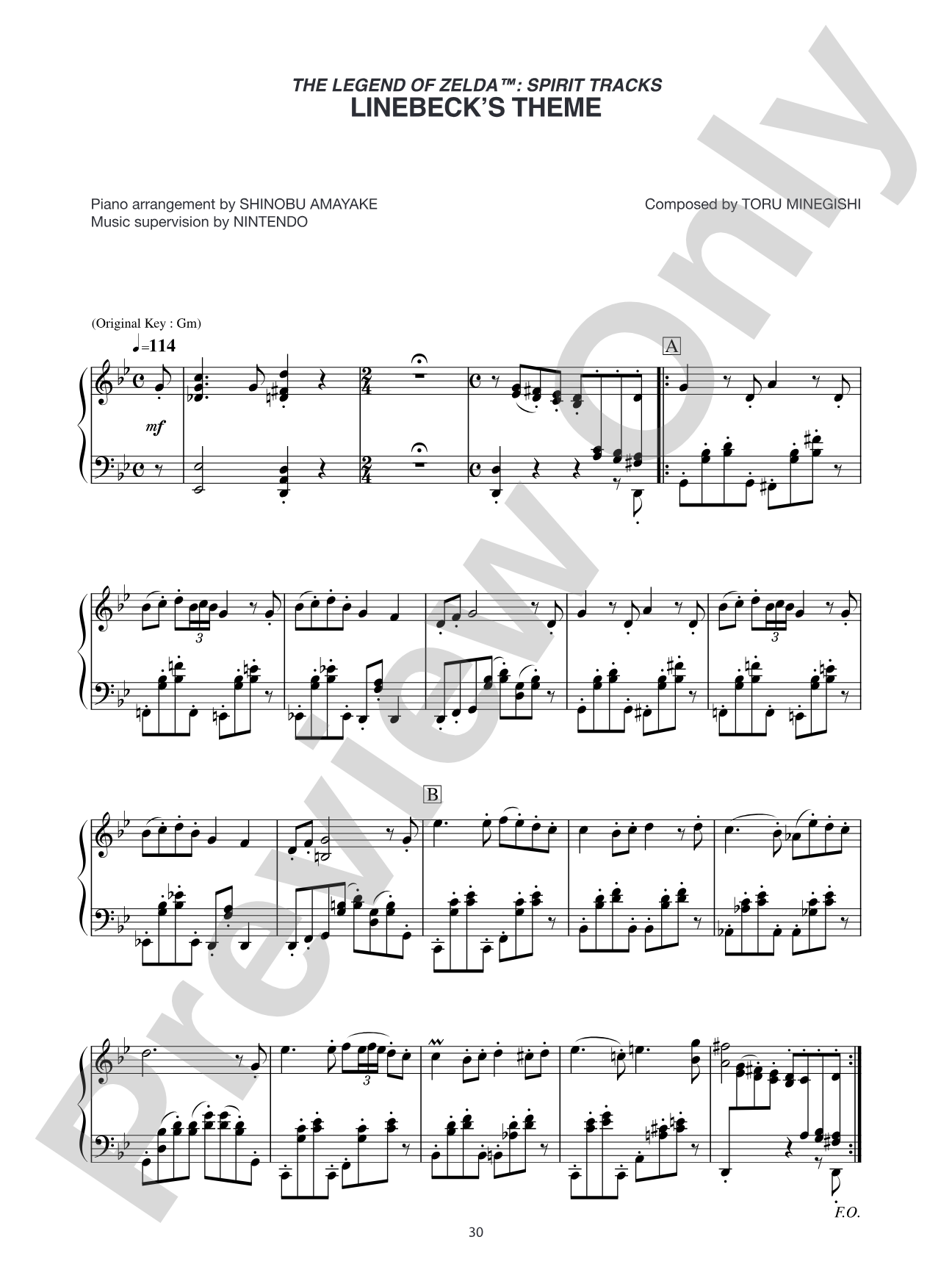

The Legend of Zelda™: Spirit Tracks Linebecks Theme: Piano
Composed by Koji Kondo, Tominaga Mao, Toru Minegishi, and Asuka Ota
Level: Intermediate / Advanced
Item: 00-PS-0015451
$4.99
One moment…
Related Items
The Legend of Zelda™: Spirit Tracks Title Theme: Piano |
$4.99
|
View | |
The Legend of Zelda™: Spirit Tracks Aboda Village: Piano |
$4.99
|
View | |
The Legend of Zelda™: Spirit Tracks Chancellor Coles Theme: Piano |
$4.99
|
View | |
The Legend of Zelda™: Spirit Tracks Hyrule Castle: Piano |
$4.99
|
View | |
The Legend of Zelda™: Spirit Tracks Princess Zeldas Theme: Piano |
$4.99
|
View | |
The Legend of Zelda™: Spirit Tracks The Battle: Piano |
$4.99
|
View | |
The Legend of Zelda™: Spirit Tracks Anjeans Theme: Piano |
$4.99
|
View | |
The Legend of Zelda™: Spirit Tracks Adventuring: Piano |
$4.99
|
View | |
The Legend of Zelda™: Spirit Tracks The Tower of Spirits: Piano |
$4.99
|
View | |
The Legend of Zelda™: Spirit Tracks Riding the Rails 2: Piano |
$4.99
|
View | |
The Legend of Zelda™: Spirit Tracks Byrnes Theme: Piano |
$4.99
|
View | |
The Legend of Zelda™: Spirit Tracks Seabed: Piano |
$4.99
|
View | |
The Legend of Zelda™: Spirit Tracks Hero of the Tracks: Piano |
$4.99
|
View | |
The Legend of Zelda™: Spirit Tracks Fighting: Piano |
$4.99
|
View | |
The Legend of Zelda™: Spirit Tracks Song of Awakening: Piano |
$4.99
|
View | |
The Legend of Zelda™: Spirit Tracks Song of Healing: Piano |
$4.99
|
View | |
The Legend of Zelda™: Spirit Tracks Song of Discovery: Piano |
$4.99
|
View | |
The Legend of Zelda™: Spirit Tracks Song of Birds: Piano |
$4.99
|
View | |
The Legend of Zelda™: Spirit Tracks Song of Light: Piano |
$4.99
|
View | |
The Legend of Zelda™: Spirit Tracks Fanfare of the Spirit Tracks: Piano |
$4.99
|
View | |
The Legend of Zelda™: Spirit Tracks Game Over: Piano |
$4.99
|
View |
Description
The soundtrack to Nintendo's The Legend of Zelda™: Spirit Tracks is packed with melodic, note-for-note transcriptions that sound great on the piano! With this officially licensed sheet music collection, intermediate to advanced pianists can dazzle friends and family by playing 22 themes from the popular video game. Titles: Title Theme * Aboda Village * Hyrule Castle * Anjean's Theme * Princess Zelda's Theme * The Tower of Spirits * Chancellor Cole's Theme * Riding the Rails 2 (Main Theme) * Seabed * The Battle * Adventuring * Linebeck's Theme * Byrne's Theme * Hero of the Tracks * Fighting * Song of Awakening * Song of Healing * Song of Discovery * Song of Birds * Song of Light * Fanfare of the Spirit Tracks * Game Over.


Discover MakeMusic Cloud: thousands of interactive titles your students can play along with today.
Sample Audio
No sample audio found.
Sample Video
No sample videos found.
Additional Details
Publisher:
Alfred Music
Page Count:
40
SKU:
00-PS-0015451
More about this title
About the Composer: Toru Minegishi
Toru Minegishi is a video game composer whose work defines the sound of Nintendo's most beloved franchises. His compositions for The Legend of Zelda series balance melodic richness with the technical constraints of game audio, creating themes that are memorable enough to stand alone on the concert stage or in the practice room.
Minegishi's approach to game music composition prioritizes singability and emotional clarity. His themes for Spirit Tracks showcase his skill at writing music that functions both as interactive soundtrack and as finished musical statement, making his work particularly valuable for pianists seeking repertoire that audiences recognize and enjoy.
Why we love this
This collection captures 22 complete themes from a beloved game in arrangements that respect both the original melodies and the piano's expressive range. Intermediate-to-advanced pianists get immediate access to music that already has cultural resonance with their peers and family members, which means performances feel less like "homework" and more like genuine entertainment.
What to expect
These themes carry the warmth and narrative pull of the game itself. Moments of adventure and discovery (Riding the Rails, Adventuring) bristle with forward motion and optimism, while the slower character themes reveal Nintendo's gift for writing music that suggests emotion without sentimentality. The three Songs feel almost liturgical in their simplicity and depth.
Who it's for
Intermediate to advanced pianists looking for engaging repertoire that connects with their interests outside classical tradition. Students who play video games will recognize these melodies immediately, making practice feel purposeful rather than distant from their everyday musical world.
How to get the most out of it
- Balance melodic lines against accompaniment textures. Many of these themes prioritize the tune, so resist the urge to bury the melody under dense left-hand figuration even when the written arrangement suggests it.
- Attend to the harmonic color in pieces like Anjean's Theme and Princess Zelda's Theme. These transcriptions rely on smooth voice leading to convey the emotional weight Nintendo composed into them.
- Control tempo shifts thoughtfully in the action cues (The Battle, Fighting, Riding the Rails 2). These pieces gain their character from rhythmic momentum, so steady tempo with clear articulation serves the music better than expressive rubato.
How to use it
A single well-prepared theme from this collection works beautifully on a student recital or informal performance event. The music's accessibility to listeners means audiences stay engaged, and pianists build confidence by playing something instantly recognizable. Alternatively, teachers can assign multiple shorter pieces from the set to create a brief "video game music" suite within a larger concert.
Skills your students will build
- Sustaining melodic lines across hand position shifts
- Balancing contrapuntal texture in both hands
- Managing rhythmic clarity in syncopated accompaniment patterns
- Controlling dynamic shape across longer formal structures
- Reading and executing straightforward harmonic progressions with stylistic consistency