
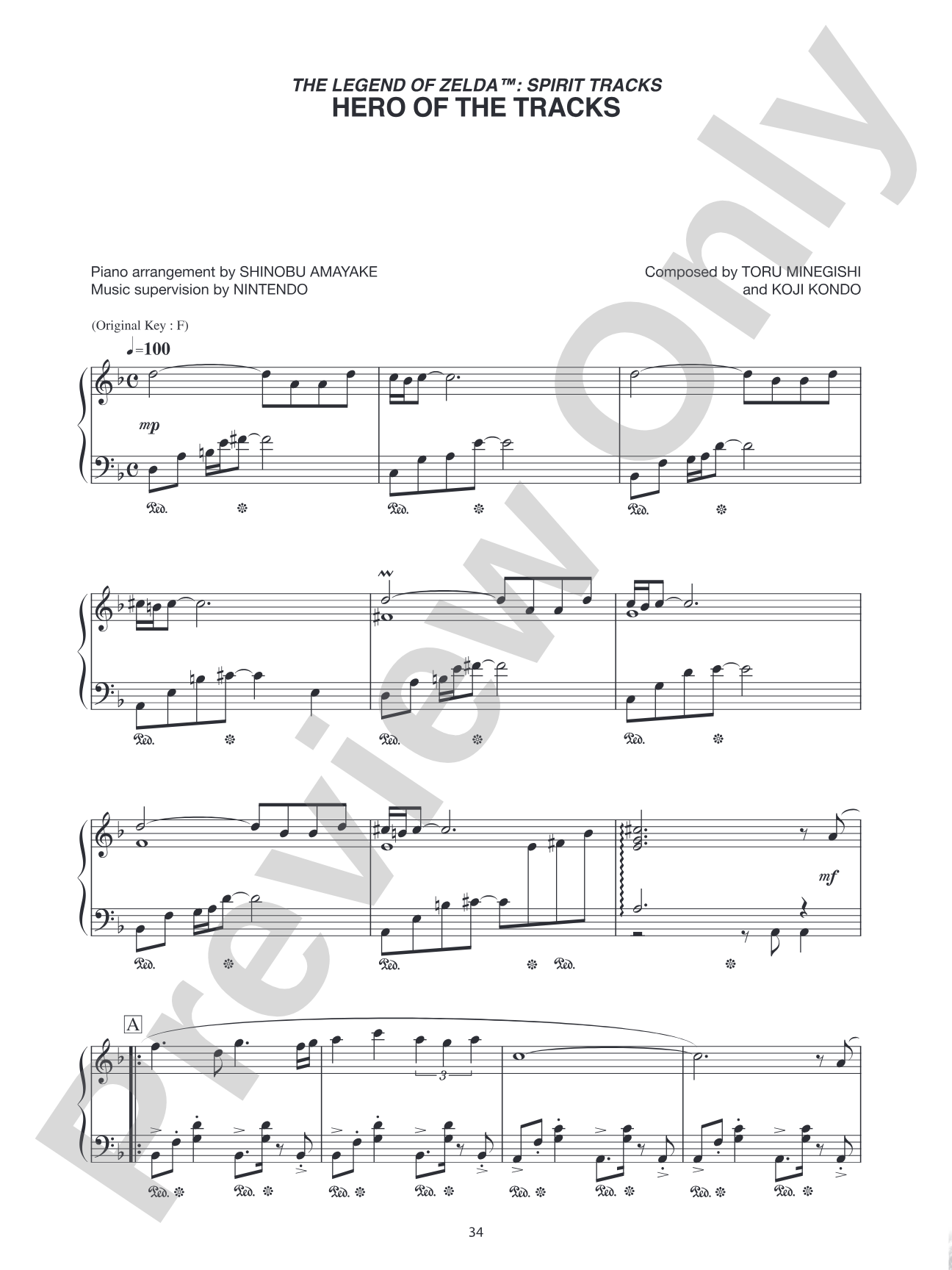

The Legend of Zelda™: Spirit Tracks Hero of the Tracks: Piano
Composed by Koji Kondo, Tominaga Mao, Toru Minegishi, and Asuka Ota
Level: Intermediate / Advanced
Item: 00-PS-0015454
$4.99
One moment…
Related Items
The Legend of Zelda™: Spirit Tracks Title Theme: Piano |
$4.99
|
View | |
The Legend of Zelda™: Spirit Tracks Aboda Village: Piano |
$4.99
|
View | |
The Legend of Zelda™: Spirit Tracks Chancellor Coles Theme: Piano |
$4.99
|
View | |
The Legend of Zelda™: Spirit Tracks Hyrule Castle: Piano |
$4.99
|
View | |
The Legend of Zelda™: Spirit Tracks Princess Zeldas Theme: Piano |
$4.99
|
View | |
The Legend of Zelda™: Spirit Tracks The Battle: Piano |
$4.99
|
View | |
The Legend of Zelda™: Spirit Tracks Anjeans Theme: Piano |
$4.99
|
View | |
The Legend of Zelda™: Spirit Tracks Adventuring: Piano |
$4.99
|
View | |
The Legend of Zelda™: Spirit Tracks The Tower of Spirits: Piano |
$4.99
|
View | |
The Legend of Zelda™: Spirit Tracks Riding the Rails 2: Piano |
$4.99
|
View | |
The Legend of Zelda™: Spirit Tracks Linebecks Theme: Piano |
$4.99
|
View | |
The Legend of Zelda™: Spirit Tracks Byrnes Theme: Piano |
$4.99
|
View | |
The Legend of Zelda™: Spirit Tracks Seabed: Piano |
$4.99
|
View | |
The Legend of Zelda™: Spirit Tracks Fighting: Piano |
$4.99
|
View | |
The Legend of Zelda™: Spirit Tracks Song of Awakening: Piano |
$4.99
|
View | |
The Legend of Zelda™: Spirit Tracks Song of Healing: Piano |
$4.99
|
View | |
The Legend of Zelda™: Spirit Tracks Song of Discovery: Piano |
$4.99
|
View | |
The Legend of Zelda™: Spirit Tracks Song of Birds: Piano |
$4.99
|
View | |
The Legend of Zelda™: Spirit Tracks Song of Light: Piano |
$4.99
|
View | |
The Legend of Zelda™: Spirit Tracks Fanfare of the Spirit Tracks: Piano |
$4.99
|
View | |
The Legend of Zelda™: Spirit Tracks Game Over: Piano |
$4.99
|
View |
Description
The soundtrack to Nintendo's The Legend of Zelda™: Spirit Tracks is packed with melodic, note-for-note transcriptions that sound great on the piano! With this officially licensed sheet music collection, intermediate to advanced pianists can dazzle friends and family by playing 22 themes from the popular video game. Titles: Title Theme * Aboda Village * Hyrule Castle * Anjean's Theme * Princess Zelda's Theme * The Tower of Spirits * Chancellor Cole's Theme * Riding the Rails 2 (Main Theme) * Seabed * The Battle * Adventuring * Linebeck's Theme * Byrne's Theme * Hero of the Tracks * Fighting * Song of Awakening * Song of Healing * Song of Discovery * Song of Birds * Song of Light * Fanfare of the Spirit Tracks * Game Over.


Discover MakeMusic Cloud: thousands of interactive titles your students can play along with today.
Sample Audio
No sample audio found.
Sample Video
No sample videos found.
Additional Details
Publisher:
Alfred Music
Page Count:
40
SKU:
00-PS-0015454
More about this title
About the Composer: Toru Minegishi
Toru Minegishi is a video game composer whose work spans Nintendo's most celebrated franchises, from the Legend of Zelda series to Fire Emblem and beyond. His compositions blend orchestral sophistication with the melodic accessibility that makes game music so memorable, creating themes that reward both casual listening and serious musical study.
Minegishi collaborates frequently with Koji Kondo, the legendary architect of Nintendo's musical identity. Together and separately, they have shaped the sonic landscape of interactive entertainment while producing music that translates beautifully to acoustic instruments.
Why we love this
These 22 transcriptions capture everything that makes Spirit Tracks a joy to play: soaring melodies, inventive harmonic progressions, and genuine emotional depth. The piano arrangements balance fidelity to the original soundtrack with idiomatic writing that feels natural on the instrument, making these pieces as satisfying to learn and perform as they are to hear.
What to expect
These pieces evoke the sense of adventure, whimsy, and quiet reflection that defines Spirit Tracks. You'll encounter sweeping castle themes that demand dramatic rubato, gentle village music that calls for delicate touch, high-energy rail sequences that test rhythmic precision, and moments of genuine poignancy that underscore the game's emotional narrative.
Who it's for
Intermediate to advanced pianists who want to build a recital repertoire beyond the traditional classical canon will find these transcriptions both accessible and musically substantial. Whether you're preparing a program for friends and family, exploring video game music as serious repertoire, or seeking melodies that reward close musical attention, this collection delivers 22 reasons to sit at the keyboard.
How to get the most out of it
- Study the phrasing across both hands as a unit rather than treating melody and accompaniment separately; the interplay between registers often carries the narrative weight of each theme.
- Let the dynamic range breathe in the longer thematic pieces like 'Princess Zelda's Theme' and 'The Tower of Spirits'; resist the temptation to maintain a uniform volume throughout.
- Pay close attention to the rhythm and articulation in the more rhythmically driven tracks such as 'Riding the Rails 2' to maintain clarity and energy without rushing.
- Use the contrasting moods of adjacent pieces to shape your practice sessions; jumping from a contemplative theme to an action-oriented one helps strengthen your interpretive range.
How to use it
Consider programming one or two of these themes as palette cleansers in a mixed recital, or construct an entire program around the collection if you want to introduce an audience to the sophistication of video game composition. The variety of moods and tempos makes it easy to build a program that showcases range, and the pieces' inherent memorability means audiences engage immediately.
Skills your students will build
- Performing scalar and arpeggiated figurations with evenness and control across varied tempos
- Reading complex rhythmic figures in both hands independently
- Shaping melodic phrases across both the left and right hand with dynamic intention
- Transitioning between contrasting textures and registers smoothly
- Interpreting rubato and tempo flexibility in thematic passages
- Balancing harmonic independence with unified musical phrasing