
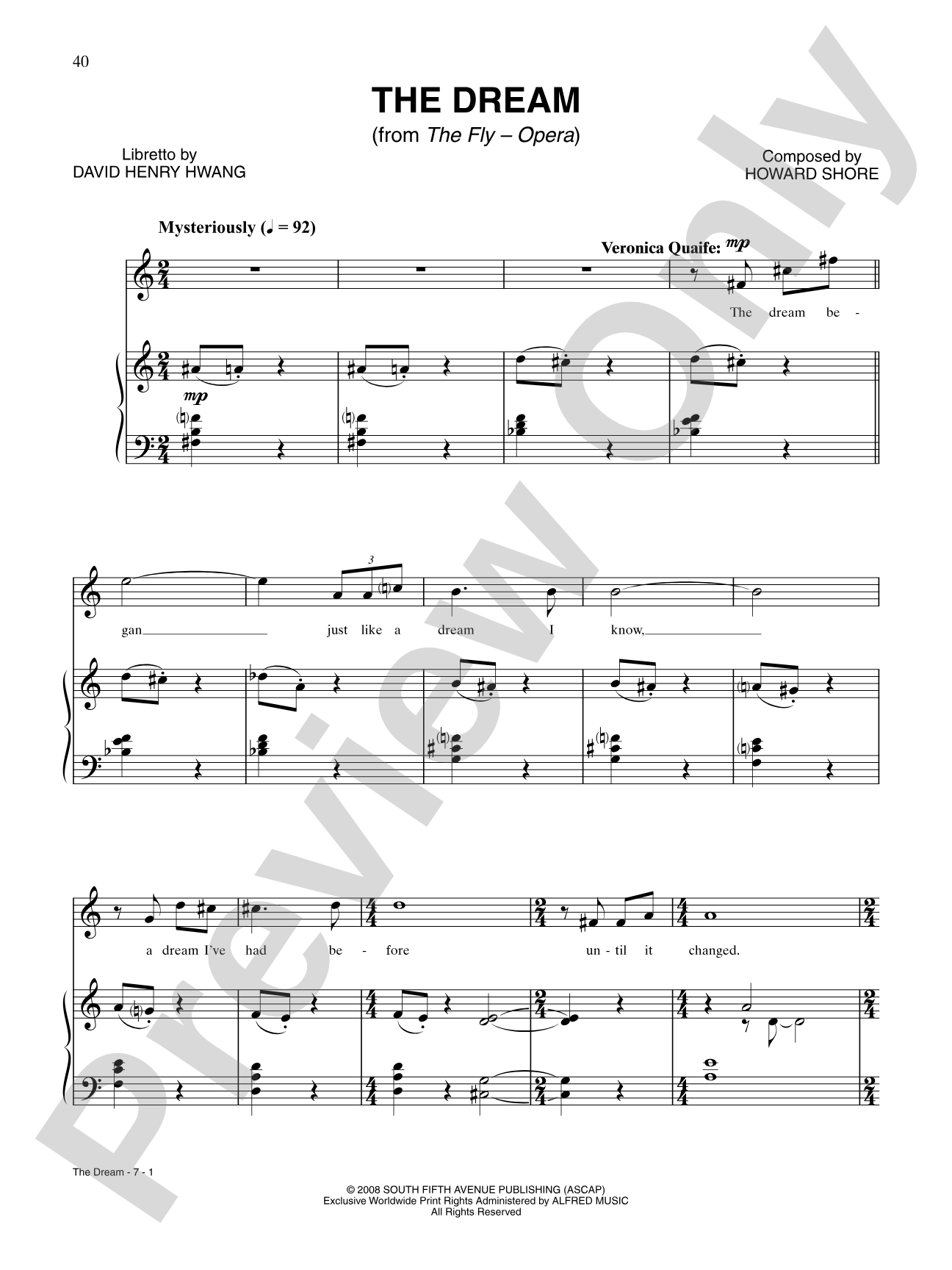
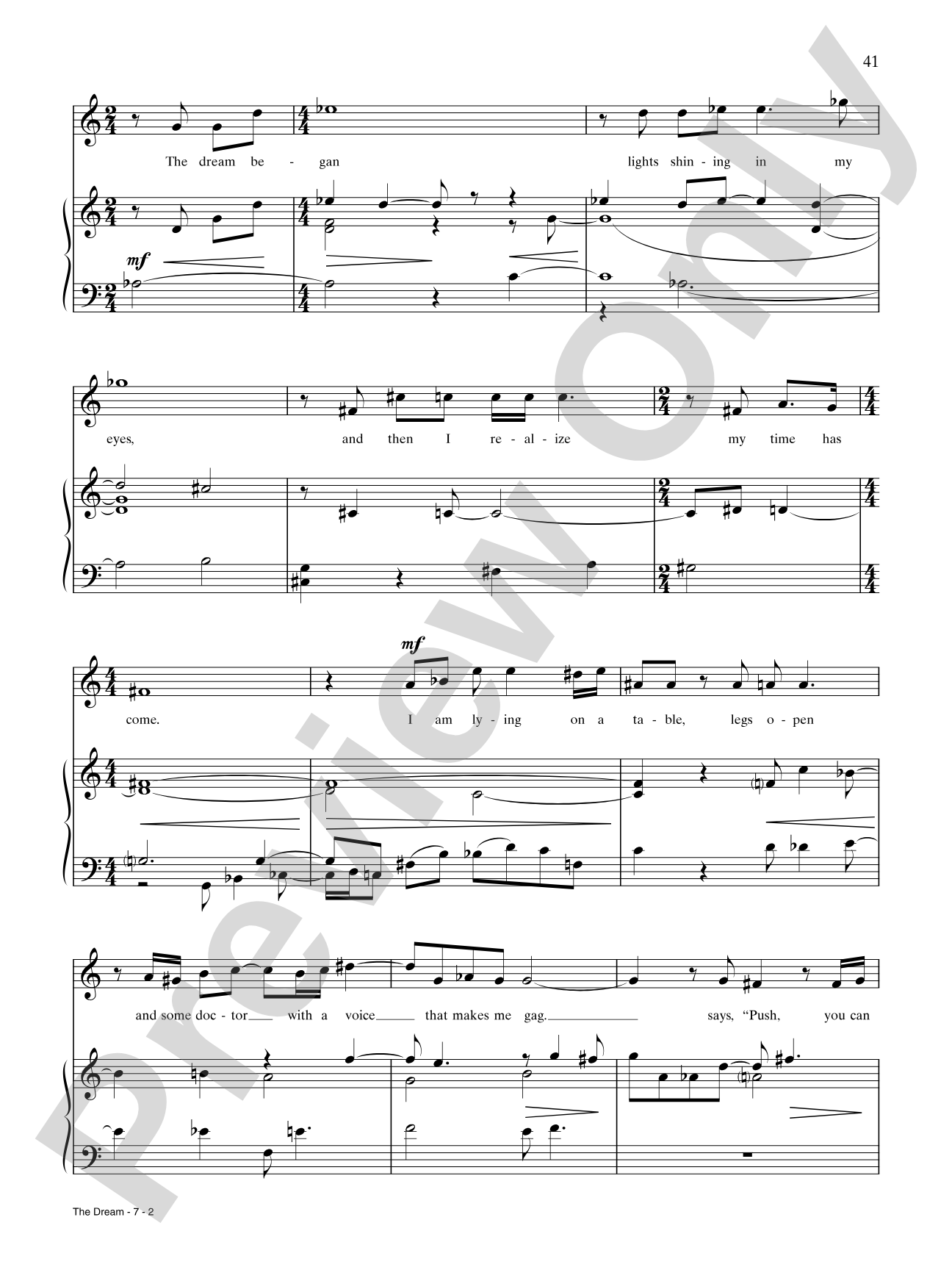

The Dream: Piano/Vocal/Chords
Composed by Howard Shore
Item: 00-PS-0015750
$5.99
Pickup currently not available
Related Items
Eclipse (All Yours): Piano/Vocal/Chords |
$4.99
|
View | |
Jacob's Theme: Piano |
$4.99
|
View | |
Portrait of John Doe: Piano |
$4.99
|
View | |
Portrait of Edie: Piano |
$4.99
|
View | |
Catania: Piano |
$4.99
|
View | |
Piano Four: Piano |
$4.99
|
View | |
Brooklyn Heights 3: Piano |
$4.99
|
View | |
Love Will Find Out the Way: Piano/Vocal/Chords |
$4.99
|
View | |
Dead Ringers (Main Title): Piano |
$4.99
|
View | |
Miss Spielrein: Piano |
$4.99
|
View | |
Richard, Duke of York: Piano/Vocal/Chords |
$5.99
|
View | |
Your Flesh: Piano/Vocal/Chords |
$5.99
|
View | |
The Shape of Rage: Piano |
$4.99
|
View | |
Birthday March: Piano/Vocal/Chords |
$4.99
|
View | |
Beyond the Forest: Piano/Vocal/Chords |
$5.99
|
View | |
The Howard Shore Collection, Volume 2: Piano/Vocal/Chords Book |
$19.99
|
View |
Description
Academy Award®-winner Howard Shore is best known for his elegant and eclectic film scores, including the soundtracks for Peter Jackson's The Lord of the Rings and The Hobbit trilogies. This collection features faithful arrangements of some of the best known titles by this brilliant composer. Titles: Birthday March (Big) * Brooklyn Heights 3 (Gangs of New York) * Calliope (Big) * Catania * Coeur Volant (Hugo) * Dead Ringers (Main Title) (Dead Ringers) * The Dream (from the opera The Fly) * Dreaming of Bag End (The Hobbit: An Unexpected Journey) * The Dwarf Lords (The Hobbit: An Unexpected Journey) * Eclipse (All Yours) (The Twilight Saga: Eclipse) * The End of All Things (The Lord of the Rings: The Return of the King) * Erebor (The Hobbit: An Unexpected Journey) * Jacob's Theme (The Twilight Saga: Eclipse) * Love Will Find Out the Way (Spider) * Miss Spielrein (A Dangerous Method) * Piano Four * Portrait of Edie (A History of Violence) * Portrait of John Doe (Se7en) * Richard, Duke of York (Looking for Richard) * The Shape of Rage (The Brood) * The Thief (Hugo) * Your Flesh (from the opera The Fly) * Zoltar (Big).


The Dream: Piano/Vocal/Chords isn't in MakeMusic Cloud just yet...but it could be. Let us know you'd like to see it, and you'll help shape what comes next. In the meantime, start a free trial and dive into thousands of interactive titles your students can play along with today.
Request This Title
Tell us you want it.
Start Your Free Trial
Explore everything that's ready to play right now.
Sample Audio
No sample audio found.
Sample Video
No sample videos found.
Additional Details
Publisher:
Alfred Music
Page Count:
112
SKU:
00-PS-0015750
More about this title
About the Composer: Howard Shore
Howard Shore has crafted some of cinema's most recognizable scores across four decades of film work. His orchestrations for Peter Jackson's adaptations of Tolkien—spanning both The Lord of the Rings and The Hobbit trilogies—established him as a master of epic, thematic composition. Beyond fantasy filmmaking, Shore has scored psychological thrillers, intimate character studies, and even operatic works, earning Academy Awards and demonstrating remarkable range across genres.
As a composer, Shore thinks orchestrally even when writing for piano and voice. His melodies tend to emerge clearly from supportive harmonic textures, and his thematic work rewards repeated listening. For pianists and singers, his music offers both technical substance and emotional directness.
Why we love this
Shore's film scores translate exceptionally well to the piano/vocal format because his melodies are inherently singable and his harmonic language remains sophisticated without requiring a full orchestra. This collection pulls from such recognizable films that singers and accompanists will find immediate musical engagement, yet the material demands genuine musicianship rather than shallow showmanship. Programming these pieces signals serious artistry while remaining accessible to audiences.
What to expect
These pieces evoke the intimate, poignant moments Shore carved from massive film narratives. There's elegance in the writing, often with a minor-key warmth or twilight quality that feels introspective rather than bombastic. The piano and voice together create space for reflection and vulnerability.
Who it's for
This collection serves singers preparing recital repertoire drawn from film, pianists seeking substantial solo arrangements with vocal partnership, and music teachers building programs around recognizable contemporary scores. Singers already familiar with Shore's film work will find immediate connection, while musicians approaching the material fresh will discover that the music itself carries emotional weight independent of its cinematic source.
How to get the most out of it
- Lean into the narrative quality of each piece. Shore composes melodically for cinema, so treat the vocal line as storytelling rather than ornamentation over the chords. Your phrasing should serve the emotional arc of the moment.
- Balance the piano texture thoughtfully. Many of these arrangements support the vocal line rather than dominate it; resist the urge to fill silence with busier playing. Space and restraint often intensify Shore's harmonic effects.
- Honor key changes and modulations as structural events. Shore uses harmonic shifts deliberately to shift emotional terrain. Mark these transitions and shape them intentionally.
- Coordinate rubato between voice and piano. Shore's film music often breathes with subtle give-and-take; discuss phrasing and flexibility in rehearsal so accompanist and singer move together.
How to use it
Use this collection to bridge contemporary film music and art song repertoire in a recital program. A set of Shore pieces works well as a thematic programming block (perhaps grouping Tolkien pieces together, or pairing emotionally similar selections). These arrangements also serve well as encore material or as substantial supplementary repertoire for singers in training.
Skills your students will build
- Legit singing over piano accompaniment with clear diction and phrase control
- Accompaniment coordination and ensemble listening between vocalist and pianist
- Harmonic reading and voice-leading awareness from the chord symbols
- Interpretation of film music convention and dramatic intent in scored arrangements
- Sight-reading fluency across mid-to-advanced contemporary vocal literature