
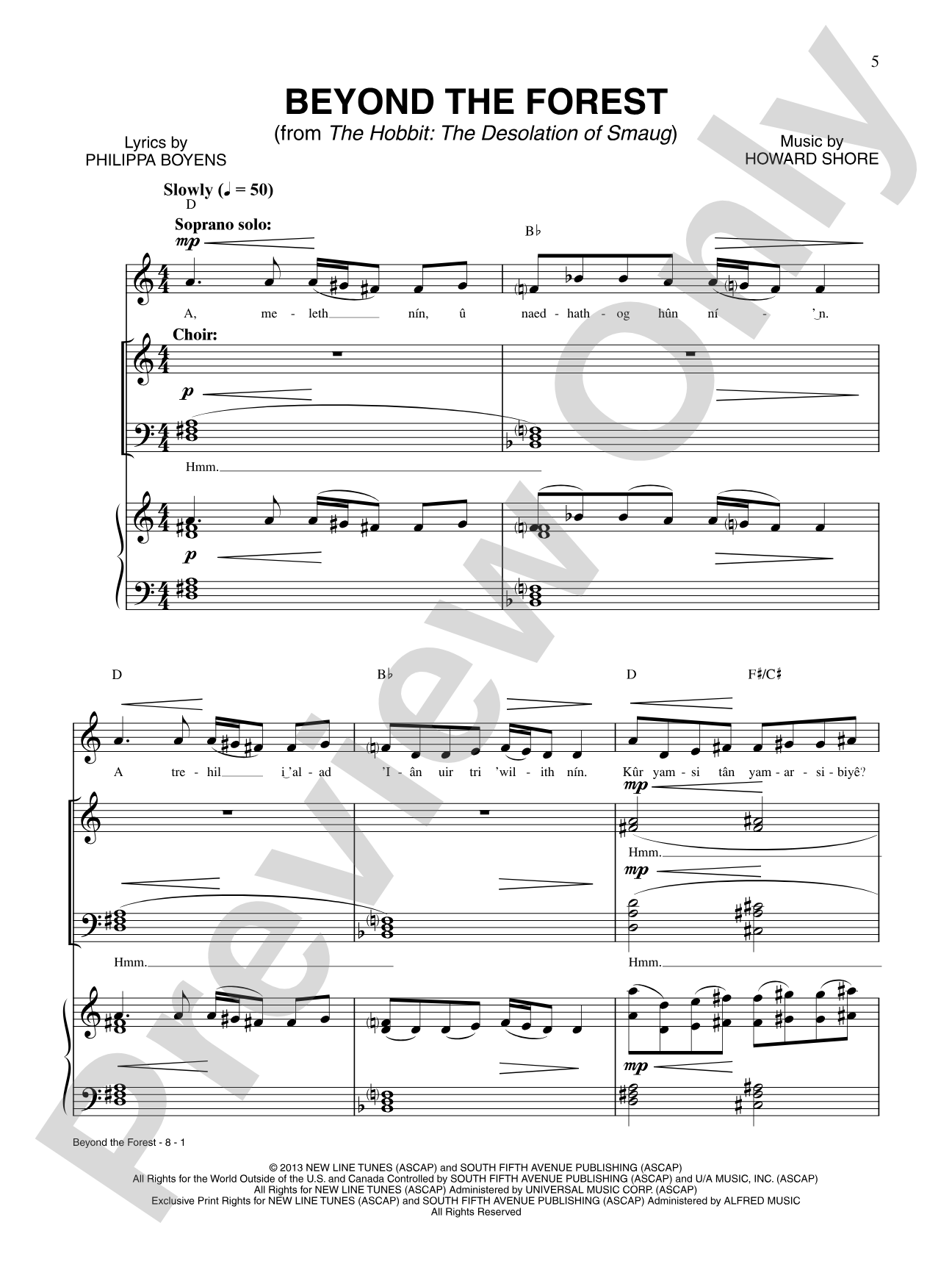
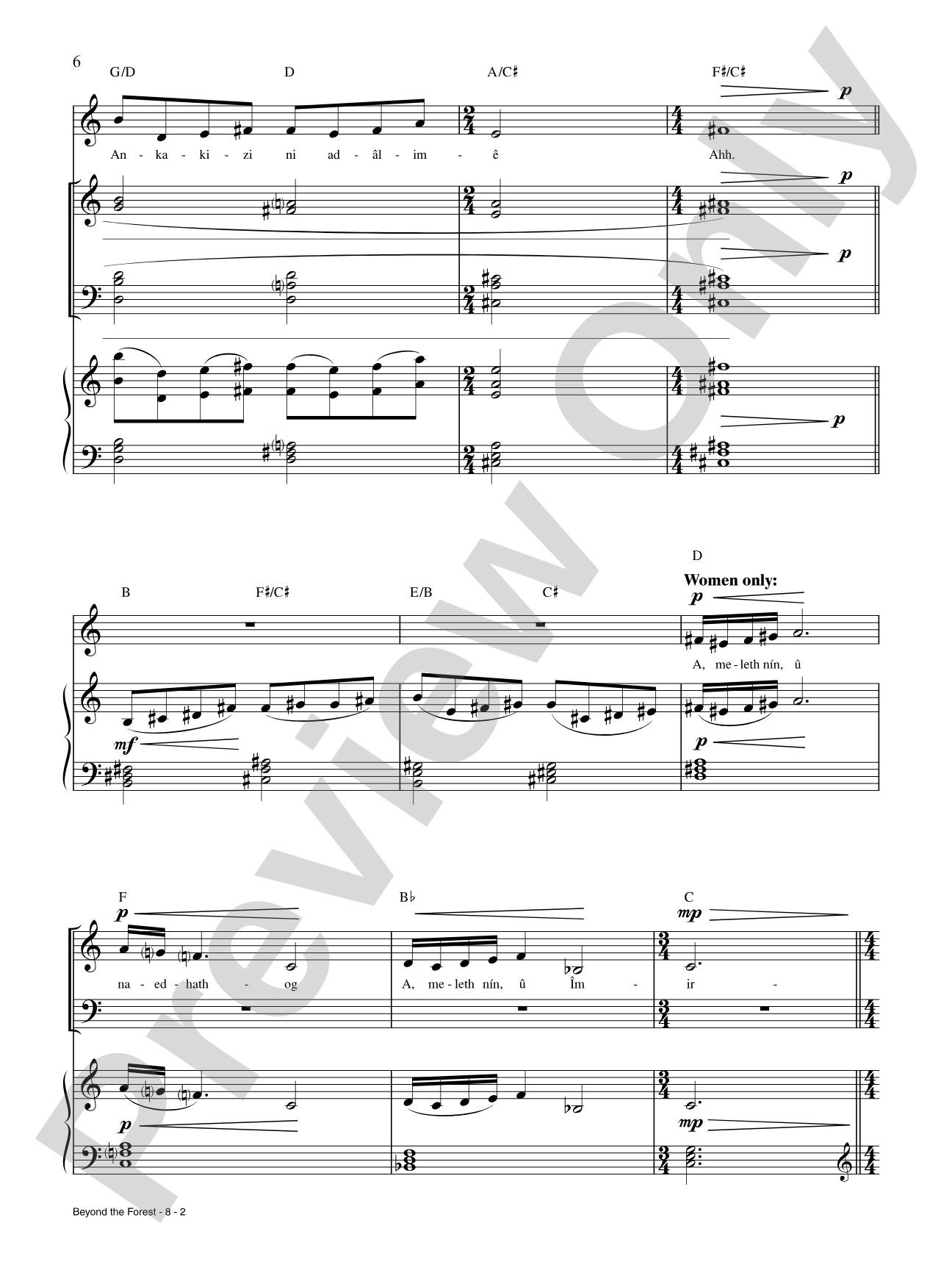

Beyond the Forest: Piano/Vocal/Chords
Composed by Howard Shore
Item: 00-PS-0015749
$5.99
Pickup currently not available
Related Items
Eclipse (All Yours): Piano/Vocal/Chords |
$4.99
|
View | |
Jacob's Theme: Piano |
$4.99
|
View | |
Portrait of John Doe: Piano |
$4.99
|
View | |
Portrait of Edie: Piano |
$4.99
|
View | |
Catania: Piano |
$4.99
|
View | |
Piano Four: Piano |
$4.99
|
View | |
Brooklyn Heights 3: Piano |
$4.99
|
View | |
Love Will Find Out the Way: Piano/Vocal/Chords |
$4.99
|
View | |
Dead Ringers (Main Title): Piano |
$4.99
|
View | |
Miss Spielrein: Piano |
$4.99
|
View | |
Richard, Duke of York: Piano/Vocal/Chords |
$5.99
|
View | |
Your Flesh: Piano/Vocal/Chords |
$5.99
|
View | |
The Shape of Rage: Piano |
$4.99
|
View | |
Birthday March: Piano/Vocal/Chords |
$4.99
|
View | |
The Dream: Piano/Vocal/Chords |
$5.99
|
View | |
The Howard Shore Collection, Volume 2: Piano/Vocal/Chords Book |
$19.99
|
View |
Description
Academy Award®-winner Howard Shore is best known for his elegant and eclectic film scores, including the soundtracks for Peter Jackson's The Lord of the Rings and The Hobbit trilogies. This collection features faithful arrangements of some of the best known titles by this brilliant composer. Titles: Birthday March (Big) * Brooklyn Heights 3 (Gangs of New York) * Calliope (Big) * Catania * Coeur Volant (Hugo) * Dead Ringers (Main Title) (Dead Ringers) * The Dream (from the opera The Fly) * Dreaming of Bag End (The Hobbit: An Unexpected Journey) * The Dwarf Lords (The Hobbit: An Unexpected Journey) * Eclipse (All Yours) (The Twilight Saga: Eclipse) * The End of All Things (The Lord of the Rings: The Return of the King) * Erebor (The Hobbit: An Unexpected Journey) * Jacob's Theme (The Twilight Saga: Eclipse) * Love Will Find Out the Way (Spider) * Miss Spielrein (A Dangerous Method) * Piano Four * Portrait of Edie (A History of Violence) * Portrait of John Doe (Se7en) * Richard, Duke of York (Looking for Richard) * The Shape of Rage (The Brood) * The Thief (Hugo) * Your Flesh (from the opera The Fly) * Zoltar (Big).


Beyond the Forest: Piano/Vocal/Chords isn't in MakeMusic Cloud just yet...but it could be. Let us know you'd like to see it, and you'll help shape what comes next. In the meantime, start a free trial and dive into thousands of interactive titles your students can play along with today.
Request This Title
Tell us you want it.
Start Your Free Trial
Explore everything that's ready to play right now.
Sample Audio
No sample audio found.
Sample Video
No sample videos found.
Additional Details
Publisher:
Alfred Music
Page Count:
112
SKU:
00-PS-0015749
More about this title
About the Composer: Howard Shore
Howard Shore has spent decades crafting film scores that balance orchestral grandeur with intimate emotional storytelling. His work across multiple decades and genres reveals a composer deeply committed to serving the narrative while maintaining distinctive melodic and harmonic voice.
Shore's collaborations with director Peter Jackson on The Lord of the Rings and The Hobbit trilogies represent some of cinema's most ambitious orchestral achievements. His ability to create memorable, singable themes that function equally well in concert settings or reduced arrangements makes his music particularly valuable for musicians exploring film score composition and arrangement.
Why we love this
This collection pulls some of Shore's most vocally and pianistically rewarding material into accessible arrangements that preserve the emotional core of the original scores. Singers and pianists gain direct access to themes that immediately resonate with audiences, while the piano/vocal/chord format lets accompanists support vocalists or work independently with genuine artistic material.
What to expect
These arrangements capture the cinematic sweep and emotional intimacy of Shore's original work, scaled to the piano and voice. Whether exploring the heroic grandeur of Middle Earth themes or the quieter introspection of character portraits, each piece balances orchestral thinking with the directness of piano/vocal scoring.
Who it's for
Singers preparing art songs or recital material grounded in accessible, memorable melody will find genuine artistic substance here. Pianists and music students interested in film scoring, arrangement, and contemporary composition benefit from studying how Shore adapts orchestral ideas for the keyboard.
How to get the most out of it
- Pay attention to Shore's use of rubato and phrase shape; these themes often benefit from slight tempo flexibility at cadential moments rather than metronomic precision.
- The chord symbols provide harmonic guidance, but listen to how Shore voices these harmonies in context. Notice which inversions and doublings create the emotional weight in passages like 'The End of All Things.'
- Balance vocal melody with piano accompaniment thoughtfully. Shore's film scoring emphasizes both partners equally; avoid overplaying the accompaniment when the lyrical line deserves space.
- Explore dynamic range within individual phrases. Many of these themes gain their power through subtle swells and retreats rather than dramatic contrasts.
How to use it
Feature individual selections in recitals exploring film music as contemporary classical art song. Many of these pieces also work well as teaching repertoire for singers and pianists studying how melody, harmony, and text (when present) interact across different musical styles and contexts.
Skills your students will build
- Interpreting film score arrangement and reducing orchestral thinking to keyboard
- Singing with jazz chord symbols and understanding harmonic function
- Balancing vocal and piano parts with equal artistic weight
- Sustaining long melodic lines with expressive shape and rubato
- Understanding thematic development across different musical contexts and emotional registers