
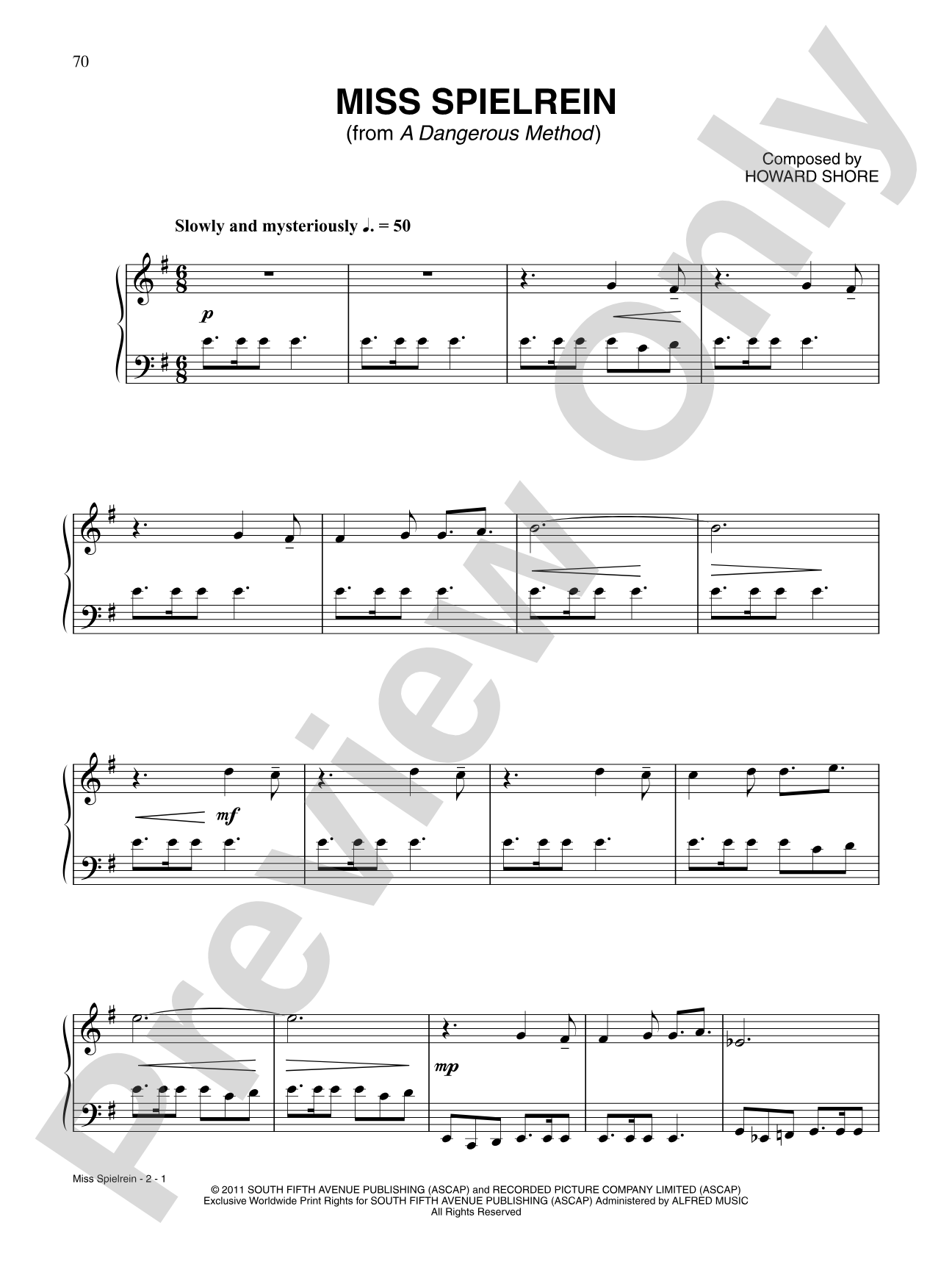

Miss Spielrein: Piano
Composed by Howard Shore
Item: 00-PS-0015744
$4.99
Pickup currently not available
Related Items
Eclipse (All Yours): Piano/Vocal/Chords |
$4.99
|
View | |
Jacob's Theme: Piano |
$4.99
|
View | |
Portrait of John Doe: Piano |
$4.99
|
View | |
Portrait of Edie: Piano |
$4.99
|
View | |
Catania: Piano |
$4.99
|
View | |
Piano Four: Piano |
$4.99
|
View | |
Brooklyn Heights 3: Piano |
$4.99
|
View | |
Love Will Find Out the Way: Piano/Vocal/Chords |
$4.99
|
View | |
Dead Ringers (Main Title): Piano |
$4.99
|
View | |
Richard, Duke of York: Piano/Vocal/Chords |
$5.99
|
View | |
Your Flesh: Piano/Vocal/Chords |
$5.99
|
View | |
The Shape of Rage: Piano |
$4.99
|
View | |
Birthday March: Piano/Vocal/Chords |
$4.99
|
View | |
Beyond the Forest: Piano/Vocal/Chords |
$5.99
|
View | |
The Dream: Piano/Vocal/Chords |
$5.99
|
View | |
The Howard Shore Collection, Volume 2: Piano/Vocal/Chords Book |
$19.99
|
View |
Description
Academy Award®-winner Howard Shore is best known for his elegant and eclectic film scores, including the soundtracks for Peter Jackson's The Lord of the Rings and The Hobbit trilogies. This collection features faithful arrangements of some of the best known titles by this brilliant composer. Titles: Birthday March (Big) * Brooklyn Heights 3 (Gangs of New York) * Calliope (Big) * Catania * Coeur Volant (Hugo) * Dead Ringers (Main Title) (Dead Ringers) * The Dream (from the opera The Fly) * Dreaming of Bag End (The Hobbit: An Unexpected Journey) * The Dwarf Lords (The Hobbit: An Unexpected Journey) * Eclipse (All Yours) (The Twilight Saga: Eclipse) * The End of All Things (The Lord of the Rings: The Return of the King) * Erebor (The Hobbit: An Unexpected Journey) * Jacob's Theme (The Twilight Saga: Eclipse) * Love Will Find Out the Way (Spider) * Miss Spielrein (A Dangerous Method) * Piano Four * Portrait of Edie (A History of Violence) * Portrait of John Doe (Se7en) * Richard, Duke of York (Looking for Richard) * The Shape of Rage (The Brood) * The Thief (Hugo) * Your Flesh (from the opera The Fly) * Zoltar (Big).


Miss Spielrein: Piano isn't in MakeMusic Cloud just yet...but it could be. Let us know you'd like to see it, and you'll help shape what comes next. In the meantime, start a free trial and dive into thousands of interactive titles your students can play along with today.
Request This Title
Tell us you want it.
Start Your Free Trial
Explore everything that's ready to play right now.
Sample Audio
No sample audio found.
Sample Video
No sample videos found.
Additional Details
Publisher:
Alfred Music
Page Count:
112
SKU:
00-PS-0015744
More about this title
About the Composer: Howard Shore
Howard Shore's film scores have defined the sound of contemporary cinema. His work on Peter Jackson's The Lord of the Rings and The Hobbit trilogies earned him three Academy Awards and established him as one of the most versatile and prolific composers working in film today. Beyond fantasy epics, Shore has composed haunting scores for psychological thrillers, intimate character studies, and experimental operas, demonstrating a compositional range that moves fluidly across genres and emotional registers.
Shore's approach to orchestration and melody has made his film music exceptionally singable and playable in chamber settings. His arrangements for solo piano and small ensemble capture the emotional core of his original scores while remaining accessible to intermediate pianists. For music educators, Shore's catalog offers students the opportunity to explore sophisticated harmonic language, sophisticated film narrative structure through music, and the craft of adapting large orchestral works into keyboard arrangements.
Why we love this
This collection draws from some of Shore's most recognizable scores, giving pianists access to emotionally substantial material that students actually want to play. The range here is remarkable: from the whimsical "Birthday March" from Big to the haunting "The End of All Things" from The Return of the King, these arrangements preserve Shore's harmonic sophistication while remaining playable at intermediate level. Programming these pieces signals to your audience that film music belongs on concert stages alongside classical repertoire.
What to expect
These pieces evoke the cinematic experiences that inspired them: sweeping fantasy landscapes, intimate psychological tension, whimsy and wonder, and moments of profound loss. Shore's melodies sit naturally under the hands, and his harmonies balance lush romanticism with modern sensibility. Playing through this collection feels like conducting your own film score.
Who it's for
Intermediate pianists seeking contemporary repertoire with immediate emotional payoff and clear narrative arc. Students who connect with film and want to perform music they recognize. Piano teachers building recital programs that bridge classical and popular idioms without sacrificing musical substance.
How to get the most out of it
- Attend to Shore's use of pedal markings carefully. These arrangements rely on harmonic resonance and color; the sustain pedal is compositional, not decorative.
- Shape longer melodic lines with subtle dynamic contours rather than rigid forte and piano. Shore's film writing emphasizes legato storytelling.
- Layer your tempo flexibility slightly. These pieces ask for rubato in moments of emotional intensity, particularly in the slower character portraits like "Portrait of Edie" and "Portrait of John Doe."
How to use it
Use individual pieces as standalone recital selections that surprise and delight audiences unfamiliar with Shore's concert arrangements. Group selections from related films (several pieces from The Hobbit, for instance) to create a thematic concert arc. Feature one piece as an encore, where the immediate recognition factor creates genuine connection with the audience.
Skills your students will build
- Reading and executing pedal markings for harmonic color and resonance
- Balancing melodic legato against accompaniment patterns across different hand positions
- Interpreting film narrative structure through dynamic and tempo choices
- Adapting orchestral voicing and texture to keyboard constraints
- Performing contemporary arrangements of recognizable themes with stylistic integrity