
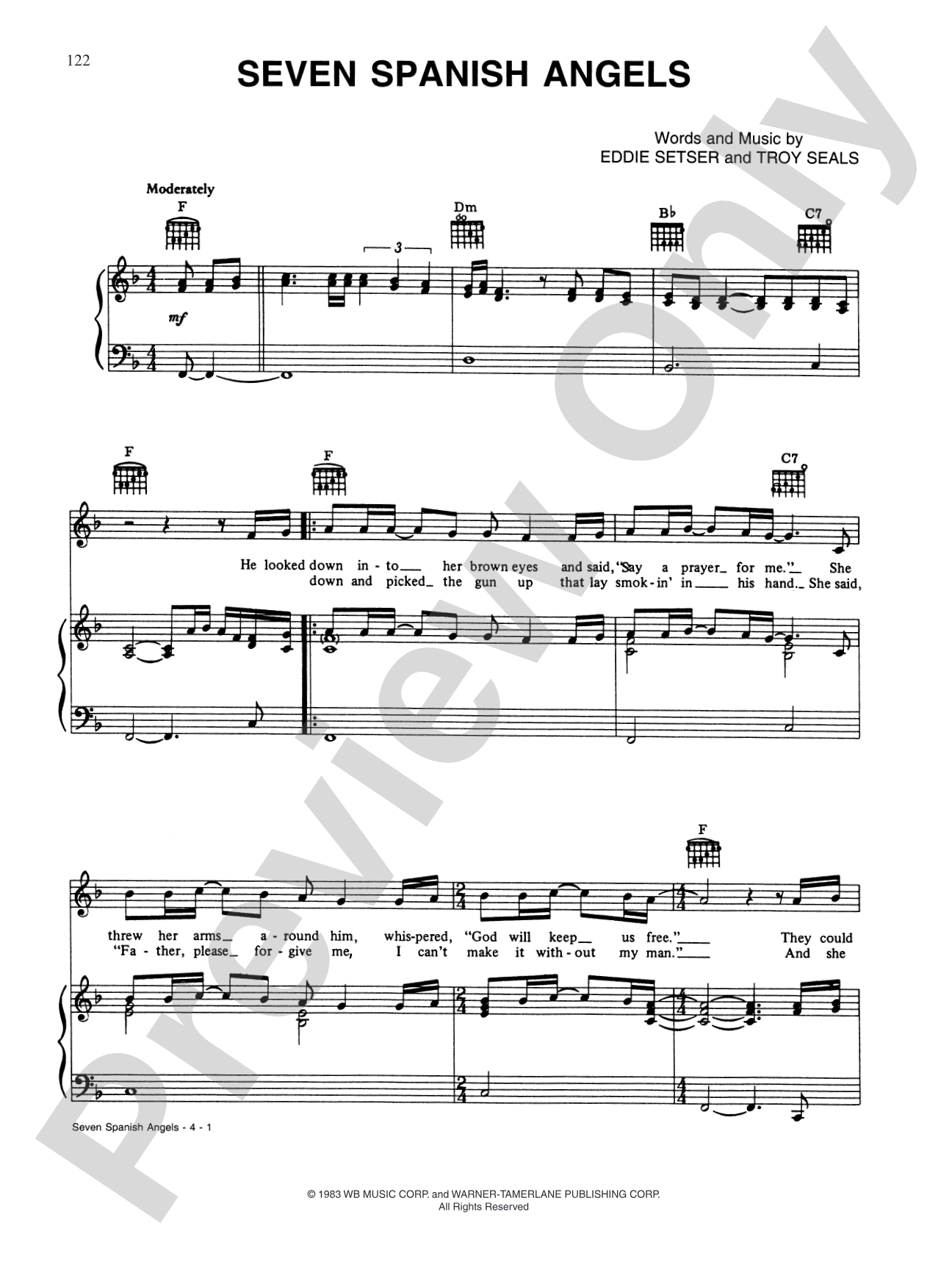

Seven Spanish Angels: Piano/Vocal/Chords
Ray Charles
Item: 00-PS-0013247
$4.99
One moment…
Related Items
Hallelujah I Love Her So: Piano/Vocal/Chords |
$5.99
|
View | |
That Lucky Old Sun: Piano/Vocal/Chords |
$5.99
|
View | |
What'd I Say: Piano/Vocal/Chords |
$9.99
|
View | |
Let the Good Times Roll: Piano/Vocal/Chords |
$5.99
|
View | |
Over the Rainbow: Piano/Vocal/Chords |
$4.99
|
View | |
Ruby: Piano/Vocal/Chords |
$5.99
|
View | |
Ain't That Love: Piano/Vocal/Chords |
$4.99
|
View | |
I've Got a Woman: Piano/Vocal/Chords |
$5.99
|
View | |
Mary Ann: Piano/Vocal/Chords |
$5.99
|
View | |
Mess Around: Piano/Vocal/Chords |
$5.99
|
View | |
One Mine Julep: Piano/Vocal/Chords |
$4.99
|
View | |
Sinner's Prayer: Piano/Vocal/Chords |
$5.99
|
View | |
This Little Girl of Mine: Piano/Vocal/Chords |
$5.99
|
View | |
Crazy Love: Piano/Vocal/Chords |
$5.99
|
View | |
Let's Go Get Stoned: Piano/Vocal/Chords |
$5.99
|
View | |
Come Rain Or Come Shine: Piano/Vocal/Chords |
$5.99
|
View | |
America the Beautful: Piano/Vocal/Chords |
$4.99
|
View |
Description
This collectible songbook celebrates the enduring legacy of Ray Charles at the 80th anniversary of his birth. Each sheet music transcription accurately renders his signature piano riffs and solos, and provides lyrics, vocal melodies, and chord changes. Ray Charles had three simple words of advice for achieving success: "Practice, practice, practice." With 28 fun and challenging transcriptions of some of popular music's most enduring standards, this collection gives pianists the opportunity to practice the techniques of the "Genius" himself. Titles: * Ain't That Love * America the Beautiful * Busted * Christmas in My Heart * Come Rain or Come Shine * Crazy Love * Georgia on My Mind * Hallelujah I Love Her So * Here We Go Again * Hit the Road Jack * I Can't Stop Loving You * I've Got a Woman * Let the Good Times Roll * Let's Go Get Stoned * Mary Ann * Mess Around * Night Time Is the Right Time * One Mint Julep * Over the Rainbow * Ruby * Seven Spanish Angels * Sinner's Prayer * That Lucky Old Sun * That Spirit of Christmas * This Little Girl of Mine * Unchain My Heart * What'd I Say * You Don't Know Me.


Seven Spanish Angels: Piano/Vocal/Chords isn't in MakeMusic Cloud just yet...but it could be. Let us know you'd like to see it, and you'll help shape what comes next. In the meantime, start a free trial and dive into thousands of interactive titles your students can play along with today.
Request This Title
Tell us you want it.
Start Your Free Trial
Explore everything that's ready to play right now.
Sample Audio
No sample audio found.
Sample Video
No sample videos found.
Additional Details
Publisher:
Alfred Music
Page Count:
180
SKU:
00-PS-0013247
More about this title
Why we love this
Ray Charles's piano work sits at the intersection of blues, gospel, and jazz, and these transcriptions capture what made his playing so distinctive. The collection spans his entire career, giving pianists access to the exact voicings and rhythmic innovations that defined his sound. Whether you're building a jazz pianist's foundation or offering an intermediate player a genuine entry point into swing and soul, these arrangements deliver authentic material with real pedagogical depth.
What to expect
These pieces carry the warmth and soulfulness Ray Charles brought to everything he touched, from upbeat novelties to deeply introspective ballads. You'll encounter moments of playful swung rhythm, passages of luxurious harmonic color, and the kind of straightforward blues feeling that communicates instantly to any listener.
Who it's for
Pianists and keyboardists aged 14 and up who want to learn directly from Ray Charles's harmonic language and rhythmic approach, whether they're aiming to improve their jazz vocabulary, explore blues and soul traditions, or develop greater independence between hands. Guitarists and vocalists benefit from the chord changes and melody transcriptions, making this collection useful for multi-instrumentalist study and ensemble preparation.
How to get the most out of it
- Study the rhythm section independence first. Ray's left hand often establishes a blues or swing groove while his right hand solos freely over it; lock these patterns separately before combining them.
- Approach the gospel-influenced chord voicings as harmonic vocabulary. Notice how Ray voices dominant sevenths and minor chords with added tensions; experimenting with these substitutions in other keys strengthens your harmonic flexibility.
- Pay attention to syncopation and swing feel. Many of these pieces sit on the eighth-note pulse differently than classical piano; listening to recordings while reading these transcriptions will anchor your interpretation in authentic groove.
- Work dynamics across the full arc of each tune. Ray's playing had enormous range, from behind-the-beat, bluesy whispers to driving, syncopated declarations; use the written dynamics as a foundation, then shape larger musical phrases.
How to use it
Use individual transcriptions as solo recital selections for pianists developing their jazz and blues repertoire, or assign them as technical studies for students learning swing feel and gospel chord voicings. Several of these pieces work well as ensemble openers or special features in concerts celebrating American songwriting traditions.
Skills your students will build
- Swing and blues rhythm interpretation
- Gospel and jazz chord voicings (dominant sevenths, extensions, alterations)
- Left-hand groove independence and bass-line construction
- Right-hand solo phrasing over rhythmic accompaniment
- Syncopation and behind-the-beat phrasing
- Reading and executing blues and swing piano idioms from notation