
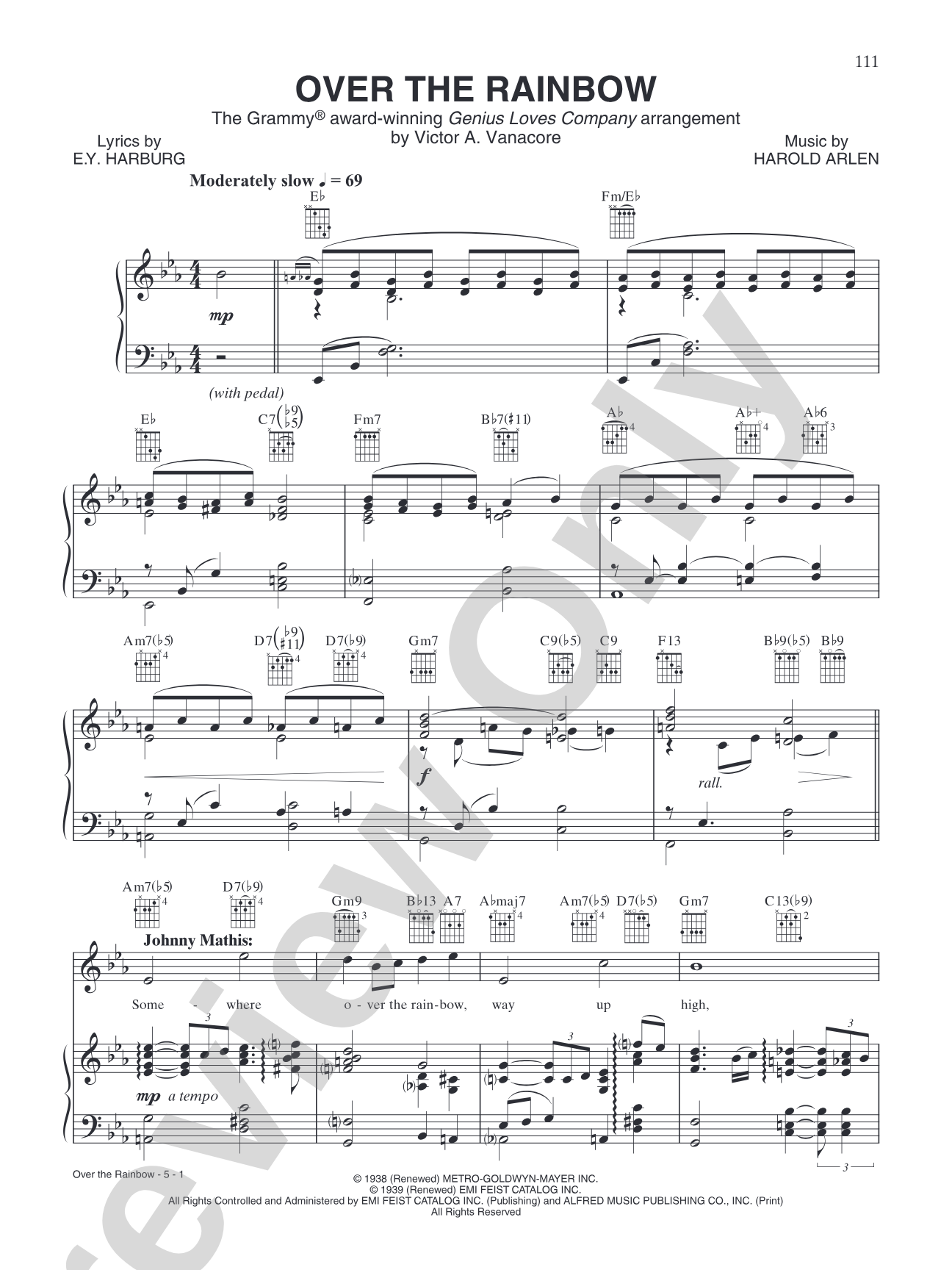

Over the Rainbow: Piano/Vocal/Chords
Ray Charles
Item: 00-PS-0013234
$4.99
One moment…
Related Items
Hallelujah I Love Her So: Piano/Vocal/Chords |
$5.99
|
View | |
That Lucky Old Sun: Piano/Vocal/Chords |
$5.99
|
View | |
What'd I Say: Piano/Vocal/Chords |
$9.99
|
View | |
Let the Good Times Roll: Piano/Vocal/Chords |
$5.99
|
View | |
Ruby: Piano/Vocal/Chords |
$5.99
|
View | |
Ain't That Love: Piano/Vocal/Chords |
$4.99
|
View | |
I've Got a Woman: Piano/Vocal/Chords |
$5.99
|
View | |
Mary Ann: Piano/Vocal/Chords |
$5.99
|
View | |
Mess Around: Piano/Vocal/Chords |
$5.99
|
View | |
One Mine Julep: Piano/Vocal/Chords |
$4.99
|
View | |
Sinner's Prayer: Piano/Vocal/Chords |
$5.99
|
View | |
This Little Girl of Mine: Piano/Vocal/Chords |
$5.99
|
View | |
Crazy Love: Piano/Vocal/Chords |
$5.99
|
View | |
Let's Go Get Stoned: Piano/Vocal/Chords |
$5.99
|
View | |
Seven Spanish Angels: Piano/Vocal/Chords |
$4.99
|
View | |
Come Rain Or Come Shine: Piano/Vocal/Chords |
$5.99
|
View | |
America the Beautful: Piano/Vocal/Chords |
$4.99
|
View |
Description
This collectible songbook celebrates the enduring legacy of Ray Charles at the 80th anniversary of his birth. Each sheet music transcription accurately renders his signature piano riffs and solos, and provides lyrics, vocal melodies, and chord changes. Ray Charles had three simple words of advice for achieving success: "Practice, practice, practice." With 28 fun and challenging transcriptions of some of popular music's most enduring standards, this collection gives pianists the opportunity to practice the techniques of the "Genius" himself. Titles: * Ain't That Love * America the Beautiful * Busted * Christmas in My Heart * Come Rain or Come Shine * Crazy Love * Georgia on My Mind * Hallelujah I Love Her So * Here We Go Again * Hit the Road Jack * I Can't Stop Loving You * I've Got a Woman * Let the Good Times Roll * Let's Go Get Stoned * Mary Ann * Mess Around * Night Time Is the Right Time * One Mint Julep * Over the Rainbow * Ruby * Seven Spanish Angels * Sinner's Prayer * That Lucky Old Sun * That Spirit of Christmas * This Little Girl of Mine * Unchain My Heart * What'd I Say * You Don't Know Me.


Over the Rainbow: Piano/Vocal/Chords isn't in MakeMusic Cloud just yet...but it could be. Let us know you'd like to see it, and you'll help shape what comes next. In the meantime, start a free trial and dive into thousands of interactive titles your students can play along with today.
Request This Title
Tell us you want it.
Start Your Free Trial
Explore everything that's ready to play right now.
Sample Audio
No sample audio found.
Sample Video
No sample videos found.
Additional Details
Publisher:
Alfred Music
Page Count:
180
SKU:
00-PS-0013234
More about this title
About the Composer: Harold Arlen
Harold Arlen (1905-1986) composed some of the twentieth century's most memorable melodies, from "Over the Rainbow" to "Stormy Weather" to "That's Entertainment." Working primarily in musical theater and film, Arlen had an instinctive gift for writing vocal lines that sit perfectly in the human voice while maintaining harmonic sophistication. His songs have become standards in jazz, blues, and popular music repertoires, studied and reinterpreted by countless artists across genres.
Arlen's influence on Ray Charles was profound. Charles understood that Arlen's melodies could anchor rhythmic exploration and improvisational depth, treating them as launching points rather than constraints. For musicians learning from these transcriptions, studying Arlen's compositional choices reveals how strong melodic writing can survive and thrive through radically different interpretations.
Why we love this
This collection captures Ray Charles at his most inventive, showing how he transformed jazz standards through his distinctive piano vocabulary. The transcriptions preserve his signature rhythmic anticipations, blues-tinged chord voicings, and the way he layered left-hand riffs beneath vocal melody, giving pianists a masterclass in accompaniment that serves the song while commanding attention. Programming these pieces lets audiences experience how deeply Charles understood both composition and improvisation.
What to expect
These pieces radiate warmth, wit, and deeper emotional truth. Whether moving through the spiritual gravity of "Sinner's Prayer" or the playful swagger of "Mess Around," Ray Charles's treatment finds humanity in every song. The piano writing feels conversational; his hands seem to be having a dialogue with each other, with the melody singing through moments of rhythmic independence and blues-inflected harmony that make even familiar standards sound newly discovered.
Who it's for
Pianists (intermediate and advanced) who want to understand how Ray Charles reshaped American songbook standards through blues and jazz sensibility. Singers and guitarists will find these transcriptions valuable for learning voicings and melodic interpretations that have defined popular music. This collection also serves jazz educators and ensemble directors seeking repertoire that demonstrates how to honor a composition while making it distinctly your own.
How to get the most out of it
- Study the recorded performances of Ray Charles playing these songs. His approach to time (pushing and pulling against the beat) and his left-hand independence are central to the arrangements; notation alone won't capture these elements.
- Lock the rhythmic feel first before worrying about tempo. Many of these pieces sit in a relaxed, behind-the-beat pocket rather than a metronomic pulse; nailing the groove comes before speed.
- Don't shy away from the blues voicings and chromatic passing tones. These aren't added for decoration; they're essential to the sound and teach you how to think beyond diatonic harmony.
- If singing and playing simultaneously, prioritize the vocal line clarity; the piano riffs should support and complement the melody, not compete with it.
How to use it
Feature these transcriptions in a concert celebrating American songwriting or the legacy of jazz standards in popular music. You might program 2-3 Ray Charles arrangements alongside other artists' interpretations of Arlen compositions to show how different musicians approach the same material. Solo recitalists can draw from this book to build a program that showcases technical command alongside interpretive depth.
Skills your students will build
- Reading and executing blues-inflected left-hand patterns against a melodic line
- Understanding jazz voicings and chromatic voice leading in a harmonic context
- Maintaining rhythmic independence between hands, with left-hand riffs that sit ahead of or behind the beat
- Interpreting written notation alongside knowledge of recorded performances to capture style and groove
- Accompanying a vocalist or instrumentalist while maintaining textural interest in the piano part