
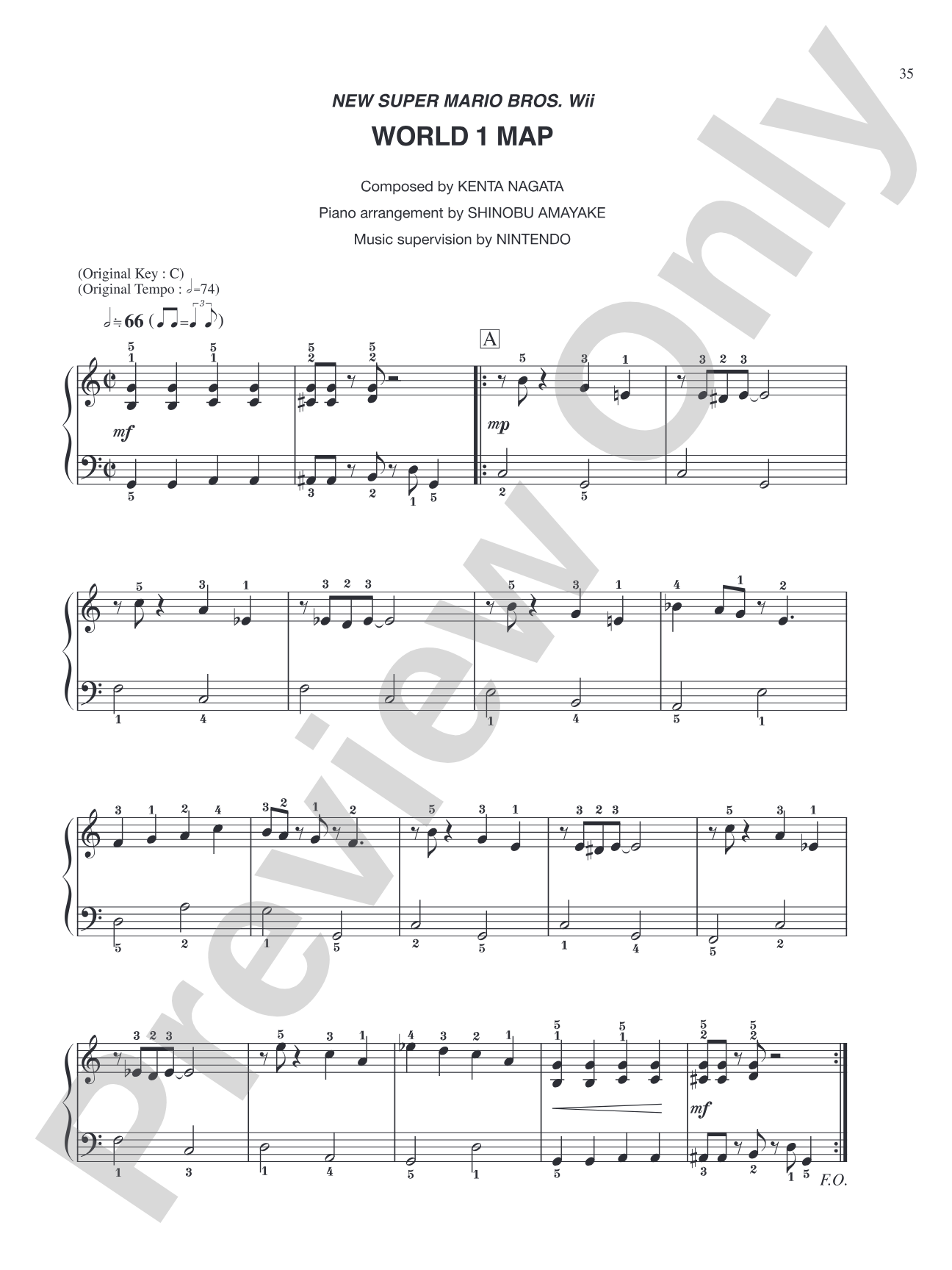

New Super Mario Bros. Wii World 1 Map: Easy Piano
Simplified Piano Solos
Composed by Koji Kondo, Shiho Fujii, Ryo Nagamatsu, and Kenta Nagata
Level: Easy Piano
Item: 00-PS-0015476
$4.99
One moment…
Related Items
New Super Mario Bros. Wii Title Theme: Piano |
$4.99
|
View | |
New Super Mario Bros. Wii Ground Theme: Piano |
$4.99
|
View | |
New Super Mario Bros. Wii Underwater Theme: Piano |
$4.99
|
View | |
New Super Mario Bros. Wii Desert Theme: Piano |
$4.99
|
View | |
New Super Mario Bros. Wii Underground Theme: Piano |
$4.99
|
View | |
New Super Mario Bros. Wii Castle Theme: Piano |
$4.99
|
View | |
New Super Mario Bros. Wii Airship Theme: Piano |
$4.99
|
View | |
New Super Mario Bros. Wii Koopa Battle 2: Piano |
$4.99
|
View | |
New Super Mario Bros. Wii Castle Boss Battle: Piano |
$4.99
|
View | |
New Super Mario Bros. Wii Toad House: Piano |
$4.99
|
View | |
New Super Mario Bros. Wii Enemy Course: Piano |
$4.99
|
View | |
New Super Mario Bros. Wii Invincible Theme: Piano |
$4.99
|
View | |
New Super Mario Bros. Wii Staff Credit Roll: Piano |
$4.99
|
View | |
New Super Mario Bros. Wii World 1 Map: Piano |
$4.99
|
View | |
New Super Mario Bros. Wii Player Down: Piano |
$4.99
|
View | |
New Super Mario Bros. Wii Game Over: Piano |
$4.99
|
View | |
New Super Mario Bros. Wii Ending Demo: Piano |
$4.99
|
View | |
New Super Mario Bros. Wii Title Theme: Easy Piano |
$4.99
|
View | |
New Super Mario Bros. Wii Ground Theme: Easy Piano |
$4.99
|
View | |
New Super Mario Bros. Wii Underwater Theme: Easy Piano |
$4.99
|
View | |
New Super Mario Bros. Wii Desert Theme: Easy Piano |
$4.99
|
View | |
New Super Mario Bros. Wii Underground Theme: Easy Piano |
$4.99
|
View | |
New Super Mario Bros. Wii Castle Theme: Easy Piano |
$4.99
|
View | |
New Super Mario Bros. Wii Airship Theme: Easy Piano |
$4.99
|
View | |
New Super Mario Bros. Wii Koopa Battle 2: Easy Piano |
$4.99
|
View | |
New Super Mario Bros. Wii Castle Boss Battle: Easy Piano |
$4.99
|
View | |
New Super Mario Bros. Wii Toad House: Easy Piano |
$4.99
|
View | |
New Super Mario Bros. Wii Enemy Course: Easy Piano |
$4.99
|
View | |
New Super Mario Bros. Wii Invincible Theme: Easy Piano |
$4.99
|
View | |
New Super Mario Bros. Wii Staff Credit Roll: Easy Piano |
$4.99
|
View | |
New Super Mario Bros. Wii Player Down: Easy Piano |
$4.99
|
View | |
New Super Mario Bros. Wii Game Over: Easy Piano |
$4.99
|
View | |
New Super Mario Bros. Wii Ending Demo: Easy Piano |
$4.99
|
View | |
New Super Mario Bros.™ Wii: Piano Book |
$16.99
|
View | |
New Super Mario Bros.™ Wii: Piano Book |
$16.99
|
View |
Description
The soundtrack to Nintendo's New Super Mario Bros.™ Wii is packed with melodic, syncopated themes that sound great on the piano! With this officially licensed sheet music collection, pianists can dazzle friends and family by playing 17 familiar themes from the beloved video game. The arrangements in this Easy Piano edition are moderately streamlined compared to those in the separately published Intermediate-Advanced edition, yet they retain a full and impressive sound. Titles: Title Theme * Ground Theme * Underground Theme * Underwater Theme * Desert Theme * Castle Theme * Airship Theme * Koopa Battle * Castle Boss Battle * Toad House * Enemy Course * Invincible Theme * Staff Credit Roll * World 1 Map * Player Down * Game Over * Ending Demo.


New Super Mario Bros. Wii World 1 Map: Easy Piano isn't in MakeMusic Cloud just yet...but it could be. Let us know you'd like to see it, and you'll help shape what comes next. In the meantime, start a free trial and dive into thousands of interactive titles your students can play along with today.
Request This Title
Tell us you want it.
Start Your Free Trial
Explore everything that's ready to play right now.
Sample Audio
No sample audio found.
Sample Video
No sample videos found.
Additional Details
Publisher:
Alfred Music
Page Count:
40
SKU:
00-PS-0015476
More about this title
About the Composer: Kenta Nagata
Kenta Nagata has been the driving force behind Nintendo's most recognizable video game soundtracks since the early 2000s. His work on the Super Mario series demonstrates a gift for writing memorable melodies that anchor gameplay while remaining deeply enjoyable as standalone musical pieces.
Nagata's compositional approach emphasizes accessibility without sacrificing musicality. His themes for New Super Mario Bros. Wii showcase rhythmic vitality and harmonic clarity, qualities that make his work particularly rewarding for pianists learning to balance technical simplicity with expressive musicality.
Why we love this
Students light up when they recognize these themes instantly. The melodies are crafted to stick in the ear without relying on complexity, so pianists at this level can focus on tone, phrasing, and rhythmic precision rather than wrestling with the notes. You'll find yourself playing through this collection multiple times simply because the music is enjoyable.
What to expect
Bright, propulsive, and unmistakably playful. Each theme carries the charm and approachability of the game itself, with enough rhythmic momentum to keep both player and listener engaged. Whether you're tackling a cheerful ground level or a tense boss battle, the melodies invite you to infuse them with personality.
Who it's for
Pianists at the easy level who want to play pieces they already know and love. This is ideal for students approaching their first years of playing who benefit from immediate recognition and emotional connection to repertoire. Recital performers looking for audience-friendly showstoppers will find multiple options here.
How to get the most out of it
- Keep the syncopated rhythms bouncy but controlled. These themes move forward naturally when you let the pulse breathe rather than rushing eighth note patterns.
- Color the bass line deliberately. Many of these arrangements use left hand movement to create harmonic interest; resist playing it as mere accompaniment.
- Pay attention to the title theme's opening especially. It sets the tone for how your listener hears the entire collection, so invest in a warm, confident entrance.
- Balance melodic clarity against the supporting figures. When both hands carry motivic material (as in the Ground Theme), neither should overwhelm the other.
How to use it
Feature individual themes as recital openers or closers; their familiarity and brevity make them excellent confidence builders in a mixed program. Consider grouping thematic pieces (Title Theme paired with Ending Demo, or Underground Theme with Castle Theme) to create a mini-suite that tells a musical story. These arrangements work beautifully as student performance assignments in spring recitals when learning velocity matters as much as technical depth.
Skills your students will build
- Playing syncopated rhythms with rhythmic independence between hands
- Managing left hand accompaniment patterns while maintaining melodic focus
- Shaping phrasing in short, motivic structures
- Balancing tempo consistency across sections with contrasting character (cheerful vs. threatening)
- Reading and executing musical figures that mirror video game sound design (staccato accents, rhythmic punctuation)