
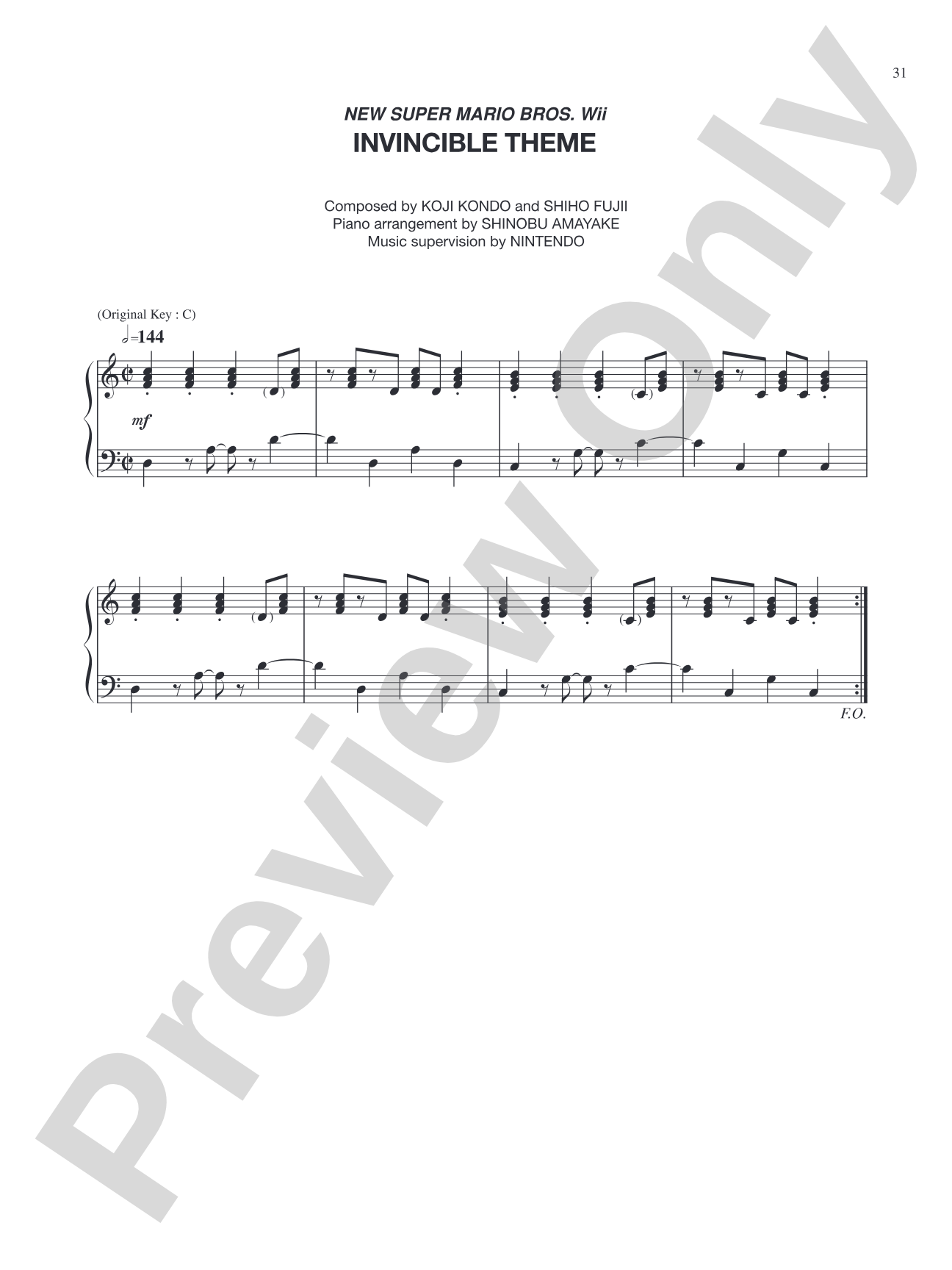

New Super Mario Bros. Wii Invincible Theme: Piano
Intermediate--Advanced Piano Solos
Composed by Koji Kondo, Shiho Fujii, Ryo Nagamatsu, and Kenta Nagata
Level: Intermediate / Advanced
Item: 00-PS-0015346
$4.99
One moment…
Related Items
New Super Mario Bros. Wii Title Theme: Piano |
$4.99
|
View | |
New Super Mario Bros. Wii Ground Theme: Piano |
$4.99
|
View | |
New Super Mario Bros. Wii Underwater Theme: Piano |
$4.99
|
View | |
New Super Mario Bros. Wii Desert Theme: Piano |
$4.99
|
View | |
New Super Mario Bros. Wii Underground Theme: Piano |
$4.99
|
View | |
New Super Mario Bros. Wii Castle Theme: Piano |
$4.99
|
View | |
New Super Mario Bros. Wii Airship Theme: Piano |
$4.99
|
View | |
New Super Mario Bros. Wii Koopa Battle 2: Piano |
$4.99
|
View | |
New Super Mario Bros. Wii Castle Boss Battle: Piano |
$4.99
|
View | |
New Super Mario Bros. Wii Toad House: Piano |
$4.99
|
View | |
New Super Mario Bros. Wii Enemy Course: Piano |
$4.99
|
View | |
New Super Mario Bros. Wii Staff Credit Roll: Piano |
$4.99
|
View | |
New Super Mario Bros. Wii World 1 Map: Piano |
$4.99
|
View | |
New Super Mario Bros. Wii Player Down: Piano |
$4.99
|
View | |
New Super Mario Bros. Wii Game Over: Piano |
$4.99
|
View | |
New Super Mario Bros. Wii Ending Demo: Piano |
$4.99
|
View | |
New Super Mario Bros. Wii Title Theme: Easy Piano |
$4.99
|
View | |
New Super Mario Bros. Wii Ground Theme: Easy Piano |
$4.99
|
View | |
New Super Mario Bros. Wii Underwater Theme: Easy Piano |
$4.99
|
View | |
New Super Mario Bros. Wii Desert Theme: Easy Piano |
$4.99
|
View | |
New Super Mario Bros. Wii Underground Theme: Easy Piano |
$4.99
|
View | |
New Super Mario Bros. Wii Castle Theme: Easy Piano |
$4.99
|
View | |
New Super Mario Bros. Wii Airship Theme: Easy Piano |
$4.99
|
View | |
New Super Mario Bros. Wii Koopa Battle 2: Easy Piano |
$4.99
|
View | |
New Super Mario Bros. Wii Castle Boss Battle: Easy Piano |
$4.99
|
View | |
New Super Mario Bros. Wii Toad House: Easy Piano |
$4.99
|
View | |
New Super Mario Bros. Wii Enemy Course: Easy Piano |
$4.99
|
View | |
New Super Mario Bros. Wii Invincible Theme: Easy Piano |
$4.99
|
View | |
New Super Mario Bros. Wii Staff Credit Roll: Easy Piano |
$4.99
|
View | |
New Super Mario Bros. Wii World 1 Map: Easy Piano |
$4.99
|
View | |
New Super Mario Bros. Wii Player Down: Easy Piano |
$4.99
|
View | |
New Super Mario Bros. Wii Game Over: Easy Piano |
$4.99
|
View | |
New Super Mario Bros. Wii Ending Demo: Easy Piano |
$4.99
|
View | |
New Super Mario Bros.™ Wii: Piano Book |
$16.99
|
View | |
New Super Mario Bros.™ Wii: Piano Book |
$16.99
|
View |
Description
The soundtrack to Nintendo's New Super Mario Bros.™ Wii is packed with melodic, syncopated themes that sound great on the piano! With this officially licensed sheet music collection, intermediate to advanced pianists can dazzle friends and family by playing 17 familiar themes from the beloved video game. Titles: Title Theme * Ground Theme * Underground Theme * Underwater Theme * Desert Theme * Castle Theme * Airship Theme * Koopa Battle * Castle Boss Battle * Toad House * Enemy Course * Invincible Theme * Staff Credit Roll * World 1 Map * Player Down * Game Over * Ending Demo.


Discover MakeMusic Cloud: thousands of interactive titles your students can play along with today.
Sample Audio
No sample audio found.
Sample Video
No sample videos found.
Additional Details
Publisher:
Alfred Music
Page Count:
40
SKU:
00-PS-0015346
More about this title
About the Composer: Koji Kondo
Koji Kondo stands as one of video game music's most influential composers, having shaped Nintendo's sonic identity across five decades of interactive entertainment. His work on the Super Mario franchise established principles of melodic clarity and rhythmic vitality that remain central to game music composition today, earning him recognition far beyond gaming circles as a legitimate voice in contemporary music.
Why we love this
This collection brings genuine musical substance to a familiar cultural touchstone. The syncopated writing and harmonic color keep these melodies fresh across 17 pieces, meaning students never feel like they're just reproducing video game bleeps; they're learning how to voice memorable themes with pianistic sophistication.
What to expect
Spirited and playful, with an underlying sense of forward momentum. The melodies have the kind of instant memorability that makes them satisfying to play, while the syncopated rhythms and lively accompaniments keep things rhythmically engaging without demanding virtuosic speed.
Who it's for
Pianists at the intermediate to advanced level who want engaging, recognizable repertoire that respects their growing technical abilities. This collection works equally well for students building performance confidence in a studio setting and for pianists looking to expand beyond traditional classical or pop standards.
How to get the most out of it
- Nail the syncopated figures first without worrying about tempo. Once the rhythmic placement sits cleanly in your hands, the groove snaps into focus naturally.
- Treat the melodic lines as singable phrases even when they're fast. This prevents the music from devolving into mechanical runs and keeps the Nintendo charm intact.
- Use the varied textures across pieces as an opportunity to explore different voicings and touch. The Castle Theme calls for something grand; the Underwater Theme benefits from lighter, shimmering sonority.
- Don't rush the syncopations for the sake of speed. These themes work their magic through rhythmic precision and pocket feel, not velocity.
How to use it
Program individual pieces as recital openers or palette cleansers between weightier works; student audiences respond immediately to recognizable material. A student recital themed around music from popular culture can draw family members who might not typically attend, making this collection an effective bridge between classical training and broader musical life.
Skills your students will build
- Syncopated rhythm reading and execution
- Voicing melodic lines idiomatically for piano
- Maintaining rhythmic groove while managing left-hand accompaniment patterns
- Stylistic interpretation of familiar melodies
- Sight-reading fluency across varied harmonic contexts