
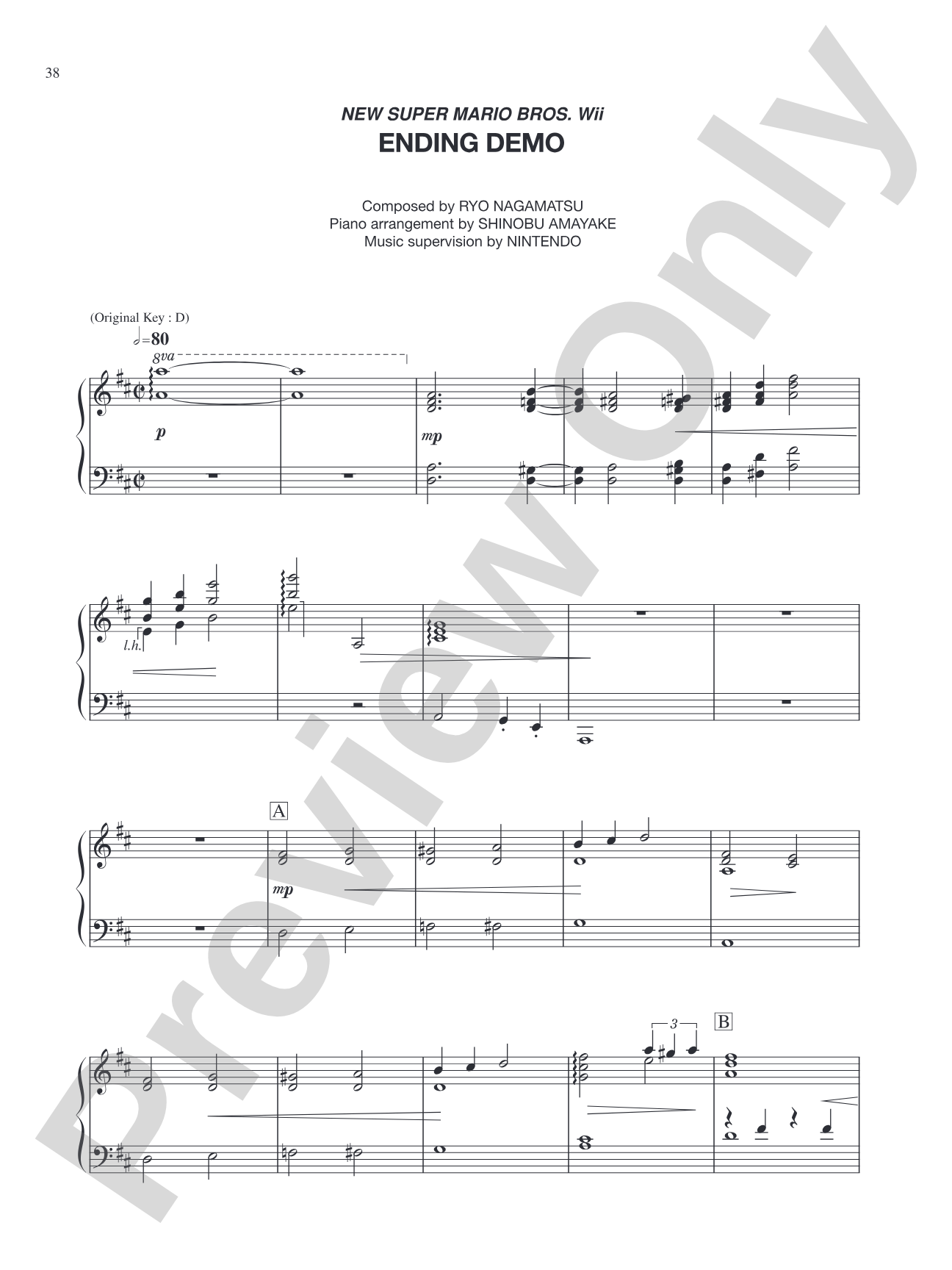

New Super Mario Bros. Wii Ending Demo: Piano
Intermediate--Advanced Piano Solos
Composed by Koji Kondo, Shiho Fujii, Ryo Nagamatsu, and Kenta Nagata
Level: Intermediate / Advanced
Item: 00-PS-0015351
$4.99
One moment…
Related Items
New Super Mario Bros. Wii Title Theme: Piano |
$4.99
|
View | |
New Super Mario Bros. Wii Ground Theme: Piano |
$4.99
|
View | |
New Super Mario Bros. Wii Underwater Theme: Piano |
$4.99
|
View | |
New Super Mario Bros. Wii Desert Theme: Piano |
$4.99
|
View | |
New Super Mario Bros. Wii Underground Theme: Piano |
$4.99
|
View | |
New Super Mario Bros. Wii Castle Theme: Piano |
$4.99
|
View | |
New Super Mario Bros. Wii Airship Theme: Piano |
$4.99
|
View | |
New Super Mario Bros. Wii Koopa Battle 2: Piano |
$4.99
|
View | |
New Super Mario Bros. Wii Castle Boss Battle: Piano |
$4.99
|
View | |
New Super Mario Bros. Wii Toad House: Piano |
$4.99
|
View | |
New Super Mario Bros. Wii Enemy Course: Piano |
$4.99
|
View | |
New Super Mario Bros. Wii Invincible Theme: Piano |
$4.99
|
View | |
New Super Mario Bros. Wii Staff Credit Roll: Piano |
$4.99
|
View | |
New Super Mario Bros. Wii World 1 Map: Piano |
$4.99
|
View | |
New Super Mario Bros. Wii Player Down: Piano |
$4.99
|
View | |
New Super Mario Bros. Wii Game Over: Piano |
$4.99
|
View | |
New Super Mario Bros. Wii Title Theme: Easy Piano |
$4.99
|
View | |
New Super Mario Bros. Wii Ground Theme: Easy Piano |
$4.99
|
View | |
New Super Mario Bros. Wii Underwater Theme: Easy Piano |
$4.99
|
View | |
New Super Mario Bros. Wii Desert Theme: Easy Piano |
$4.99
|
View | |
New Super Mario Bros. Wii Underground Theme: Easy Piano |
$4.99
|
View | |
New Super Mario Bros. Wii Castle Theme: Easy Piano |
$4.99
|
View | |
New Super Mario Bros. Wii Airship Theme: Easy Piano |
$4.99
|
View | |
New Super Mario Bros. Wii Koopa Battle 2: Easy Piano |
$4.99
|
View | |
New Super Mario Bros. Wii Castle Boss Battle: Easy Piano |
$4.99
|
View | |
New Super Mario Bros. Wii Toad House: Easy Piano |
$4.99
|
View | |
New Super Mario Bros. Wii Enemy Course: Easy Piano |
$4.99
|
View | |
New Super Mario Bros. Wii Invincible Theme: Easy Piano |
$4.99
|
View | |
New Super Mario Bros. Wii Staff Credit Roll: Easy Piano |
$4.99
|
View | |
New Super Mario Bros. Wii World 1 Map: Easy Piano |
$4.99
|
View | |
New Super Mario Bros. Wii Player Down: Easy Piano |
$4.99
|
View | |
New Super Mario Bros. Wii Game Over: Easy Piano |
$4.99
|
View | |
New Super Mario Bros. Wii Ending Demo: Easy Piano |
$4.99
|
View | |
New Super Mario Bros.™ Wii: Piano Book |
$16.99
|
View | |
New Super Mario Bros.™ Wii: Piano Book |
$16.99
|
View |
Description
The soundtrack to Nintendo's New Super Mario Bros.™ Wii is packed with melodic, syncopated themes that sound great on the piano! With this officially licensed sheet music collection, intermediate to advanced pianists can dazzle friends and family by playing 17 familiar themes from the beloved video game. Titles: Title Theme * Ground Theme * Underground Theme * Underwater Theme * Desert Theme * Castle Theme * Airship Theme * Koopa Battle * Castle Boss Battle * Toad House * Enemy Course * Invincible Theme * Staff Credit Roll * World 1 Map * Player Down * Game Over * Ending Demo.


Discover MakeMusic Cloud: thousands of interactive titles your students can play along with today.
Sample Audio
No sample audio found.
Sample Video
No sample videos found.
Additional Details
Publisher:
Alfred Music
Page Count:
40
SKU:
00-PS-0015351
More about this title
About the Composer: Ryo Nagamatsu
Ryo Nagamatsu is a video game composer known for his work on the Super Mario franchise, where his melodic sensibility and rhythmic precision have shaped some of Nintendo's most recognizable music. His arrangements for piano showcase an understanding of how to translate interactive game music into engaging concert repertoire while preserving the character that makes these themes instantly memorable.
Why we love this
This collection captures the full arc of a beloved game in one playable score, giving intermediate to advanced pianists genuine repertoire that connects to their own musical lives. The variety across 17 tracks means you can program a single theme in a casual recital or tackle the full collection for a themed performance, and the syncopated writing keeps the music engaging to both play and hear.
What to expect
Playing through these themes feels like conducting a victory lap through a familiar world. The writing bounces with energy and charm, moving fluidly between upbeat map music, darkly comedic boss battles, and genuinely touching moments like the ending demo, all while staying comfortably within the hands of a solid intermediate player.
Who it's for
Intermediate to advanced pianists who want music that feels contemporary and personal rather than classical obligation. This collection appeals to students who grew up with these games and adult pianists seeking repertoire that bridges video game culture and traditional keyboard performance.
How to get the most out of it
- Pay attention to the syncopation without letting it override the forward pulse; these themes are designed to drive momentum, not stumble on awkward rhythms.
- Distinguish the character of each theme through touch and tempo nuance rather than dramatic dynamic swings; the melodies are strongest when they sit naturally in the hand.
- Use the recorded accompaniment (sold separately) to lock into the original game's rhythmic feel, especially for pieces like Koopa Battle where the energy is essential to the arrangement's effect.
- Treat the shorter pieces (Player Down, Game Over) as palate cleansers in a longer program; their brevity becomes their strength when surrounded by weightier material.
How to use it
A single theme works beautifully as a modern novelty piece in a student recital or casual performance. For a more ambitious project, consider programming three to five contrasting themes (perhaps Title Theme, Castle Boss Battle, and Ending Demo) to show the range of the composer's writing within one familiar world.
Skills your students will build
- Syncopated rhythm reading and performance
- Managing hand independence across syncopated accompaniment figures
- Translating melodic character through touch and articulation
- Sight-reading across moderate tempo and rhythmic density
- Program building with thematic unity in shorter forms