
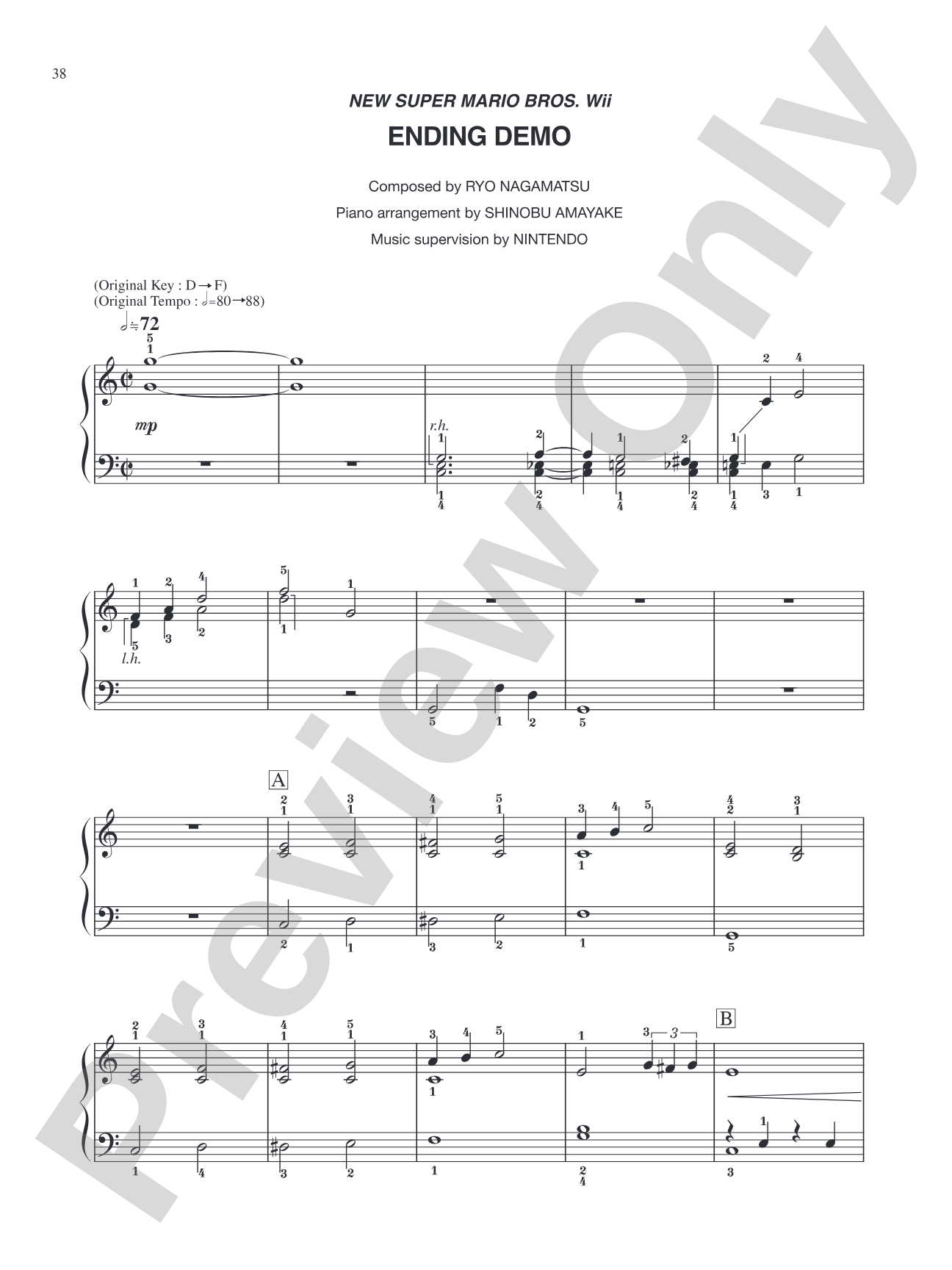

New Super Mario Bros. Wii Ending Demo: Easy Piano
Simplified Piano Solos
Composed by Koji Kondo, Shiho Fujii, Ryo Nagamatsu, and Kenta Nagata
Level: Easy Piano
Item: 00-PS-0015479
$4.99
One moment…
Related Items
New Super Mario Bros. Wii Title Theme: Piano |
$4.99
|
View | |
New Super Mario Bros. Wii Ground Theme: Piano |
$4.99
|
View | |
New Super Mario Bros. Wii Underwater Theme: Piano |
$4.99
|
View | |
New Super Mario Bros. Wii Desert Theme: Piano |
$4.99
|
View | |
New Super Mario Bros. Wii Underground Theme: Piano |
$4.99
|
View | |
New Super Mario Bros. Wii Castle Theme: Piano |
$4.99
|
View | |
New Super Mario Bros. Wii Airship Theme: Piano |
$4.99
|
View | |
New Super Mario Bros. Wii Koopa Battle 2: Piano |
$4.99
|
View | |
New Super Mario Bros. Wii Castle Boss Battle: Piano |
$4.99
|
View | |
New Super Mario Bros. Wii Toad House: Piano |
$4.99
|
View | |
New Super Mario Bros. Wii Enemy Course: Piano |
$4.99
|
View | |
New Super Mario Bros. Wii Invincible Theme: Piano |
$4.99
|
View | |
New Super Mario Bros. Wii Staff Credit Roll: Piano |
$4.99
|
View | |
New Super Mario Bros. Wii World 1 Map: Piano |
$4.99
|
View | |
New Super Mario Bros. Wii Player Down: Piano |
$4.99
|
View | |
New Super Mario Bros. Wii Game Over: Piano |
$4.99
|
View | |
New Super Mario Bros. Wii Ending Demo: Piano |
$4.99
|
View | |
New Super Mario Bros. Wii Title Theme: Easy Piano |
$4.99
|
View | |
New Super Mario Bros. Wii Ground Theme: Easy Piano |
$4.99
|
View | |
New Super Mario Bros. Wii Underwater Theme: Easy Piano |
$4.99
|
View | |
New Super Mario Bros. Wii Desert Theme: Easy Piano |
$4.99
|
View | |
New Super Mario Bros. Wii Underground Theme: Easy Piano |
$4.99
|
View | |
New Super Mario Bros. Wii Castle Theme: Easy Piano |
$4.99
|
View | |
New Super Mario Bros. Wii Airship Theme: Easy Piano |
$4.99
|
View | |
New Super Mario Bros. Wii Koopa Battle 2: Easy Piano |
$4.99
|
View | |
New Super Mario Bros. Wii Castle Boss Battle: Easy Piano |
$4.99
|
View | |
New Super Mario Bros. Wii Toad House: Easy Piano |
$4.99
|
View | |
New Super Mario Bros. Wii Enemy Course: Easy Piano |
$4.99
|
View | |
New Super Mario Bros. Wii Invincible Theme: Easy Piano |
$4.99
|
View | |
New Super Mario Bros. Wii Staff Credit Roll: Easy Piano |
$4.99
|
View | |
New Super Mario Bros. Wii World 1 Map: Easy Piano |
$4.99
|
View | |
New Super Mario Bros. Wii Player Down: Easy Piano |
$4.99
|
View | |
New Super Mario Bros. Wii Game Over: Easy Piano |
$4.99
|
View | |
New Super Mario Bros.™ Wii: Piano Book |
$16.99
|
View | |
New Super Mario Bros.™ Wii: Piano Book |
$16.99
|
View |
Description
The soundtrack to Nintendo's New Super Mario Bros.™ Wii is packed with melodic, syncopated themes that sound great on the piano! With this officially licensed sheet music collection, pianists can dazzle friends and family by playing 17 familiar themes from the beloved video game. The arrangements in this Easy Piano edition are moderately streamlined compared to those in the separately published Intermediate-Advanced edition, yet they retain a full and impressive sound. Titles: Title Theme * Ground Theme * Underground Theme * Underwater Theme * Desert Theme * Castle Theme * Airship Theme * Koopa Battle * Castle Boss Battle * Toad House * Enemy Course * Invincible Theme * Staff Credit Roll * World 1 Map * Player Down * Game Over * Ending Demo.


New Super Mario Bros. Wii Ending Demo: Easy Piano isn't in MakeMusic Cloud just yet...but it could be. Let us know you'd like to see it, and you'll help shape what comes next. In the meantime, start a free trial and dive into thousands of interactive titles your students can play along with today.
Request This Title
Tell us you want it.
Start Your Free Trial
Explore everything that's ready to play right now.
Sample Audio
No sample audio found.
Sample Video
No sample videos found.
Additional Details
Publisher:
Alfred Music
Page Count:
40
SKU:
00-PS-0015479
More about this title
About the Composer: Ryo Nagamatsu
Ryo Nagamatsu is a video game composer whose work spans Nintendo's most recognizable franchises. His ability to craft memorable, immediately singable melodies that work across different instrumental contexts has made him essential to the company's sound design, particularly in the New Super Mario Bros. series where his arrangements balance nostalgia with fresh energy.
Why we love this
These arrangements prove that accessible piano writing doesn't mean thin or simplistic. Each theme retains its character and harmonic color while staying within the technical reach of early intermediate pianists, making them genuinely fun to perform rather than just serviceable. Students get to play music they actually know and love, which turns practice time into celebration.
What to expect
Energetic and playful, with enough harmonic color to feel substantial. These pieces capture the warmth and familiarity of the original soundtrack while translating its motion and texture specifically for piano, creating that satisfying moment when a student realizes they can bring a beloved game world to life through their own playing.
Who it's for
Young pianists who are moving into early intermediate territory and thrive with repertoire they recognize. This collection works especially well for students who need motivation to practice or who respond to contemporary game music over classical standards.
How to get the most out of it
- Keep the syncopated rhythms tight and consistent without rushing; the bounce of these themes depends on rhythmic clarity, not speed.
- Balance melody against accompaniment carefully, especially in busier textures where left-hand figures can easily overshadow the tune.
- Lean into the character of each theme: the underground passages feel dampened and echoing, while castle themes should sound stately and grand.
- Use tempo variety between pieces to showcase the range of moods across the collection, from the whimsy of the Toad House to the urgency of boss battles.
How to use it
Perfect for a studio or community recital where you want to include pieces that engage both performer and audience. Consider programming a few thematic selections together (perhaps ground theme, underwater theme, and castle boss battle) to create a mini soundtrack experience, or use individual pieces as rewards for students who've completed more traditional repertoire units.
Skills your students will build
- Playing syncopated rhythms accurately while maintaining a steady pulse
- Balancing independent left-hand accompaniment patterns against right-hand melody
- Reading and executing dynamic changes that shape musical character
- Developing tempo control across varied moods and styles