
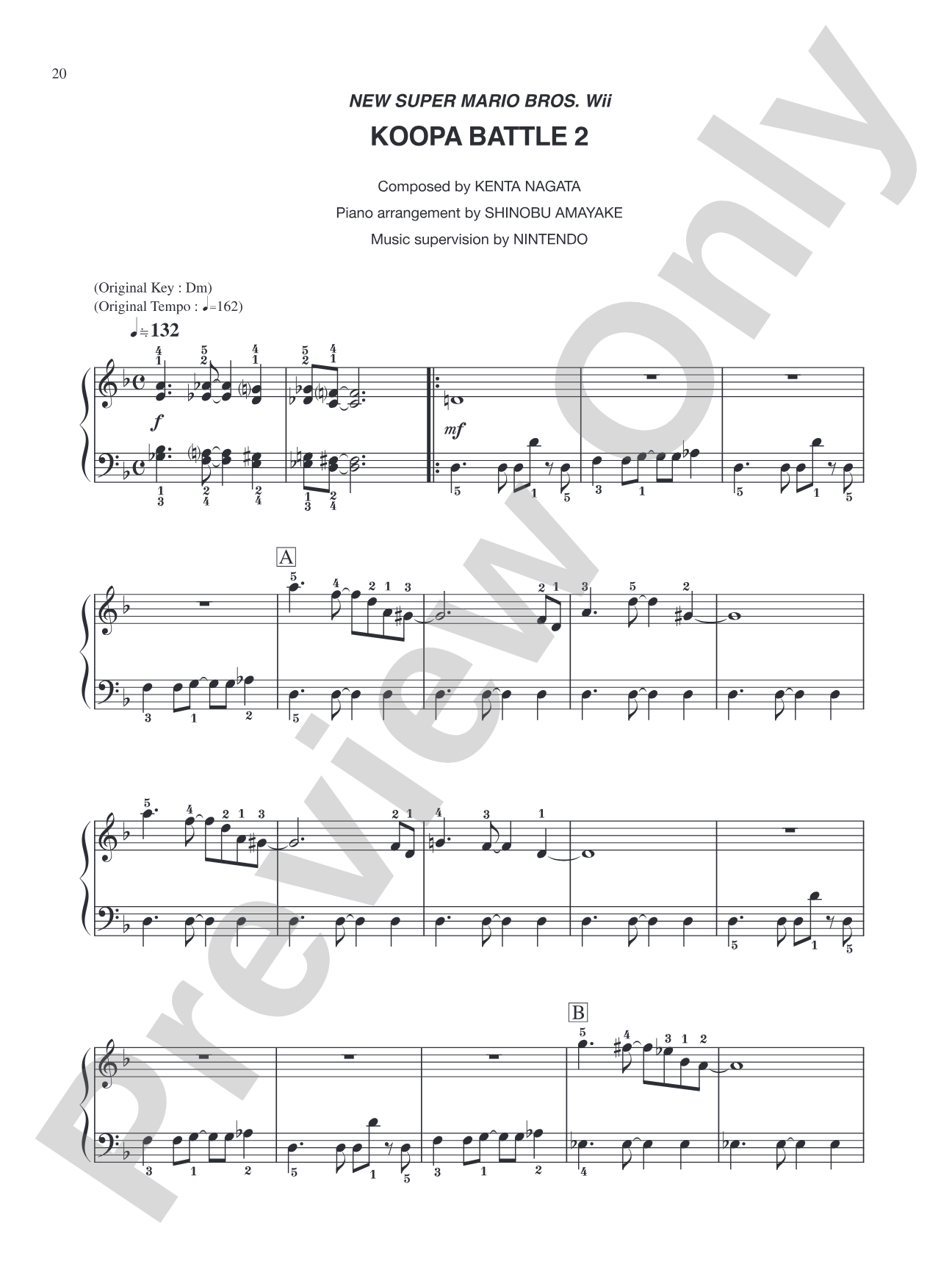

New Super Mario Bros. Wii Koopa Battle 2: Easy Piano
Simplified Piano Solos
Composed by Koji Kondo, Shiho Fujii, Ryo Nagamatsu, and Kenta Nagata
Level: Easy Piano
Item: 00-PS-0015470
$4.99
One moment…
Related Items
New Super Mario Bros. Wii Title Theme: Piano |
$4.99
|
View | |
New Super Mario Bros. Wii Ground Theme: Piano |
$4.99
|
View | |
New Super Mario Bros. Wii Underwater Theme: Piano |
$4.99
|
View | |
New Super Mario Bros. Wii Desert Theme: Piano |
$4.99
|
View | |
New Super Mario Bros. Wii Underground Theme: Piano |
$4.99
|
View | |
New Super Mario Bros. Wii Castle Theme: Piano |
$4.99
|
View | |
New Super Mario Bros. Wii Airship Theme: Piano |
$4.99
|
View | |
New Super Mario Bros. Wii Koopa Battle 2: Piano |
$4.99
|
View | |
New Super Mario Bros. Wii Castle Boss Battle: Piano |
$4.99
|
View | |
New Super Mario Bros. Wii Toad House: Piano |
$4.99
|
View | |
New Super Mario Bros. Wii Enemy Course: Piano |
$4.99
|
View | |
New Super Mario Bros. Wii Invincible Theme: Piano |
$4.99
|
View | |
New Super Mario Bros. Wii Staff Credit Roll: Piano |
$4.99
|
View | |
New Super Mario Bros. Wii World 1 Map: Piano |
$4.99
|
View | |
New Super Mario Bros. Wii Player Down: Piano |
$4.99
|
View | |
New Super Mario Bros. Wii Game Over: Piano |
$4.99
|
View | |
New Super Mario Bros. Wii Ending Demo: Piano |
$4.99
|
View | |
New Super Mario Bros. Wii Title Theme: Easy Piano |
$4.99
|
View | |
New Super Mario Bros. Wii Ground Theme: Easy Piano |
$4.99
|
View | |
New Super Mario Bros. Wii Underwater Theme: Easy Piano |
$4.99
|
View | |
New Super Mario Bros. Wii Desert Theme: Easy Piano |
$4.99
|
View | |
New Super Mario Bros. Wii Underground Theme: Easy Piano |
$4.99
|
View | |
New Super Mario Bros. Wii Castle Theme: Easy Piano |
$4.99
|
View | |
New Super Mario Bros. Wii Airship Theme: Easy Piano |
$4.99
|
View | |
New Super Mario Bros. Wii Castle Boss Battle: Easy Piano |
$4.99
|
View | |
New Super Mario Bros. Wii Toad House: Easy Piano |
$4.99
|
View | |
New Super Mario Bros. Wii Enemy Course: Easy Piano |
$4.99
|
View | |
New Super Mario Bros. Wii Invincible Theme: Easy Piano |
$4.99
|
View | |
New Super Mario Bros. Wii Staff Credit Roll: Easy Piano |
$4.99
|
View | |
New Super Mario Bros. Wii World 1 Map: Easy Piano |
$4.99
|
View | |
New Super Mario Bros. Wii Player Down: Easy Piano |
$4.99
|
View | |
New Super Mario Bros. Wii Game Over: Easy Piano |
$4.99
|
View | |
New Super Mario Bros. Wii Ending Demo: Easy Piano |
$4.99
|
View | |
New Super Mario Bros.™ Wii: Piano Book |
$16.99
|
View | |
New Super Mario Bros.™ Wii: Piano Book |
$16.99
|
View |
Description
The soundtrack to Nintendo's New Super Mario Bros.™ Wii is packed with melodic, syncopated themes that sound great on the piano! With this officially licensed sheet music collection, pianists can dazzle friends and family by playing 17 familiar themes from the beloved video game. The arrangements in this Easy Piano edition are moderately streamlined compared to those in the separately published Intermediate-Advanced edition, yet they retain a full and impressive sound. Titles: Title Theme * Ground Theme * Underground Theme * Underwater Theme * Desert Theme * Castle Theme * Airship Theme * Koopa Battle * Castle Boss Battle * Toad House * Enemy Course * Invincible Theme * Staff Credit Roll * World 1 Map * Player Down * Game Over * Ending Demo.


Discover MakeMusic Cloud: thousands of interactive titles your students can play along with today.
Sample Audio
No sample audio found.
Sample Video
No sample videos found.
Additional Details
Publisher:
Alfred Music
Page Count:
40
SKU:
00-PS-0015470
More about this title
About the Composer: Kenta Nagata
Kenta Nagata has been the primary composer for the Super Mario series since the early 2000s, bringing a distinctive melodic sensibility to Nintendo's most iconic franchise. His work balances accessibility with harmonic sophistication, creating themes that remain memorable across multiple listens while offering enough musical substance to engage serious players.
Why we love this
These arrangements capture what makes Mario music so engaging: infectious rhythms and clear melodic lines that pianists can sink their teeth into without drowning in technical demands. The syncopation and rhythmic variety across 17 tracks give students genuine reasons to practice different musical textures, from the bouncy Ground Theme to the driving Koopa Battle.
What to expect
Bright, rhythmically zippy, and unapologetically fun. These themes pulse with the energy of the game while maintaining enough melodic integrity that they feel substantial at the piano rather than novelty arrangements. The variety across 17 pieces means you move between reflective moments (Underwater Theme) and high-energy action sequences (Castle Boss Battle) in a single sitting.
Who it's for
Pianists in the early elementary through late elementary grades who are ready for straightforward, engaging repertoire that connects to their world outside the lesson studio. This collection appeals equally to students learning through a traditional method and those wanting to supplement their studies with music they already love.
How to get the most out of it
- Pay close attention to syncopated rhythms in the melodic lines; locking them in cleanly gives these pieces their playful character and makes the familiar themes instantly recognizable.
- Balance the melody against left-hand accompaniment patterns so the right hand sings without overwhelming the harmonic foundation, especially in pieces like the Castle Theme.
- Treat tempo as flexible within reason; these arrangements benefit from slight rubato in moments of melodic emphasis, matching the expressive phrasing of the original game audio.
How to use it
Ideal for recital programs where you want to include contemporary music that resonates with young audiences and their families. A medley of 3-4 contrasting themes from this collection also works beautifully as an encore or as part of a mixed-level student showcase.
Skills your students will build
- Reading and executing syncopated rhythms across both hands
- Balancing melody and accompaniment in different textural arrangements
- Maintaining steady tempo while managing rhythmic complexity
- Transitioning between contrasting moods and tempos across a diverse repertoire