
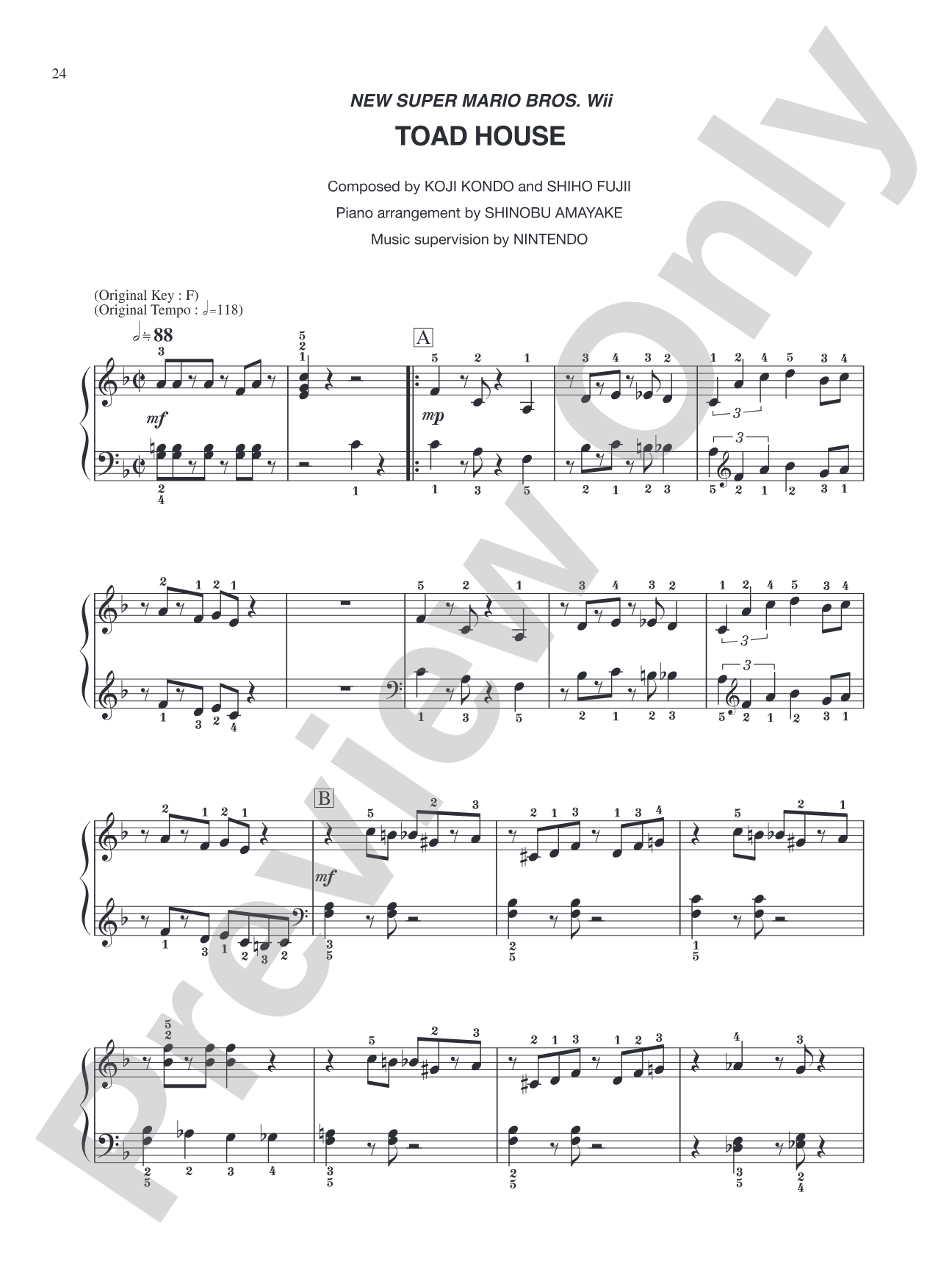

New Super Mario Bros. Wii Toad House: Easy Piano
Simplified Piano Solos
Composed by Koji Kondo, Shiho Fujii, Ryo Nagamatsu, and Kenta Nagata
Level: Easy Piano
Item: 00-PS-0015472
$4.99
One moment…
Related Items
New Super Mario Bros. Wii Title Theme: Piano |
$4.99
|
View | |
New Super Mario Bros. Wii Ground Theme: Piano |
$4.99
|
View | |
New Super Mario Bros. Wii Underwater Theme: Piano |
$4.99
|
View | |
New Super Mario Bros. Wii Desert Theme: Piano |
$4.99
|
View | |
New Super Mario Bros. Wii Underground Theme: Piano |
$4.99
|
View | |
New Super Mario Bros. Wii Castle Theme: Piano |
$4.99
|
View | |
New Super Mario Bros. Wii Airship Theme: Piano |
$4.99
|
View | |
New Super Mario Bros. Wii Koopa Battle 2: Piano |
$4.99
|
View | |
New Super Mario Bros. Wii Castle Boss Battle: Piano |
$4.99
|
View | |
New Super Mario Bros. Wii Toad House: Piano |
$4.99
|
View | |
New Super Mario Bros. Wii Enemy Course: Piano |
$4.99
|
View | |
New Super Mario Bros. Wii Invincible Theme: Piano |
$4.99
|
View | |
New Super Mario Bros. Wii Staff Credit Roll: Piano |
$4.99
|
View | |
New Super Mario Bros. Wii World 1 Map: Piano |
$4.99
|
View | |
New Super Mario Bros. Wii Player Down: Piano |
$4.99
|
View | |
New Super Mario Bros. Wii Game Over: Piano |
$4.99
|
View | |
New Super Mario Bros. Wii Ending Demo: Piano |
$4.99
|
View | |
New Super Mario Bros. Wii Title Theme: Easy Piano |
$4.99
|
View | |
New Super Mario Bros. Wii Ground Theme: Easy Piano |
$4.99
|
View | |
New Super Mario Bros. Wii Underwater Theme: Easy Piano |
$4.99
|
View | |
New Super Mario Bros. Wii Desert Theme: Easy Piano |
$4.99
|
View | |
New Super Mario Bros. Wii Underground Theme: Easy Piano |
$4.99
|
View | |
New Super Mario Bros. Wii Castle Theme: Easy Piano |
$4.99
|
View | |
New Super Mario Bros. Wii Airship Theme: Easy Piano |
$4.99
|
View | |
New Super Mario Bros. Wii Koopa Battle 2: Easy Piano |
$4.99
|
View | |
New Super Mario Bros. Wii Castle Boss Battle: Easy Piano |
$4.99
|
View | |
New Super Mario Bros. Wii Enemy Course: Easy Piano |
$4.99
|
View | |
New Super Mario Bros. Wii Invincible Theme: Easy Piano |
$4.99
|
View | |
New Super Mario Bros. Wii Staff Credit Roll: Easy Piano |
$4.99
|
View | |
New Super Mario Bros. Wii World 1 Map: Easy Piano |
$4.99
|
View | |
New Super Mario Bros. Wii Player Down: Easy Piano |
$4.99
|
View | |
New Super Mario Bros. Wii Game Over: Easy Piano |
$4.99
|
View | |
New Super Mario Bros. Wii Ending Demo: Easy Piano |
$4.99
|
View | |
New Super Mario Bros.™ Wii: Piano Book |
$16.99
|
View | |
New Super Mario Bros.™ Wii: Piano Book |
$16.99
|
View |
Description
The soundtrack to Nintendo's New Super Mario Bros.™ Wii is packed with melodic, syncopated themes that sound great on the piano! With this officially licensed sheet music collection, pianists can dazzle friends and family by playing 17 familiar themes from the beloved video game. The arrangements in this Easy Piano edition are moderately streamlined compared to those in the separately published Intermediate-Advanced edition, yet they retain a full and impressive sound. Titles: Title Theme * Ground Theme * Underground Theme * Underwater Theme * Desert Theme * Castle Theme * Airship Theme * Koopa Battle * Castle Boss Battle * Toad House * Enemy Course * Invincible Theme * Staff Credit Roll * World 1 Map * Player Down * Game Over * Ending Demo.


New Super Mario Bros. Wii Toad House: Easy Piano isn't in MakeMusic Cloud just yet...but it could be. Let us know you'd like to see it, and you'll help shape what comes next. In the meantime, start a free trial and dive into thousands of interactive titles your students can play along with today.
Request This Title
Tell us you want it.
Start Your Free Trial
Explore everything that's ready to play right now.
Sample Audio
No sample audio found.
Sample Video
No sample videos found.
Additional Details
Publisher:
Alfred Music
Page Count:
40
SKU:
00-PS-0015472
More about this title
About the Composer: Koji Kondo
Koji Kondo shaped video game music as an art form during his decades at Nintendo, beginning with the original Donkey Kong in 1981. His melodic sensibility and gift for memorable hooks made him one of the most influential composers in interactive media, and his work across the Super Mario franchise remains a touchstone for how game music can be both instantly recognizable and genuinely musical.
Why we love this
These arrangements strike a genuine balance between accessibility and musicianship. They preserve the rhythmic drive and harmonic character that made these themes iconic, yet they're written at a level where early intermediate pianists can actually pull off performances that sound polished and confident. Parents and friends recognize these melodies instantly, which means your students get the reward of genuine audience recognition as they develop their skills.
What to expect
Bright, energetic, and genuinely fun. These themes pulse with the signature Mario vitality, whether they're cheerful map themes or more dramatic castle and battle sequences. Even in simplified form, the music retains its sense of adventure and forward momentum.
Who it's for
Early intermediate pianists who've moved past absolute beginner material and want repertoire that feels rewarding to perform. This collection works equally well for recreational players developing confidence and for students in formal lessons who need engaging, level-appropriate concert pieces.
How to get the most out of it
- Keep the syncopated rhythms crisp and deliberate rather than rushing through them. These themes rely on their rhythmic swing, so articulation matters as much as tempo accuracy.
- Pay attention to the dynamic markings throughout. Mario themes often build energy through careful dynamic shaping, and the contrast between softer and bolder passages helps the melodies land with their intended impact.
- Practice the left-hand accompaniment patterns separately. Many of these arrangements use repetitive, driving rhythmic figures in the bass that need to sit solidly behind the melody without feeling mechanical.
How to use it
Spring piano recitals benefit enormously from these pieces, since they give young pianists recognizable material their families will celebrate hearing live. You might also use individual selections from this collection as rewards for students who've met specific practice milestones, or build a thematic recital around video game music that mixes these Mario themes with pieces from other game soundtracks.
Skills your students will build
- Playing syncopated rhythms accurately in both hands
- Managing repeated left-hand accompaniment patterns without rushing
- Balancing melody and accompaniment to keep accompaniment from overwhelming the tune
- Interpreting and executing dynamic markings to shape phrases and build energy
- Reading a 40-page collection and selecting pieces to work on strategically