
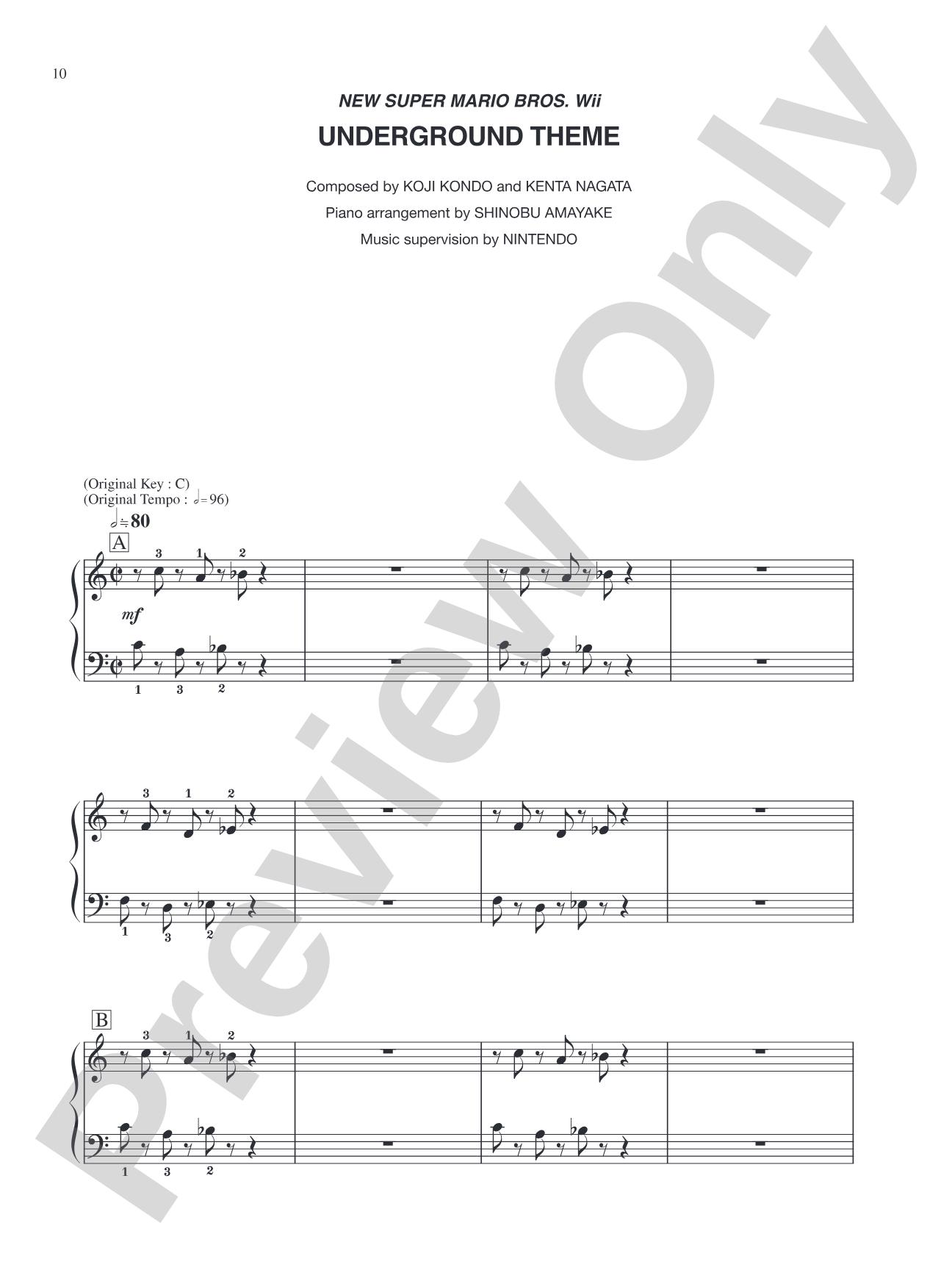

New Super Mario Bros. Wii Underground Theme: Easy Piano
Simplified Piano Solos
Composed by Koji Kondo, Shiho Fujii, Ryo Nagamatsu, and Kenta Nagata
Level: Easy Piano
Item: 00-PS-0015467
$4.99
One moment…
Related Items
New Super Mario Bros. Wii Title Theme: Piano |
$4.99
|
View | |
New Super Mario Bros. Wii Ground Theme: Piano |
$4.99
|
View | |
New Super Mario Bros. Wii Underwater Theme: Piano |
$4.99
|
View | |
New Super Mario Bros. Wii Desert Theme: Piano |
$4.99
|
View | |
New Super Mario Bros. Wii Underground Theme: Piano |
$4.99
|
View | |
New Super Mario Bros. Wii Castle Theme: Piano |
$4.99
|
View | |
New Super Mario Bros. Wii Airship Theme: Piano |
$4.99
|
View | |
New Super Mario Bros. Wii Koopa Battle 2: Piano |
$4.99
|
View | |
New Super Mario Bros. Wii Castle Boss Battle: Piano |
$4.99
|
View | |
New Super Mario Bros. Wii Toad House: Piano |
$4.99
|
View | |
New Super Mario Bros. Wii Enemy Course: Piano |
$4.99
|
View | |
New Super Mario Bros. Wii Invincible Theme: Piano |
$4.99
|
View | |
New Super Mario Bros. Wii Staff Credit Roll: Piano |
$4.99
|
View | |
New Super Mario Bros. Wii World 1 Map: Piano |
$4.99
|
View | |
New Super Mario Bros. Wii Player Down: Piano |
$4.99
|
View | |
New Super Mario Bros. Wii Game Over: Piano |
$4.99
|
View | |
New Super Mario Bros. Wii Ending Demo: Piano |
$4.99
|
View | |
New Super Mario Bros. Wii Title Theme: Easy Piano |
$4.99
|
View | |
New Super Mario Bros. Wii Ground Theme: Easy Piano |
$4.99
|
View | |
New Super Mario Bros. Wii Underwater Theme: Easy Piano |
$4.99
|
View | |
New Super Mario Bros. Wii Desert Theme: Easy Piano |
$4.99
|
View | |
New Super Mario Bros. Wii Castle Theme: Easy Piano |
$4.99
|
View | |
New Super Mario Bros. Wii Airship Theme: Easy Piano |
$4.99
|
View | |
New Super Mario Bros. Wii Koopa Battle 2: Easy Piano |
$4.99
|
View | |
New Super Mario Bros. Wii Castle Boss Battle: Easy Piano |
$4.99
|
View | |
New Super Mario Bros. Wii Toad House: Easy Piano |
$4.99
|
View | |
New Super Mario Bros. Wii Enemy Course: Easy Piano |
$4.99
|
View | |
New Super Mario Bros. Wii Invincible Theme: Easy Piano |
$4.99
|
View | |
New Super Mario Bros. Wii Staff Credit Roll: Easy Piano |
$4.99
|
View | |
New Super Mario Bros. Wii World 1 Map: Easy Piano |
$4.99
|
View | |
New Super Mario Bros. Wii Player Down: Easy Piano |
$4.99
|
View | |
New Super Mario Bros. Wii Game Over: Easy Piano |
$4.99
|
View | |
New Super Mario Bros. Wii Ending Demo: Easy Piano |
$4.99
|
View | |
New Super Mario Bros.™ Wii: Piano Book |
$16.99
|
View | |
New Super Mario Bros.™ Wii: Piano Book |
$16.99
|
View |
Description
The soundtrack to Nintendo's New Super Mario Bros.™ Wii is packed with melodic, syncopated themes that sound great on the piano! With this officially licensed sheet music collection, pianists can dazzle friends and family by playing 17 familiar themes from the beloved video game. The arrangements in this Easy Piano edition are moderately streamlined compared to those in the separately published Intermediate-Advanced edition, yet they retain a full and impressive sound. Titles: Title Theme * Ground Theme * Underground Theme * Underwater Theme * Desert Theme * Castle Theme * Airship Theme * Koopa Battle * Castle Boss Battle * Toad House * Enemy Course * Invincible Theme * Staff Credit Roll * World 1 Map * Player Down * Game Over * Ending Demo.


Discover MakeMusic Cloud: thousands of interactive titles your students can play along with today.
Sample Audio
No sample audio found.
Sample Video
No sample videos found.
Additional Details
Publisher:
Alfred Music
Page Count:
40
SKU:
00-PS-0015467
More about this title
About the Composer: Koji Kondo
Koji Kondo shaped video game music as an art form. His work at Nintendo beginning in the 1980s established the sonic identity of some of gaming's most iconic franchises, from Donkey Kong to The Legend of Zelda. His compositions balance memorable melodies with technical sophistication, proving that music written for interactive media demands the same musical craftsmanship as any concert work.
Kondo's influence extends beyond entertainment into music education. His themes have become cultural touchstones that motivate young pianists to develop their skills, often serving as entry points into serious music study. The accessibility and rewarding nature of his compositions make them powerful teaching tools.
Why we love this
These arrangements strike an uncommon balance: they sound genuinely impressive when played well, yet remain genuinely playable at the easy level. Most easy piano collections sacrifice musical substance for accessibility, but this one retains the syncopated energy and harmonic interest of Kondo's originals. Your students will want to practice these because they recognize them, and they'll feel accomplished when they nail the rhythms and tempo.
What to expect
Bright, energetic, and unmistakably playful. The melodies bounce with Nintendo's characteristic optimism while the syncopated rhythms keep the music feeling alive and contemporary. Even at the easy level, these pieces retain enough harmonic color and rhythmic interest to feel like real compositions rather than simplified exercises.
Who it's for
Elementary and middle school pianists working at early intermediate levels will find these arrangements rewarding and motivating. Students drawn to video game music will develop serious technique while playing repertoire they genuinely want to learn. Teachers seeking music that engages reluctant pianists or bridges recreational playing and conservatory-style study will find a reliable resource here.
How to get the most out of it
- Maintain steady tempo through syncopated passages. The Underground Theme and Ground Theme rely on rhythmic precision to capture their driving character; rushing destroys the groove.
- Shape the melodic line even when playing at a measured tempo. These themes are singable and memorable, so let them breathe rather than mechanically working through note values.
- Balance the accompaniment so it supports rather than overwhelms the melody. In arrangements like the Castle Theme, the left hand provides harmonic richness, but the right hand must always lead.
- Practice hands separately before combining them, especially in passages where the rhythm between hands feels offsetor the melody sits in an unfamiliar register.
How to use it
Program one or more of these pieces as part of a student recital that celebrates diverse repertoire and connects music to popular culture. You might also use them as rewards for students who complete more traditional method work, or as motivation during sight-reading exercises. A collection this size allows you to match individual student interests to specific themes rather than assigning one generic piece to everyone.
Skills your students will build
- Reading and executing syncopated rhythms in both hands
- Balancing melody and accompaniment in a single staff or across two staves
- Maintaining steady tempo in energetic, rhythmically active music
- Shaping melodic lines with expression while managing technical demands
- Sight-reading and learning music independently across a 40-page collection