
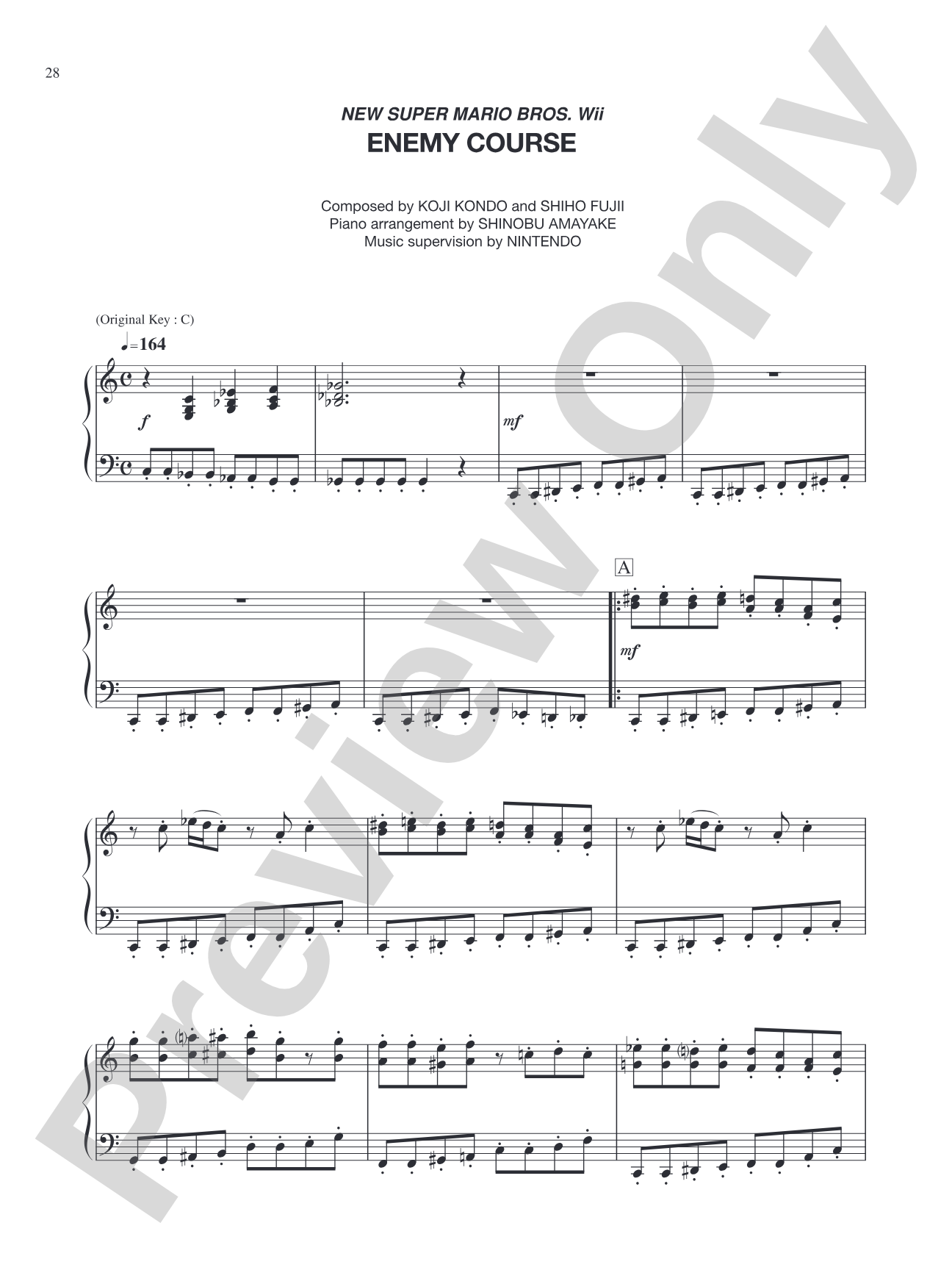

New Super Mario Bros. Wii Enemy Course: Piano
Intermediate--Advanced Piano Solos
Composed by Koji Kondo, Shiho Fujii, Ryo Nagamatsu, and Kenta Nagata
Level: Intermediate / Advanced
Item: 00-PS-0015345
$4.99
One moment…
Related Items
New Super Mario Bros. Wii Title Theme: Piano |
$4.99
|
View | |
New Super Mario Bros. Wii Ground Theme: Piano |
$4.99
|
View | |
New Super Mario Bros. Wii Underwater Theme: Piano |
$4.99
|
View | |
New Super Mario Bros. Wii Desert Theme: Piano |
$4.99
|
View | |
New Super Mario Bros. Wii Underground Theme: Piano |
$4.99
|
View | |
New Super Mario Bros. Wii Castle Theme: Piano |
$4.99
|
View | |
New Super Mario Bros. Wii Airship Theme: Piano |
$4.99
|
View | |
New Super Mario Bros. Wii Koopa Battle 2: Piano |
$4.99
|
View | |
New Super Mario Bros. Wii Castle Boss Battle: Piano |
$4.99
|
View | |
New Super Mario Bros. Wii Toad House: Piano |
$4.99
|
View | |
New Super Mario Bros. Wii Invincible Theme: Piano |
$4.99
|
View | |
New Super Mario Bros. Wii Staff Credit Roll: Piano |
$4.99
|
View | |
New Super Mario Bros. Wii World 1 Map: Piano |
$4.99
|
View | |
New Super Mario Bros. Wii Player Down: Piano |
$4.99
|
View | |
New Super Mario Bros. Wii Game Over: Piano |
$4.99
|
View | |
New Super Mario Bros. Wii Ending Demo: Piano |
$4.99
|
View | |
New Super Mario Bros. Wii Title Theme: Easy Piano |
$4.99
|
View | |
New Super Mario Bros. Wii Ground Theme: Easy Piano |
$4.99
|
View | |
New Super Mario Bros. Wii Underwater Theme: Easy Piano |
$4.99
|
View | |
New Super Mario Bros. Wii Desert Theme: Easy Piano |
$4.99
|
View | |
New Super Mario Bros. Wii Underground Theme: Easy Piano |
$4.99
|
View | |
New Super Mario Bros. Wii Castle Theme: Easy Piano |
$4.99
|
View | |
New Super Mario Bros. Wii Airship Theme: Easy Piano |
$4.99
|
View | |
New Super Mario Bros. Wii Koopa Battle 2: Easy Piano |
$4.99
|
View | |
New Super Mario Bros. Wii Castle Boss Battle: Easy Piano |
$4.99
|
View | |
New Super Mario Bros. Wii Toad House: Easy Piano |
$4.99
|
View | |
New Super Mario Bros. Wii Enemy Course: Easy Piano |
$4.99
|
View | |
New Super Mario Bros. Wii Invincible Theme: Easy Piano |
$4.99
|
View | |
New Super Mario Bros. Wii Staff Credit Roll: Easy Piano |
$4.99
|
View | |
New Super Mario Bros. Wii World 1 Map: Easy Piano |
$4.99
|
View | |
New Super Mario Bros. Wii Player Down: Easy Piano |
$4.99
|
View | |
New Super Mario Bros. Wii Game Over: Easy Piano |
$4.99
|
View | |
New Super Mario Bros. Wii Ending Demo: Easy Piano |
$4.99
|
View | |
New Super Mario Bros.™ Wii: Piano Book |
$16.99
|
View | |
New Super Mario Bros.™ Wii: Piano Book |
$16.99
|
View |
Description
The soundtrack to Nintendo's New Super Mario Bros.™ Wii is packed with melodic, syncopated themes that sound great on the piano! With this officially licensed sheet music collection, intermediate to advanced pianists can dazzle friends and family by playing 17 familiar themes from the beloved video game. Titles: Title Theme * Ground Theme * Underground Theme * Underwater Theme * Desert Theme * Castle Theme * Airship Theme * Koopa Battle * Castle Boss Battle * Toad House * Enemy Course * Invincible Theme * Staff Credit Roll * World 1 Map * Player Down * Game Over * Ending Demo.


Discover MakeMusic Cloud: thousands of interactive titles your students can play along with today.
Sample Audio
No sample audio found.
Sample Video
No sample videos found.
Additional Details
Publisher:
Alfred Music
Page Count:
40
SKU:
00-PS-0015345
More about this title
About the Composer: Koji Kondo
Koji Kondo shaped video game music as an art form, pioneering the integration of memorable melodies and complex rhythmic patterns within the technical constraints of early gaming hardware. His work on the Super Mario series established conventions that influenced generations of game composers, proving that interactive music could be as sophisticated and emotionally resonant as film scores.
Why we love this
These arrangements respect the structural integrity of Kondo's original themes while giving pianists genuine technical and interpretive work. The collection spans 17 distinct musical moments, from cheerful overworld marches to dramatically intense boss battles, offering variety that keeps student recitals engaging and showcases different pianistic skills across a single program.
What to expect
The collection captures the infectious energy and playful character of the original game while giving the piano full license to bring textural depth and harmonic clarity. You'll feel the propulsive rhythm beneath nearly every piece, with moments of genuine drama and even vulnerability in the boss battle and ending sequences.
Who it's for
Intermediate to advanced pianists who want accessible yet musically satisfying repertoire grounded in melodies they already love. Students preparing recitals or informal performances will find pieces that are immediate crowd-pleasers without sacrificing pianistic substance.
How to get the most out of it
- Lean into the syncopation and rhythmic drive of pieces like "Ground Theme" and "World 1 Map" by anchoring your left hand firmly; these themes demand clarity in their off-beat figures.
- Treat the dynamic and textural contrasts between themes as dramatic opportunities. Move decisively from the bright energy of "Toad House" to the menacing intensity of "Castle Boss Battle."
- Practice the accompaniment patterns separately to internalize their rhythmic vitality before combining them with melody. Many of these arrangements feature active inner voices that deserve attention.
- Pay attention to tempo consistency across shorter themes like "Player Down" and "Game Over." These brief moments can feel rushed without careful pacing.
How to use it
Curate thematic recital halves around contrasting moods: open with upbeat map and ground themes, build toward the intensity of boss battles, then resolve with softer moments like "Toad House" and the credit roll. A full suite or carefully selected medley also works beautifully as a bridge between classical and contemporary repertoire in a mixed program.
Skills your students will build
- Executing syncopated rhythms with rhythmic clarity and precision
- Managing tempo and energy across rapid-fire thematic changes
- Balancing active accompanimental figures with melodic clarity
- Interpreting dynamic contrast to convey distinct emotional landscapes
- Building interpretive confidence in video game and popular music arrangements