
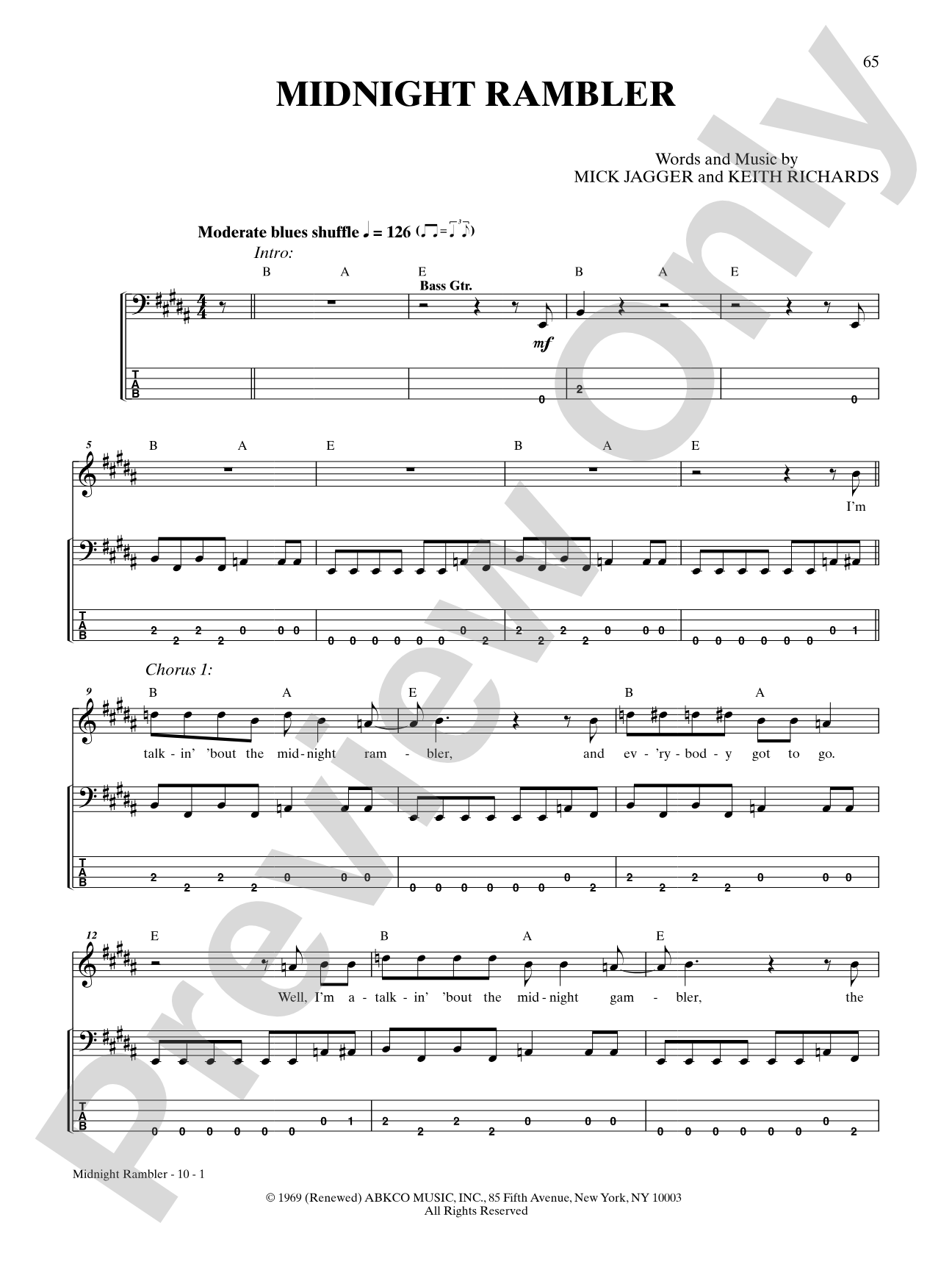
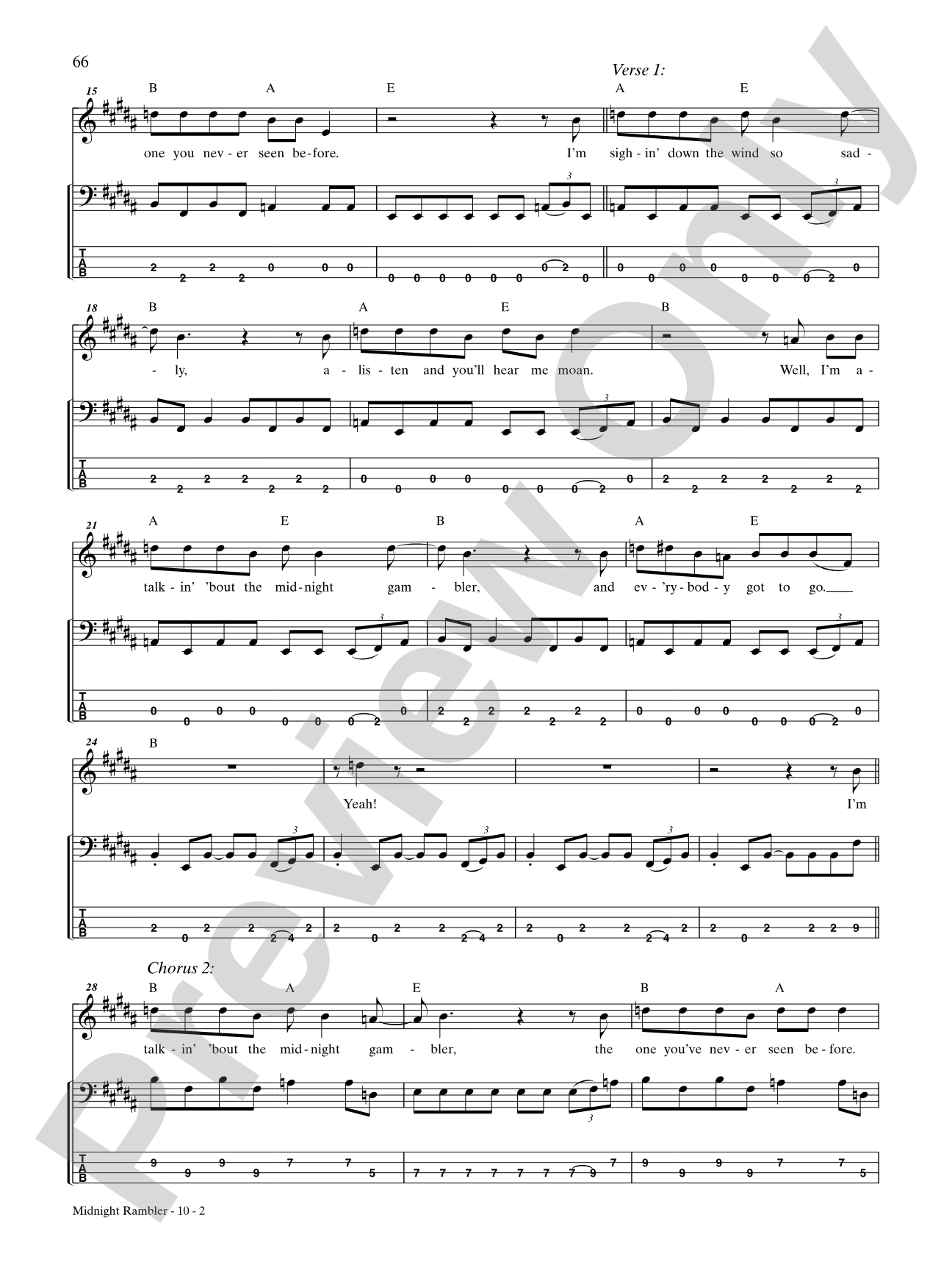

Midnight Rambler: Bass TAB
The Rolling Stones
Item: 00-PS-0010225
$9.99
Pickup currently not available
Related Items
Heart of Stone: Authentic Guitar TAB |
$4.99
|
View | |
Paint It, Black: Bass TAB |
$4.99
|
View | |
(I Can't Get No) Satisfaction: Bass TAB |
$4.99
|
View | |
(I Can't Get No) Satisfaction: Authentic Guitar TAB |
$4.99
|
View | |
Street Fighting Man: Bass TAB |
$4.99
|
View | |
Get Off of My Cloud: Bass TAB |
$4.99
|
View | |
Get Off of My Cloud: Authentic Guitar TAB |
$4.99
|
View | |
Heart of Stone: Bass TAB |
$4.99
|
View | |
19th Nervous Breakdown: Bass TAB |
$4.99
|
View | |
19th Nervous Breakdown: Authentic Guitar TAB |
$5.99
|
View | |
Wild Horses: Bass TAB |
$4.99
|
View | |
Wild Horses: Authentic Guitar TAB |
$5.99
|
View | |
Time is on My Side: Bass TAB |
$4.99
|
View | |
Play With Fire: Bass TAB |
$4.99
|
View | |
Play With Fire: Authentic Guitar TAB |
$4.99
|
View | |
Mother's Little Helper: Authentic Guitar TAB |
$4.99
|
View | |
Mother's Little Helper: Bass TAB |
$4.99
|
View | |
Honky Tonk Women: Bass TAB |
$4.99
|
View | |
Honky Tonk Women: Authentic Guitar TAB |
$5.99
|
View | |
You Can't Always Get What You Want: Bass TAB |
$5.99
|
View | |
You Can't Always Get What You Want: Authentic Guitar TAB |
$9.99
|
View | |
As Tears Go By: Authentic Guitar TAB |
$4.99
|
View | |
As Tears Go By: Bass TAB |
$4.99
|
View | |
Ruby Tuesday: Bass TAB |
$4.99
|
View | |
Ruby Tuesday: Authentic Guitar TAB |
$4.99
|
View | |
Sympathy for the Devil: Bass TAB |
$4.99
|
View | |
Brown Sugar: Bass TAB |
$4.99
|
View | |
Brown Sugar: Authentic Guitar TAB |
$5.99
|
View | |
Let's Spend the Night Together: Authentic Guitar TAB |
$4.99
|
View | |
Let's Spend the Night Together: Bass TAB |
$4.99
|
View | |
Midnight Rambler: Authentic Guitar TAB |
$9.99
|
View | |
Under My Thumb: Bass TAB |
$4.99
|
View | |
Gimme Shelter: Bass TAB |
$4.99
|
View | |
Gimme Shelter: Authentic Guitar TAB |
$5.99
|
View | |
Jumpin' Jack Flash: Authentic Guitar TAB |
$5.99
|
View | |
Jumpin' Jack Flash: Bass TAB |
$4.99
|
View | |
Street Fighting Man: Authentic Guitar TAB |
$4.99
|
View | |
Sympathy for the Devil: Authentic Guitar TAB |
$5.99
|
View | |
Paint It, Black: Authentic Guitar TAB |
$4.99
|
View | |
Under My Thumb: Authentic Guitar TAB |
$4.99
|
View | |
Time Is On My Side: Authentic Guitar TAB |
$4.99
|
View | |
The Rolling Stones: Hot Rocks 1964-1971: Authentic Bass TAB Book |
$19.95
|
View | |
The Rolling Stones: Hot Rocks 1964-1971: Authentic Guitar TAB Book |
$24.99
|
View |
Description
Hot Rocks was the first, and, four decades later, remains the most significant Rolling Stones compilation ever released. It is The Rolling Stones' biggest-selling album---more than 12 million copies! This book features all 21 tracks from this landmark recording--fully transcribed for bass! Hot Rocks' traces the development of the songwriting team of Jagger and Richards. The album begins with the early cover recording of "Time Is on My Side" and then proceeds chronologically through most of the band's biggest hits from its first decade. Titles: 19th Nervous Breakdown * As Tears Go By * Brown Sugar * Get Off of My Cloud * Gimme Shelter * Heart of Stone * Honky Tonk Women * (I Can't Get No) Satisfaction * Jumpin' Jack Flash * Let's Spend the Night Together * Midnight Rambler * Mother's Little Helper * Paint It, Black * Play With Fire * Ruby Tuesday * Street Fighting Man * Sympathy For The Devil * Time Is On My Side * Under My Thumb * Wild Horses * You Can't Always Get What You Want.


Midnight Rambler: Bass TAB isn't in MakeMusic Cloud just yet...but it could be. Let us know you'd like to see it, and you'll help shape what comes next. In the meantime, start a free trial and dive into thousands of interactive titles your students can play along with today.
Request This Title
Tell us you want it.
Start Your Free Trial
Explore everything that's ready to play right now.
Sample Audio
No sample audio found.
Sample Video
No sample videos found.
Additional Details
Series:
Alfred's Classic Album Editions
Publisher:
Alfred Music
Page Count:
88
SKU:
00-PS-0010225
More about this title
About the Composer: Mick Jagger
Mick Jagger emerged as one of rock music's defining frontmen and songwriters, shaping popular music from the mid-1960s onward. As the primary lyricist and voice of The Rolling Stones, Jagger created some of the most iconic vocal melodies and narrative-driven lyrics in rock history, often collaborating with guitarist Keith Richards to produce songs that balanced blues tradition with contemporary rock sensibility.
For bass players studying rock composition, Jagger's work demonstrates how vocal phrasing and melodic contour can drive the structural choices of an entire song. The pieces in Hot Rocks showcase his ability to craft memorable hooks and lyrical narratives that give bass lines clear harmonic and rhythmic context.
Why we love this
Hot Rocks is the definitive introduction to transcribing classic rock bass lines because it covers 21 essential tracks in one book. These songs demand solid fundamentals in rock rhythm, syncopation, and lock with kick drum patterns, making them ideal teaching material for intermediate bass players ready to move beyond simplified versions.
What to expect
These grooves swing between swagger and urgency, anchored by blues-rooted riffs that feel both timeless and propulsive. Each song rewards players who balance precision with feel, demanding tight synchronization with the kick drum while still communicating the groove's inherent attitude and movement.
Who it's for
Bass players working toward intermediate to advanced proficiency who want to learn the sonic language of classic rock. This collection suits musicians in cover bands, school jazz ensembles exploring rock repertoire, and anyone building a foundational understanding of how bass lines function within rock song structures.
How to get the most out of it
- Study the recorded versions to internalize how Bill Wyman (and later bass players) voice these lines; the TAB alone won't capture the tone and feel that made these grooves iconic.
- Work on the syncopated 16th-note figures in tracks like 'Jumpin' Jack Flash' and 'Sympathy For The Devil' slowly, isolating the pocket between the kick drum and snare before playing at tempo.
- Pay close attention to bass line variations within verses and choruses; many of these songs shift the groove subtly between sections, and that attention to detail separates competent playing from authentic interpretation.
- Lock the root notes to the kick drum pattern in songs like 'Brown Sugar' and 'Honky Tonk Women' first, then layer in the passing tones and embellishments that give the line its character.
How to use it
Build a unit around Hot Rocks for a rock history module in jazz band or ensemble class, assigning 3-4 tracks per week as transcription and performance work. You can also program individual selections as recital pieces for advanced bass students or feature them in concert pops sets alongside jazz standards.
Skills your students will build
- Reading and performing syncopated rock grooves with precision
- Coordinating eighth-note and 16th-note subdivisions with kick drum patterns
- Identifying and executing passing tones and chromatic approach notes
- Building endurance and consistency over full-length song forms (verses, choruses, bridges)
- Responding aurally to chord changes and harmonic rhythm in blues-based rock structures