
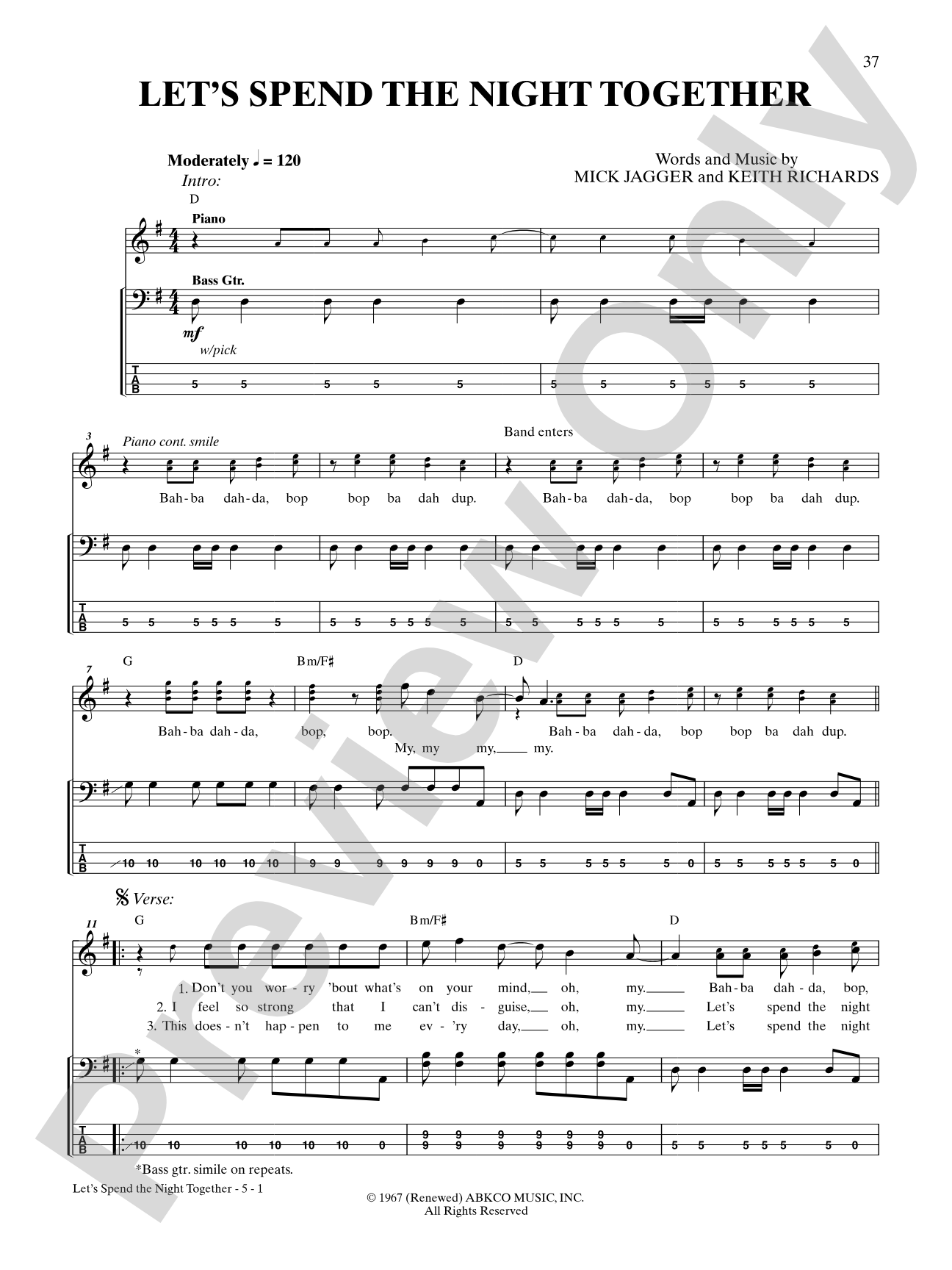

Let's Spend the Night Together: Bass TAB
The Rolling Stones
Item: 00-PS-0010224
$4.99
Pickup currently not available
Related Items
Heart of Stone: Authentic Guitar TAB |
$4.99
|
View | |
Paint It, Black: Bass TAB |
$4.99
|
View | |
(I Can't Get No) Satisfaction: Bass TAB |
$4.99
|
View | |
(I Can't Get No) Satisfaction: Authentic Guitar TAB |
$4.99
|
View | |
Street Fighting Man: Bass TAB |
$4.99
|
View | |
Get Off of My Cloud: Bass TAB |
$4.99
|
View | |
Get Off of My Cloud: Authentic Guitar TAB |
$4.99
|
View | |
Heart of Stone: Bass TAB |
$4.99
|
View | |
19th Nervous Breakdown: Bass TAB |
$4.99
|
View | |
19th Nervous Breakdown: Authentic Guitar TAB |
$5.99
|
View | |
Wild Horses: Bass TAB |
$4.99
|
View | |
Wild Horses: Authentic Guitar TAB |
$5.99
|
View | |
Time is on My Side: Bass TAB |
$4.99
|
View | |
Play With Fire: Bass TAB |
$4.99
|
View | |
Play With Fire: Authentic Guitar TAB |
$4.99
|
View | |
Mother's Little Helper: Authentic Guitar TAB |
$4.99
|
View | |
Mother's Little Helper: Bass TAB |
$4.99
|
View | |
Honky Tonk Women: Bass TAB |
$4.99
|
View | |
Honky Tonk Women: Authentic Guitar TAB |
$5.99
|
View | |
You Can't Always Get What You Want: Bass TAB |
$5.99
|
View | |
You Can't Always Get What You Want: Authentic Guitar TAB |
$9.99
|
View | |
As Tears Go By: Authentic Guitar TAB |
$4.99
|
View | |
As Tears Go By: Bass TAB |
$4.99
|
View | |
Ruby Tuesday: Bass TAB |
$4.99
|
View | |
Ruby Tuesday: Authentic Guitar TAB |
$4.99
|
View | |
Sympathy for the Devil: Bass TAB |
$4.99
|
View | |
Brown Sugar: Bass TAB |
$4.99
|
View | |
Brown Sugar: Authentic Guitar TAB |
$5.99
|
View | |
Let's Spend the Night Together: Authentic Guitar TAB |
$4.99
|
View | |
Midnight Rambler: Bass TAB |
$9.99
|
View | |
Midnight Rambler: Authentic Guitar TAB |
$9.99
|
View | |
Under My Thumb: Bass TAB |
$4.99
|
View | |
Gimme Shelter: Bass TAB |
$4.99
|
View | |
Gimme Shelter: Authentic Guitar TAB |
$5.99
|
View | |
Jumpin' Jack Flash: Authentic Guitar TAB |
$5.99
|
View | |
Jumpin' Jack Flash: Bass TAB |
$4.99
|
View | |
Street Fighting Man: Authentic Guitar TAB |
$4.99
|
View | |
Sympathy for the Devil: Authentic Guitar TAB |
$5.99
|
View | |
Paint It, Black: Authentic Guitar TAB |
$4.99
|
View | |
Under My Thumb: Authentic Guitar TAB |
$4.99
|
View | |
Time Is On My Side: Authentic Guitar TAB |
$4.99
|
View | |
The Rolling Stones: Hot Rocks 1964-1971: Authentic Bass TAB Book |
$19.95
|
View | |
The Rolling Stones: Hot Rocks 1964-1971: Authentic Guitar TAB Book |
$24.99
|
View |
Description
Hot Rocks was the first, and, four decades later, remains the most significant Rolling Stones compilation ever released. It is The Rolling Stones' biggest-selling album---more than 12 million copies! This book features all 21 tracks from this landmark recording--fully transcribed for bass! Hot Rocks' traces the development of the songwriting team of Jagger and Richards. The album begins with the early cover recording of "Time Is on My Side" and then proceeds chronologically through most of the band's biggest hits from its first decade. Titles: 19th Nervous Breakdown * As Tears Go By * Brown Sugar * Get Off of My Cloud * Gimme Shelter * Heart of Stone * Honky Tonk Women * (I Can't Get No) Satisfaction * Jumpin' Jack Flash * Let's Spend the Night Together * Midnight Rambler * Mother's Little Helper * Paint It, Black * Play With Fire * Ruby Tuesday * Street Fighting Man * Sympathy For The Devil * Time Is On My Side * Under My Thumb * Wild Horses * You Can't Always Get What You Want.


Let's Spend the Night Together: Bass TAB isn't in MakeMusic Cloud just yet...but it could be. Let us know you'd like to see it, and you'll help shape what comes next. In the meantime, start a free trial and dive into thousands of interactive titles your students can play along with today.
Request This Title
Tell us you want it.
Start Your Free Trial
Explore everything that's ready to play right now.
Sample Audio
No sample audio found.
Sample Video
No sample videos found.
Additional Details
Series:
Alfred's Classic Album Editions
Publisher:
Alfred Music
Page Count:
88
SKU:
00-PS-0010224
More about this title
About the Composer: Mick Jagger
Mick Jagger's songwriting partnership with Keith Richards fundamentally reshaped rock music across five decades. Beginning in the early 1960s, their compositions evolved from interpretations of American blues standards into innovative originals that defined the Rolling Stones' sound and influenced generations of musicians.
For bass players, studying these transcriptions offers insight into how Jagger and Richards constructed melodies and song structures that Bill Wyman and subsequent Stones bassists had to interpret and support. Their work demonstrates how strong songwriting creates space for compelling bass lines rather than demanding them.
Why we love this
This collection captures the Stones at their most prolific and inventive, with bass lines that range from subtle and supportive to rhythmically driving. Each transcription reveals how bass functions differently across genres within a single band's catalog: bluesy grooves in "Midnight Rambler," the anxious pulse of "Satisfaction," the swagger of "Brown Sugar." You're not just learning songs; you're deconstructing 21 essential rock compositions.
What to expect
These bass lines embody the Stones' fearless blend of American blues tradition with British swagger. You'll feel the pull of deep, resonant grooves; the snap of rock and roll precision; and moments of genuine blues soul underneath some of the most recognizable melodies in rock history.
Who it's for
Bass players at the intermediate level and beyond who want to master rock fundamentals through canonical material. Whether you're building a setlist of cover songs, studying how legendary session and touring bassists approached Stones material, or seeking transcriptions that challenge you to play with taste and restraint, this collection offers serious learning disguised as playing the songs you love.
How to get the most out of it
- Lock into the pocket by listening closely to drum patterns first; Stones grooves often sit slightly behind the beat, and rushing kills the swagger.
- Study the interplay between bass and guitar riffs, especially on "Satisfaction" and "Jumpin' Jack Flash," where they're nearly inseparable.
- Pay attention to dynamics and restraint; many of these lines are effective precisely because they don't overplay.
- Use the chronological order as a listening guide; hearing how bass approaches changed from 1960s covers to mid-1970s originals clarifies the band's evolution.
How to use it
Build a set around these songs for a rock ensemble, student band, or community event celebrating 1960s-70s rock history. You might also sequence individual transcriptions into a lesson sequence on rock bass fundamentals, moving chronologically through the album to show how the role of bass evolved across a single band's first decade.
Skills your students will build
- Reading and interpreting authentic bass TAB from a landmark rock recording
- Playing behind-the-beat pocket and swing in rock grooves
- Distinguishing bass roles across different song structures (verse, chorus, bridge, breakdown)
- Understanding the relationship between bass and drums in defining groove
- Building taste and restraint in rock bass playing
- Adapting fingering and technique across 21 different song contexts and tempos