
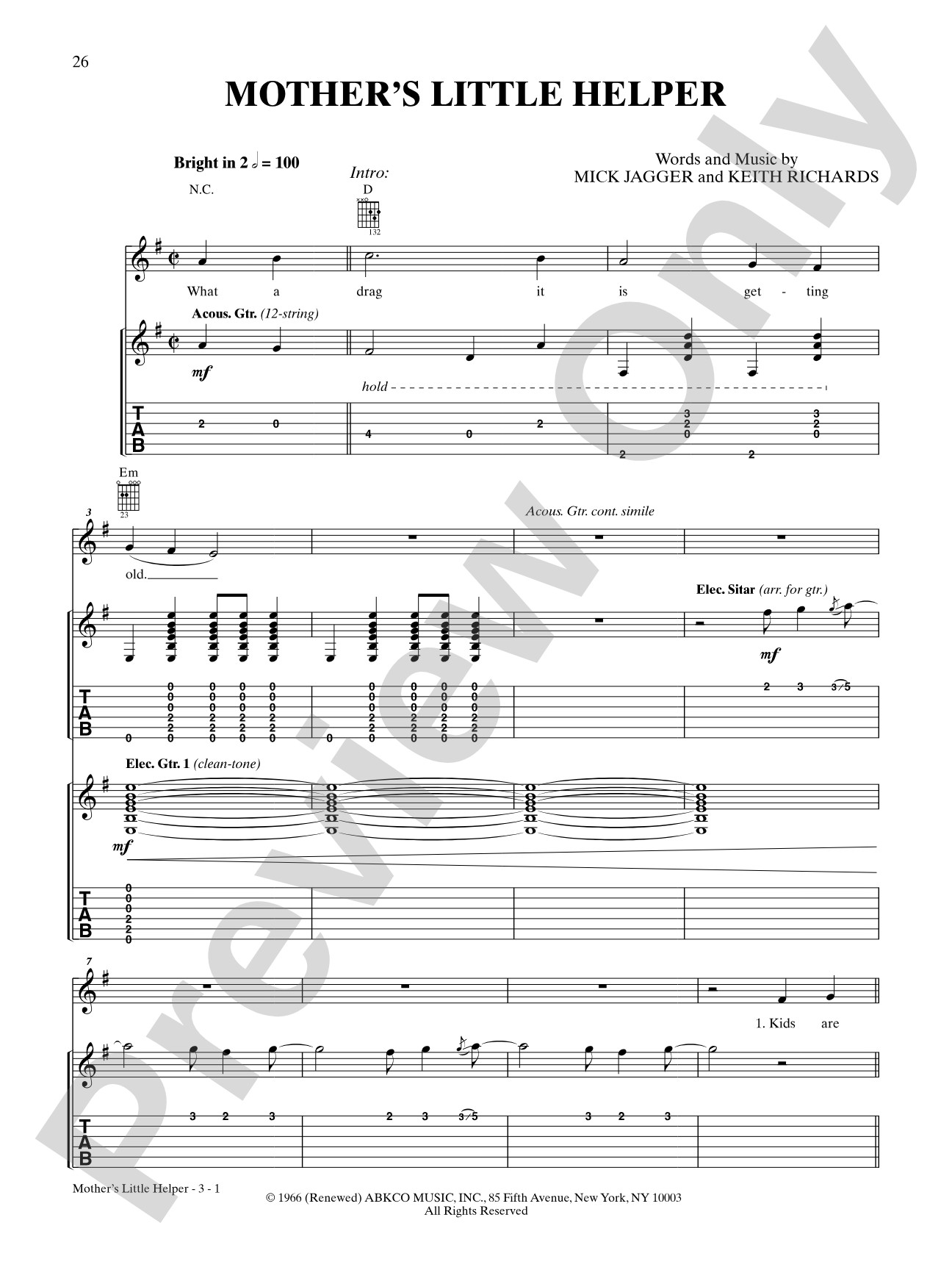

Mother's Little Helper: Authentic Guitar TAB
The Rolling Stones
Item: 00-PS-0010210
$4.99
Pickup currently not available
Related Items
Heart of Stone: Authentic Guitar TAB |
$4.99
|
View | |
Paint It, Black: Bass TAB |
$4.99
|
View | |
(I Can't Get No) Satisfaction: Bass TAB |
$4.99
|
View | |
(I Can't Get No) Satisfaction: Authentic Guitar TAB |
$4.99
|
View | |
Street Fighting Man: Bass TAB |
$4.99
|
View | |
Get Off of My Cloud: Bass TAB |
$4.99
|
View | |
Get Off of My Cloud: Authentic Guitar TAB |
$4.99
|
View | |
Heart of Stone: Bass TAB |
$4.99
|
View | |
19th Nervous Breakdown: Bass TAB |
$4.99
|
View | |
19th Nervous Breakdown: Authentic Guitar TAB |
$5.99
|
View | |
Wild Horses: Bass TAB |
$4.99
|
View | |
Wild Horses: Authentic Guitar TAB |
$5.99
|
View | |
Time is on My Side: Bass TAB |
$4.99
|
View | |
Play With Fire: Bass TAB |
$4.99
|
View | |
Play With Fire: Authentic Guitar TAB |
$4.99
|
View | |
Mother's Little Helper: Bass TAB |
$4.99
|
View | |
Honky Tonk Women: Bass TAB |
$4.99
|
View | |
Honky Tonk Women: Authentic Guitar TAB |
$5.99
|
View | |
You Can't Always Get What You Want: Bass TAB |
$5.99
|
View | |
You Can't Always Get What You Want: Authentic Guitar TAB |
$9.99
|
View | |
As Tears Go By: Authentic Guitar TAB |
$4.99
|
View | |
As Tears Go By: Bass TAB |
$4.99
|
View | |
Ruby Tuesday: Bass TAB |
$4.99
|
View | |
Ruby Tuesday: Authentic Guitar TAB |
$4.99
|
View | |
Sympathy for the Devil: Bass TAB |
$4.99
|
View | |
Brown Sugar: Bass TAB |
$4.99
|
View | |
Brown Sugar: Authentic Guitar TAB |
$5.99
|
View | |
Let's Spend the Night Together: Authentic Guitar TAB |
$4.99
|
View | |
Let's Spend the Night Together: Bass TAB |
$4.99
|
View | |
Midnight Rambler: Bass TAB |
$9.99
|
View | |
Midnight Rambler: Authentic Guitar TAB |
$9.99
|
View | |
Under My Thumb: Bass TAB |
$4.99
|
View | |
Gimme Shelter: Bass TAB |
$4.99
|
View | |
Gimme Shelter: Authentic Guitar TAB |
$5.99
|
View | |
Jumpin' Jack Flash: Authentic Guitar TAB |
$5.99
|
View | |
Jumpin' Jack Flash: Bass TAB |
$4.99
|
View | |
Street Fighting Man: Authentic Guitar TAB |
$4.99
|
View | |
Sympathy for the Devil: Authentic Guitar TAB |
$5.99
|
View | |
Paint It, Black: Authentic Guitar TAB |
$4.99
|
View | |
Under My Thumb: Authentic Guitar TAB |
$4.99
|
View | |
Time Is On My Side: Authentic Guitar TAB |
$4.99
|
View | |
The Rolling Stones: Hot Rocks 1964-1971: Authentic Bass TAB Book |
$19.95
|
View | |
The Rolling Stones: Hot Rocks 1964-1971: Authentic Guitar TAB Book |
$24.99
|
View |
Description
Hot Rocks, released almost four decades ago, remains the most significant Rolling Stones compilation ever. It is The Rolling Stones' biggest-selling album---more than 12 million copies! This book features all 21 tracks from this landmark recording--fully transcribed for guitar! Hot Rocks' traces the development of the songwriting team of Jagger and Richards. The album begins with the early cover recording of "Time Is on My Side" and then proceeds chronologically through most of the band's biggest hits from its first decade. Titles: 19th Nervous Breakdown * As Tears Go By * Brown Sugar * Get Off of My Cloud * Gimme Shelter * Heart of Stone * Honky Tonk Women * (I Can't Get No) Satisfaction * Jumpin' Jack Flash * Let's Spend the Night Together * Midnight Rambler * Mother's Little Helper * Paint It, Black * Play With Fire * Ruby Tuesday * Street Fighting Man * Sympathy For The Devil * Time Is On My Side * Under My Thumb * Wild Horses * You Can't Always Get What You Want.


Mother's Little Helper: Authentic Guitar TAB isn't in MakeMusic Cloud just yet...but it could be. Let us know you'd like to see it, and you'll help shape what comes next. In the meantime, start a free trial and dive into thousands of interactive titles your students can play along with today.
Request This Title
Tell us you want it.
Start Your Free Trial
Explore everything that's ready to play right now.
Sample Audio
No sample audio found.
Sample Video
No sample videos found.
Additional Details
Series:
Alfred's Classic Album Editions
Publisher:
Alfred Music
Page Count:
136
SKU:
00-PS-0010210
More about this title
About the Composer: Mick Jagger
Mick Jagger emerged as one of rock music's most distinctive frontmen and songwriters during the 1960s. Working alongside Keith Richards, Jagger crafted songs that balanced blues-influenced grit with pop sensibility, creating a catalog that defined an era and influenced generations of musicians across genres.
Why we love this
Hot Rocks captures the Rolling Stones at their songwriting peak, and these authentic transcriptions unlock the guitar arrangements that powered some of rock's most enduring hits. Having all 21 tracks in one volume gives guitarists a complete survey of classic rock guitar work across nearly a decade of evolution.
What to expect
Raw, inventive, and endlessly engaging. These songs shift between swagger and subtlety, from the driving energy of "Brown Sugar" and "Jumpin' Jack Flash" to the fingerpicked grace of "Paint It Black" and "Ruby Tuesday." You'll hear how simple, well-crafted ideas become unforgettable.
Who it's for
Guitarists intermediate to advanced who want to understand how classic rock guitar arrangements work, from rhythm playing to lead lines. This is equally valuable for players learning the Stones' catalog, studying Keith Richards' influence on rock guitar, or preparing material for ensemble or solo performance.
How to get the most out of it
- Study the recorded versions alongside the tab to internalize the feel and timing of each arrangement; Richards' rhythmic phrasing is as important as the notes themselves.
- Pay attention to the dynamic shifts between verses and choruses; many of these tracks hinge on texture and restraint rather than constant intensity.
- Lock into the rhythm section approach used on each track; some arrangements emphasize single-note lines while others layer multiple guitar parts, and knowing which role you're playing matters.
- Explore the different tunings and techniques Richards employed across the album; switching between standard tuning, open tunings, and various effects will deepen your understanding of each song's character.
How to use it
Build a solo recital entirely around Hot Rocks, tracing the band's evolution chronologically or curating a greatest-hits set. Alternatively, use individual transcriptions to supplement ensemble programs, adding a rock dimension to otherwise classical or contemporary lineups.
Skills your students will build
- Reading and playing authentic rock guitar arrangements from original recordings
- Understanding Keith Richards' signature techniques (open tunings, bent notes, rhythmic phrasing)
- Adapting guitar parts between rhythm and lead contexts
- Recognizing structural and textural differences across songs in a single album
- Translating studio arrangements to live performance on electric guitar