
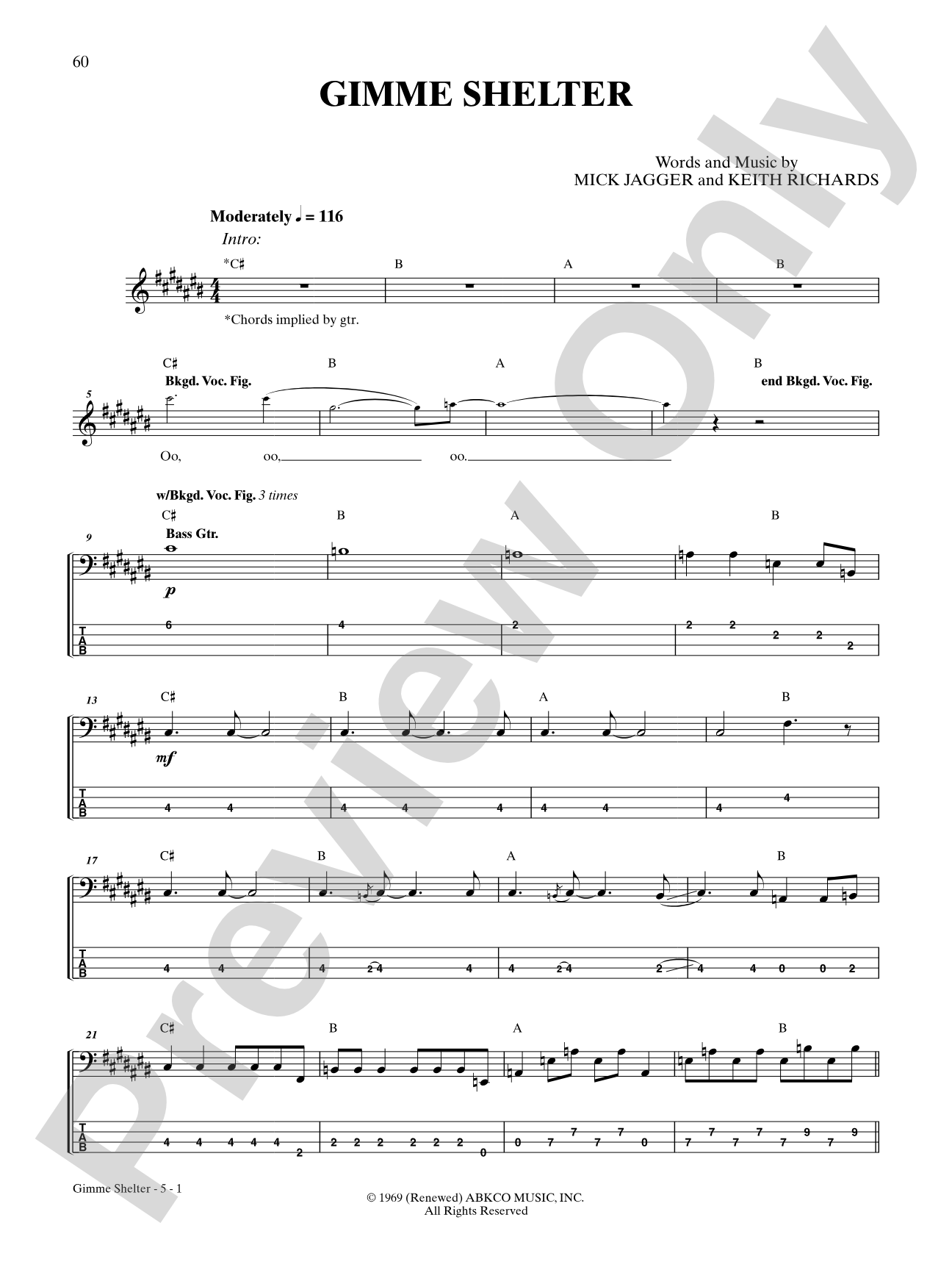

Gimme Shelter: Bass TAB
The Rolling Stones
Item: 00-PS-0010228
$4.99
Pickup currently not available
Related Items
Heart of Stone: Authentic Guitar TAB |
$4.99
|
View | |
Paint It, Black: Bass TAB |
$4.99
|
View | |
(I Can't Get No) Satisfaction: Bass TAB |
$4.99
|
View | |
(I Can't Get No) Satisfaction: Authentic Guitar TAB |
$4.99
|
View | |
Street Fighting Man: Bass TAB |
$4.99
|
View | |
Get Off of My Cloud: Bass TAB |
$4.99
|
View | |
Get Off of My Cloud: Authentic Guitar TAB |
$4.99
|
View | |
Heart of Stone: Bass TAB |
$4.99
|
View | |
19th Nervous Breakdown: Bass TAB |
$4.99
|
View | |
19th Nervous Breakdown: Authentic Guitar TAB |
$5.99
|
View | |
Wild Horses: Bass TAB |
$4.99
|
View | |
Wild Horses: Authentic Guitar TAB |
$5.99
|
View | |
Time is on My Side: Bass TAB |
$4.99
|
View | |
Play With Fire: Bass TAB |
$4.99
|
View | |
Play With Fire: Authentic Guitar TAB |
$4.99
|
View | |
Mother's Little Helper: Authentic Guitar TAB |
$4.99
|
View | |
Mother's Little Helper: Bass TAB |
$4.99
|
View | |
Honky Tonk Women: Bass TAB |
$4.99
|
View | |
Honky Tonk Women: Authentic Guitar TAB |
$5.99
|
View | |
You Can't Always Get What You Want: Bass TAB |
$5.99
|
View | |
You Can't Always Get What You Want: Authentic Guitar TAB |
$9.99
|
View | |
As Tears Go By: Authentic Guitar TAB |
$4.99
|
View | |
As Tears Go By: Bass TAB |
$4.99
|
View | |
Ruby Tuesday: Bass TAB |
$4.99
|
View | |
Ruby Tuesday: Authentic Guitar TAB |
$4.99
|
View | |
Sympathy for the Devil: Bass TAB |
$4.99
|
View | |
Brown Sugar: Bass TAB |
$4.99
|
View | |
Brown Sugar: Authentic Guitar TAB |
$5.99
|
View | |
Let's Spend the Night Together: Authentic Guitar TAB |
$4.99
|
View | |
Let's Spend the Night Together: Bass TAB |
$4.99
|
View | |
Midnight Rambler: Bass TAB |
$9.99
|
View | |
Midnight Rambler: Authentic Guitar TAB |
$9.99
|
View | |
Under My Thumb: Bass TAB |
$4.99
|
View | |
Gimme Shelter: Authentic Guitar TAB |
$5.99
|
View | |
Jumpin' Jack Flash: Authentic Guitar TAB |
$5.99
|
View | |
Jumpin' Jack Flash: Bass TAB |
$4.99
|
View | |
Street Fighting Man: Authentic Guitar TAB |
$4.99
|
View | |
Sympathy for the Devil: Authentic Guitar TAB |
$5.99
|
View | |
Paint It, Black: Authentic Guitar TAB |
$4.99
|
View | |
Under My Thumb: Authentic Guitar TAB |
$4.99
|
View | |
Time Is On My Side: Authentic Guitar TAB |
$4.99
|
View | |
The Rolling Stones: Hot Rocks 1964-1971: Authentic Bass TAB Book |
$19.95
|
View | |
The Rolling Stones: Hot Rocks 1964-1971: Authentic Guitar TAB Book |
$24.99
|
View |
Description
Hot Rocks was the first, and, four decades later, remains the most significant Rolling Stones compilation ever released. It is The Rolling Stones' biggest-selling album---more than 12 million copies! This book features all 21 tracks from this landmark recording--fully transcribed for bass! Hot Rocks' traces the development of the songwriting team of Jagger and Richards. The album begins with the early cover recording of "Time Is on My Side" and then proceeds chronologically through most of the band's biggest hits from its first decade. Titles: 19th Nervous Breakdown * As Tears Go By * Brown Sugar * Get Off of My Cloud * Gimme Shelter * Heart of Stone * Honky Tonk Women * (I Can't Get No) Satisfaction * Jumpin' Jack Flash * Let's Spend the Night Together * Midnight Rambler * Mother's Little Helper * Paint It, Black * Play With Fire * Ruby Tuesday * Street Fighting Man * Sympathy For The Devil * Time Is On My Side * Under My Thumb * Wild Horses * You Can't Always Get What You Want.


Discover MakeMusic Cloud: thousands of interactive titles your students can play along with today.
Sample Audio
No sample audio found.
Sample Video
No sample videos found.
Additional Details
Series:
Alfred's Classic Album Editions
Publisher:
Alfred Music
Page Count:
88
SKU:
00-PS-0010228
More about this title
About the Composer: Mick Jagger
Mick Jagger stands as one of rock music's most distinctive frontmen and prolific songwriters. Along with Keith Richards, he formed the creative engine of The Rolling Stones, crafting songs that defined multiple generations of rock and roll from the 1960s onward. His ability to write memorable melodies paired with provocative lyrics made the Stones' catalog enduringly relevant in popular music education and performance contexts.
Why we love this
This transcription captures the bass lines that anchor some of rock's most iconic songs, giving players direct access to the grooves that shaped modern popular music. The chronological journey through the Stones' first decade lets bassists see how the band's arrangements evolved and how bass playing itself became more inventive and integral to the songwriting. With 21 tracks spanning from covers to originals, it's both a masterclass in rock bass fundamentals and a chance to own a genuine piece of music history.
What to expect
These transcriptions capture the swagger, swagger, and raw energy of the Stones at their creative peak. You'll feel the tension and release in tracks like 'Sympathy for the Devil' and 'Paint It, Black,' the infectious bounce of 'Brown Sugar,' and the hypnotic pulse underneath ballads like 'Wild Horses.' The bass lines tell you as much about each song's character as the vocals or guitars do.
Who it's for
Bass players who want to understand how the electric bass became a melodic and rhythmic voice in rock music, from beginners learning foundational grooves to intermediate players ready to tackle the subtlety and swagger in these iconic lines. Teachers and band directors using rock repertoire in educational settings will find this resource invaluable for showing students how bass playing contributes to song arrangement and groove.
How to get the most out of it
- Study the original recordings alongside the transcriptions. Hearing Bill Wyman's approach to dynamics and pocket will reveal nuances that notation alone cannot capture, especially in the swing and push of tracks like 'Brown Sugar' and 'Jumpin' Jack Flash.'
- Pay attention to the interaction between bass and drums on each track. The Stones' rhythm section is conversational, not mechanical, so lock into how the kick drum and bass reinforce or answer each other.
- Work through the songs in clusters rather than jumping around randomly. Playing them in the order they appear gives you a sense of how the band's arrangements matured and how your own bass vocabulary can expand through the material.
- Nail the rhythmic pocket before worrying about speed. Many of these lines sit behind the beat slightly or push ahead in specific places; getting that feel right matters more than playing them fast.
How to use it
Frame a rock history unit around this album, using individual transcriptions to illustrate different bass techniques and song structures across the 1960s and 1970s. Alternatively, assign specific tracks as supplementary material for students learning rock and blues grooves, or build a master class where students transcribe one additional line by ear after studying the printed version, bridging notation and listening skills.
Skills your students will build
- Rock and blues groove fundamentals
- Reading guitar TAB with accuracy and fluency
- Pocket playing and rhythmic placement relative to the kick drum
- Understanding how bass lines interact with melody and chord structure
- Interpreting dynamics and articulation from written notation
- Analyzing bass line construction across different song forms and tempos