
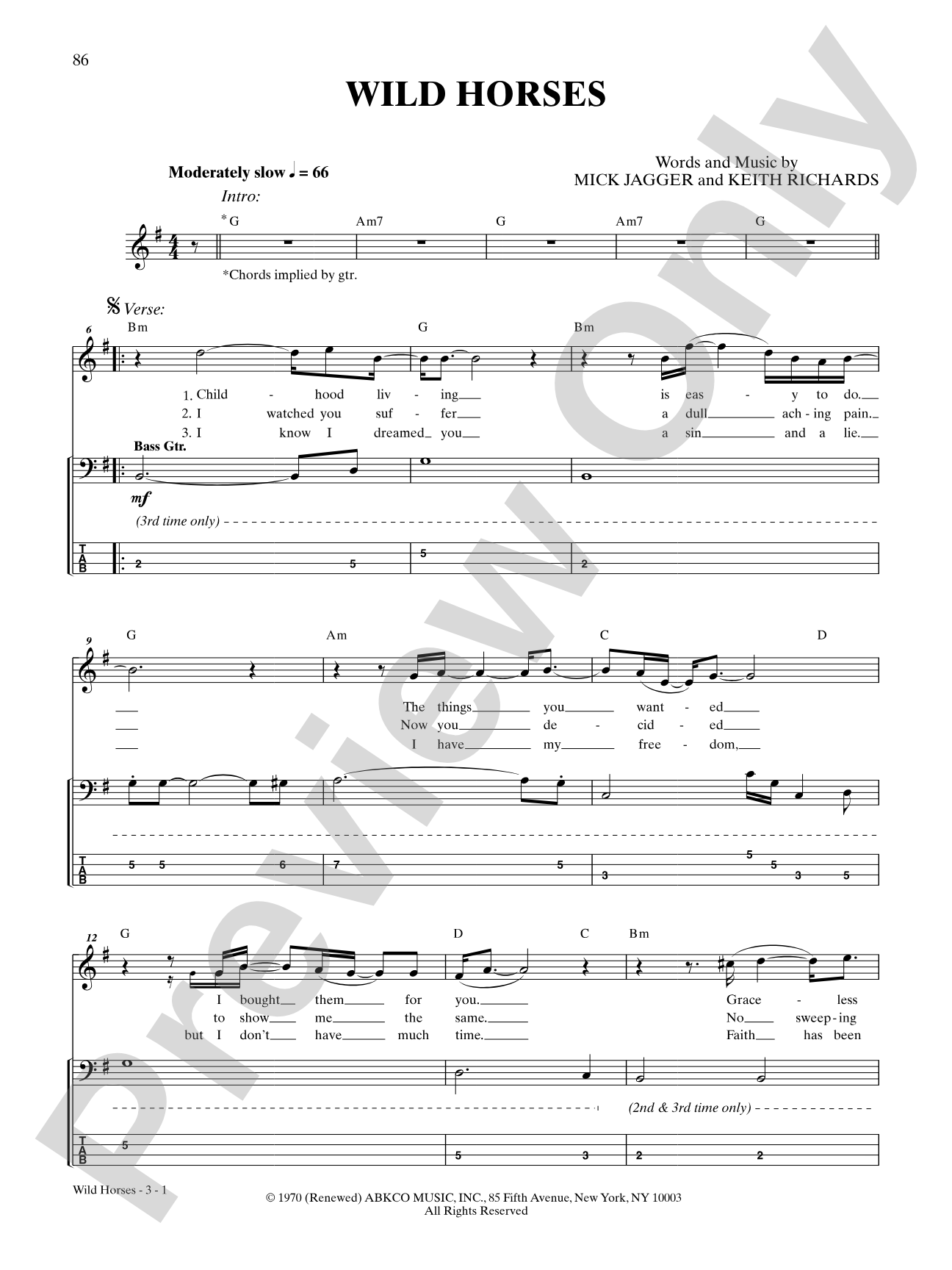

Wild Horses: Bass TAB
The Rolling Stones
Item: 00-PS-0010205
$4.99
Pickup currently not available
Related Items
Heart of Stone: Authentic Guitar TAB |
$4.99
|
View | |
Paint It, Black: Bass TAB |
$4.99
|
View | |
(I Can't Get No) Satisfaction: Bass TAB |
$4.99
|
View | |
(I Can't Get No) Satisfaction: Authentic Guitar TAB |
$4.99
|
View | |
Street Fighting Man: Bass TAB |
$4.99
|
View | |
Get Off of My Cloud: Bass TAB |
$4.99
|
View | |
Get Off of My Cloud: Authentic Guitar TAB |
$4.99
|
View | |
Heart of Stone: Bass TAB |
$4.99
|
View | |
19th Nervous Breakdown: Bass TAB |
$4.99
|
View | |
19th Nervous Breakdown: Authentic Guitar TAB |
$5.99
|
View | |
Wild Horses: Authentic Guitar TAB |
$5.99
|
View | |
Time is on My Side: Bass TAB |
$4.99
|
View | |
Play With Fire: Bass TAB |
$4.99
|
View | |
Play With Fire: Authentic Guitar TAB |
$4.99
|
View | |
Mother's Little Helper: Authentic Guitar TAB |
$4.99
|
View | |
Mother's Little Helper: Bass TAB |
$4.99
|
View | |
Honky Tonk Women: Bass TAB |
$4.99
|
View | |
Honky Tonk Women: Authentic Guitar TAB |
$5.99
|
View | |
You Can't Always Get What You Want: Bass TAB |
$5.99
|
View | |
You Can't Always Get What You Want: Authentic Guitar TAB |
$9.99
|
View | |
As Tears Go By: Authentic Guitar TAB |
$4.99
|
View | |
As Tears Go By: Bass TAB |
$4.99
|
View | |
Ruby Tuesday: Bass TAB |
$4.99
|
View | |
Ruby Tuesday: Authentic Guitar TAB |
$4.99
|
View | |
Sympathy for the Devil: Bass TAB |
$4.99
|
View | |
Brown Sugar: Bass TAB |
$4.99
|
View | |
Brown Sugar: Authentic Guitar TAB |
$5.99
|
View | |
Let's Spend the Night Together: Authentic Guitar TAB |
$4.99
|
View | |
Let's Spend the Night Together: Bass TAB |
$4.99
|
View | |
Midnight Rambler: Bass TAB |
$9.99
|
View | |
Midnight Rambler: Authentic Guitar TAB |
$9.99
|
View | |
Under My Thumb: Bass TAB |
$4.99
|
View | |
Gimme Shelter: Bass TAB |
$4.99
|
View | |
Gimme Shelter: Authentic Guitar TAB |
$5.99
|
View | |
Jumpin' Jack Flash: Authentic Guitar TAB |
$5.99
|
View | |
Jumpin' Jack Flash: Bass TAB |
$4.99
|
View | |
Street Fighting Man: Authentic Guitar TAB |
$4.99
|
View | |
Sympathy for the Devil: Authentic Guitar TAB |
$5.99
|
View | |
Paint It, Black: Authentic Guitar TAB |
$4.99
|
View | |
Under My Thumb: Authentic Guitar TAB |
$4.99
|
View | |
Time Is On My Side: Authentic Guitar TAB |
$4.99
|
View | |
The Rolling Stones: Hot Rocks 1964-1971: Authentic Bass TAB Book |
$19.95
|
View | |
The Rolling Stones: Hot Rocks 1964-1971: Authentic Guitar TAB Book |
$24.99
|
View |
Description
Hot Rocks was the first, and, four decades later, remains the most significant Rolling Stones compilation ever released. It is The Rolling Stones' biggest-selling album---more than 12 million copies! This book features all 21 tracks from this landmark recording--fully transcribed for bass! Hot Rocks' traces the development of the songwriting team of Jagger and Richards. The album begins with the early cover recording of "Time Is on My Side" and then proceeds chronologically through most of the band's biggest hits from its first decade. Titles: 19th Nervous Breakdown * As Tears Go By * Brown Sugar * Get Off of My Cloud * Gimme Shelter * Heart of Stone * Honky Tonk Women * (I Can't Get No) Satisfaction * Jumpin' Jack Flash * Let's Spend the Night Together * Midnight Rambler * Mother's Little Helper * Paint It, Black * Play With Fire * Ruby Tuesday * Street Fighting Man * Sympathy For The Devil * Time Is On My Side * Under My Thumb * Wild Horses * You Can't Always Get What You Want.


Discover MakeMusic Cloud: thousands of interactive titles your students can play along with today.
Sample Audio
No sample audio found.
Sample Video
No sample videos found.
Additional Details
Series:
Alfred's Classic Album Editions
Publisher:
Alfred Music
Page Count:
88
SKU:
00-PS-0010205
More about this title
About the Composer: Mick Jagger
Mick Jagger's songwriting partnership with Keith Richards fundamentally shaped rock music from the 1960s forward. Together they moved the Rolling Stones beyond blues covers into original compositions that combined blues structures with pop sensibility, creating some of the most enduring songs in popular music.
For bass players and transcription students, Jagger's role as lyricist and melody writer reveals how vocal lines and narrative drive the compositional architecture. Understanding how Jagger crafted hooks, phrasing, and rhythmic vocal patterns alongside Richards' guitar riffs shows aspiring musicians how melody and harmony function as equal partners in rock songwriting.
Why we love this
This collection captures the Rolling Stones at their creative peak, and the bass lines across these 21 tracks represent the full arc of their early innovation. From the restrained, blues-rooted lines of "Time Is on My Side" to the driving, syncopated grooves of "Jumpin' Jack Flash," players encounter the evolution of rock bass playing in a single, cohesive book. The TAB format makes these classic lines immediately playable, so students can learn the actual recordings without guessing.
What to expect
This TAB collection is a time machine through four decades of the Rolling Stones' evolution. Early tracks pulse with the rawness of a band learning to write its own material; later hits swagger with the confidence of musicians who'd already changed rock and roll. The bass lines anchor every shift, from the bluesy simplicity of the opening tracks to the intricate rhythmic interplay of the masterpieces that close the album.
Who it's for
Bass players at the intermediate level and beyond who want to master the actual recordings rather than simplified versions. Musicians preparing for auditions, jam sessions, or performances where authenticity matters will find exact transcriptions essential. This book also serves rock history students and transcription classes exploring how bass lines evolved across a pivotal decade.
How to get the most out of it
- Study the originals alongside the transcriptions. Bill Wyman's bass approach changes dramatically across this album; hearing the context of each song's groove and tempo is essential to understanding why the lines sit the way they do.
- Pay attention to sustain and tone in songs like "Paint It, Black" and "Sympathy for the Devil." The bass isn't always moving; knowing when to sit back and let the note ring defines the character of these arrangements.
- Lock into the kick drum pattern first. Many of these grooves interlock bass and drums in ways that feel unnatural if you're reading independently; always verify the rhythmic relationship.
- Use distortion and tone effects conservatively. Several tracks feature bass distortion or fuzzy tone, but these are specific moments, not the default sound across the album.
How to use it
Assign individual tracks from this collection as supplementary repertoire in bass lessons or ensemble rehearsals. A jazz or rock ensemble could program 3 to 4 tracks in a concert celebrating classic rock, giving students the authentic experience of playing alongside these iconic grooves. The progression of complexity across the album also makes it ideal for a "Stones deep dive" workshop or masterclass on how bass lines function in rock arrangements.
Skills your students will build
- Reading and executing authentic bass TAB from professional recordings
- Understanding how bass lines anchor groove and syncopation in rock music
- Playing with precision across varying tempos and rhythmic feels
- Recognizing the relationship between bass and kick drum in different song structures
- Building stamina and consistency in longer, repeated groove sections