
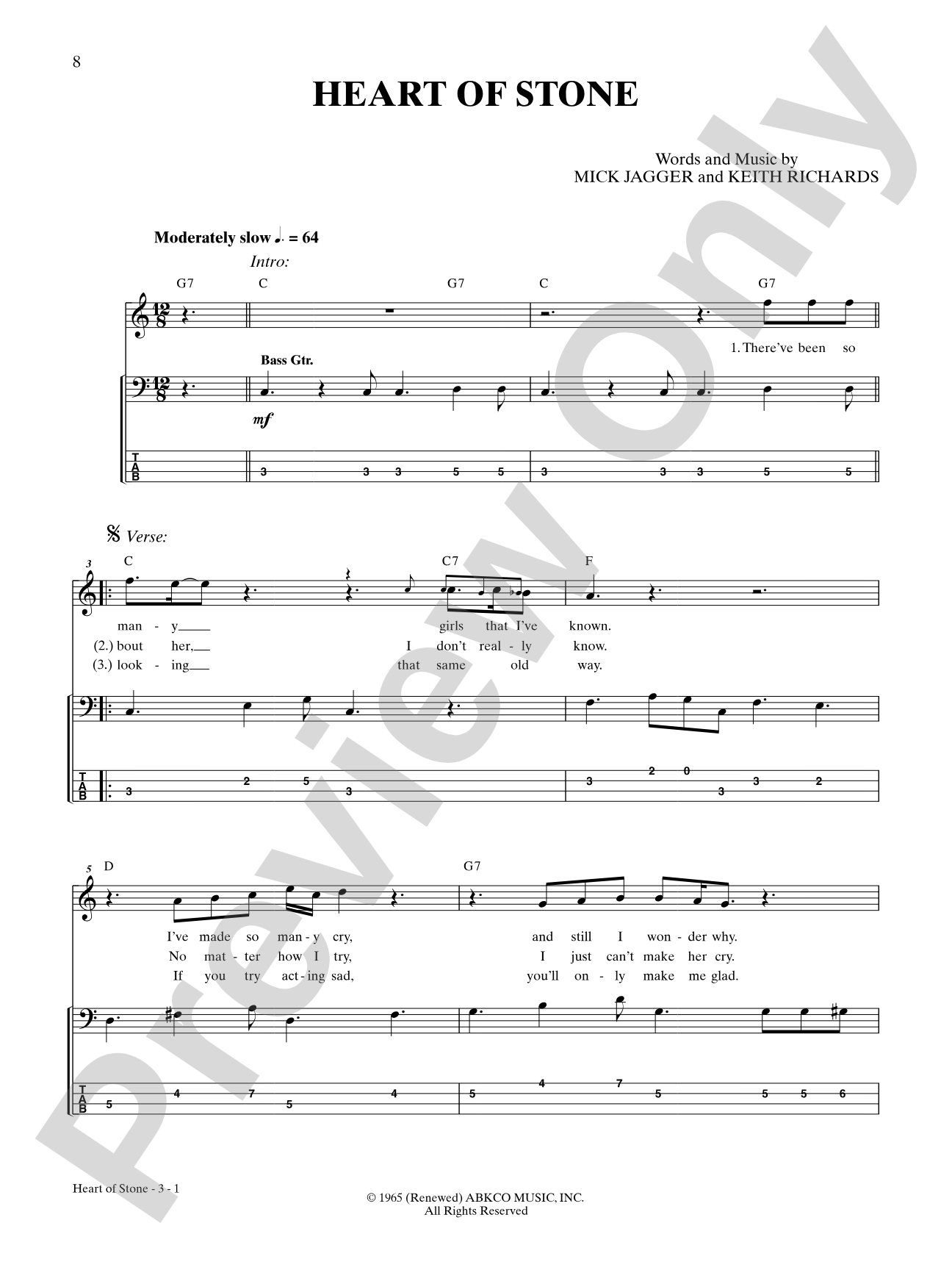

Heart of Stone: Bass TAB
The Rolling Stones
Item: 00-PS-0010202
$4.99
Pickup currently not available
Related Items
Heart of Stone: Authentic Guitar TAB |
$4.99
|
View | |
Paint It, Black: Bass TAB |
$4.99
|
View | |
(I Can't Get No) Satisfaction: Bass TAB |
$4.99
|
View | |
(I Can't Get No) Satisfaction: Authentic Guitar TAB |
$4.99
|
View | |
Street Fighting Man: Bass TAB |
$4.99
|
View | |
Get Off of My Cloud: Bass TAB |
$4.99
|
View | |
Get Off of My Cloud: Authentic Guitar TAB |
$4.99
|
View | |
19th Nervous Breakdown: Bass TAB |
$4.99
|
View | |
19th Nervous Breakdown: Authentic Guitar TAB |
$5.99
|
View | |
Wild Horses: Bass TAB |
$4.99
|
View | |
Wild Horses: Authentic Guitar TAB |
$5.99
|
View | |
Time is on My Side: Bass TAB |
$4.99
|
View | |
Play With Fire: Bass TAB |
$4.99
|
View | |
Play With Fire: Authentic Guitar TAB |
$4.99
|
View | |
Mother's Little Helper: Authentic Guitar TAB |
$4.99
|
View | |
Mother's Little Helper: Bass TAB |
$4.99
|
View | |
Honky Tonk Women: Bass TAB |
$4.99
|
View | |
Honky Tonk Women: Authentic Guitar TAB |
$5.99
|
View | |
You Can't Always Get What You Want: Bass TAB |
$5.99
|
View | |
You Can't Always Get What You Want: Authentic Guitar TAB |
$9.99
|
View | |
As Tears Go By: Authentic Guitar TAB |
$4.99
|
View | |
As Tears Go By: Bass TAB |
$4.99
|
View | |
Ruby Tuesday: Bass TAB |
$4.99
|
View | |
Ruby Tuesday: Authentic Guitar TAB |
$4.99
|
View | |
Sympathy for the Devil: Bass TAB |
$4.99
|
View | |
Brown Sugar: Bass TAB |
$4.99
|
View | |
Brown Sugar: Authentic Guitar TAB |
$5.99
|
View | |
Let's Spend the Night Together: Authentic Guitar TAB |
$4.99
|
View | |
Let's Spend the Night Together: Bass TAB |
$4.99
|
View | |
Midnight Rambler: Bass TAB |
$9.99
|
View | |
Midnight Rambler: Authentic Guitar TAB |
$9.99
|
View | |
Under My Thumb: Bass TAB |
$4.99
|
View | |
Gimme Shelter: Bass TAB |
$4.99
|
View | |
Gimme Shelter: Authentic Guitar TAB |
$5.99
|
View | |
Jumpin' Jack Flash: Authentic Guitar TAB |
$5.99
|
View | |
Jumpin' Jack Flash: Bass TAB |
$4.99
|
View | |
Street Fighting Man: Authentic Guitar TAB |
$4.99
|
View | |
Sympathy for the Devil: Authentic Guitar TAB |
$5.99
|
View | |
Paint It, Black: Authentic Guitar TAB |
$4.99
|
View | |
Under My Thumb: Authentic Guitar TAB |
$4.99
|
View | |
Time Is On My Side: Authentic Guitar TAB |
$4.99
|
View | |
The Rolling Stones: Hot Rocks 1964-1971: Authentic Bass TAB Book |
$19.95
|
View | |
The Rolling Stones: Hot Rocks 1964-1971: Authentic Guitar TAB Book |
$24.99
|
View |
Description
Hot Rocks was the first, and, four decades later, remains the most significant Rolling Stones compilation ever released. It is The Rolling Stones' biggest-selling album---more than 12 million copies! This book features all 21 tracks from this landmark recording--fully transcribed for bass! Hot Rocks' traces the development of the songwriting team of Jagger and Richards. The album begins with the early cover recording of "Time Is on My Side" and then proceeds chronologically through most of the band's biggest hits from its first decade. Titles: 19th Nervous Breakdown * As Tears Go By * Brown Sugar * Get Off of My Cloud * Gimme Shelter * Heart of Stone * Honky Tonk Women * (I Can't Get No) Satisfaction * Jumpin' Jack Flash * Let's Spend the Night Together * Midnight Rambler * Mother's Little Helper * Paint It, Black * Play With Fire * Ruby Tuesday * Street Fighting Man * Sympathy For The Devil * Time Is On My Side * Under My Thumb * Wild Horses * You Can't Always Get What You Want.


Heart of Stone: Bass TAB isn't in MakeMusic Cloud just yet...but it could be. Let us know you'd like to see it, and you'll help shape what comes next. In the meantime, start a free trial and dive into thousands of interactive titles your students can play along with today.
Request This Title
Tell us you want it.
Start Your Free Trial
Explore everything that's ready to play right now.
Sample Audio
No sample audio found.
Sample Video
No sample videos found.
Additional Details
Series:
Alfred's Classic Album Editions
Publisher:
Alfred Music
Page Count:
88
SKU:
00-PS-0010202
More about this title
About the Composer: Mick Jagger
Mick Jagger emerged as one of rock's most distinctive frontmen and songwriters, shaping popular music across five decades through his work with The Rolling Stones. Beginning in the early 1960s, Jagger and Keith Richards developed a prolific partnership that produced some of rock's most enduring compositions, from blues-influenced covers to original material that captured the energy and attitude of the era.
Jagger's approach to songwriting reveals deep roots in American blues and R&B, a foundation that would influence generations of musicians. His lyrics became known for sharp social observation, wit, and an unflinching engagement with the times in which they were written. For bass players and musicians studying rock foundations, Jagger's compositions offer direct insight into how great songs are constructed around rhythm, groove, and lyrical storytelling.
Why we love this
This collection captures the essence of one of rock's most important eras through the lens of the bass guitar, letting players experience how Bill Wyman's parts drive these unforgettable songs. Spanning 21 tracks from Hot Rocks, you get chronological insight into how The Rolling Stones' songwriting evolved, making it both a musical and historical document. The authentic transcriptions mean you're learning the actual bass lines that defined these hits, not simplified approximations.
What to expect
Energetic, confident, and rooted in the blues. These bass lines breathe with swagger and swing, anchoring melodies that range from vulnerable to defiant. The collection moves through nearly a decade of musical development, each song a snapshot of a moment when rock and roll was still finding its voice.
Who it's for
Bass players learning the foundation of rock music, from beginners tackling iconic riffs to intermediate players deepening their understanding of groove and song construction. Musicians preparing for rock ensemble or band contexts will find invaluable reference material here. Teachers using rock repertoire to engage students will appreciate having authentic transcriptions of songs students already know.
How to get the most out of it
- Lock into the pocket of each groove before worrying about speed; these songs succeed through feel and timing rather than flash.
- Study how Bill Wyman's bass lines sit underneath Jagger's vocals and the guitar riffs. Notice when the bass echoes the melody versus when it anchors the rhythm section.
- Pay attention to how different eras represented in this collection demand different tonal approaches. Contrast the rawness of early covers with the production sophistication of later tracks.
- Use the chronological ordering to trace how bass playing in rock evolved during The Rolling Stones' first decade, paying particular attention to shifts in rhythmic complexity.
How to use it
Build a unit around rock history and songwriting by having students work through Hot Rocks chronologically, discussing how both composition and bass technique deepened over time. Select standout tracks to integrate into rock ensemble or band arrangements, letting students learn from transcriptions of hits their audiences will recognize. Use individual songs as models when teaching bass students how to support a song's melody and vocal line without overshadowing it.
Skills your students will build
- Reading and interpreting authentic bass TAB transcriptions
- Understanding groove and pocket in rock music
- Recognizing how bass lines support vocal melodies and guitar riffs
- Tracing stylistic evolution through a decade of songwriting
- Building fluency with the blues vocabulary that underpins rock
- Developing feel for swing and syncopation in rock contexts