
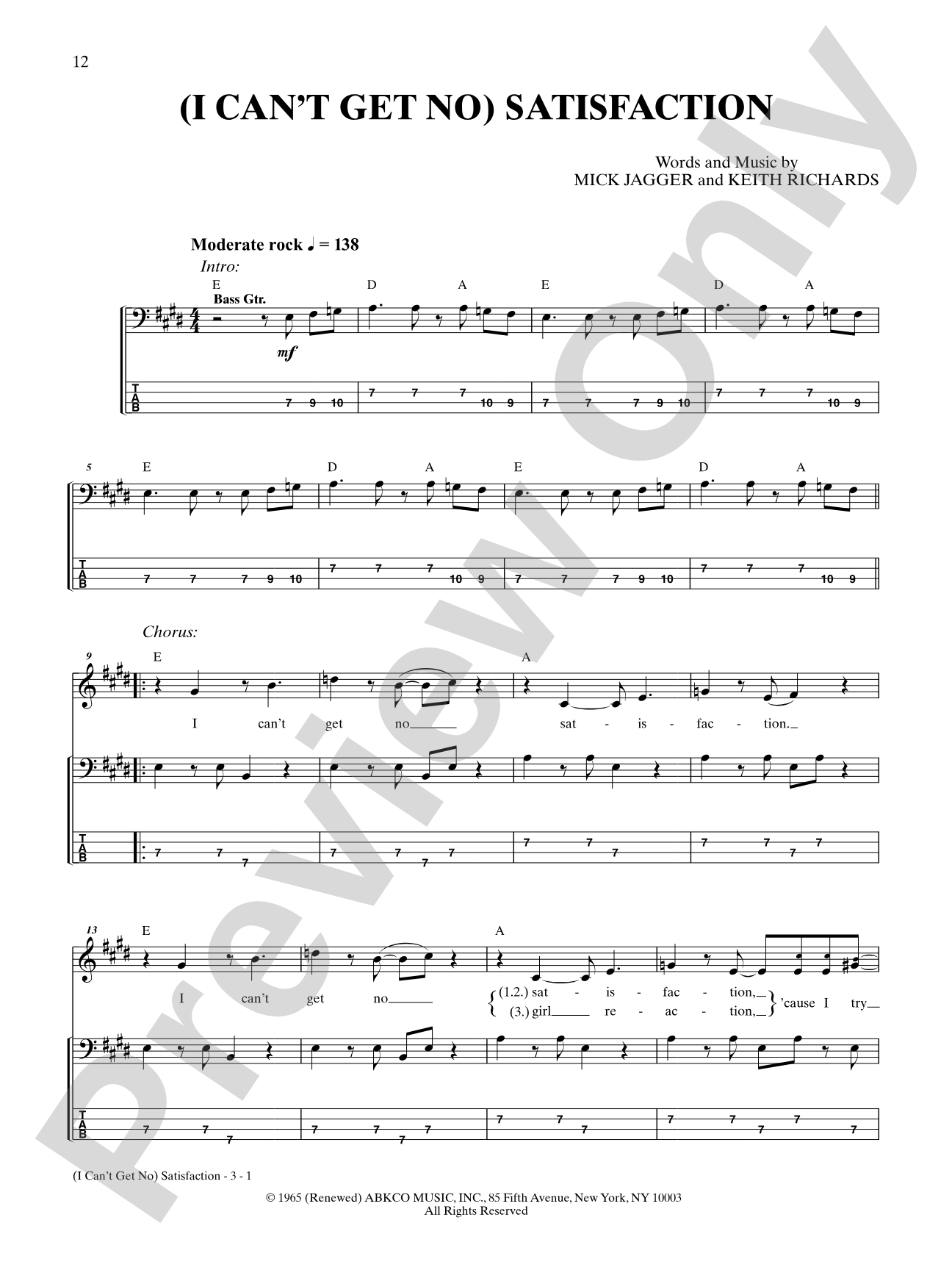

(I Can't Get No) Satisfaction: Bass TAB
The Rolling Stones
Item: 00-PS-0010197
$4.99
Pickup currently not available
Related Items
Heart of Stone: Authentic Guitar TAB |
$4.99
|
View | |
Paint It, Black: Bass TAB |
$4.99
|
View | |
(I Can't Get No) Satisfaction: Authentic Guitar TAB |
$4.99
|
View | |
Street Fighting Man: Bass TAB |
$4.99
|
View | |
Get Off of My Cloud: Bass TAB |
$4.99
|
View | |
Get Off of My Cloud: Authentic Guitar TAB |
$4.99
|
View | |
Heart of Stone: Bass TAB |
$4.99
|
View | |
19th Nervous Breakdown: Bass TAB |
$4.99
|
View | |
19th Nervous Breakdown: Authentic Guitar TAB |
$5.99
|
View | |
Wild Horses: Bass TAB |
$4.99
|
View | |
Wild Horses: Authentic Guitar TAB |
$5.99
|
View | |
Time is on My Side: Bass TAB |
$4.99
|
View | |
Play With Fire: Bass TAB |
$4.99
|
View | |
Play With Fire: Authentic Guitar TAB |
$4.99
|
View | |
Mother's Little Helper: Authentic Guitar TAB |
$4.99
|
View | |
Mother's Little Helper: Bass TAB |
$4.99
|
View | |
Honky Tonk Women: Bass TAB |
$4.99
|
View | |
Honky Tonk Women: Authentic Guitar TAB |
$5.99
|
View | |
You Can't Always Get What You Want: Bass TAB |
$5.99
|
View | |
You Can't Always Get What You Want: Authentic Guitar TAB |
$9.99
|
View | |
As Tears Go By: Authentic Guitar TAB |
$4.99
|
View | |
As Tears Go By: Bass TAB |
$4.99
|
View | |
Ruby Tuesday: Bass TAB |
$4.99
|
View | |
Ruby Tuesday: Authentic Guitar TAB |
$4.99
|
View | |
Sympathy for the Devil: Bass TAB |
$4.99
|
View | |
Brown Sugar: Bass TAB |
$4.99
|
View | |
Brown Sugar: Authentic Guitar TAB |
$5.99
|
View | |
Let's Spend the Night Together: Authentic Guitar TAB |
$4.99
|
View | |
Let's Spend the Night Together: Bass TAB |
$4.99
|
View | |
Midnight Rambler: Bass TAB |
$9.99
|
View | |
Midnight Rambler: Authentic Guitar TAB |
$9.99
|
View | |
Under My Thumb: Bass TAB |
$4.99
|
View | |
Gimme Shelter: Bass TAB |
$4.99
|
View | |
Gimme Shelter: Authentic Guitar TAB |
$5.99
|
View | |
Jumpin' Jack Flash: Authentic Guitar TAB |
$5.99
|
View | |
Jumpin' Jack Flash: Bass TAB |
$4.99
|
View | |
Street Fighting Man: Authentic Guitar TAB |
$4.99
|
View | |
Sympathy for the Devil: Authentic Guitar TAB |
$5.99
|
View | |
Paint It, Black: Authentic Guitar TAB |
$4.99
|
View | |
Under My Thumb: Authentic Guitar TAB |
$4.99
|
View | |
Time Is On My Side: Authentic Guitar TAB |
$4.99
|
View | |
The Rolling Stones: Hot Rocks 1964-1971: Authentic Bass TAB Book |
$19.95
|
View | |
The Rolling Stones: Hot Rocks 1964-1971: Authentic Guitar TAB Book |
$24.99
|
View |
Description
Hot Rocks was the first, and, four decades later, remains the most significant Rolling Stones compilation ever released. It is The Rolling Stones' biggest-selling album---more than 12 million copies! This book features all 21 tracks from this landmark recording--fully transcribed for bass! Hot Rocks' traces the development of the songwriting team of Jagger and Richards. The album begins with the early cover recording of "Time Is on My Side" and then proceeds chronologically through most of the band's biggest hits from its first decade. Titles: 19th Nervous Breakdown * As Tears Go By * Brown Sugar * Get Off of My Cloud * Gimme Shelter * Heart of Stone * Honky Tonk Women * (I Can't Get No) Satisfaction * Jumpin' Jack Flash * Let's Spend the Night Together * Midnight Rambler * Mother's Little Helper * Paint It, Black * Play With Fire * Ruby Tuesday * Street Fighting Man * Sympathy For The Devil * Time Is On My Side * Under My Thumb * Wild Horses * You Can't Always Get What You Want.


Discover MakeMusic Cloud: thousands of interactive titles your students can play along with today.
Sample Audio
No sample audio found.
Sample Video
No sample videos found.
Additional Details
Series:
Alfred's Classic Album Editions
Publisher:
Alfred Music
Page Count:
88
SKU:
00-PS-0010197
More about this title
About the Composer: Mick Jagger
Mick Jagger shaped rock and roll as the defining frontman and lyricist of The Rolling Stones, channeling raw energy and social commentary into anthems that defined generations. His songwriting partnership with Keith Richards produced some of the most enduring rock compositions of the 20th century, balancing blues-derived structures with contemporary cultural observation and melodic innovation.
For bass players, Jagger's catalog offers a masterclass in how vocal melody, rhythmic intention, and lyrical phrasing drive instrumental arrangement. The bass lines that support his songs reveal how rhythm section voices anchor vocal-driven rock, making them essential study for players developing their sense of groove and accompaniment.
Why we love this
This collection captures bass lines that defined rock music across a single transformative decade, transcribed with the precision needed to learn them accurately. Each track showcases a different approach to supporting vocals and driving rhythm, from minimalist anchor lines to propulsive countermelodies, giving bass players concrete examples of how the instrument functions in classic rock arrangements.
What to expect
These bass lines sit at the intersection of blues simplicity and rock sophistication, grounded in straightforward grooves that somehow never feel predictable. The collection swings through different moods and tempos, capturing everything from the nervous tension of early hits to the expansive swagger of the band's later work.
Who it's for
Bass players ranging from intermediate to advanced who want to dig into authentic, documented lines from one of rock's most influential bands. This is equally valuable for students building their understanding of rock arrangement and for experienced players filling gaps in their catalog knowledge or preparing material for cover bands and tribute projects.
How to get the most out of it
- Lock into the kick drum pattern before worrying about melodic ornamentation; these songs live and die by their pocket, and rushing ahead of the beat will expose the line immediately.
- Study the original recordings alongside the tab to internalize the tone and attack each player uses; Stones bass parts benefit from clarity and definition rather than excessive effects.
- Pay attention to dynamic shifts between verse and chorus; many of these arrangements strip down in quieter sections, and maintaining consistent feel across those changes matters more than adding flourishes.
- Practice transitions between songs using the chronological structure of the album; playing through multiple tracks in sequence will develop your stamina and help you hear the stylistic evolution within the catalog.
How to use it
Bass students can work through this as supplementary material alongside their primary studies, selecting individual tracks that match their current level and interests rather than attempting all 21 at once. Advanced players might use it as the foundation for a rock history project or ensemble, contextualizing each song within the Stones' arc and the broader development of rock bass playing.
Skills your students will build
- Reading authentic transcriptions and translating them to the instrument with correct tone and feel
- Identifying and playing different groove types within rock music (blues-based, funk-influenced, straightforward four-on-the-floor)
- Locking pocket between bass and drums across varying tempos
- Executing dynamic control and phrasing that supports vocal melody
- Recognizing how bass lines evolve within a single artist's catalog