
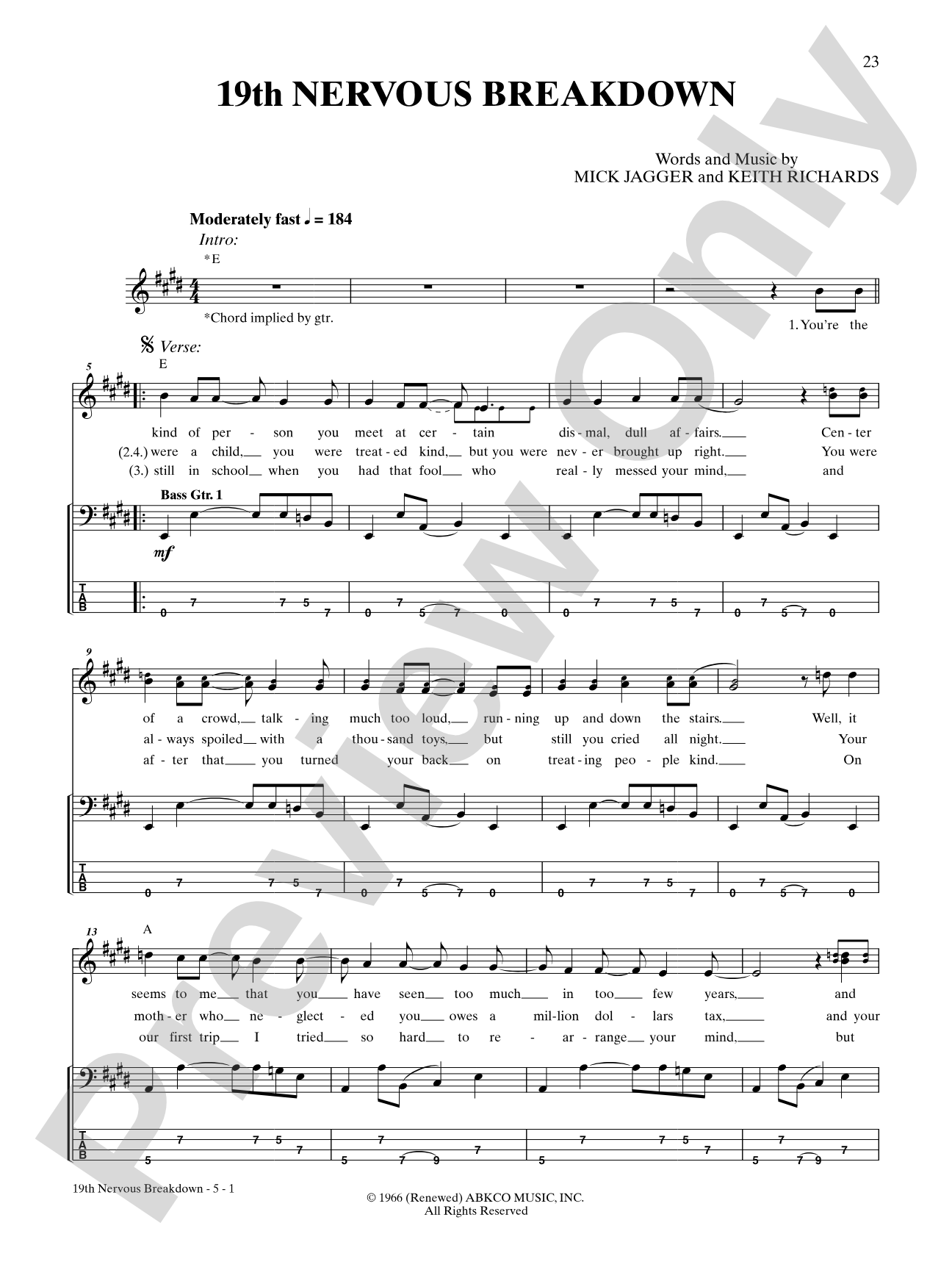

19th Nervous Breakdown: Bass TAB
The Rolling Stones
Item: 00-PS-0010203
$4.99
Pickup currently not available
Related Items
Heart of Stone: Authentic Guitar TAB |
$4.99
|
View | |
Paint It, Black: Bass TAB |
$4.99
|
View | |
(I Can't Get No) Satisfaction: Bass TAB |
$4.99
|
View | |
(I Can't Get No) Satisfaction: Authentic Guitar TAB |
$4.99
|
View | |
Street Fighting Man: Bass TAB |
$4.99
|
View | |
Get Off of My Cloud: Bass TAB |
$4.99
|
View | |
Get Off of My Cloud: Authentic Guitar TAB |
$4.99
|
View | |
Heart of Stone: Bass TAB |
$4.99
|
View | |
19th Nervous Breakdown: Authentic Guitar TAB |
$5.99
|
View | |
Wild Horses: Bass TAB |
$4.99
|
View | |
Wild Horses: Authentic Guitar TAB |
$5.99
|
View | |
Time is on My Side: Bass TAB |
$4.99
|
View | |
Play With Fire: Bass TAB |
$4.99
|
View | |
Play With Fire: Authentic Guitar TAB |
$4.99
|
View | |
Mother's Little Helper: Authentic Guitar TAB |
$4.99
|
View | |
Mother's Little Helper: Bass TAB |
$4.99
|
View | |
Honky Tonk Women: Bass TAB |
$4.99
|
View | |
Honky Tonk Women: Authentic Guitar TAB |
$5.99
|
View | |
You Can't Always Get What You Want: Bass TAB |
$5.99
|
View | |
You Can't Always Get What You Want: Authentic Guitar TAB |
$9.99
|
View | |
As Tears Go By: Authentic Guitar TAB |
$4.99
|
View | |
As Tears Go By: Bass TAB |
$4.99
|
View | |
Ruby Tuesday: Bass TAB |
$4.99
|
View | |
Ruby Tuesday: Authentic Guitar TAB |
$4.99
|
View | |
Sympathy for the Devil: Bass TAB |
$4.99
|
View | |
Brown Sugar: Bass TAB |
$4.99
|
View | |
Brown Sugar: Authentic Guitar TAB |
$5.99
|
View | |
Let's Spend the Night Together: Authentic Guitar TAB |
$4.99
|
View | |
Let's Spend the Night Together: Bass TAB |
$4.99
|
View | |
Midnight Rambler: Bass TAB |
$9.99
|
View | |
Midnight Rambler: Authentic Guitar TAB |
$9.99
|
View | |
Under My Thumb: Bass TAB |
$4.99
|
View | |
Gimme Shelter: Bass TAB |
$4.99
|
View | |
Gimme Shelter: Authentic Guitar TAB |
$5.99
|
View | |
Jumpin' Jack Flash: Authentic Guitar TAB |
$5.99
|
View | |
Jumpin' Jack Flash: Bass TAB |
$4.99
|
View | |
Street Fighting Man: Authentic Guitar TAB |
$4.99
|
View | |
Sympathy for the Devil: Authentic Guitar TAB |
$5.99
|
View | |
Paint It, Black: Authentic Guitar TAB |
$4.99
|
View | |
Under My Thumb: Authentic Guitar TAB |
$4.99
|
View | |
Time Is On My Side: Authentic Guitar TAB |
$4.99
|
View | |
The Rolling Stones: Hot Rocks 1964-1971: Authentic Bass TAB Book |
$19.95
|
View | |
The Rolling Stones: Hot Rocks 1964-1971: Authentic Guitar TAB Book |
$24.99
|
View |
Description
Hot Rocks was the first, and, four decades later, remains the most significant Rolling Stones compilation ever released. It is The Rolling Stones' biggest-selling album---more than 12 million copies! This book features all 21 tracks from this landmark recording--fully transcribed for bass! Hot Rocks' traces the development of the songwriting team of Jagger and Richards. The album begins with the early cover recording of "Time Is on My Side" and then proceeds chronologically through most of the band's biggest hits from its first decade. Titles: 19th Nervous Breakdown * As Tears Go By * Brown Sugar * Get Off of My Cloud * Gimme Shelter * Heart of Stone * Honky Tonk Women * (I Can't Get No) Satisfaction * Jumpin' Jack Flash * Let's Spend the Night Together * Midnight Rambler * Mother's Little Helper * Paint It, Black * Play With Fire * Ruby Tuesday * Street Fighting Man * Sympathy For The Devil * Time Is On My Side * Under My Thumb * Wild Horses * You Can't Always Get What You Want.


19th Nervous Breakdown: Bass TAB isn't in MakeMusic Cloud just yet...but it could be. Let us know you'd like to see it, and you'll help shape what comes next. In the meantime, start a free trial and dive into thousands of interactive titles your students can play along with today.
Request This Title
Tell us you want it.
Start Your Free Trial
Explore everything that's ready to play right now.
Sample Audio
No sample audio found.
Sample Video
No sample videos found.
Additional Details
Series:
Alfred's Classic Album Editions
Publisher:
Alfred Music
Page Count:
88
SKU:
00-PS-0010203
More about this title
About the Composer: Mick Jagger
Mick Jagger co-wrote the majority of The Rolling Stones' catalog alongside Keith Richards, establishing one of rock music's most enduring and prolific songwriting partnerships. Beginning in the early 1960s, Jagger and Richards crafted songs that became foundational to rock and roll, blending blues influences with innovative arrangements and memorable melodies that defined generations of popular music.
For bass players learning transcriptions, Jagger's songwriting reveals how vocal melody and lyrical phrasing shape instrumental arrangements. The bass lines across Hot Rocks demonstrate how the rhythm section interprets and responds to vocal hooks, making these transcriptions invaluable for understanding the relationship between melody, lyrics, and groove.
Why we love this
This collection captures bass lines that are instantly recognizable yet nuanced enough to reward careful study. Every track represents a distinct era of The Rolling Stones' first decade, so players encounter genuine variety in style, from blues-based grooves to more orchestrated arrangements. Transcribing from Hot Rocks gives bassists direct access to lines that influenced rock and roll bass playing for decades.
What to expect
Playing through Hot Rocks feels like tracking the Rolling Stones' journey from raw blues interpreters to sophisticated arrangers. The bass lines grow in complexity and intentionality as the album progresses, reflecting how the band matured musically while maintaining the swagger and groove that made them unforgettable.
Who it's for
Bass players comfortable reading standard notation and TAB who want to learn the actual lines that defined rock and roll bass playing. This book works for intermediate to advanced players seeking both technical challenge and historical grounding in a single, cohesive collection.
How to get the most out of it
- Study the original recordings alongside the TAB to internalize the pocket and feel of each groove. The written notes tell you what to play; the audio shows you when and how to sit in the mix.
- Pay attention to how bass lines respond to vocal phrasing rather than playing rigidly to the beat. Many of these lines breathe with Jagger's delivery and Richards' guitar work.
- Experiment with dynamics and attack across the collection. Early cover versions sit differently in the mix than the band's later hits; adjust your tone and intensity accordingly.
- Practice switching between the various grooves without losing momentum. The progression from one song to another mirrors the album's chronological arc and reveals how the band's approach evolved.
How to use it
Use this collection to build repertoire for rock or popular music ensembles, or assign individual transcriptions as homework for bassists developing their sight-reading and ear skills. The 21 tracks offer enough variety that you can select pieces matching your ensemble's current abilities while gradually introducing more demanding arrangements.
Skills your students will build
- Reading and executing authentic bass TAB from a landmark rock recording
- Understanding groove and pocket within blues-based and rock song forms
- Recognizing how bass lines complement vocal melody and guitar riffs
- Adapting tone and dynamics to match different eras and production styles within a single artist's catalog
- Developing rhythmic independence and responsiveness to other instruments