
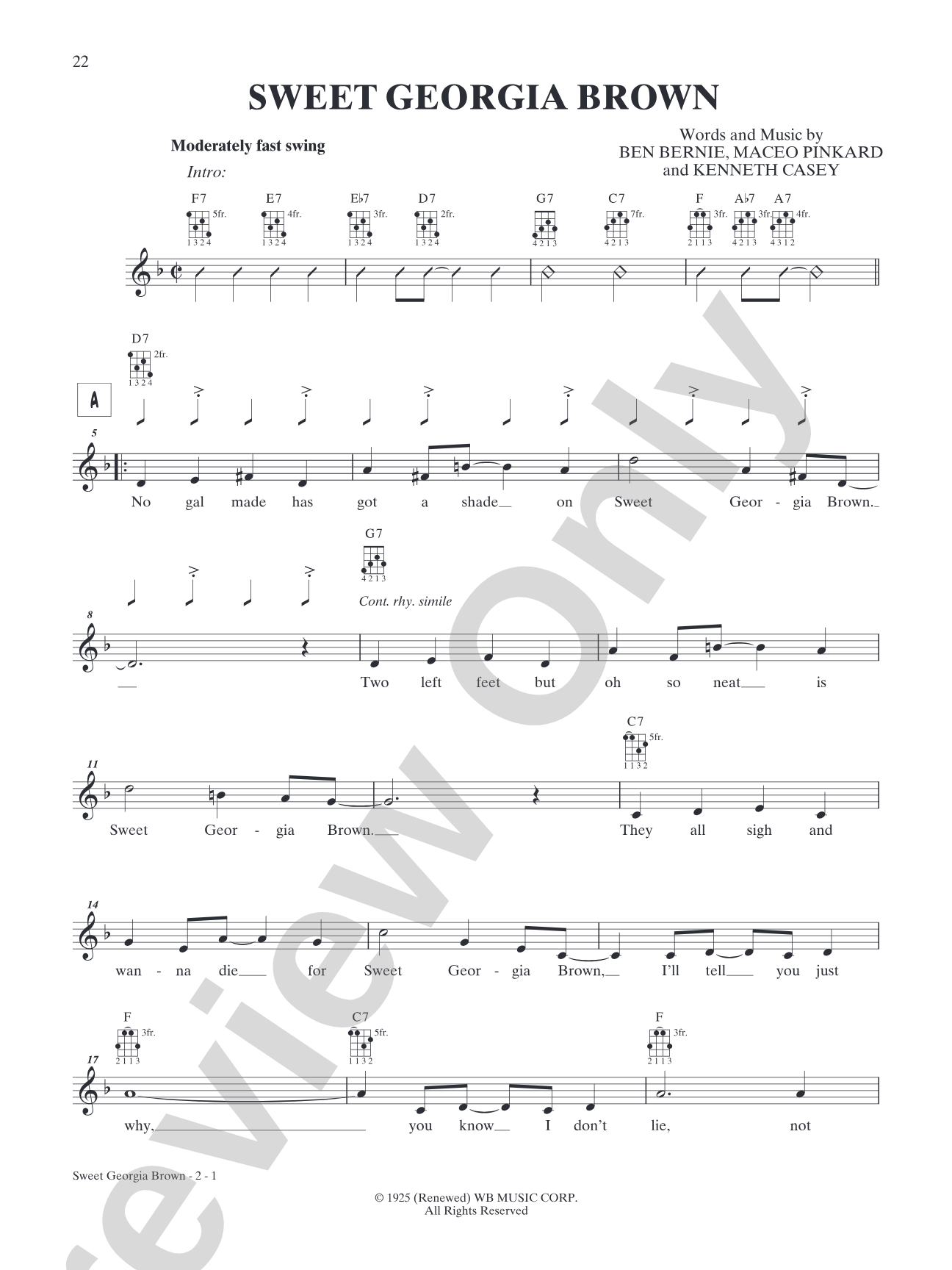

Sweet Georgia Brown: Mandolin TAB
12 Great Songs of the '20s & '30s
Item: 00-PS-0011850
$4.99
One moment…
Related Items
Makin' Whoopee: Mandolin TAB |
$4.99
|
View | |
Five Foot Two, Eyes of Blue: Mandolin TAB |
$4.99
|
View | |
Ain't Misbehavin': Mandolin TAB |
$4.99
|
View | |
It Don't Mean a Thing: Mandolin TAB |
$4.99
|
View | |
Tonight You Belong to Me: Mandolin TAB |
$4.99
|
View | |
As Time Goes By: Mandolin TAB |
$4.99
|
View | |
It Had to Be You: Mandolin TAB |
$4.99
|
View | |
Ain't She Sweet: Mandolin TAB |
$4.99
|
View | |
I'll See You in My Dreams: Mandolin TAB |
$4.99
|
View | |
Dream a Little Dream of Me: Mandolin TAB |
$4.99
|
View |
Description
Swingin' Jazz Mandolin is designed for your total enjoyment. Each song is arranged in a fun and lively way with a strum-and-sing approach. The chords are simple, yet entirely appropriate to the jazz-age style of the '20s and '30s---the era of the great mandolin orchestras before the popularity of the guitar. We've also included classic intros, endings, and turnarounds that will make you sound like an authentic early jazzer. Titles: Ain't Misbehavin' * Ain't She Sweet * As Time Goes By * Bye Bye Blackbird * Dream a Little Dream of Me * Five Foot Two, Eyes of Blue * I'll See You in My Dreams * It Don't Mean a Thing (If It Ain't Got That Swing) * It Had to Be You * Makin' Whoopee * Sweet Georgia Brown * Tonight You Belong to Me.


Discover MakeMusic Cloud: thousands of interactive titles your students can play along with today.
Sample Audio
No sample audio found.
Sample Video
No sample videos found.
Additional Details
Series:
Just for Fun
Publisher:
Alfred Music
Page Count:
40
SKU:
00-PS-0011850
More about this title
About the Composer: Ben Bernie
Ben Bernie (1891–1927) was a bandleader, violinist, and composer who became one of the defining figures of 1920s jazz. Known as "The Lad Who Lad the Band," Bernie led one of the most popular dance orchestras of the Jazz Age and composed or co-composed numerous standards that defined the era's sound. His work bridged the gap between early jazz idioms and the sophisticated pop songwriting of the decade, making his pieces enduring fixtures in jazz repertoire across all instruments.
Bernie's compositions are particularly valuable for musicians learning early jazz style because they showcase the harmonic language and melodic sensibilities that made '20s jazz accessible yet genuinely swinging. His output captures a specific moment in American music history when mandolin orchestras and dance bands ruled the concert hall.
Why we love this
This folio captures the mandolin in its natural habitat: the jazz orchestras of the 1920s and '30s. Rather than forcing modern guitar-oriented jazz onto the mandolin, the arrangement honors how these tunes were actually played in that era, complete with period-appropriate voicings and the strum patterns that made mandolin orchestras swing. You'll sound authentic because the writing is authentic.
What to expect
Stepping into a smoke-filled speakeasy in 1925. The tunes crackle with energy and swagger; the harmonies are colorful but never cluttered. There's a lightness to the writing that makes even complex changes feel natural under your fingers, and the rhythm section wants to drive these tempos forward with infectious joy.
Who it's for
Mandolin players who want to move beyond folk or bluegrass into the sophisticated jazz vocabulary of the early twentieth century. Whether you're exploring jazz for the first time or rounding out your repertoire with period-authentic material, this folio gives you immediate access to genuine jazz standards arranged specifically for your instrument.
How to get the most out of it
- Approach the rhythm with the relaxed swing feel of early jazz rather than strict time. These tunes should dance, not march.
- Let the chords breathe. The strum-and-sing approach means you're not filling every beat; use silence as an active part of your phrasing.
- Lean into the classic intros and turnarounds provided. They're not decorative; they're the signature moves that anchor you in the era and give you confidence between verses.
- Listen to recordings of '20s mandolin orchestras (or early jazz recordings featuring mandolin) to internalize the tone and attack that makes these arrangements sing.
How to use it
Program one or two of these pieces in a jazz recital or ensemble concert to showcase mandolin's legitimate place in early American jazz. They work equally well as solo recital material or paired with other '20s-era standards. If you're building a themed program around the Jazz Age or vintage Americana, this folio provides ready-to-perform options that require no apology or explanation.
Skills your students will build
- Reading TAB notation with chord symbols in a jazz context
- Playing swing rhythm with authentic early jazz feel and tempo flexibility
- Interpreting chord charts to comp jazz-age voicings appropriate to mandolin
- Executing period-style intros, turnarounds, and endings that anchor ensemble playing
- Building melodic and rhythmic confidence in standards from the 1920s-1930s