
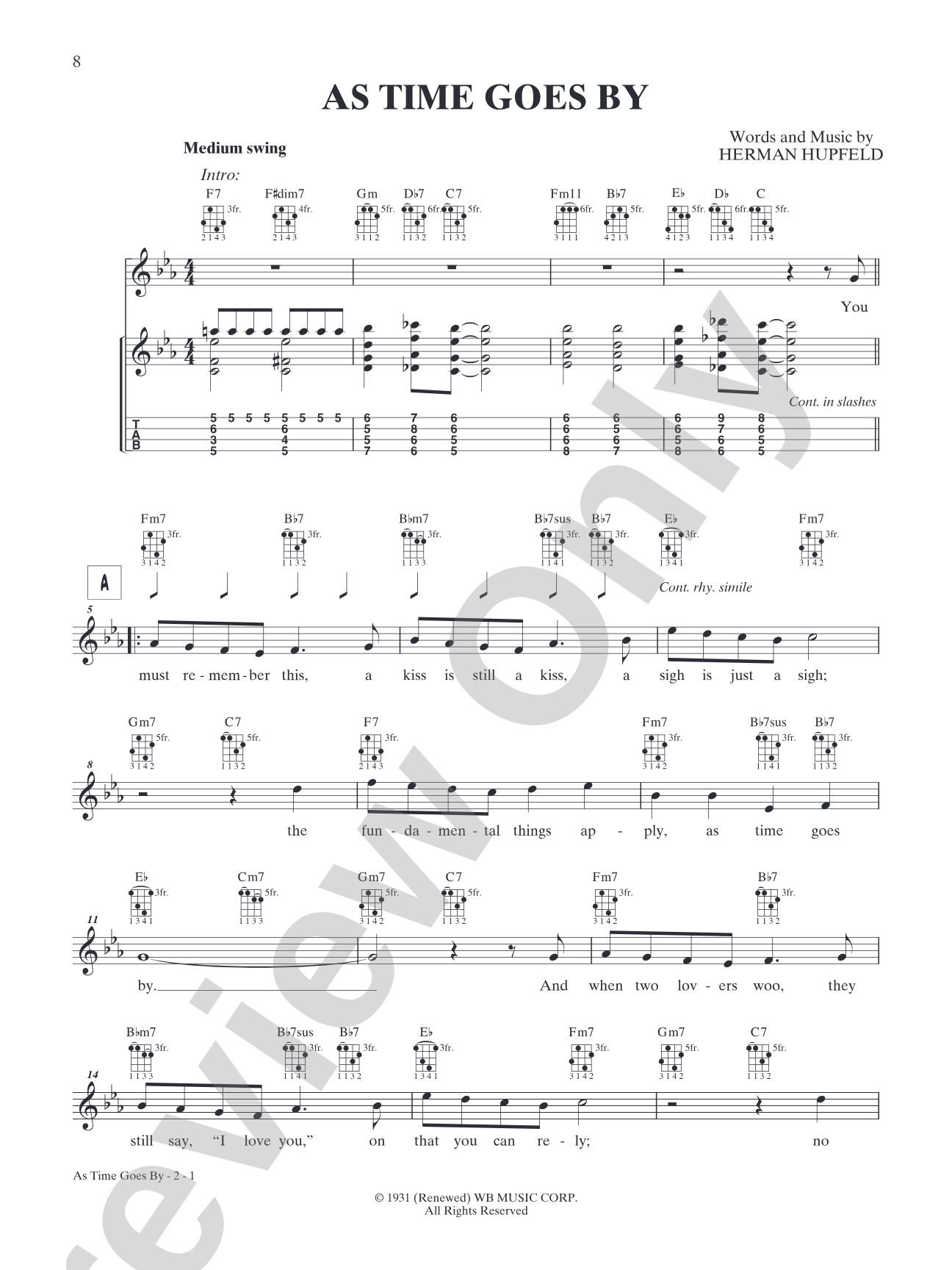

As Time Goes By: Mandolin TAB
12 Great Songs of the '20s & '30s
Item: 00-PS-0011840
$4.99
One moment…
Related Items
Makin' Whoopee: Mandolin TAB |
$4.99
|
View | |
Five Foot Two, Eyes of Blue: Mandolin TAB |
$4.99
|
View | |
Ain't Misbehavin': Mandolin TAB |
$4.99
|
View | |
It Don't Mean a Thing: Mandolin TAB |
$4.99
|
View | |
Tonight You Belong to Me: Mandolin TAB |
$4.99
|
View | |
It Had to Be You: Mandolin TAB |
$4.99
|
View | |
Sweet Georgia Brown: Mandolin TAB |
$4.99
|
View | |
Ain't She Sweet: Mandolin TAB |
$4.99
|
View | |
I'll See You in My Dreams: Mandolin TAB |
$4.99
|
View | |
Dream a Little Dream of Me: Mandolin TAB |
$4.99
|
View |
Description
Swingin' Jazz Mandolin is designed for your total enjoyment. Each song is arranged in a fun and lively way with a strum-and-sing approach. The chords are simple, yet entirely appropriate to the jazz-age style of the '20s and '30s---the era of the great mandolin orchestras before the popularity of the guitar. We've also included classic intros, endings, and turnarounds that will make you sound like an authentic early jazzer. Titles: Ain't Misbehavin' * Ain't She Sweet * As Time Goes By * Bye Bye Blackbird * Dream a Little Dream of Me * Five Foot Two, Eyes of Blue * I'll See You in My Dreams * It Don't Mean a Thing (If It Ain't Got That Swing) * It Had to Be You * Makin' Whoopee * Sweet Georgia Brown * Tonight You Belong to Me.


As Time Goes By: Mandolin TAB isn't in MakeMusic Cloud just yet...but it could be. Let us know you'd like to see it, and you'll help shape what comes next. In the meantime, start a free trial and dive into thousands of interactive titles your students can play along with today.
Request This Title
Tell us you want it.
Start Your Free Trial
Explore everything that's ready to play right now.
Sample Audio
No sample audio found.
Sample Video
No sample videos found.
Additional Details
Series:
Just for Fun
Publisher:
Alfred Music
Page Count:
40
SKU:
00-PS-0011840
More about this title
About the Composer: Herman Hupfeld
Herman Hupfeld (1894-1951) was an American songwriter who became synonymous with the jazz standards of the 1920s and 1930s. His gift for memorable melodies and clever lyrics made him a defining voice of the jazz age, creating songs that captured the spirit and sophistication of the era. "As Time Goes By," perhaps his most enduring composition, gained renewed fame decades after its creation and remains a touchstone of American popular song.
Why we love this
This collection captures an often-overlooked chapter in mandolin history when the instrument was central to jazz ensembles rather than a novelty. The arrangements honor that legacy with authentic chord voicings and period-appropriate turnarounds that let players inhabit the sound of 1920s and 1930s jazz without needing extensive harmonic theory. It's rewarding repertoire that sounds sophisticated while remaining genuinely playable.
What to expect
Stepping into a speakeasy during prohibition, with the warm, bright tones of mandolins weaving through sophisticated chord changes and playful rhythms. The music feels elegant yet unpretentious, swinging with the ease of musicians who knew these songs intimately and played them nightly. There's an infectious lightness to it all, the sense that playing these standards should be fun first and technically impressive second.
Who it's for
Mandolin players who want to explore jazz repertoire beyond classical or bluegrass contexts, or anyone curious about how the mandolin functioned as a serious jazz instrument before the guitar's dominance. This collection works equally well for hobbyists seeking engaging standards and for teachers looking for historically grounded repertoire that expands what mandolin students understand the instrument can do.
How to get the most out of it
- Study the intros and endings provided for each tune; they're not decorative but core to sounding like an ensemble player from the era rather than soloing over standards.
- Let the chords breathe on the mandolin's natural decay rather than constantly restriking; this creates the warmth and swing that defines jazz-age mandolin tone.
- Treat strum patterns as flexible guides rather than rigid templates; the best early jazz recordings show rhythmic looseness that makes the music swing.
- Use the TAB alongside the chord charts to explore different voicing positions on the neck, which will improve your comfort navigating the fretboard across multiple songs.
How to use it
Program individual tunes as opening numbers for student recitals or ensemble performances, or assemble several songs into a themed set that showcases the mandolin's jazz-era legacy. This collection also works beautifully for chamber settings where mandolin needs to interact with guitar, ukulele, or other fretted instruments in period-aware arrangements.
Skills your students will build
- Reading and interpreting jazz chord symbols in TAB format
- Executing period-appropriate strum patterns and rhythmic flexibility
- Recognizing and playing authentic jazz-age turnarounds and intros
- Voice leading across chord changes typical of 1920s-1930s jazz harmony
- Sight-reading TAB without losing musical phrasing and swing feel