
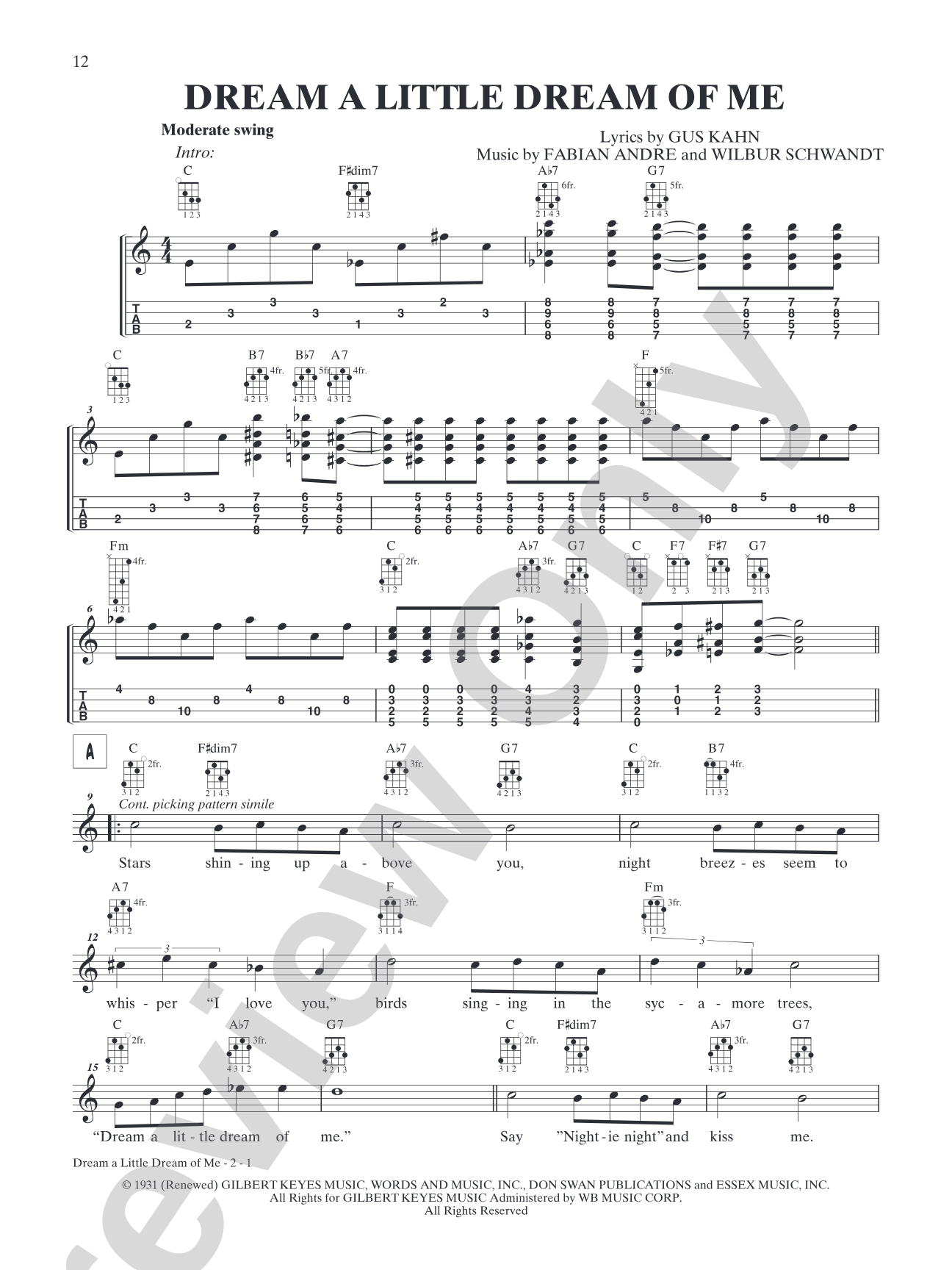

Dream a Little Dream of Me: Mandolin TAB
12 Great Songs of the '20s & '30s
Item: 00-PS-0011950
$4.99
One moment…
Related Items
Makin' Whoopee: Mandolin TAB |
$4.99
|
View | |
Five Foot Two, Eyes of Blue: Mandolin TAB |
$4.99
|
View | |
Ain't Misbehavin': Mandolin TAB |
$4.99
|
View | |
It Don't Mean a Thing: Mandolin TAB |
$4.99
|
View | |
Tonight You Belong to Me: Mandolin TAB |
$4.99
|
View | |
As Time Goes By: Mandolin TAB |
$4.99
|
View | |
It Had to Be You: Mandolin TAB |
$4.99
|
View | |
Sweet Georgia Brown: Mandolin TAB |
$4.99
|
View | |
Ain't She Sweet: Mandolin TAB |
$4.99
|
View | |
I'll See You in My Dreams: Mandolin TAB |
$4.99
|
View |
Description
Swingin' Jazz Mandolin is designed for your total enjoyment. Each song is arranged in a fun and lively way with a strum-and-sing approach. The chords are simple, yet entirely appropriate to the jazz-age style of the '20s and '30s---the era of the great mandolin orchestras before the popularity of the guitar. We've also included classic intros, endings, and turnarounds that will make you sound like an authentic early jazzer. Titles: Ain't Misbehavin' * Ain't She Sweet * As Time Goes By * Bye Bye Blackbird * Dream a Little Dream of Me * Five Foot Two, Eyes of Blue * I'll See You in My Dreams * It Don't Mean a Thing (If It Ain't Got That Swing) * It Had to Be You * Makin' Whoopee * Sweet Georgia Brown * Tonight You Belong to Me.


Dream a Little Dream of Me: Mandolin TAB isn't in MakeMusic Cloud just yet...but it could be. Let us know you'd like to see it, and you'll help shape what comes next. In the meantime, start a free trial and dive into thousands of interactive titles your students can play along with today.
Request This Title
Tell us you want it.
Start Your Free Trial
Explore everything that's ready to play right now.
Sample Audio
No sample audio found.
Sample Video
No sample videos found.
Additional Details
Series:
Just for Fun
Publisher:
Alfred Music
Page Count:
40
SKU:
00-PS-0011950
More about this title
About the Composer: Fabian Andre
Fabian André was a prolific songwriter and composer during the Jazz Age, contributing to the Great American Songbook with memorable melodies that defined the 1920s and 1930s. His collaborations with lyricists like Gus Kahn produced standards that remain central to jazz repertoire today, showcasing his gift for crafting singable, harmonically sophisticated melodies that work equally well on any instrument.
Why we love this
This collection captures the mandolin's glory days as a jazz instrument, before guitars dominated the soundscape. You'll find the chord voicings and rhythmic patterns that made early mandolin orchestras swing, giving modern players authentic period style without requiring advanced technique.
What to expect
Stepping into a speakeasy with a mandolin in hand: each tune swings with period charm and melodic warmth. The simple chords belie genuine jazz sophistication, and the classic turnarounds and intros transport you directly to the era when mandolins were as central to jazz as saxophones.
Who it's for
Mandolin players who want to expand beyond bluegrass and classical repertoire into the jazz standards that defined their instrument's role in early American music. Intermediate players comfortable with chord-based playing and looking for accessible material that sounds sophisticated will find these arrangements immediately playable yet deeply musical.
How to get the most out of it
- Study the provided intros and turnarounds carefully; these signature figures set the early jazz aesthetic and make the difference between a casual strum and an authentic '20s sound.
- Work the strum patterns as deliberately as the melody itself. The rhythmic precision of jazz-era mandolin playing carries as much of the style as the notes you're playing.
- Approach the chord changes with attention to voicing. Simple doesn't mean sloppy; these straightforward chords still need clarity and voice leading to sound period-appropriate.
- Listen to recordings of early mandolin orchestras or jazz mandolin soloists from the 1920s-1930s for phrasing and articulation reference before performing.
How to use it
Feature individual standards as solo recital pieces, or program several together as a thematic set exploring Jazz Age repertoire. This collection also works beautifully for community performances where mandolin players want to showcase the instrument's jazz heritage in an accessible, entertaining context.
Skills your students will build
- Jazz chord voicing and substitution on mandolin
- Period-appropriate phrasing and articulation from the 1920s-1930s jazz style
- Swing rhythms and jazz-specific strum patterns
- Improvisation within simple chord changes
- Reading mandolin TAB in a jazz context