
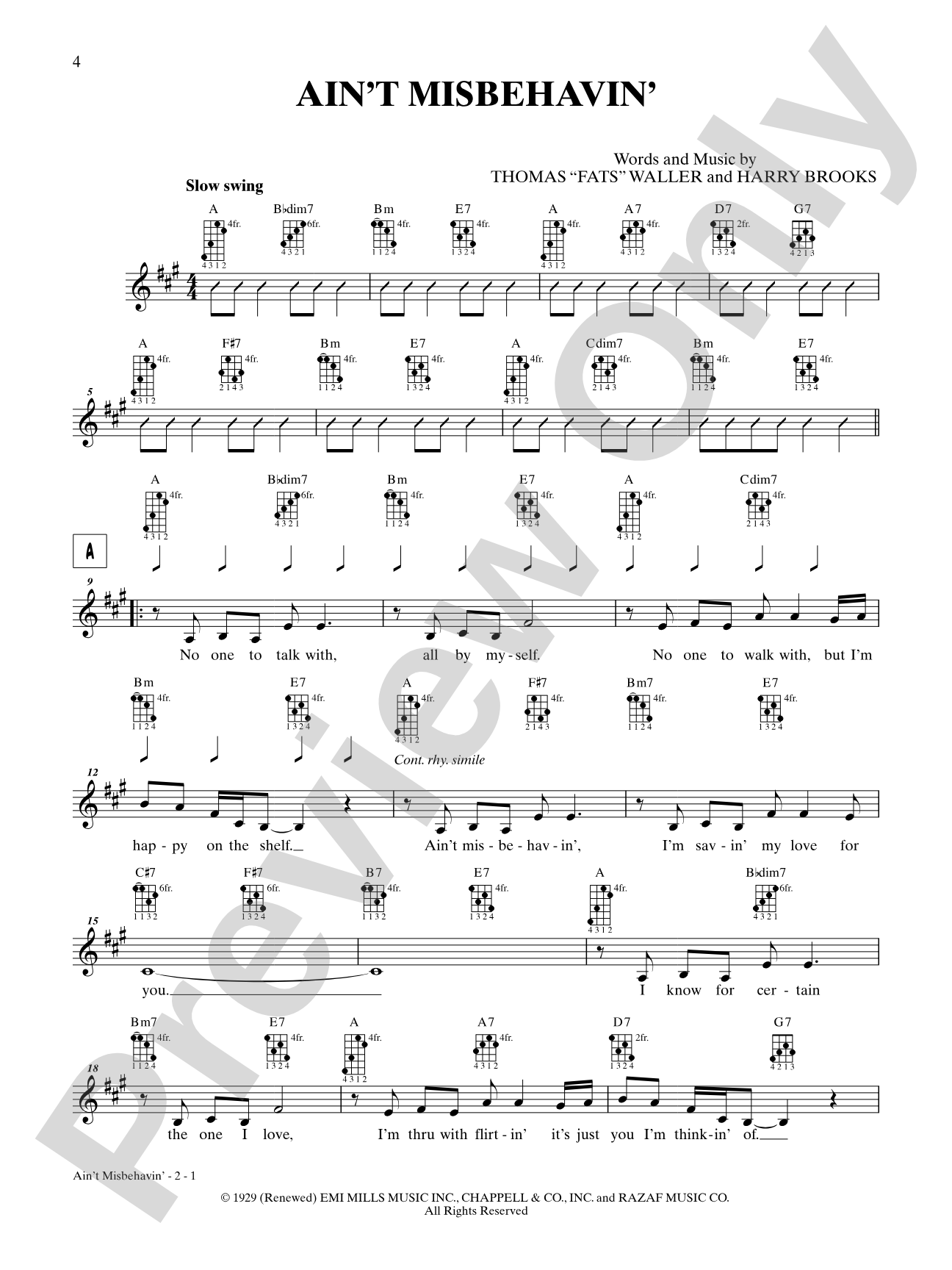

Ain't Misbehavin': Mandolin TAB
12 Great Songs of the '20s & '30s
Item: 00-PS-0011797
$4.99
Pickup currently not available
Related Items
Makin' Whoopee: Mandolin TAB |
$4.99
|
View | |
Five Foot Two, Eyes of Blue: Mandolin TAB |
$4.99
|
View | |
It Don't Mean a Thing: Mandolin TAB |
$4.99
|
View | |
Tonight You Belong to Me: Mandolin TAB |
$4.99
|
View | |
As Time Goes By: Mandolin TAB |
$4.99
|
View | |
It Had to Be You: Mandolin TAB |
$4.99
|
View | |
Sweet Georgia Brown: Mandolin TAB |
$4.99
|
View | |
Ain't She Sweet: Mandolin TAB |
$4.99
|
View | |
I'll See You in My Dreams: Mandolin TAB |
$4.99
|
View | |
Dream a Little Dream of Me: Mandolin TAB |
$4.99
|
View |
Description
Swingin' Jazz Mandolin is designed for your total enjoyment. Each song is arranged in a fun and lively way with a strum-and-sing approach. The chords are simple, yet entirely appropriate to the jazz-age style of the '20s and '30s---the era of the great mandolin orchestras before the popularity of the guitar. We've also included classic intros, endings, and turnarounds that will make you sound like an authentic early jazzer. Titles: Ain't Misbehavin' * Ain't She Sweet * As Time Goes By * Bye Bye Blackbird * Dream a Little Dream of Me * Five Foot Two, Eyes of Blue * I'll See You in My Dreams * It Don't Mean a Thing (If It Ain't Got That Swing) * It Had to Be You * Makin' Whoopee * Sweet Georgia Brown * Tonight You Belong to Me.


Discover MakeMusic Cloud: thousands of interactive titles your students can play along with today.
Sample Audio
No sample audio found.
Sample Video
No sample videos found.
Additional Details
Series:
Just for Fun
Publisher:
Alfred Music
Page Count:
40
SKU:
00-PS-0011797
More about this title
About the Composer: Fats Waller
Fats Waller (1904-1943) was a pianist, organist, singer, and composer who shaped the sound of American jazz and popular music during the swing era. His prolific output included songs performed by everyone from Billie Holiday to Louis Armstrong, and his rhythmic sensibility and harmonic sophistication influenced generations of jazz musicians across every instrument.
Waller's gift was making complex jazz language accessible without simplifying it. His melodies swing naturally, his chord progressions sit comfortably under the fingers, and his lyrics capture the wit and resilience of the era. For mandolin players, his work represents the golden age when mandolin orchestras commanded jazz venues alongside hot jazz combos, before the guitar became dominant.
Why we love this
These arrangements capture the spirit of '20s and '30s mandolin jazz without requiring advanced technique or reading skills. The strum-and-sing format keeps the focus on authentic style elements: classic intros, turnarounds, and endings that let mandolin players actually sound like they belong in a jazz context rather than playing simplified pop songs on a fretted instrument.
What to expect
Stepping into a 1920s jazz club where mandolins traded solos and drove the rhythm forward with infectious swing. The tunes sparkle with period charm and lyrical warmth while the harmonic movement stays grounded in genuine jazz language rather than folk-style simplicity.
Who it's for
Mandolin players with basic chord knowledge and strumming ability who want to explore jazz repertoire without needing to transpose or decipher complicated voicings. This collection works equally well for players seeking casual sing-along material and those interested in the history of jazz mandolin as a serious voice in the swing era.
How to get the most out of it
- Let the chord changes breathe. The simple chords work precisely because the rhythm section (whether you're playing solo or with accompaniment) carries the swing feel; resist rushing into elaborate strumming patterns.
- Study the suggested intros and endings as written before personalizing them. These phrases anchor the early-jazz mandolin sound and provide a framework for understanding how melody, harmony, and rhythm worked together in period arrangements.
- Sing the melody line while playing chords, or have a singing partner take the melody while you comp. This is how mandolin jazz was performed in the era, and it clarifies your role in the ensemble texture.
- Pay attention to the dynamic and rhythmic character of each tune. 'Ain't Misbehavin'' and 'It Don't Mean a Thing' sit in different grooves; shifting your touch and attack between them keeps each song distinct.
How to use it
Feature this in a standalone jazz or American Songbook recital, or mix individual tunes into a broader jazz history concert that traces mandolin's role in early jazz. These arrangements also work well as informal performance or jam session material at student showcases and casual community music events.
Skills your students will build
- Reading TAB and chord charts in jazz context
- Playing swing rhythm and understanding early jazz groove
- Navigating period jazz intros, turnarounds, and endings
- Accompanying melody in a duo or ensemble setting
- Connecting repertoire knowledge to instrument history