
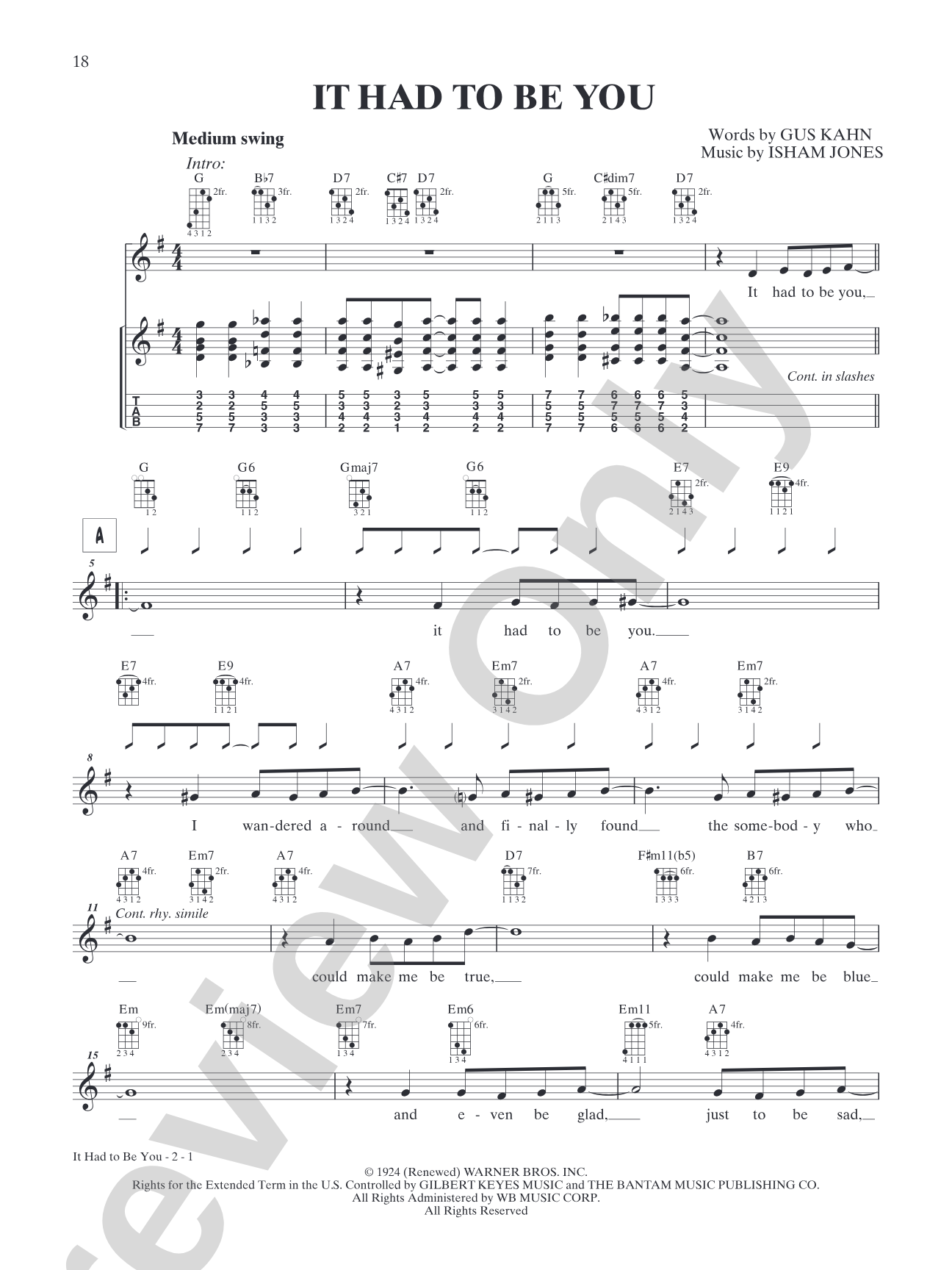

It Had to Be You: Mandolin TAB
12 Great Songs of the '20s & '30s
Item: 00-PS-0011843
$4.99
One moment…
Related Items
Makin' Whoopee: Mandolin TAB |
$4.99
|
View | |
Five Foot Two, Eyes of Blue: Mandolin TAB |
$4.99
|
View | |
Ain't Misbehavin': Mandolin TAB |
$4.99
|
View | |
It Don't Mean a Thing: Mandolin TAB |
$4.99
|
View | |
Tonight You Belong to Me: Mandolin TAB |
$4.99
|
View | |
As Time Goes By: Mandolin TAB |
$4.99
|
View | |
Sweet Georgia Brown: Mandolin TAB |
$4.99
|
View | |
Ain't She Sweet: Mandolin TAB |
$4.99
|
View | |
I'll See You in My Dreams: Mandolin TAB |
$4.99
|
View | |
Dream a Little Dream of Me: Mandolin TAB |
$4.99
|
View |
Description
Swingin' Jazz Mandolin is designed for your total enjoyment. Each song is arranged in a fun and lively way with a strum-and-sing approach. The chords are simple, yet entirely appropriate to the jazz-age style of the '20s and '30s---the era of the great mandolin orchestras before the popularity of the guitar. We've also included classic intros, endings, and turnarounds that will make you sound like an authentic early jazzer. Titles: Ain't Misbehavin' * Ain't She Sweet * As Time Goes By * Bye Bye Blackbird * Dream a Little Dream of Me * Five Foot Two, Eyes of Blue * I'll See You in My Dreams * It Don't Mean a Thing (If It Ain't Got That Swing) * It Had to Be You * Makin' Whoopee * Sweet Georgia Brown * Tonight You Belong to Me.


Discover MakeMusic Cloud: thousands of interactive titles your students can play along with today.
Sample Audio
No sample audio found.
Sample Video
No sample videos found.
Additional Details
Series:
Just for Fun
Publisher:
Alfred Music
Page Count:
40
SKU:
00-PS-0011843
More about this title
About the Composer: Gus Kahn
Gus Kahn (1886-1941) was one of the most prolific lyricists of the jazz age, crafting witty and memorable words for some of the era's most enduring standards. Though he wrote lyrics rather than melodies, his partnership with composers like Isham Jones produced songs that defined the sound and spirit of the 1920s and 1930s. His contributions to jazz standards remain central to the American songbook and continue to resonate with musicians across all instruments and skill levels.
Why we love this
This collection captures the mandolin's golden era, when the instrument was as central to jazz as the saxophone and trumpet. The arrangements honor that history by grounding each tune in authentic period style while keeping the playing straightforward enough that mandolinists at intermediate level can sound genuinely swinging from their first run-through. Programmers will find these tunes instantly recognizable and deeply appealing to audiences who love classic jazz standards.
What to expect
Stepping into a speakeasy during the height of the jazz age, where mandolins traded choruses with horns and the rhythm was always swinging. These arrangements capture that vintage energy—sophisticated enough to feel authentic, warm enough to invite you right in, and always with a wink and a smile.
Who it's for
Mandolinists who want to explore jazz repertoire without wrestling with complex bebop harmonic changes or transcription-level technique. This book serves intermediate players ready to move beyond folk and bluegrass into a new style, as well as jazz musicians curious about how the mandolin fit into the early jazz tradition.
How to get the most out of it
- Lean into the swing rhythm and let the strum-and-sing format guide your phrasing; these songs thrive on a relaxed, conversational feel rather than metronomic precision.
- Study the classic intros and turnarounds provided in the book—they're the signature moves that distinguish an authentic '20s-'30s mandolin player from someone just reading the chords.
- Balance clarity with drive in your right hand; mandolin's natural brightness can cut through a rhythm section, so shape your tone to complement rather than overpower ensemble playing.
- Pay attention to the jazz-age chord voicings and how they differ from modern jazz harmony; leaning into these period-specific sounds will anchor your interpretation historically and musically.
How to use it
Pair this collection with other instrumental jazz standards as an intermission set or a lighter concert segment that bridges classical and popular repertoire. It also works beautifully in educational contexts where you want to introduce musicians to jazz vocabulary and phrasing without requiring years of improvisation study.
Skills your students will build
- Jazz rhythm and swing feel specific to the 1920s-1930s style
- Reading and interpreting period-appropriate chord changes
- Intro, ending, and turnaround techniques for jazz standards
- Mandolin-specific jazz articulation and tone shaping
- Strum patterns and right-hand technique suited to jazz accompaniment