
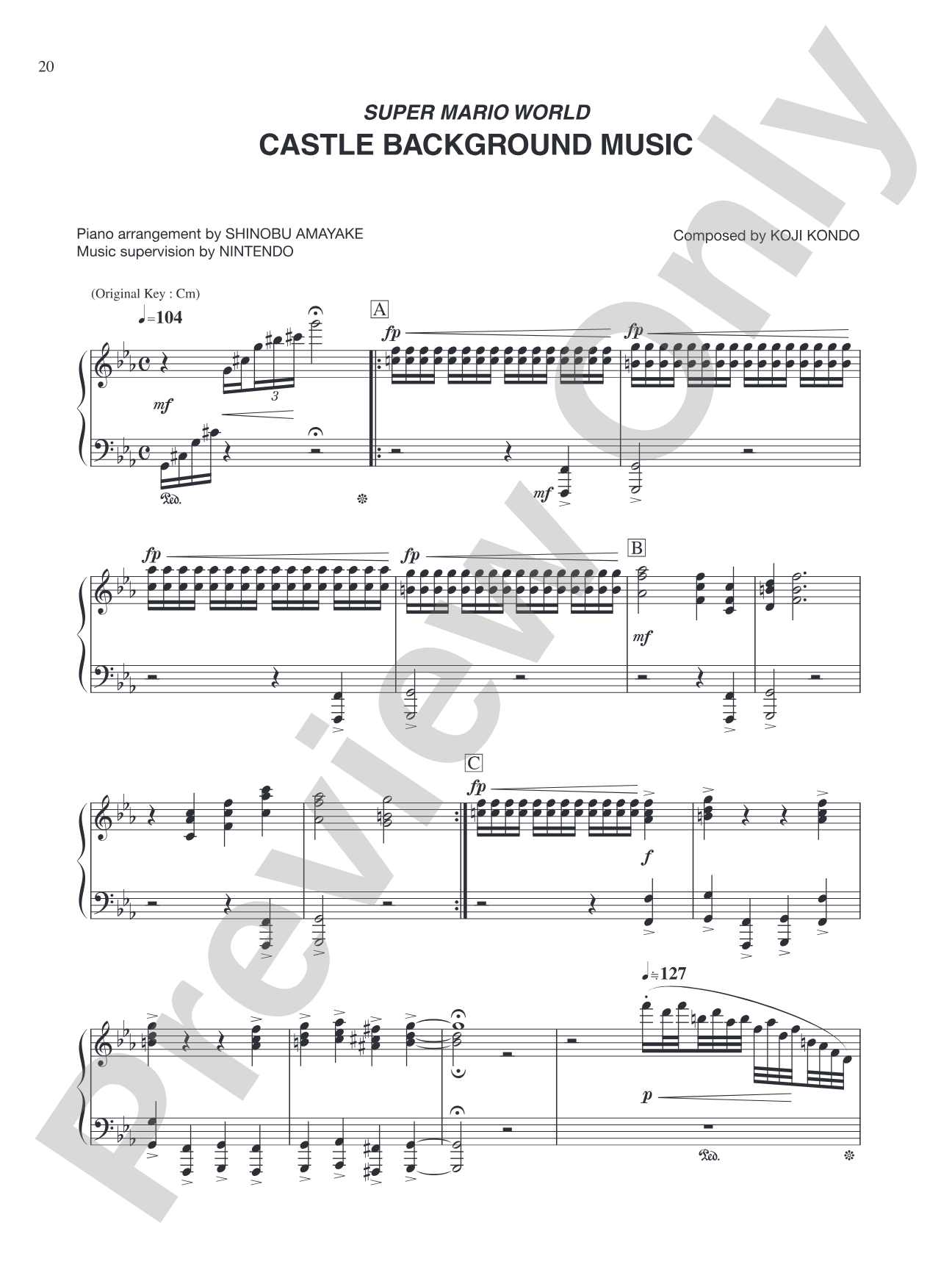

Super Mario World Castle Background Music: Piano
34 Super Mario™ Themes Arranged for Solo Piano
By Koji Kondo, Shiho Fujii, Asuka Ohta, Soyo Oka, Kenta Nagata, Hirokazu Tanaka, and Mahito Yokota
Level: Intermediate / Advanced
Item: 00-PS-0015267
$4.99
One moment…
Related Items
Super Mario Bros. Ground Background Music: Piano |
$4.99
|
View | |
Super Mario Bros. Underground Background Music: Piano |
$4.99
|
View | |
Super Mario Bros. Invincible Background Music: Piano |
$4.99
|
View | |
Super Mario Bros. Underwater Background Music: Piano |
$4.99
|
View | |
Super Mario Bros. Power Down Game Over: Piano |
$4.99
|
View | |
Super Mario Bros. Time Up Warning Fanfare: Piano |
$4.99
|
View | |
Super Mario Bros. Course Clear Fanfare: Piano |
$4.99
|
View | |
Super Mario Bros. World Clear Fanfare: Piano |
$4.99
|
View | |
Super Mario Bros. The Lost Levels Ending: Piano |
$4.99
|
View | |
Super Mario Bros. 3 Map 1: Piano |
$4.99
|
View | |
Super Mario Bros. 3 Ground Background Music: Piano |
$4.99
|
View | |
Super Mario Bros. 3 Boss of the Fortress: Piano |
$4.99
|
View | |
Super Mario Bros. 3 Skyship Background Music: Piano |
$4.99
|
View | |
Super Mario World Title: Piano |
$4.99
|
View | |
Dr. Mario Title Background Music: Piano |
$4.99
|
View | |
Dr. Mario Chill: Piano |
$4.99
|
View | |
Super Mario Kart Mario Circuit: Piano |
$4.99
|
View | |
Super Mario World 2 Yoshis Island Ground Background Music: Piano |
$4.99
|
View | |
Super Mario World 2 Yoshis Island Athletic Theme: Piano |
$4.99
|
View | |
Super Mario 64 Main Theme: Piano |
$4.99
|
View | |
Super Mario 64 Water Land: Piano |
$4.99
|
View | |
Mario Kart 64 Circuit: Piano |
$4.99
|
View | |
Super Mario Sunshine Dolpic Town: Piano |
$4.99
|
View | |
New Super Mario Bros. Title: Piano |
$4.99
|
View | |
New Super Mario Bros. Giant Background Music: Piano |
$4.99
|
View | |
New Super Mario Bros. Battle Background Music 1: Piano |
$4.99
|
View | |
New Super Mario Bros. Battle Background Music 2: Piano |
$4.99
|
View | |
Super Mario Galaxy Ending Staff Credit Roll: Piano |
$5.99
|
View | |
Mario Kart World Rainbow Road: Piano |
$4.99
|
View | |
New Super Mario Bros. Wii Ground Background Music: Piano |
$4.99
|
View | |
New Super Mario Bros. Wii Underwater Background Music: Piano |
$4.99
|
View | |
New Super Mario Bros. Wii Desert Background Music: Piano |
$4.99
|
View | |
Super Mario Bros. Castle Background Music: Piano |
$4.99
|
View | |
Super Mario™ Series for Piano: Piano Book |
$19.99
|
View |
Description
After decades of anticipation, Alfred is proud to release the officially licensed, collectible sheet music companion folios to the Super Mario Bros.™ video game series. The 34 arrangements in this intermediate-advanced piano edition are note-for-note transcriptions of instantly recognizable melodies beloved by generations of gamers around the globe. From Koji Kondo's iconic "Super Mario Bros.™ Ground Background Music" to the New Super Mario Bros.™ Wii™ themes, the dozens of pieces in this book represent two and a half decades of Nintendo® video game favorites. Adding to the fun, graphics from the corresponding games grace each page of the sheet music. Impress friends, family, and audiences of all ages by playing from this magnificent collection, which makes a great gift for every pianist.
Titles: Super Mario Bros.™ Ground Background Music * Super Mario Bros.™ Underground Background Music * Super Mario Bros.™ Underwater Background Music * Super Mario Bros.™ Castle Background Music * Super Mario Bros.™ Invincible Background Music * Super Mario Bros.™: The Lost Levels Ending * Super Mario Bros.™ 3 Map 1 * Super Mario Bros.™ 3 Ground Background Music * Super Mario Bros.™ 3 Boss of the Fortress * Super Mario Bros.™ 3 Skyship Background Music * Super Mario World™ Title * Super Mario World™ Castle Background Music * Dr. Mario™ Chill * Dr. Mario™ Title Background Music * Super Mario Kart™ Mario Circuit * Super Mario World™ 2 Yoshi's Island™ Athletic * Super Mario World™ 2 Yoshi's Island™ Ground Background Music * Super Mario 64™ Main Theme * Super Mario 64™ Water Land * Mario Kart™ 64 Circuit * Super Mario Sunshine™ Dolpic Town * New Super Mario Bros.™ Title * New Super Mario Bros.™ Giant Background Music * New Super Mario Bros.™ Battle Background Music 2 * New Super Mario Bros.™ Battle Background Music 1 * Super Mario Galaxy™ Ending Staff Credit Roll * Mario Kart™ Wii™ Rainbow Road * New Super Mario Bros.™ Wii™ Ground Background Music * New Super Mario Bros.™ Wii™ Underwater Background Music * New Super Mario Bros.™ Wii™ Desert Background Music * Super Mario Bros.™ Time Up Warning Fanfare * Super Mario Bros.™ Course Clear Fanfare * Super Mario Bros.™ World Clear Fanfare * Super Mario Bros.™ Power Down, Game Over.
"Best in Show" Award at Winter NAMM 2012 presented by Music Inc. magazine.


Titles: Super Mario Bros.™ Ground Background Music * Super Mario Bros.™ Underground Background Music * Super Mario Bros.™ Underwater Background Music * Super Mario Bros.™ Castle Background Music * Super Mario Bros.™ Invincible Background Music * Super Mario Bros.™: The Lost Levels Ending * Super Mario Bros.™ 3 Map 1 * Super Mario Bros.™ 3 Ground Background Music * Super Mario Bros.™ 3 Boss of the Fortress * Super Mario Bros.™ 3 Skyship Background Music * Super Mario World™ Title * Super Mario World™ Castle Background Music * Dr. Mario™ Chill * Dr. Mario™ Title Background Music * Super Mario Kart™ Mario Circuit * Super Mario World™ 2 Yoshi's Island™ Athletic * Super Mario World™ 2 Yoshi's Island™ Ground Background Music * Super Mario 64™ Main Theme * Super Mario 64™ Water Land * Mario Kart™ 64 Circuit * Super Mario Sunshine™ Dolpic Town * New Super Mario Bros.™ Title * New Super Mario Bros.™ Giant Background Music * New Super Mario Bros.™ Battle Background Music 2 * New Super Mario Bros.™ Battle Background Music 1 * Super Mario Galaxy™ Ending Staff Credit Roll * Mario Kart™ Wii™ Rainbow Road * New Super Mario Bros.™ Wii™ Ground Background Music * New Super Mario Bros.™ Wii™ Underwater Background Music * New Super Mario Bros.™ Wii™ Desert Background Music * Super Mario Bros.™ Time Up Warning Fanfare * Super Mario Bros.™ Course Clear Fanfare * Super Mario Bros.™ World Clear Fanfare * Super Mario Bros.™ Power Down, Game Over.
"Best in Show" Award at Winter NAMM 2012 presented by Music Inc. magazine.
Discover MakeMusic Cloud: thousands of interactive titles your students can play along with today.
Sample Audio
No sample audio found.
Sample Video
Additional Details
Publisher:
Alfred Music
Page Count:
80
SKU:
00-PS-0015267
More about this title
About the Composer: Koji Kondo
Koji Kondo shaped the sound of video game music from its infancy, crafting melodies so durable they've outlasted entire generations of gaming hardware. His work on the Super Mario Bros. series established a compositional vocabulary that proved instantly memorable, harmonically sophisticated enough to sustain repeated listening, and endlessly adaptable across different musical contexts and arrangements.
Kondo's approach to game music composition prioritized melodic clarity and harmonic accessibility while avoiding the predictability that could trap game scores in novelty territory. His influence on music education extends beyond nostalgia; his themes have become a legitimate entry point for pianists exploring arrangement, orchestration, and the relationship between theme and variation.
Why we love this
These transcriptions capture melodies so musically sturdy they reward serious piano study. You get officially licensed authenticity paired with intermediate-advanced arrangements that respect the original compositions while giving pianists real technical and musical challenges. The visual element (original game graphics on each page) is genuine motivation for students who might otherwise overlook video game music as "serious" repertoire.
What to expect
These arrangements retain the harmonic richness and melodic clarity that made these themes instantly recognizable across millions of players, while adding the textural and rhythmic complexity that intermediate-advanced piano writing demands. Playing them feels like rediscovering a piece of your own musical memory through a more sophisticated lens.
Who it's for
Pianists who want to play music they genuinely love without compromising musicianship. Intermediate-advanced players looking for repertoire that bridges classical technique with contemporary cultural material, and students who need permission to take video game music seriously as compositional craft.
How to get the most out of it
- Balance melody and accompaniment carefully, especially in pieces with rapid left-hand figures. The iconic status of these themes means audiences will hear immediately if the tune gets buried.
- Treat tempo marking consistency as your foundation; most of these pieces rely on rhythmic momentum rather than expressive rubato to create their character.
- Pay attention to articulation in the left hand. Staccato passages create that percussive, rhythmic energy that defined these themes in their 8-bit and 16-bit original forms.
- Use pedal sparingly in underground and underwater variations where harmonic movement is minimal; let the notes speak clearly before adding resonance.
How to use it
Program individual pieces as encores in student recitals to engage audiences beyond traditional piano repertoire enthusiasts. Use arrangements like Castle Background Music or the various level themes as bridge repertoire for students transitioning from method books into standard classical collections, since the musical literacy is genuine even though the cultural entry point feels contemporary.
Skills your students will build
- Reading and executing mixed articulation (staccato and legato within rapid figuration)
- Managing rhythmic independence between hands in pieces with asymmetrical accompaniment patterns
- Dynamic control and pedal technique for passages requiring harmonic sustain without muddiness
- Interpretation of melodies built on repeated motifs and variations
- Technical coordination in passages combining scalar movement with rhythmic precision