
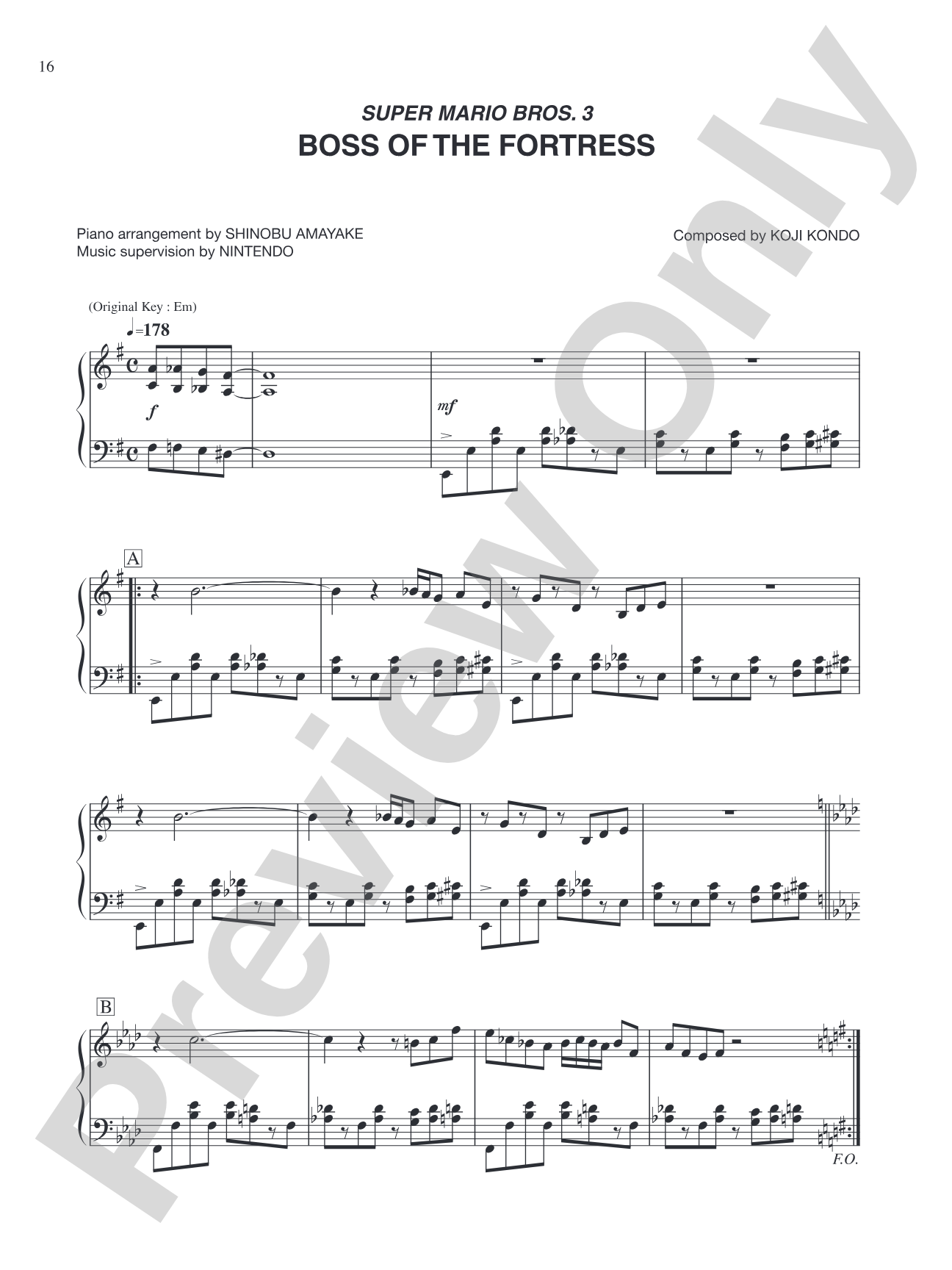

Super Mario Bros. 3 Boss of the Fortress: Piano
34 Super Mario™ Themes Arranged for Solo Piano
By Koji Kondo, Shiho Fujii, Asuka Ohta, Soyo Oka, Kenta Nagata, Hirokazu Tanaka, and Mahito Yokota
Level: Intermediate / Advanced
Item: 00-PS-0015264
$4.99
One moment…
Related Items
Super Mario Bros. Ground Background Music: Piano |
$4.99
|
View | |
Super Mario Bros. Underground Background Music: Piano |
$4.99
|
View | |
Super Mario Bros. Invincible Background Music: Piano |
$4.99
|
View | |
Super Mario Bros. Underwater Background Music: Piano |
$4.99
|
View | |
Super Mario Bros. Power Down Game Over: Piano |
$4.99
|
View | |
Super Mario Bros. Time Up Warning Fanfare: Piano |
$4.99
|
View | |
Super Mario Bros. Course Clear Fanfare: Piano |
$4.99
|
View | |
Super Mario Bros. World Clear Fanfare: Piano |
$4.99
|
View | |
Super Mario Bros. The Lost Levels Ending: Piano |
$4.99
|
View | |
Super Mario Bros. 3 Map 1: Piano |
$4.99
|
View | |
Super Mario Bros. 3 Ground Background Music: Piano |
$4.99
|
View | |
Super Mario Bros. 3 Skyship Background Music: Piano |
$4.99
|
View | |
Super Mario World Title: Piano |
$4.99
|
View | |
Super Mario World Castle Background Music: Piano |
$4.99
|
View | |
Dr. Mario Title Background Music: Piano |
$4.99
|
View | |
Dr. Mario Chill: Piano |
$4.99
|
View | |
Super Mario Kart Mario Circuit: Piano |
$4.99
|
View | |
Super Mario World 2 Yoshis Island Ground Background Music: Piano |
$4.99
|
View | |
Super Mario World 2 Yoshis Island Athletic Theme: Piano |
$4.99
|
View | |
Super Mario 64 Main Theme: Piano |
$4.99
|
View | |
Super Mario 64 Water Land: Piano |
$4.99
|
View | |
Mario Kart 64 Circuit: Piano |
$4.99
|
View | |
Super Mario Sunshine Dolpic Town: Piano |
$4.99
|
View | |
New Super Mario Bros. Title: Piano |
$4.99
|
View | |
New Super Mario Bros. Giant Background Music: Piano |
$4.99
|
View | |
New Super Mario Bros. Battle Background Music 1: Piano |
$4.99
|
View | |
New Super Mario Bros. Battle Background Music 2: Piano |
$4.99
|
View | |
Super Mario Galaxy Ending Staff Credit Roll: Piano |
$5.99
|
View | |
Mario Kart World Rainbow Road: Piano |
$4.99
|
View | |
New Super Mario Bros. Wii Ground Background Music: Piano |
$4.99
|
View | |
New Super Mario Bros. Wii Underwater Background Music: Piano |
$4.99
|
View | |
New Super Mario Bros. Wii Desert Background Music: Piano |
$4.99
|
View | |
Super Mario Bros. Castle Background Music: Piano |
$4.99
|
View | |
Super Mario™ Series for Piano: Piano Book |
$19.99
|
View |
Description
After decades of anticipation, Alfred is proud to release the officially licensed, collectible sheet music companion folios to the Super Mario Bros.™ video game series. The 34 arrangements in this intermediate-advanced piano edition are note-for-note transcriptions of instantly recognizable melodies beloved by generations of gamers around the globe. From Koji Kondo's iconic "Super Mario Bros.™ Ground Background Music" to the New Super Mario Bros.™ Wii™ themes, the dozens of pieces in this book represent two and a half decades of Nintendo® video game favorites. Adding to the fun, graphics from the corresponding games grace each page of the sheet music. Impress friends, family, and audiences of all ages by playing from this magnificent collection, which makes a great gift for every pianist.
Titles: Super Mario Bros.™ Ground Background Music * Super Mario Bros.™ Underground Background Music * Super Mario Bros.™ Underwater Background Music * Super Mario Bros.™ Castle Background Music * Super Mario Bros.™ Invincible Background Music * Super Mario Bros.™: The Lost Levels Ending * Super Mario Bros.™ 3 Map 1 * Super Mario Bros.™ 3 Ground Background Music * Super Mario Bros.™ 3 Boss of the Fortress * Super Mario Bros.™ 3 Skyship Background Music * Super Mario World™ Title * Super Mario World™ Castle Background Music * Dr. Mario™ Chill * Dr. Mario™ Title Background Music * Super Mario Kart™ Mario Circuit * Super Mario World™ 2 Yoshi's Island™ Athletic * Super Mario World™ 2 Yoshi's Island™ Ground Background Music * Super Mario 64™ Main Theme * Super Mario 64™ Water Land * Mario Kart™ 64 Circuit * Super Mario Sunshine™ Dolpic Town * New Super Mario Bros.™ Title * New Super Mario Bros.™ Giant Background Music * New Super Mario Bros.™ Battle Background Music 2 * New Super Mario Bros.™ Battle Background Music 1 * Super Mario Galaxy™ Ending Staff Credit Roll * Mario Kart™ Wii™ Rainbow Road * New Super Mario Bros.™ Wii™ Ground Background Music * New Super Mario Bros.™ Wii™ Underwater Background Music * New Super Mario Bros.™ Wii™ Desert Background Music * Super Mario Bros.™ Time Up Warning Fanfare * Super Mario Bros.™ Course Clear Fanfare * Super Mario Bros.™ World Clear Fanfare * Super Mario Bros.™ Power Down, Game Over.
"Best in Show" Award at Winter NAMM 2012 presented by Music Inc. magazine.


Titles: Super Mario Bros.™ Ground Background Music * Super Mario Bros.™ Underground Background Music * Super Mario Bros.™ Underwater Background Music * Super Mario Bros.™ Castle Background Music * Super Mario Bros.™ Invincible Background Music * Super Mario Bros.™: The Lost Levels Ending * Super Mario Bros.™ 3 Map 1 * Super Mario Bros.™ 3 Ground Background Music * Super Mario Bros.™ 3 Boss of the Fortress * Super Mario Bros.™ 3 Skyship Background Music * Super Mario World™ Title * Super Mario World™ Castle Background Music * Dr. Mario™ Chill * Dr. Mario™ Title Background Music * Super Mario Kart™ Mario Circuit * Super Mario World™ 2 Yoshi's Island™ Athletic * Super Mario World™ 2 Yoshi's Island™ Ground Background Music * Super Mario 64™ Main Theme * Super Mario 64™ Water Land * Mario Kart™ 64 Circuit * Super Mario Sunshine™ Dolpic Town * New Super Mario Bros.™ Title * New Super Mario Bros.™ Giant Background Music * New Super Mario Bros.™ Battle Background Music 2 * New Super Mario Bros.™ Battle Background Music 1 * Super Mario Galaxy™ Ending Staff Credit Roll * Mario Kart™ Wii™ Rainbow Road * New Super Mario Bros.™ Wii™ Ground Background Music * New Super Mario Bros.™ Wii™ Underwater Background Music * New Super Mario Bros.™ Wii™ Desert Background Music * Super Mario Bros.™ Time Up Warning Fanfare * Super Mario Bros.™ Course Clear Fanfare * Super Mario Bros.™ World Clear Fanfare * Super Mario Bros.™ Power Down, Game Over.
"Best in Show" Award at Winter NAMM 2012 presented by Music Inc. magazine.
Discover MakeMusic Cloud: thousands of interactive titles your students can play along with today.
Sample Audio
No sample audio found.
Sample Video
Additional Details
Publisher:
Alfred Music
Page Count:
80
SKU:
00-PS-0015264
More about this title
About the Composer: Koji Kondo
Koji Kondo is the legendary video game composer whose work shaped the sound of Nintendo and, by extension, an entire generation of gamers. Beginning with Donkey Kong in 1981, Kondo crafted melodies so memorable and architecturally brilliant that they transcended their medium, becoming globally recognized cultural touchstones. His compositions are masterclasses in economical writing: clear thematic material, strategic repetition, and harmonic choices that communicate instantly without a word of text.
Kondo's influence on music education extends far beyond nostalgia. His themes demonstrate how strong melodic writing, logical form, and tasteful orchestration create pieces that remain engaging after countless repetitions. Pianists studying his work encounter practical lessons in phrase construction, accompaniment texture, and the art of making simple ideas resonate across decades.
Why we love this
This collection brings legitimacy and joy to a repertoire that intermediate and advanced pianists actually want to play. Kondo's melodies are instantly rewarding, with clear structures that don't talk down to players, while the game graphics on every page remind students why they chose music in the first place. The intermediate-advanced level respects both the technical demands and musical intelligence required, making this a repertoire win for students who might otherwise see classical training as disconnected from their lives.
What to expect
Playing these arrangements feels like stepping into a familiar world made vivid and new. Each piece carries the directness and optimism of video game composition at its finest: themes that are joyful, heroic, contemplative, or whimsical without pretension. The intermediate-advanced difficulty means you're not fighting awkward voicings or inflated arrangements; instead, you're experiencing Kondo's original melodies with appropriate piano textures that enhance rather than obscure the core ideas.
Who it's for
Intermediate to advanced pianists who want to expand their repertoire beyond traditional classical and contemporary art music, or who are motivated by repertoire rooted in their own musical interests. This collection also serves teachers looking to engage students through music they already know and love, creating a bridge between personal passion and serious musicianship.
How to get the most out of it
- Anchor the left-hand accompaniment patterns early in rehearsal. Many pieces rely on steady rhythmic figures that serve as the harmonic and textural foundation; lock these in before adding melodic nuance.
- Balance the melody so it sits naturally above the accompaniment without forcing. Kondo's orchestrations often feature gentle supporting voices that deserve to be heard, not buried.
- Respect the piece's original context by maintaining consistent tempos. These themes were designed to loop seamlessly in games, which means steady pulse and clear phrasing matter more than rubato indulgence.
- Bring out the subtle harmonic shifts that keep even simple progressions fresh. Kondo frequently modulates or reharmonizes repeating phrases, and catching these moments prevents the performance from feeling static.
How to use it
These pieces work beautifully on student recitals, casual performances, or mixed-genre concerts where they serve as a musical bridge to audiences of all ages. They're also excellent for studio practice and motivation, particularly during periods when students need repertoire that feels immediately rewarding. Consider programming one or two alongside classical or contemporary works to demonstrate how strong composition transcends genre and era.
Skills your students will build
- Clarity of melodic line when it sits above accompanying figures
- Rhythmic precision and consistent pulse in repetitive accompaniment patterns
- Listening for harmonic color changes and subtle reharmonizations within familiar themes
- Balancing legato phrasing with game-music clarity and directness
- Building interpretive confidence in contemporary and popular music contexts