
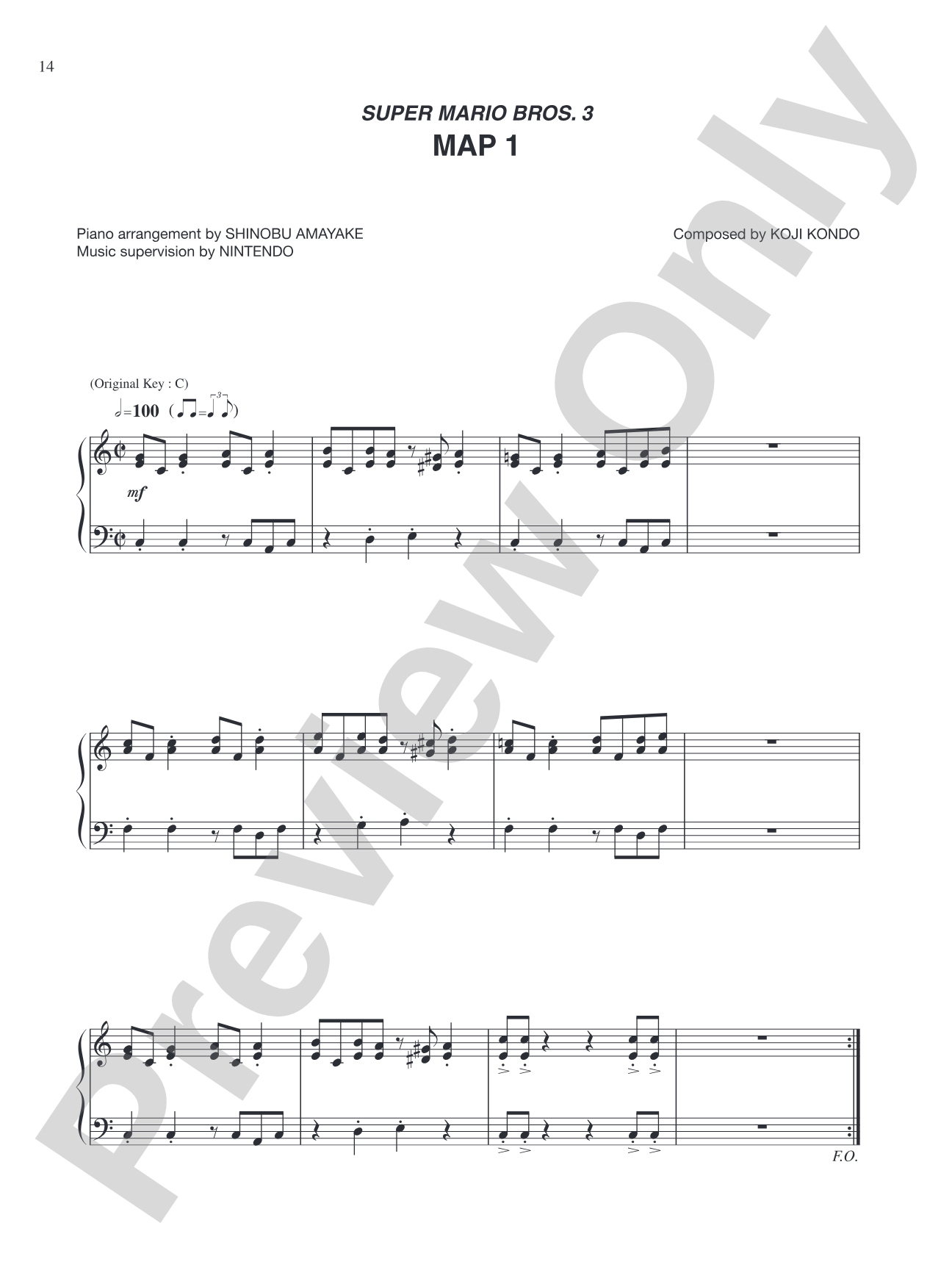

Super Mario Bros. 3 Map 1: Piano
34 Super Mario™ Themes Arranged for Solo Piano
By Koji Kondo, Shiho Fujii, Asuka Ohta, Soyo Oka, Kenta Nagata, Hirokazu Tanaka, and Mahito Yokota
Level: Intermediate / Advanced
Item: 00-PS-0015262
$4.99
One moment…
Related Items
Super Mario Bros. Ground Background Music: Piano |
$4.99
|
View | |
Super Mario Bros. Underground Background Music: Piano |
$4.99
|
View | |
Super Mario Bros. Invincible Background Music: Piano |
$4.99
|
View | |
Super Mario Bros. Underwater Background Music: Piano |
$4.99
|
View | |
Super Mario Bros. Power Down Game Over: Piano |
$4.99
|
View | |
Super Mario Bros. Time Up Warning Fanfare: Piano |
$4.99
|
View | |
Super Mario Bros. Course Clear Fanfare: Piano |
$4.99
|
View | |
Super Mario Bros. World Clear Fanfare: Piano |
$4.99
|
View | |
Super Mario Bros. The Lost Levels Ending: Piano |
$4.99
|
View | |
Super Mario Bros. 3 Ground Background Music: Piano |
$4.99
|
View | |
Super Mario Bros. 3 Boss of the Fortress: Piano |
$4.99
|
View | |
Super Mario Bros. 3 Skyship Background Music: Piano |
$4.99
|
View | |
Super Mario World Title: Piano |
$4.99
|
View | |
Super Mario World Castle Background Music: Piano |
$4.99
|
View | |
Dr. Mario Title Background Music: Piano |
$4.99
|
View | |
Dr. Mario Chill: Piano |
$4.99
|
View | |
Super Mario Kart Mario Circuit: Piano |
$4.99
|
View | |
Super Mario World 2 Yoshis Island Ground Background Music: Piano |
$4.99
|
View | |
Super Mario World 2 Yoshis Island Athletic Theme: Piano |
$4.99
|
View | |
Super Mario 64 Main Theme: Piano |
$4.99
|
View | |
Super Mario 64 Water Land: Piano |
$4.99
|
View | |
Mario Kart 64 Circuit: Piano |
$4.99
|
View | |
Super Mario Sunshine Dolpic Town: Piano |
$4.99
|
View | |
New Super Mario Bros. Title: Piano |
$4.99
|
View | |
New Super Mario Bros. Giant Background Music: Piano |
$4.99
|
View | |
New Super Mario Bros. Battle Background Music 1: Piano |
$4.99
|
View | |
New Super Mario Bros. Battle Background Music 2: Piano |
$4.99
|
View | |
Super Mario Galaxy Ending Staff Credit Roll: Piano |
$5.99
|
View | |
Mario Kart World Rainbow Road: Piano |
$4.99
|
View | |
New Super Mario Bros. Wii Ground Background Music: Piano |
$4.99
|
View | |
New Super Mario Bros. Wii Underwater Background Music: Piano |
$4.99
|
View | |
New Super Mario Bros. Wii Desert Background Music: Piano |
$4.99
|
View | |
Super Mario Bros. Castle Background Music: Piano |
$4.99
|
View | |
Super Mario™ Series for Piano: Piano Book |
$19.99
|
View |
Description
After decades of anticipation, Alfred is proud to release the officially licensed, collectible sheet music companion folios to the Super Mario Bros.™ video game series. The 34 arrangements in this intermediate-advanced piano edition are note-for-note transcriptions of instantly recognizable melodies beloved by generations of gamers around the globe. From Koji Kondo's iconic "Super Mario Bros.™ Ground Background Music" to the New Super Mario Bros.™ Wii™ themes, the dozens of pieces in this book represent two and a half decades of Nintendo® video game favorites. Adding to the fun, graphics from the corresponding games grace each page of the sheet music. Impress friends, family, and audiences of all ages by playing from this magnificent collection, which makes a great gift for every pianist.
Titles: Super Mario Bros.™ Ground Background Music * Super Mario Bros.™ Underground Background Music * Super Mario Bros.™ Underwater Background Music * Super Mario Bros.™ Castle Background Music * Super Mario Bros.™ Invincible Background Music * Super Mario Bros.™: The Lost Levels Ending * Super Mario Bros.™ 3 Map 1 * Super Mario Bros.™ 3 Ground Background Music * Super Mario Bros.™ 3 Boss of the Fortress * Super Mario Bros.™ 3 Skyship Background Music * Super Mario World™ Title * Super Mario World™ Castle Background Music * Dr. Mario™ Chill * Dr. Mario™ Title Background Music * Super Mario Kart™ Mario Circuit * Super Mario World™ 2 Yoshi's Island™ Athletic * Super Mario World™ 2 Yoshi's Island™ Ground Background Music * Super Mario 64™ Main Theme * Super Mario 64™ Water Land * Mario Kart™ 64 Circuit * Super Mario Sunshine™ Dolpic Town * New Super Mario Bros.™ Title * New Super Mario Bros.™ Giant Background Music * New Super Mario Bros.™ Battle Background Music 2 * New Super Mario Bros.™ Battle Background Music 1 * Super Mario Galaxy™ Ending Staff Credit Roll * Mario Kart™ Wii™ Rainbow Road * New Super Mario Bros.™ Wii™ Ground Background Music * New Super Mario Bros.™ Wii™ Underwater Background Music * New Super Mario Bros.™ Wii™ Desert Background Music * Super Mario Bros.™ Time Up Warning Fanfare * Super Mario Bros.™ Course Clear Fanfare * Super Mario Bros.™ World Clear Fanfare * Super Mario Bros.™ Power Down, Game Over.
"Best in Show" Award at Winter NAMM 2012 presented by Music Inc. magazine.


Titles: Super Mario Bros.™ Ground Background Music * Super Mario Bros.™ Underground Background Music * Super Mario Bros.™ Underwater Background Music * Super Mario Bros.™ Castle Background Music * Super Mario Bros.™ Invincible Background Music * Super Mario Bros.™: The Lost Levels Ending * Super Mario Bros.™ 3 Map 1 * Super Mario Bros.™ 3 Ground Background Music * Super Mario Bros.™ 3 Boss of the Fortress * Super Mario Bros.™ 3 Skyship Background Music * Super Mario World™ Title * Super Mario World™ Castle Background Music * Dr. Mario™ Chill * Dr. Mario™ Title Background Music * Super Mario Kart™ Mario Circuit * Super Mario World™ 2 Yoshi's Island™ Athletic * Super Mario World™ 2 Yoshi's Island™ Ground Background Music * Super Mario 64™ Main Theme * Super Mario 64™ Water Land * Mario Kart™ 64 Circuit * Super Mario Sunshine™ Dolpic Town * New Super Mario Bros.™ Title * New Super Mario Bros.™ Giant Background Music * New Super Mario Bros.™ Battle Background Music 2 * New Super Mario Bros.™ Battle Background Music 1 * Super Mario Galaxy™ Ending Staff Credit Roll * Mario Kart™ Wii™ Rainbow Road * New Super Mario Bros.™ Wii™ Ground Background Music * New Super Mario Bros.™ Wii™ Underwater Background Music * New Super Mario Bros.™ Wii™ Desert Background Music * Super Mario Bros.™ Time Up Warning Fanfare * Super Mario Bros.™ Course Clear Fanfare * Super Mario Bros.™ World Clear Fanfare * Super Mario Bros.™ Power Down, Game Over.
"Best in Show" Award at Winter NAMM 2012 presented by Music Inc. magazine.
Discover MakeMusic Cloud: thousands of interactive titles your students can play along with today.
Sample Audio
No sample audio found.
Sample Video
Additional Details
Publisher:
Alfred Music
Page Count:
80
SKU:
00-PS-0015262
More about this title
About the Composer: Koji Kondo
Koji Kondo transformed video game music from functional background sound into a legitimate musical art form. His work on the original Super Mario Bros. (1985) established the template for interactive game composition: memorable melodic hooks, harmonic clarity, and rhythmic drive that could loop seamlessly without becoming tiresome. Over decades at Nintendo, Kondo composed and supervised music for some of the most culturally significant gaming franchises ever created, influencing how musicians worldwide approach composition for interactive media.
Kondo's mastery of constraint shaped his genius. Working within the technical limitations of 8-bit and 16-bit sound hardware, he developed an instantly recognizable musical language that prioritized singability and emotional clarity. Pianists and music educators now recognize his melodies as twentieth-century standards, worthy of serious arrangement and performance in concert settings alongside classical and contemporary repertoire.
Why we love this
These transcriptions honor Kondo's melodic gift while giving intermediate-advanced pianists substantial material that resonates across generations. The arrangements balance technical engagement with accessibility, avoiding the trap of either oversimplification or gratuitous difficulty. Programming video game music on concert programs shifts student perception of what 'real' music can be, legitimizing a repertoire that already means something to their lives.
What to expect
These pieces pulse with the infectious energy and clarity of their original compositions while gaining new sophistication through careful piano arrangement. Whether playing a cheerful map theme or a tense boss battle sequence, you'll find yourself engaging with surprisingly elegant harmonic language wrapped in melodies that stick in your mind for hours after you finish playing.
Who it's for
Intermediate-advanced pianists eager to expand their repertoire beyond traditional classical and contemporary concert music. This collection appeals equally to students seeking immediately rewarding material to learn and performers who want to program memorable music that connects with diverse audiences, including those who may not typically attend classical recitals.
How to get the most out of it
- Treat the tempo markings as carefully as you would in any classical sonata movement. Kondo's melodies demand rhythmic precision and thoughtful phrasing, not rushed delivery.
- Pay attention to the harmonic progressions underlying these familiar themes. They're often more sophisticated than the simple melodies suggest, and highlighting them adds dimension to otherwise straightforward passages.
- Use the game graphics on each page to inform your interpretation. These visual cues are part of the artistic vision and can guide your choices about tone, articulation, and emotional intention.
- Practice the hand-crossing sections deliberately. Video game themes frequently demand nimble voice-leading that can trip up pianists expecting purely linear accompaniment patterns.
How to use it
Open a recital or concert with one of the more recognizable themes to immediately engage your audience, then transition into other repertoire. Alternatively, close a program with a medley of themes to leave listeners with music they already love. These pieces also work beautifully as encore material or as part of a thematic concert exploring music across different media.
Skills your students will build
- Navigating shifting harmonic contexts within simple-seeming melodies
- Balancing melodic clarity with animated accompaniment patterns
- Reading and executing hand-crossing passages with precision
- Sustaining musicality in highly repetitive, looped structures
- Interpreting music from non-traditional sources with the same artistic integrity as classical repertoire