
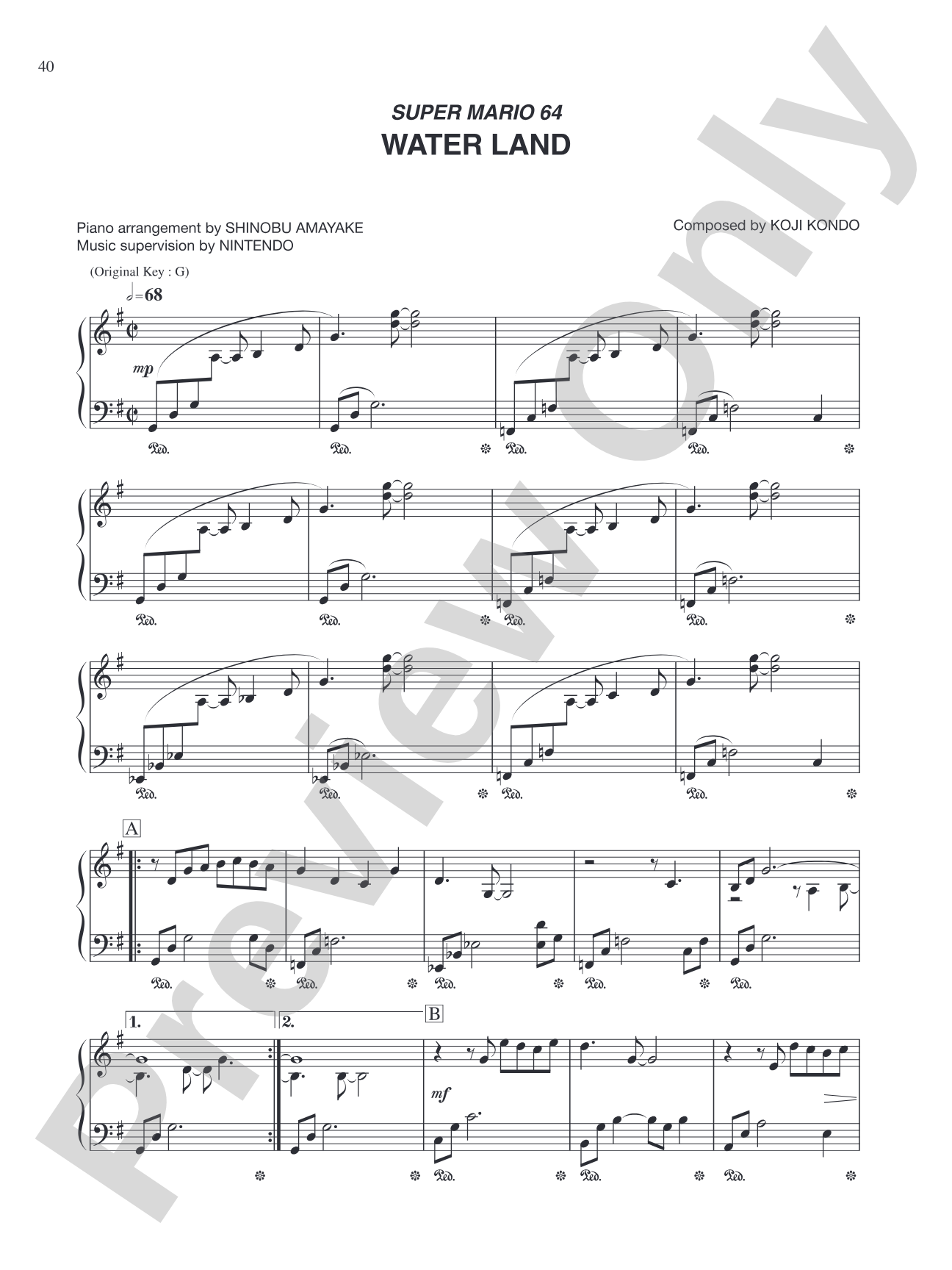

Super Mario 64 Water Land: Piano
34 Super Mario™ Themes Arranged for Solo Piano
By Koji Kondo, Shiho Fujii, Asuka Ohta, Soyo Oka, Kenta Nagata, Hirokazu Tanaka, and Mahito Yokota
Level: Intermediate / Advanced
Item: 00-PS-0015274
$4.99
One moment…
Related Items
Super Mario Bros. Ground Background Music: Piano |
$4.99
|
View | |
Super Mario Bros. Underground Background Music: Piano |
$4.99
|
View | |
Super Mario Bros. Invincible Background Music: Piano |
$4.99
|
View | |
Super Mario Bros. Underwater Background Music: Piano |
$4.99
|
View | |
Super Mario Bros. Power Down Game Over: Piano |
$4.99
|
View | |
Super Mario Bros. Time Up Warning Fanfare: Piano |
$4.99
|
View | |
Super Mario Bros. Course Clear Fanfare: Piano |
$4.99
|
View | |
Super Mario Bros. World Clear Fanfare: Piano |
$4.99
|
View | |
Super Mario Bros. The Lost Levels Ending: Piano |
$4.99
|
View | |
Super Mario Bros. 3 Map 1: Piano |
$4.99
|
View | |
Super Mario Bros. 3 Ground Background Music: Piano |
$4.99
|
View | |
Super Mario Bros. 3 Boss of the Fortress: Piano |
$4.99
|
View | |
Super Mario Bros. 3 Skyship Background Music: Piano |
$4.99
|
View | |
Super Mario World Title: Piano |
$4.99
|
View | |
Super Mario World Castle Background Music: Piano |
$4.99
|
View | |
Dr. Mario Title Background Music: Piano |
$4.99
|
View | |
Dr. Mario Chill: Piano |
$4.99
|
View | |
Super Mario Kart Mario Circuit: Piano |
$4.99
|
View | |
Super Mario World 2 Yoshis Island Ground Background Music: Piano |
$4.99
|
View | |
Super Mario World 2 Yoshis Island Athletic Theme: Piano |
$4.99
|
View | |
Super Mario 64 Main Theme: Piano |
$4.99
|
View | |
Mario Kart 64 Circuit: Piano |
$4.99
|
View | |
Super Mario Sunshine Dolpic Town: Piano |
$4.99
|
View | |
New Super Mario Bros. Title: Piano |
$4.99
|
View | |
New Super Mario Bros. Giant Background Music: Piano |
$4.99
|
View | |
New Super Mario Bros. Battle Background Music 1: Piano |
$4.99
|
View | |
New Super Mario Bros. Battle Background Music 2: Piano |
$4.99
|
View | |
Super Mario Galaxy Ending Staff Credit Roll: Piano |
$5.99
|
View | |
Mario Kart World Rainbow Road: Piano |
$4.99
|
View | |
New Super Mario Bros. Wii Ground Background Music: Piano |
$4.99
|
View | |
New Super Mario Bros. Wii Underwater Background Music: Piano |
$4.99
|
View | |
New Super Mario Bros. Wii Desert Background Music: Piano |
$4.99
|
View | |
Super Mario Bros. Castle Background Music: Piano |
$4.99
|
View | |
Super Mario™ Series for Piano: Piano Book |
$19.99
|
View |
Description
After decades of anticipation, Alfred is proud to release the officially licensed, collectible sheet music companion folios to the Super Mario Bros.™ video game series. The 34 arrangements in this intermediate-advanced piano edition are note-for-note transcriptions of instantly recognizable melodies beloved by generations of gamers around the globe. From Koji Kondo's iconic "Super Mario Bros.™ Ground Background Music" to the New Super Mario Bros.™ Wii™ themes, the dozens of pieces in this book represent two and a half decades of Nintendo® video game favorites. Adding to the fun, graphics from the corresponding games grace each page of the sheet music. Impress friends, family, and audiences of all ages by playing from this magnificent collection, which makes a great gift for every pianist.
Titles: Super Mario Bros.™ Ground Background Music * Super Mario Bros.™ Underground Background Music * Super Mario Bros.™ Underwater Background Music * Super Mario Bros.™ Castle Background Music * Super Mario Bros.™ Invincible Background Music * Super Mario Bros.™: The Lost Levels Ending * Super Mario Bros.™ 3 Map 1 * Super Mario Bros.™ 3 Ground Background Music * Super Mario Bros.™ 3 Boss of the Fortress * Super Mario Bros.™ 3 Skyship Background Music * Super Mario World™ Title * Super Mario World™ Castle Background Music * Dr. Mario™ Chill * Dr. Mario™ Title Background Music * Super Mario Kart™ Mario Circuit * Super Mario World™ 2 Yoshi's Island™ Athletic * Super Mario World™ 2 Yoshi's Island™ Ground Background Music * Super Mario 64™ Main Theme * Super Mario 64™ Water Land * Mario Kart™ 64 Circuit * Super Mario Sunshine™ Dolpic Town * New Super Mario Bros.™ Title * New Super Mario Bros.™ Giant Background Music * New Super Mario Bros.™ Battle Background Music 2 * New Super Mario Bros.™ Battle Background Music 1 * Super Mario Galaxy™ Ending Staff Credit Roll * Mario Kart™ Wii™ Rainbow Road * New Super Mario Bros.™ Wii™ Ground Background Music * New Super Mario Bros.™ Wii™ Underwater Background Music * New Super Mario Bros.™ Wii™ Desert Background Music * Super Mario Bros.™ Time Up Warning Fanfare * Super Mario Bros.™ Course Clear Fanfare * Super Mario Bros.™ World Clear Fanfare * Super Mario Bros.™ Power Down, Game Over.
"Best in Show" Award at Winter NAMM 2012 presented by Music Inc. magazine.


Titles: Super Mario Bros.™ Ground Background Music * Super Mario Bros.™ Underground Background Music * Super Mario Bros.™ Underwater Background Music * Super Mario Bros.™ Castle Background Music * Super Mario Bros.™ Invincible Background Music * Super Mario Bros.™: The Lost Levels Ending * Super Mario Bros.™ 3 Map 1 * Super Mario Bros.™ 3 Ground Background Music * Super Mario Bros.™ 3 Boss of the Fortress * Super Mario Bros.™ 3 Skyship Background Music * Super Mario World™ Title * Super Mario World™ Castle Background Music * Dr. Mario™ Chill * Dr. Mario™ Title Background Music * Super Mario Kart™ Mario Circuit * Super Mario World™ 2 Yoshi's Island™ Athletic * Super Mario World™ 2 Yoshi's Island™ Ground Background Music * Super Mario 64™ Main Theme * Super Mario 64™ Water Land * Mario Kart™ 64 Circuit * Super Mario Sunshine™ Dolpic Town * New Super Mario Bros.™ Title * New Super Mario Bros.™ Giant Background Music * New Super Mario Bros.™ Battle Background Music 2 * New Super Mario Bros.™ Battle Background Music 1 * Super Mario Galaxy™ Ending Staff Credit Roll * Mario Kart™ Wii™ Rainbow Road * New Super Mario Bros.™ Wii™ Ground Background Music * New Super Mario Bros.™ Wii™ Underwater Background Music * New Super Mario Bros.™ Wii™ Desert Background Music * Super Mario Bros.™ Time Up Warning Fanfare * Super Mario Bros.™ Course Clear Fanfare * Super Mario Bros.™ World Clear Fanfare * Super Mario Bros.™ Power Down, Game Over.
"Best in Show" Award at Winter NAMM 2012 presented by Music Inc. magazine.
Discover MakeMusic Cloud: thousands of interactive titles your students can play along with today.
Sample Audio
No sample audio found.
Sample Video
Additional Details
Publisher:
Alfred Music
Page Count:
80
SKU:
00-PS-0015274
More about this title
About the Composer: Koji Kondo
Koji Kondo shaped video game music as we know it. His work at Nintendo beginning in the 1980s established the template for how melody, harmony, and rhythm could drive interactive entertainment, proving that game music deserved the same compositional craft as any other medium. His melodies are so durable that they've outlasted the technology that birthed them, becoming part of global popular culture.
Kondo's genius lies in economy of expression. Working within the technical constraints of early synthesizers and sound chips, he wrote themes that are instantly memorable, harmonically satisfying, and endlessly replayable without becoming tedious. These qualities make his compositions uniquely rewarding for pianists to learn and perform.
Why we love this
These transcriptions bridge two audiences that rarely overlap in concert programming. Intermediate-advanced pianists get substantial musical material with genuine harmonic interest and textural variety, while the recognizable melodies create an immediate connection with audiences of all ages. The official Nintendo licensing and in-game graphics add legitimacy and visual appeal to a collection that celebrates gaming as a legitimate source of musical inspiration.
What to expect
These arrangements capture the energy, whimsy, and earnest charm of the games themselves. The music bounces with optimism and adventure, whether underwater, underground, or soaring through castle passages. Each setting has its own harmonic flavor, from minor-key mischief to bright, triumphant fanfares.
Who it's for
Pianists in the intermediate to advanced range who want to expand beyond classical and popular song repertoire will find genuine musical substance here alongside the joy of playing beloved themes. Teachers often use these pieces as bridges to students who feel disconnected from traditional classical piano study.
How to get the most out of it
- Pay close attention to the hand position shifts required by these arrangements. The piano transcriptions accommodate the synthesizer originals by mapping them onto the keyboard in unexpected ways; mark your hand positions in advance so you're not caught off guard during performance.
- Tempo stability matters more than it might seem in video game music. These pieces drive forward with rhythmic momentum by design. A metronome during practice ensures the groove stays locked without rushing.
- Treat the melodic lines with clarity and singing tone even when they're buried within denser textures. The original video game versions prioritize these melodies; your arrangement should too, bringing them forward so listeners recognize the themes immediately.
- Use the game graphics on each page as a visual anchor during performance. The imagery connects you emotionally to the source material and helps you maintain the character of each piece, even in the moment.
How to use it
A recital built around these arrangements creates an accessible, multigenerational program that feels fresh and contemporary. You might program a single standout piece among traditional classical work to demonstrate stylistic range, or build an entire section around these themes. The visual element also works beautifully in educational concerts where program notes and projected game art enhance the listening experience.
Skills your students will build
- Reading and executing hand position changes across the full keyboard
- Maintaining rhythmic momentum in syncopated and repetitive structures
- Balancing melodic clarity with harmonic accompaniment textures
- Adapting synthesizer-based voicings to piano timbre and resonance
- Building interpretive choices within familiar, recognizable material