
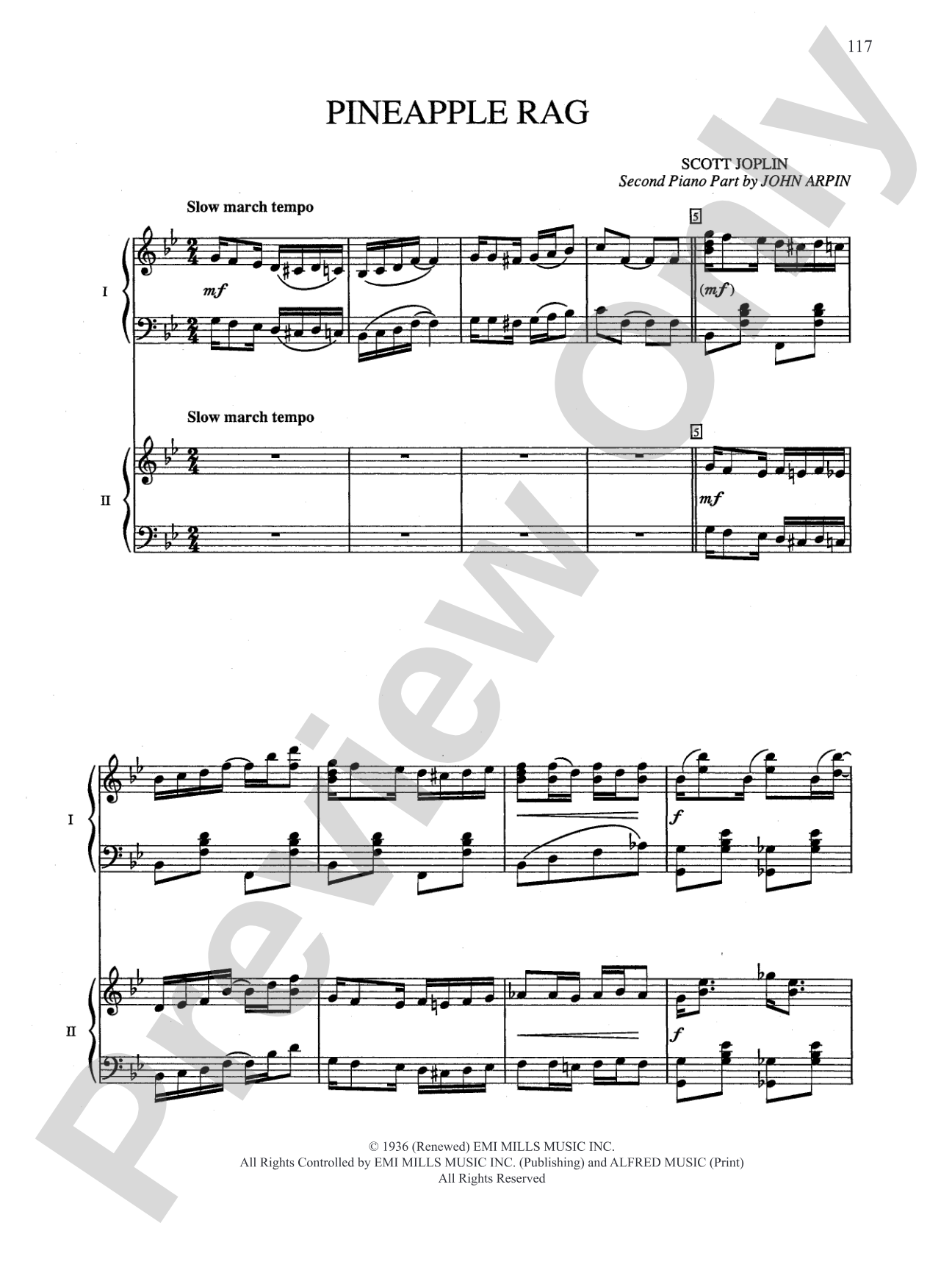
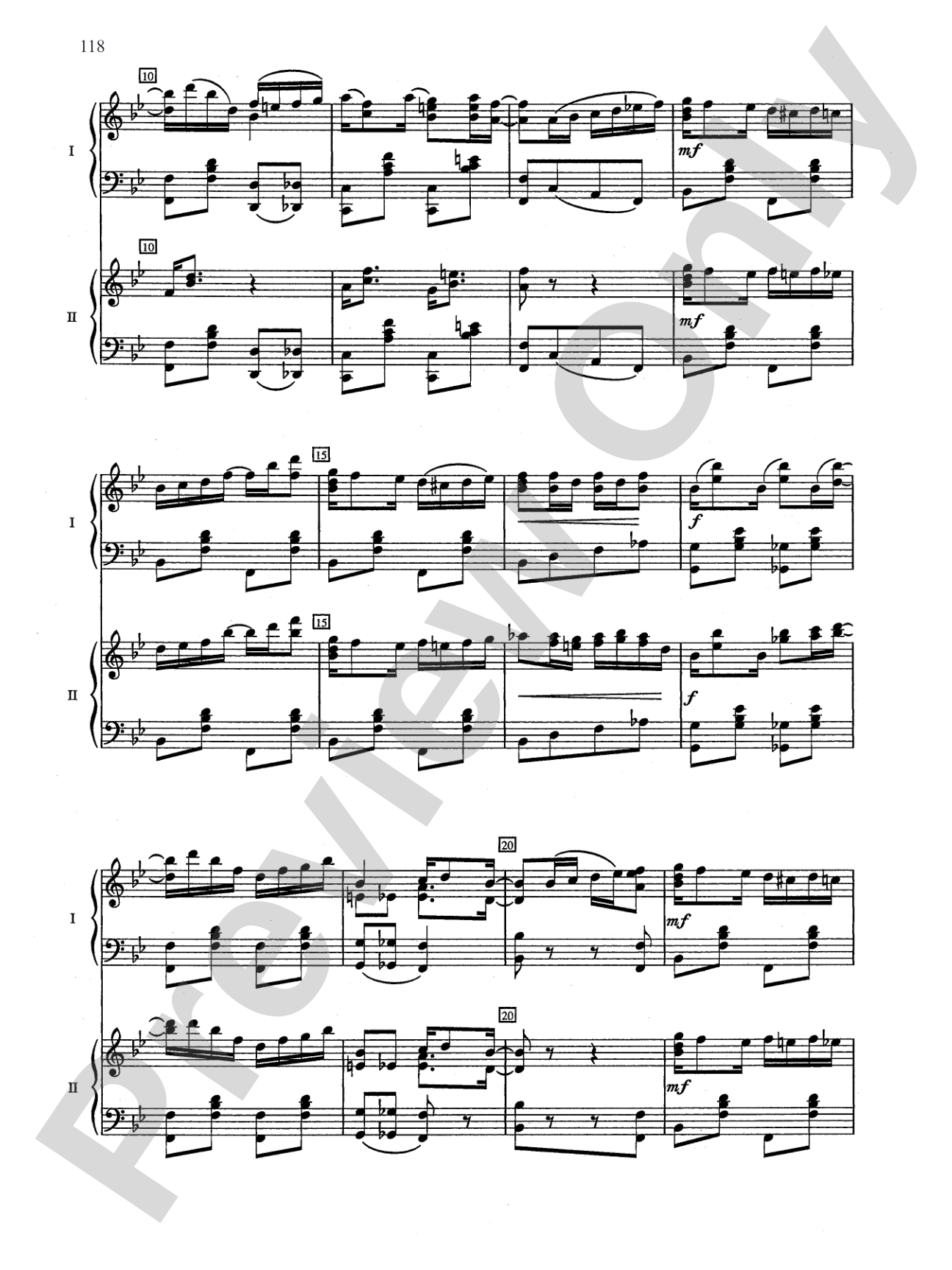
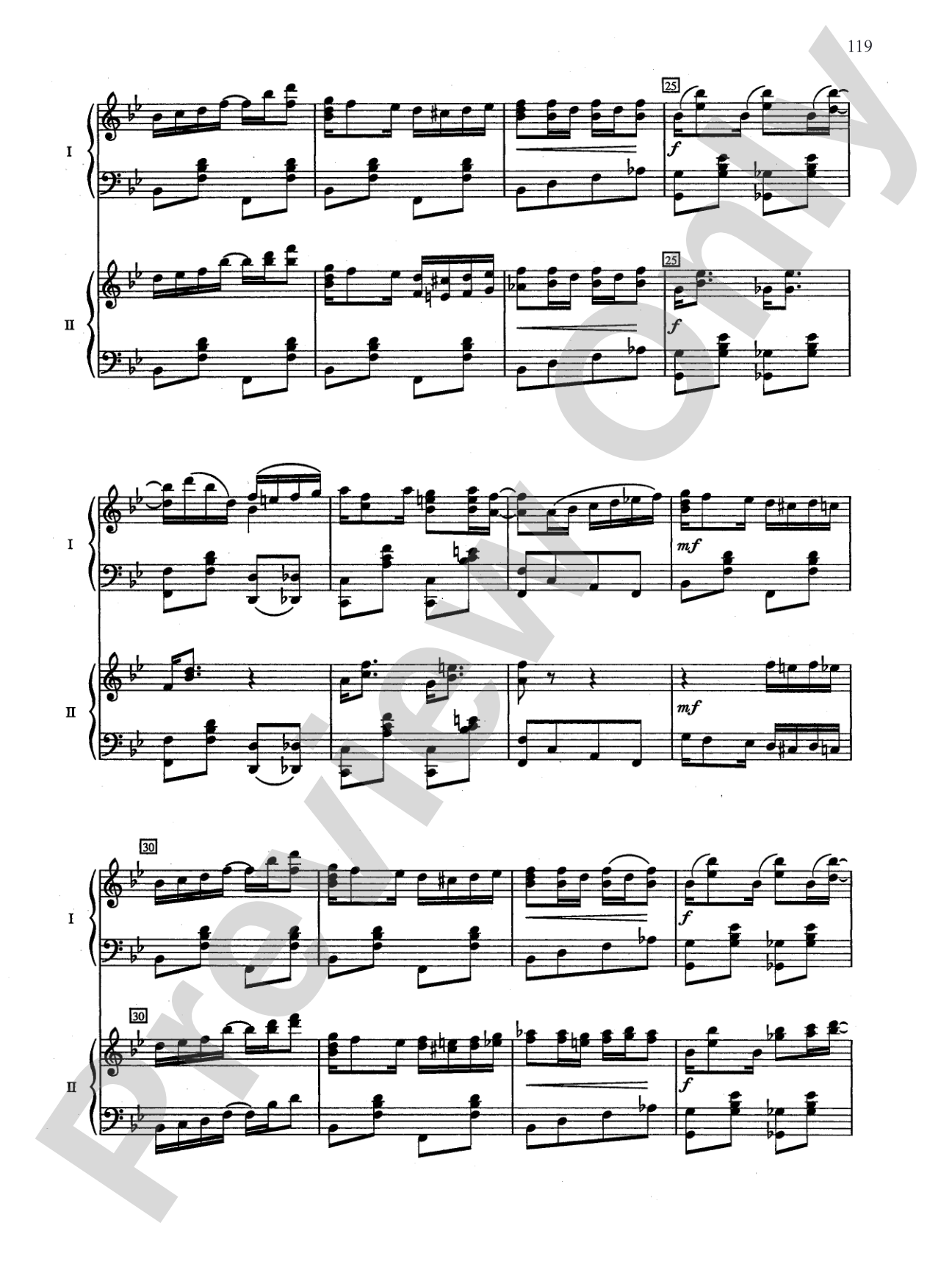

Pineapple Rag - Piano Duo (2 Pianos, 4 Hands): Piano Duo (2 Pianos, 4 Hands)
Selections by George and Ira Gershwin, Thomas "Fats" Waller, Scott Joplin, Irving Berlin, Jerome Kern and More
Arr. Jim Lyke, Geoff Haydon, Don Heitler, and John Arpin
Level: Intermediate / Late Intermediate
Item: 00-PS-0017302
$9.99
Pickup currently not available
Related Items
Ain't Misbehavin' (from "Ain't Misbehavin'") - Piano Duo (2 Pianos, 4 Hands): Piano Duo (2 Pianos, 4 Hands) |
$5.99
|
View | |
Alexander's Ragtime Band - Piano Duo (2 Pianos, 4 Hands): Piano Duo (2 Pianos, 4 Hands) |
$9.99
|
View | |
America, the Beautiful - Piano Duo (2 Pianos, 4 Hands): Piano Duo (2 Pianos, 4 Hands) |
$5.99
|
View | |
By Strauss (from "The Show Is On") - Piano Duo (2 Pianos, 4 Hands): Piano Duo (2 Pianos, 4 Hands) |
$5.99
|
View | |
Everybody's Doing It Now - Piano Duo (2 Pianos, 4 Hands): Piano Duo (2 Pianos, 4 Hands) |
$5.99
|
View | |
I Want to Be Happy (from "No, No, Nanette") - Piano Duo (2 Pianos, 4 Hands): Piano Duo (2 Pianos, 4 Hands) |
$5.99
|
View | |
Look for the Silver Lining - Piano Duo (2 Pianos, 4 Hands): Piano Duo (2 Pianos, 4 Hands) |
$5.99
|
View | |
Nobody but You (from "La La Lucille") - Piano Duo (2 Pianos, 4 Hands): Piano Duo (2 Pianos, 4 Hands) |
$4.99
|
View | |
Solace - A Mexican Serenade - Piano Duo (2 Pianos, 4 Hands): Piano Duo (2 Pianos, 4 Hands) |
$9.99
|
View | |
Swanee - Piano Duo (2 Pianos, 4 Hands): Piano Duo (2 Pianos, 4 Hands) |
$5.99
|
View | |
The Easy Winners - Piano Duo (2 Pianos, 4 Hands): Piano Duo (2 Pianos, 4 Hands) |
$9.99
|
View | |
When the Midnight Choo Choo Leaves for Alabam' - Piano Duo (2 Pianos, 4 Hands): Piano Duo (2 Pianos, 4 Hands) |
$5.99
|
View | |
15 Arrangements of American Classics for Two Pianos, Four Hands: Piano Duo (2 Pianos, 4 Hands) Book (2 copies required) |
$17.95
|
View |
Description
The 15 American classics in this collection have been masterfully arranged for two pianos, four hands. Titles: Ain't Misbehavin' (Fats Waller) * Alexander's Ragtime Band (Irving Berlin) * America, the Beautiful (Katherine Lee Bates and Samuel A. Ward) * By Strauss (George Gershwin and Ira Gershwin) * The Easy Winners (Scott Joplin) * Everybody's Doing It Now (Irving Berlin) * Gladiolus Rag (Scott Joplin) * I Want to be Happy (Vincent Youmans) * Look for the Silver Lining (Jerome Kern) * Medley: Yankee Doodle Boy; Over There; You're a Grand Old Flag (George M. Cohan) * Nobody But You (George Gershwin) * Pineapple Rag (Scott Joplin) * Solace (Scott Joplin) * Swanee (George Gershwin) * When the Midnight Choo-Choo Leaves for Alabam' (Irving Berlin). 128 pages. A Federation Festivals 2024-2028 selection.


Discover MakeMusic Cloud: thousands of interactive titles your students can play along with today.
Sample Audio
No sample audio found.
Sample Video
No sample videos found.
Additional Details
Series:
Alfred's Classic Editions
Publisher:
Alfred Music
Page Count:
128
SKU:
00-PS-0017302
More about this title
About the Composer: Scott Joplin
Scott Joplin (1868-1917) was an African American composer and pianist whose ragtime compositions fundamentally shaped American music. His syncopated melodies and sophisticated harmonic language elevated ragtime from popular entertainment to a respected art form, influencing everything from jazz to classical composition. Joplin's legacy rests on works like "The Maple Leaf Rag" and "Pineapple Rag," which showcase his gift for creating memorable themes with genuine musical depth.
John Arpin is a Canadian composer and pianist specializing in ragtime arrangement and preservation. His arrangements for this collection respect Joplin's original intent while creating idiomatic writing for two pianos that brings fresh energy to these enduring classics.
Why we love this
This collection pairs some of the most recognizable American melodies with Joplin's (and Arpin's arrangements of) sophisticated ragtime textures, giving pianists real musical substance to dig into rather than simplistic treatments. The two-piano format creates genuine ensemble challenge without requiring singers or additional instruments, making it ideal for studio pairs or community music programs. Each piece rewards careful attention to rhythmic precision and voicing while remaining accessible enough for advanced high school pianists.
What to expect
These pieces crackle with the energy of early twentieth-century American popular music, from the syncopated strut of Joplin's rags to the breezy charm of Gershwin and Berlin standards. Playing them together creates an infectious momentum; the interplay between the two pianos sparks and propels the music forward in ways a solo arrangement cannot capture.
Who it's for
Intermediate to late intermediate pianists working in partnerships or studio pairs seeking ensemble repertoire with real musical substance. Teachers building collaborative skills will find these arrangements equally valuable for students ready to develop listening and balance within a two-piano setting.
How to get the most out of it
- Establish a steady internal pulse before rehearsing together; ragtime's syncopation can blur the downbeat for pianists accustomed to straighter styles. Count aloud or use a metronome during initial run-throughs.
- Differentiate the parts clearly in your mind: one player often carries the melody while the other maintains rhythmic propulsion. Listen for this role distinction in recordings before assuming both parts are equally prominent.
- Shape the phrasing across both instruments as if you were a single ensemble. Breathe together and taper phrases in unison to avoid one player overshadowing the other's line.
- Balance the right hand of the primo (first piano) with the left hand of the secondo (second piano) to ensure thematic material sings through the fuller texture.
How to use it
Spotlight this collection in a program celebrating American vernacular music or early twentieth-century popular song. These pieces work wonderfully in a mixed recital that bridges classical and popular contexts, or as an entire concert devoted to ragtime and jazz-era standards. Consider pairing selections with solo performances to showcase how the same material can be reimagined through arrangement.
Skills your students will build
- Playing ragtime syncopation with rhythmic precision
- Balancing two independent parts while maintaining ensemble cohesion
- Reading and executing musical textures specific to early American popular music
- Collaborating as an equal partner in duo settings
- Shaping long melodic lines across a full two-piano texture